





Former National Champion Farida Khattab Is Dressing Squash's Queens
For a sport that's spent years being measured against tennis, Patra is the first real sign that squash is ready to be dressed on its own terms.

What do squash, tennis, and padel have in common? For years, the honest answer was: not enough fashion. Racquet sports have produced some of the most magnetic athletes in the world, yet the women playing them have largely been left to choose between ill-fitting hand-me-downs from bigger sports and whatever a handful of legacy brands decided to make available. Former National Squash Champion Farida Khattab noticed the gap long before she had the means to close it.
Before she was a stylist, before she was a creative director juggling two careers, she was a four-year-old picking up a racquet for the first time - the fourth generation in her family to do it. Squash was never a hobby she stumbled into. It ran in her DNA, passed down the way some families pass down a language or a trade. "Genuinely, squash is something that I felt runs in my blood," she says.
That inheritance has become a brand. Patra, short for Cleopatra, is Khattab's answer to a gap she lived inside of long before she had the vocabulary to name it: a sportswear label built specifically for women in racquet sports, stitched together from the two lives she never expected to merge. "Ironically, no," she says, when asked whether she grew up dreaming of a sports label of her own. Fashion was the private obsession - sketchbooks filled by age nine or ten, hours lost to Fashion TV Arabia - while squash ran through the rest of her family like a second language. Her father played. Her aunt competed in college leagues before Egypt even had a national women's team. Her grandparents played together.
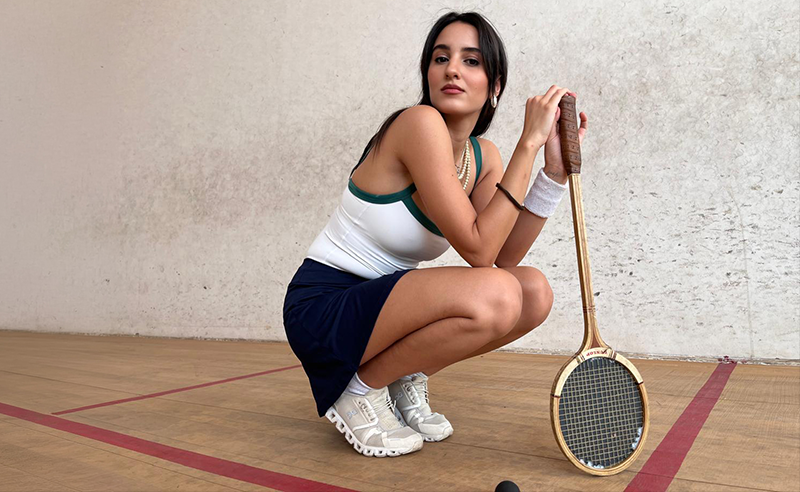 For most of her career, those two inheritances stayed separate. Khattab spent a decade styling and directing for other labels, working the quieter side of the industry while squash remained something she'd left behind on court, a national title from her youth and little else. It took watching today's players, not competing herself, but watching from the outside, for the idea to finally take shape. "When I would watch them, the way they inspire me, it's crazy," she says. "It gives me goosebumps. Because as I'm watching them, I can really see how that Yalla that came from Player X is coming from a place where she's beating her demons at that very moment."
If Patra needed a muse, Khattab doesn't hesitate to say there's one in mind - she just won't say who. "She's incredibly feisty, and she's quite a fighter," Khattab says of the player she pictures whenever she designs. "That, for me, is the representation." It's a small confession she asks to keep between us, before deciding, laughing, that the world can have the description - just not the name.
The name itself is a deliberate act of reclamation. "Patra is short for Cleopatra," Khattab explains. "I tried to have something that is ancient Egyptian inspired... honoring the history of women in ancient Egypt, especially how empowered they were at the time. We had so many queens at the time." She points to the documentary Queens of the Nile, about Egyptian women's squash, as proof that the torch has always been passing between generations of women who refuse to shrink. But the aesthetic, she's careful to clarify, isn't a pastiche of pharaonic motifs. She likens it to Nike, a Greek goddess turned thoroughly contemporary brand: the myth as foundation, not as costume.
 What Khattab keeps returning to, though, isn't mythology so much as the gap she noticed in the market itself: a sport still underserved by fashion, forever measured against tennis, and rarely given the kind of intentional design its players deserve. "Clothes in general really empower women," she says. "I always want women to wear what reflects their true essence and personality so they would be comfortable, so they would be confident, so they would look their best."
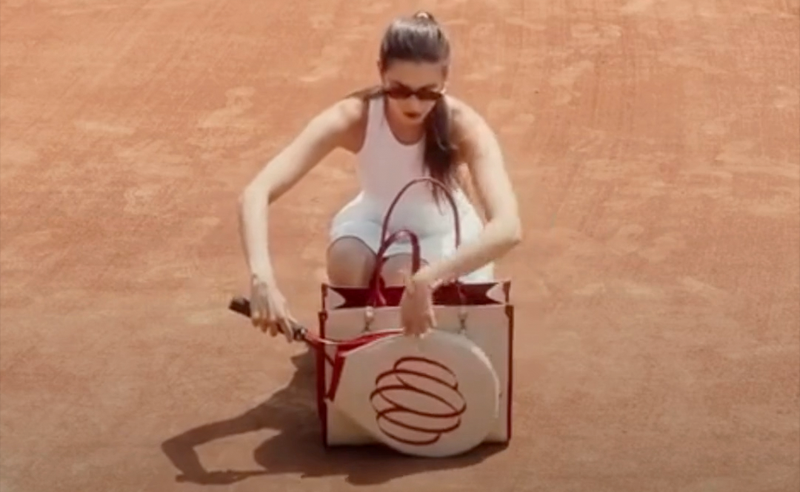
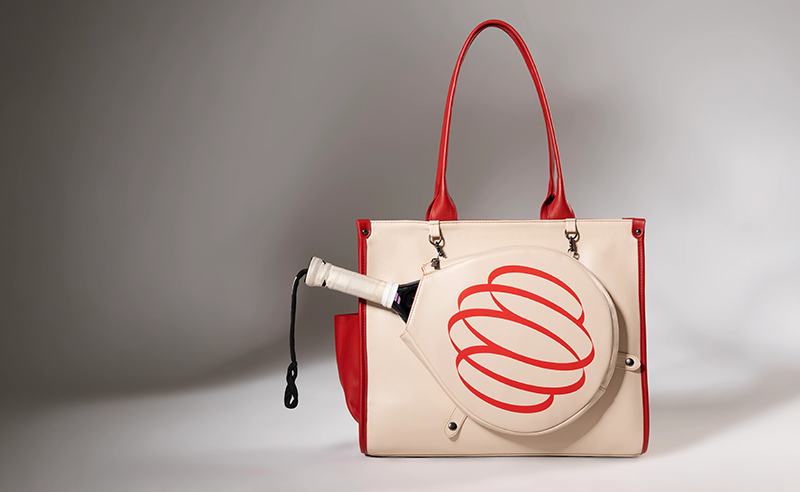
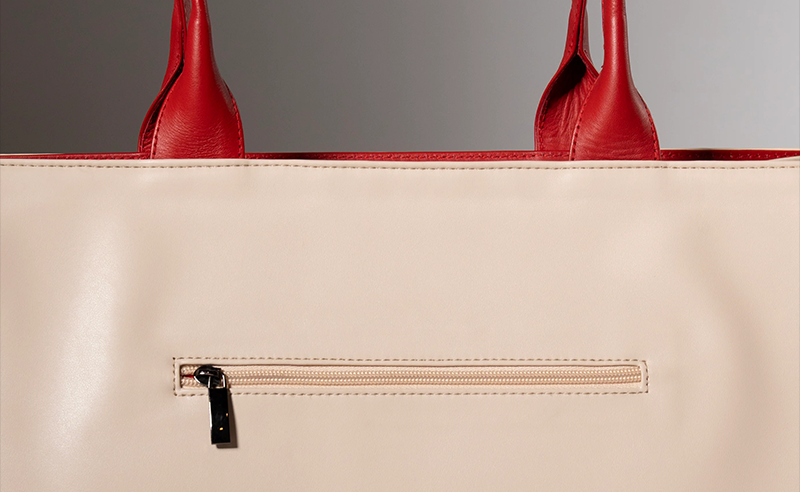
That conviction now runs through everything Patra makes, starting with the brand's first release: a tote bag engineered specifically to fit a racquet, born not from a mood board but from an actual Tuesday. Khattab had played a match, had two laptops and a full change of clothes to carry to back-to-back meetings afterward, and reached for the kind of oversized tote she already lived in, only to realize nothing like it existed for her sport. "This bag carries it all," she says. "It's an incredibly convenient bag. But at the same time, it looks so good. You can wear it on court and off court." The leather-and-vegan-leather construction, the deliberate racquet compartment, the price point that sits closer to a designer handbag than a gym bag - all of it, she argues, is simply what craftsmanship costs when nobody has built the category before. "Not a single squash bag is like that," she says.
Khattab designs the way she talks - circling a story until the emotional center of it surfaces. Even Patra's logo carries a message she returns to unprompted: the arc of a bouncing ball, its highest point a reminder to stay humble, its lowest point a reminder that nothing, good or bad, stays permanent. "When you are at the bottom, when you hit your rock bottom, always remember that also everything is temporary," she says. "So you're not going to stay at that bottom for long. And soon enough, when you just stay focused and stay resilient, you're going to make it to the top." It's a design philosophy that doubles, unmistakably, as autobiography.
 The brand itself is structured in three tiers, each one built around a different register of the same idea. There's the Ath-Elite line - named, deliberately, for the elite athlete - which Khattab describes as the label's couture: limited, intricate, and, by her own admission, her favorite. "That's my baby," she says. "I think that's the number one reason why Patra came to life." Beneath it sits the Off-Duty collection, conceived as squash's answer to the off-duty model, built to move seamlessly from court to the rest of the day. And grounding it all is the Core line - simpler, more minimal, designed to mix, match, and outlast any single season.
Comfort and performance, Khattab insists, are never negotiable, no matter how elaborate a design gets. She tests everything herself first. "I'm usually the first rat in the lab to test on, for sure," she says, before turning serious. "I understand that not all bodies are built the same. So I need to make sure that the outfits are serving." The current fabric of choice is a nylon-spandex blend sourced from outside Egypt, a compromise she's candid about. Sustainability sits high on her list of ambitions, not yet fully realized. "I'm very aware of the impact of non-organic materials on the body, how it affects the hormones, how it affects women in the long run, and also their implications on the environment," she says. "I can't 100% achieve that as I'm launching, but I'm trying to make sure that this is part of my vision for sure."
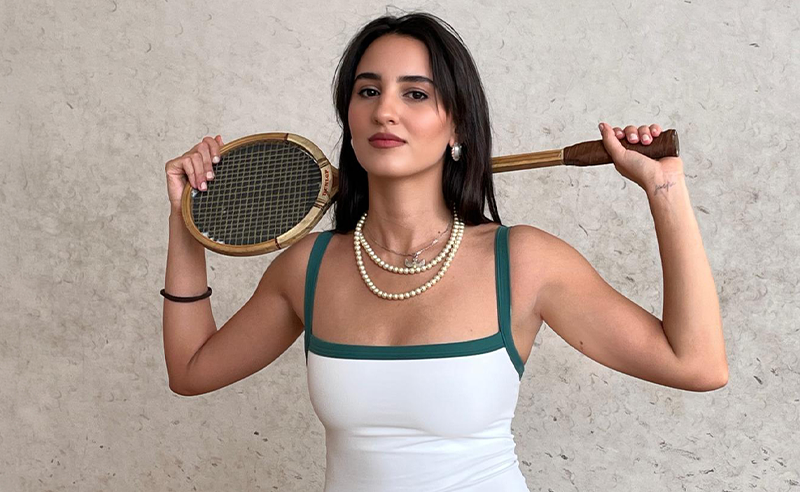 Khattab runs Patra largely alone - sketching by hand, building mood boards, translating designs for the factory herself, calling in a graphic designer only where her own tools fall short. It is, by her own description, close to a one-woman operation, propped up around the edges by a growing team of photographers and collaborators she's still assembling. The apparel line, still unreleased at the time we spoke, is expected before the end of the year, alongside a campaign she teases without confirming: possibly, she says, featuring current squash players, delivered with the kind of smile that makes clear the answer is closer to yes than no.
What Khattab is ultimately building isn't just a wardrobe, though. It's a corrective to every borrowed, generic idea of what an athlete is supposed to look like, one she's constructing from the inside, with the authority of someone who has actually lived on both sides of the equation, as player and as designer. "I understand their lifestyle. I understand the convenience. I understand their mindset," she says of the players she's designing for. "I really hope Patra could be that safe space that truly again speaks to them and reflects them and inspires them, hopefully." She pauses, then adds what functions, almost accidentally, as the brand's real mission statement: "I hope we can make squash girls look better and look like themselves."
- Previous Article Dubai Launches Region's First AI Model to Detect Deepfake Videos
- Next Article UAE Ranked Most Tax Friendly Country for Global Citizens