





3,000-Year-Old Tomb Unearthed in Luxor's West Bank
The newly discovered tomb belonged to a man named Paser and is believed to date to the Ramesside period.

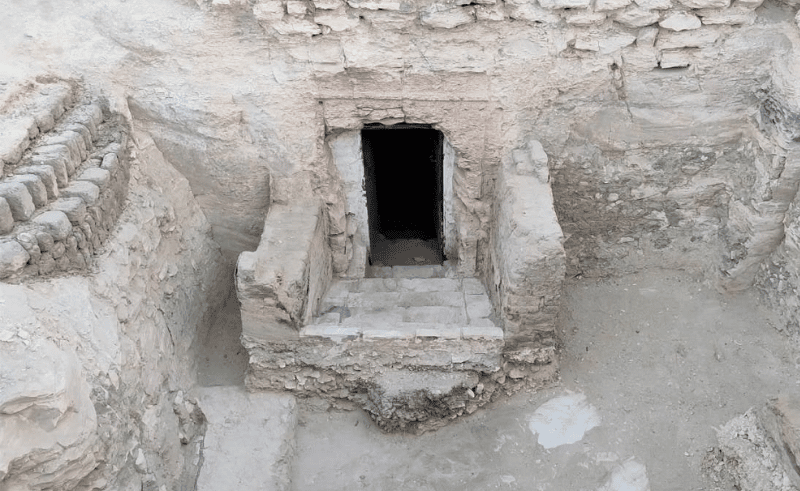
A Dutch archaeological mission from Leiden University has uncovered a New Kingdom tomb belonging to a man named Paser in the lower Sheikh Abd El Qurna area on Luxor's West Bank, with the discovery believed to date to the Ramesside period.
According to the Supreme Council of Antiquities, the tomb was discovered during the mission's current excavation season. It lies east of Theban Tomb No. 45, where the Leiden University team has been carrying out archaeological research in cooperation with the Ministry of Tourism and Antiquities since 2018. The project focuses on preventive conservation, risk management and documenting the archaeological landscape of the area.
The tomb follows the typical layout of private Theban burials from the New Kingdom, comprising an outer courtyard, an inverted T-shaped rock-cut chapel and underground burial chambers. Archaeologists also identified a mudbrick mastaba with a niche intended for a funerary stela, as well as a staircase leading to the entrance.
Colourful wall paintings inside the tomb preserve the name of Paser, depicting him worshipping deities inside shrines and standing alongside his wife before an offering table. Although parts of the artwork are covered by a thin layer of dust, the decorations remain largely intact.
The archaeological mission plans to continue documenting the tomb and carrying out structural conservation and restoration work in future excavation seasons. Researchers also aim to identify those buried within the tomb and reconstruct their biographies to better understand the history of the lower Sheikh Abd El Qurna necropolis and its role in ancient Egyptian society.