




The Egyptian on His Way to Mars, 10 Years Later
When Mohammed Sallam was chosen for a one-way trip to Mars, his life changed overnight. A decade later, he's still waiting for lift off.
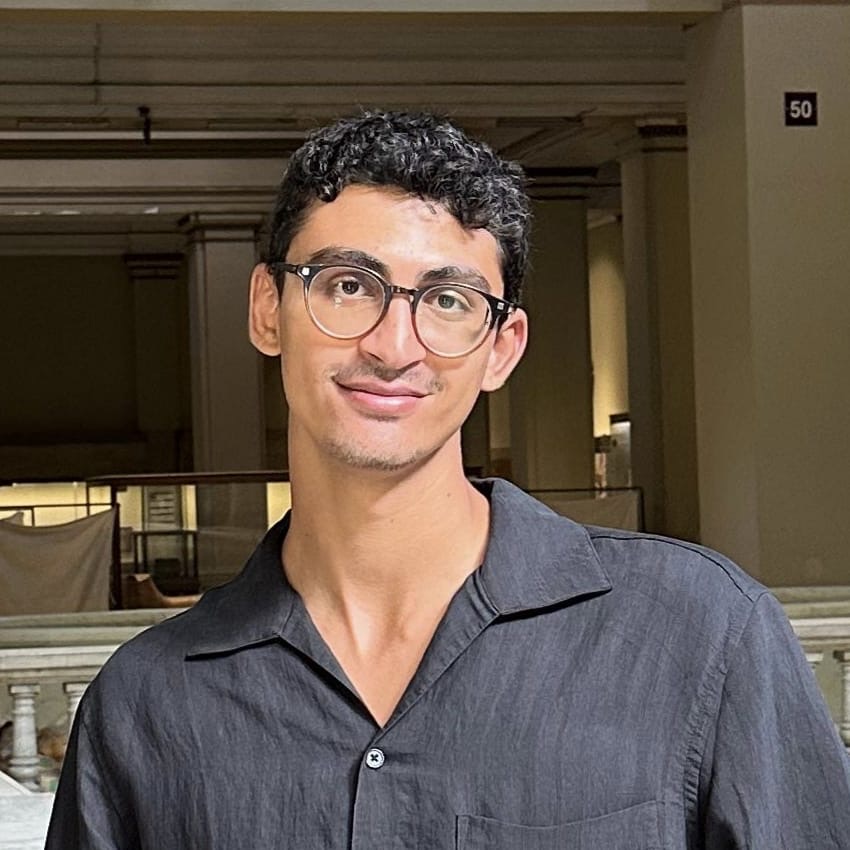
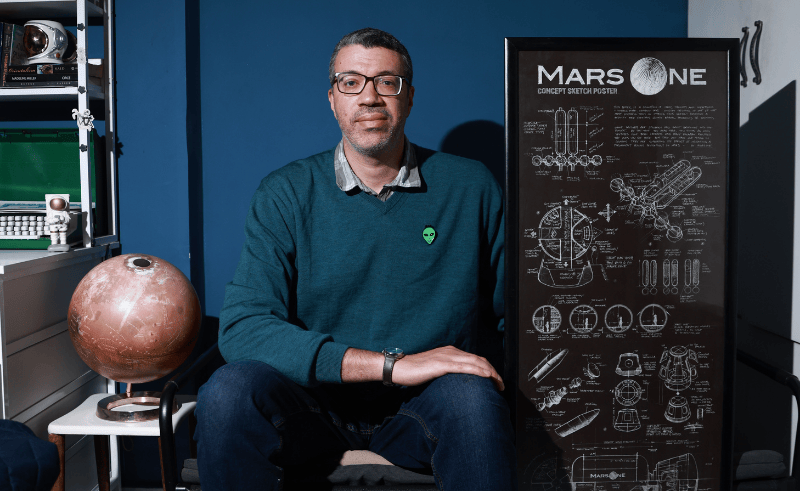
When CairoScene last interviewed Mohammed Sallam in 2015, it was just days after he had been selected as an astronaut candidate for a one-way mission to Mars. Out of 200,000 applicants, the Cairo native was the only Egyptian and Arab among the 100 candidates chosen by Dutch firm Mars One for its privately-funded space colony. Sallam became a national sensation overnight.
The mission was scheduled for the 2020s, sending colonists four at a time to spend the rest of their lives creating an outpost for humanity on Mars, a mission that was celebrated by some and labelled impossible, or suicidal, by others. For 30-year-old Sallam, a former pro basketball player and orchestral violinist who lost both of his parents in a car crash as a teenager, it was a golden ticket to recover a childhood obsession with outer space and represent Egypt among the first generation of humans to set foot on another planet. But after years of funding issues and repeated delays, the mission quietly went bankrupt in 2019.
In 2025, the year Sallam could have been on Mars, he was instead somewhere in Cairo. After months of trying to reach him, I finally found the grounded astronaut to learn what has happened in the decade since he was selected for the journey, and what he is now doing here on Earth.-df1931fa-3ef3-440a-99fe-ebbeacb886a8.png) The Man on His Way to Mars
The Man on His Way to Mars
At some point in his eight-month journey through outer space, Sallam would have reached a point where he could no longer view Earth while his destination, Mars, was still beyond sight. Sallam, a very practical man, never liked to dwell on the uncertain future, but he had thought of this moment many times.
“I was super anxious and yet really looking forward to this moment, when I would just be in the nothing,” says Sallam. In person, his matter-of-fact attitude masks the enormity of the task he was undertaking, but in moments like these, the grandness of it all could not be hidden. “So I would tell myself that the only thing I would do to calm myself while I looked out of the window into the void was listen to my favourite symphony, Scheherazade. When I listen to it, I experience love, curiosity, confusion, and fear. It’s very human. That’s why I would play it in space.”
Besides this one moment, Sallam rarely wasted time on fantasies, even when to the rest of Egypt he had become the one who would represent them on humanity’s first ever colony on another planet. When Sallam first came across Mars One by chance in 2013, he’d thought his childhood dream of going to space was long expired. He was a 30-year-old white-collar employee in Cairo. All he had from it was a telescope he’d bought in 2011 during the Arab Spring, and a habit of checking space news as frequently as he checked his email. “I was constantly asking myself, ‘Why would Mars One choose me?’ I have passion, yes, but why me?”
Fearing ridicule, Sallam didn’t tell anyone that he had applied to become a Mars settler, even as he advanced through successive selection and interview rounds. When, in 2015, he was announced to the world among the final 100 candidates, Sallam’s family found out the same way he did: through the media.
“My family called me with a worried voice, asking what the news meant.” While Sallam himself was still processing the news, he had to explain to his worried family that he had signed up to go to Mars and never come back, all while juggling the dozens of interview requests from national and global news outlets that flooded into his inbox. “I was just a regular employee in a corporate environment when Mars One lifted me out of that world,” says Sallam. “It was a life-changer. It was the best thing to happen to me as an adult.”-8729ac9a-e96b-4964-ad40-74dcd89bf0f3.png) Sallam with NASA astronaut Ricky Arnold.
Sallam with NASA astronaut Ricky Arnold.
After the news broke in February 2015, the next step was for Mars One to arrange physical and behavioural tests to further filter the 100 candidates. Placed in teams of ten, Sallam was told each team would be dropped into remote locations such as mountains, deserts, and tundras, where they would be given basic tools to survive and reach a pre-determined destination within a given time limit. This round was to be followed by another, consisting of an isolation test to observe candidates’ psychological aptitude to survive the cramped, eight-month journey within the spaceship.
It did not ease the scepticism surrounding Mars One’s mission that they planned to televise these selection rounds in a format similar to reality TV. The intention, according to Mars One’s co-founder and CEO Bas Lansdorp, was to generate the necessary funds required for the mission—an estimated $6 billion—this way.
As Mars One made their preparations, Sallam made his. He was the only Egyptian and Arab candidate among the ‘Mars 100’, which Sallam believes was part of the reason he became a media sensation. “In this period I was hardly ever at home,” he says. Camera shy, Sallam forced himself to say yes to every TV opportunity because he felt he had to share with his fellow Egyptians the purpose of his mission, and get them to feel the pride and excitement he felt.“I remember my uncle once called me and told me he was solving the crossword puzzle in the newspaper, and the clue for the third horizontal was ‘The first Egyptian who will go to Mars.’ He asked me, ‘What should I write?’”
Through Mars One, Sallam got to meet real-life astronauts from NASA and ESA, give keynote talks at Cairo University and Ain Shams University, and meet Dr. Farouk El Baz, the Egyptian scientist who selected the lunar landing site for Neil Armstrong and the Apollo 11 team in 1969.
In the midst of all the media opportunities and the studying Sallam was doing for Mars One, there was no space in Sallam’s mind for thoughts of the uncertain future. He and 99 others had become the first humans to sign away their lives on Earth, without death. But for Sallam, there was no point in thinking along these terms when he did not know what ten days would bring, let alone ten years. The best proof of this is in the fact that, with the possibility of permanently leaving Earth, Sallam decided to get married.
“People were telling me, ‘Why would you get married when you’re going to leave us?’ But I thought, by that logic, why does anyone get married?” Sallam’s wife, who deserves at least as much credit for the daring decision, was his biggest supporter and, like him, believed in his mission.
Sallam was not sure how life on Mars would be, but he was excited by the potential of discovery, of advancing humanity, of settling questions like how humans would carve out a society and govern themselves on Mars. He did not think about how he would die (though he supposed it would be from radiation, after many decades) nor what he would find once he set foot on the planet. But he was sure of one thing: he would do everything in his power to remain in the programme and make it onto the spaceship.
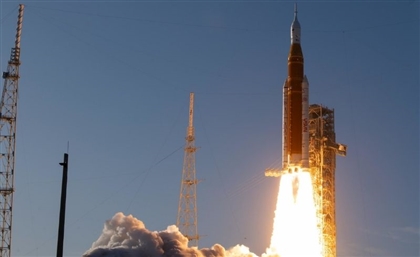
However, as months turned into years and the 100 candidates still waited for the next selection tests to begin, the world slowly moved on from Mars One, and they were left waiting, wondering.-cb39ea2d-aa51-47e1-89b0-02f49a9025e5.png) On April 1, 2026, NASA sent four astronauts on a flyby mission to the moon. Artemis IV, planned for 2028, aims to land humans on the moon for the first time since 1972.
On April 1, 2026, NASA sent four astronauts on a flyby mission to the moon. Artemis IV, planned for 2028, aims to land humans on the moon for the first time since 1972.
Stranded on Earth
It was always going to be a far cry: sending people on a privately-funded, one-way trip to Mars when even the likes of NASA haven't landed a person on the moon in over 50 years. There was in it something both beautifully hopeful and utterly hopeless. Yet, despite the many naysayers, Sallam and many of the candidates never wavered in their belief that Mars One would one day lift off.
“I had full confidence in the CEO and CTO,” says Sallam. Conscious of the daunting task ahead of the company, he and the Mars 100 offered their help whenever they could. "We’d tell them, for example, rather than spending money on web designers, among the 100 of us are programmers who could build you a free website and write blogs."
But as the years crept by, signs of financial difficulty became more and more apparent. Though originally scheduled for 2016, years passed, and Mars One was still unable to raise funds for the candidates’ physical elimination rounds—the first, and easiest, milestone in their project. They had raised millions, but most of that money went towards filling the technological gaps of the mission itself, which still required billions more. The original project timeline had been delayed to 2030 or beyond: besides the lack of funds, there was also the task of training the final 24 astronauts into 12 doctors and 12 engineers, which Mars One expected to take ten years.
In 2019, Sallam invited four of the astronaut candidates to his wedding in Egypt. “It was the first time I ever met them,” he says. “We spoke a lot about Mars One when we met, but the general tone was that things were very difficult for the company right now.”
With the candidates, Sallam shared how he'd quit his job in insurance only a few months after his selection in 2015, and how he’d begun pursuing his own educational space projects while studying the Mars One applicant material on a near full-time basis.
“From the moment I got selected among the Mars One 100, I vowed to myself that I wanted to benefit Egyptians and all students of the region with the knowledge that I was gaining,” Sallam says. He co-founded Make Space Yours with fellow adventurer Omar Samra, the first Egyptian to summit Mount Everest, because of their shared passion for space. Make Space Yours organised a nationwide competition for high school and university students to come up with experiments that could be launched into space with a partner organisation named XCOR. Alone, Sallam also launched the Saturn V Club, an extra-curricular program which he offered to schools and summer camps around Cairo to teach young students about space.-464e6184-e71e-4b32-813a-c645129f243b.png) Mohammed Sallam and Omar Samra with Dr. Farouk El Baz after a panel discussion at AUC in 2019.
Mohammed Sallam and Omar Samra with Dr. Farouk El Baz after a panel discussion at AUC in 2019.
Although the difficulties were clear, there was no official indication to Sallam that the company was going bankrupt. The emails he and the candidates received were mainly investor updates, informing candidates about all the money pouring in from different sources, and about upcoming studies and reports with various partner organisations. But still, four years had passed since any real progress had been made.
“We hoped that it would continue, but we knew sensibly that it was dying. We were hoping for a miracle out of the blue.”
However, that miracle never came. In its place was an email that landed quietly in Sallam’s inbox one afternoon, delivering the news he had been fearing: the project was off, and the company was bankrupt.
“When I received the email, I was at a workshop talking to kids about Mars and how one day we would set foot there,” Sallam recalls. “I thought it was just another email at first. When I read it, my first thought was No, what I’m reading can’t be true.”
As the shock settled in, Sallam’s first impulse was to call his wife. There was always the chance she would feel a sense of relief that her husband was no longer bound to leave Earth—and her—forever, but if she did, she did not show it.
“I’m not the type of person to cry,” says Sallam, “But I was very defeated inside. My wife reminded me that I had already achieved something amazing. She was my biggest supporter.” Sallam also turned to the other candidates for consolation. The night the news broke, he and the rest of them had an online call and talked for hours, as though patting each other on the back. The next day, just like that, it was time to move on with their lives.
“There was some language in the email along the lines of ‘we won't give up’, but all of us knew that this was basically it.” The Covid-19 pandemic, which spelt trouble for even the most grounded of startups during this period, was the final nail in the coffin.
Though it had largely disappeared from the public’s radar, when Mars One declared bankruptcy, it invited another wave of publicity tinged with ridicule, with labels like ‘scam’, ‘fantasy’, and ‘suicidal’ used to describe the failed mission. One popular science website referred to it dismissively as the ‘Mars Reality TV Venture’. But Sallam never saw it as such. His hopes were earnest: “I wanted to go for a science mission. That was my goal. From long ago, I would say I want to be part of a very successful team that discovers something insanely great for humanity. I want to be part of the team that answers the question: are we alone in the universe?”
Holding Out Hope
The cancellation of Mars One gave Sallam the opportunity to think about his own long-term mission on Earth, which was passing his knowledge and passion for space onto a new generation. By the time I met him, he was no longer Mohammed Sallam the astronaut candidate, but Mohammed Sallam the astronomy and space teacher.
“I was always the last student in the world to study,” Sallam recalls, “but when Mars One was sending us the material we needed to learn, I was studying 24/7. I was so happy during this phase, maybe even more than when they first picked me.”-a27f891c-effc-431f-a23f-dc155d0e0a05.png) For years, Sallam studied the material sent to him by Mars One in preparation for the subsequent selection stages and, ultimately, the voyage.
For years, Sallam studied the material sent to him by Mars One in preparation for the subsequent selection stages and, ultimately, the voyage.
Though he didn't have formal education on the subject, years of near full-time studying of everything from orbital mechanics to astrobiology endowed Sallam with a wealth of knowledge. He just had to find the right audience to pass it on to.
“I expanded my space camp,” Sallam says, referring to his extracurricular Saturn V Club, “until I found the school where I now work, the British School of Elite Education in Shorouk.”
The school had a brand new STEM lab and were looking for someone to make use of it. “I offered to do my programme with them after school,” Sallam explains, “and the director said, ‘How about we make it full-time as a subject within the school?’ That was the dream, so I left everything I was doing and I joined them.”
The school principal, Mrs. Hanan El Gammal, saw in Sallam an unbridled passion that the Mars One selection committee had also seen before her. “She’s someone with a lot of vision,” Sallam says appreciatively of her. “I told Ms. Hanan I want this subject to be the best subject in the school. I told them you won't find any other school in Egypt teaching what I'm teaching.”-cf5753a7-97ec-4b24-8e83-2bf5725ac8f3.png) Sallam teaching young students about space.
Sallam teaching young students about space.
Since 2023, Sallam has been a full-time educator, teaching space and astronomy to grade 4 and grade 9 students. “A lot of my students from Saturn V Club and from school entered space engineering and joined space agencies, and they still write to me until today, Alhamdullah.”
As for himself, Sallam was already 30 years old when he was first selected for Mars One, and didn't think there was any hope left in his childhood dream of going to space. All these years later, Sallam still holds hope that Mars One might get going again. “I no longer say that I’m an astronaut candidate—I don’t want to fool myself or anyone—but if they asked me to go again I would go. I don’t know if I could do it 100%, logistically speaking, but emotionally speaking, I am there.”
“Still, until today, when I see Mars in the sky sometimes, I just stand there and look at it and talk to it. I say, ‘One day. Even if it’s not me, but one day. We’re coming.’”
- Previous Article Azza Fahmy Unveils All-New Zamalek Boutique
- Next Article Open Call Launched for Egyptian Photography Exhibition in London
Related Articles
Trending This Week
-
 Apr 17, 2026
 -

-
-