





SAL Architects Design a Gas Station That Blends into AlUla
SAL Architects turn everyday spaces in AlUla into places the community can truly belong.
When one imagines themselves in AlUla, they are automatically transported into a labyrinth of stone and mud brick ruins. If these walls could speak, they would recount the journeys of caravans that once carried silk, spices, and incense along ancient trade routes.
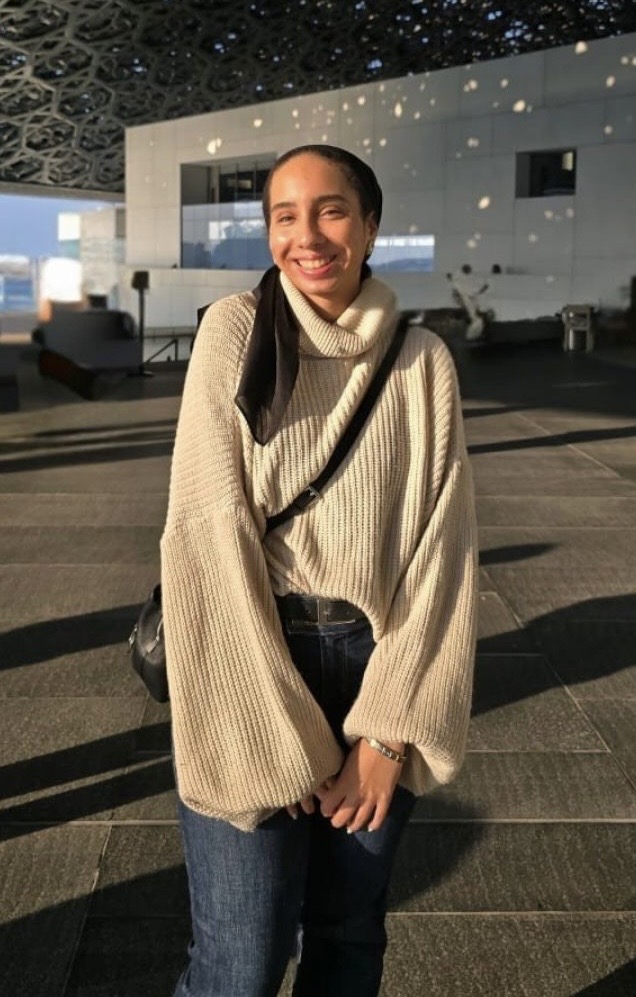
Today, that history still sits in the background of how the region is being shaped. For SAL Architects, founded by Salwa Samargandi, working in AlUla means staying close to the place and the people who use it. Established in 2020, the studio moves across architecture, landscape, and urban design, with a focus on restoration and adaptive reuse, alongside SAL Lab, a platform for material and technical research.
“We’re always questioning local materials and sources,” Samargandi says. “How we can use what’s already there in a way that makes sense for the environment.”
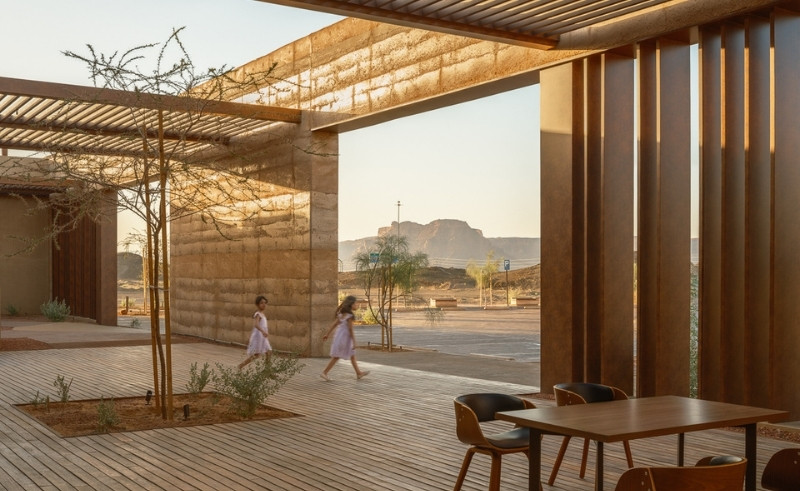
That thinking carries into a series of petrol stations set along AlUla’s main routes. What started as a straightforward infrastructure brief shifted through conversations with the client. The programme grew to include places to sit, pray, and spend time, not just pass through.
Built from locally sourced rammed earth, the stations sit low in the landscape, their earthy tones and simple geometry echoing the surrounding terrain. Shaded areas frame views of the desert, and a small exhibition introduces visitors to AlUla’s wider geography. “We wanted it to blend into the context,” Samargandi says. “You don’t really see it as a gas station. It’s a place for people and for the journey itself.”
SAL Architects also restored the Ammar Bin Yasser Mosque in AlJadidah, a twentieth-century building sitting between the Old Town and later expansion. Incremental additions had obscured its clarity, so the team focused on revealing the mosque’s key elements while creating spaces for public gathering.
Service areas were relocated, new seating zones added, and the rear courtyard opened to allow visitors to experience the mosque alongside worshippers. “The mosque carries the memory of AlUla’s community and landscape, our role was to carefully restore its essence, working with light, material, and proportion so it remains a living space for prayer and gathering,” Samargandi tells SceneHome.
A similar approach guided the restoration of the Omar Bin Abdulaziz Mosque. Subtle interventions improved light, circulation, and spatial clarity while respecting the building’s original character. Both mosques continue to function as places of worship and community connection.
Across all these projects, the studio’s work in AlUla is rooted in the people who use the spaces. “Architecture begins with listening to the place, it’s about building for the people of AlUla,” Samargandi says.
Related Articles
Trending This Week
-
-
 Sep 10, 2026
 -
 Sep 10, 2026
 -