





Hana Mekawy’s Object Disorder Creates Frankensteinian Furniture
Hana Mekawy’s Object Disorder turns grout, sequins, disco tile and visual debris into Frankensteinian furniture.

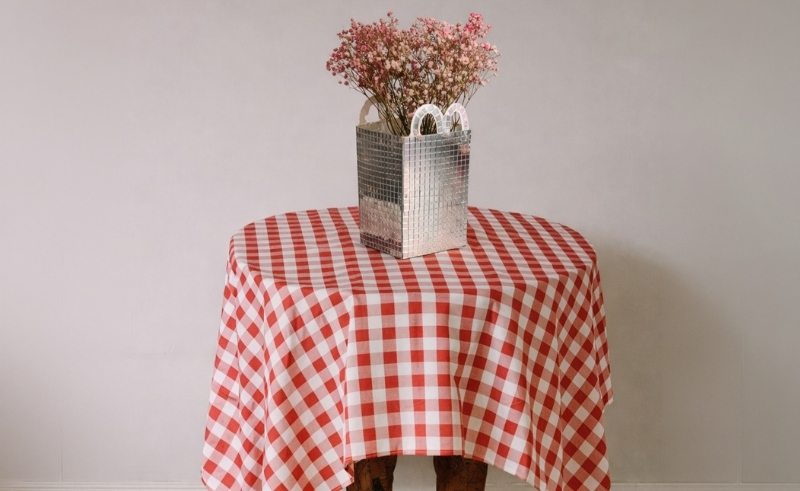
Somewhere in Cairo, a McDonald’s Happy Meal box stared at its own greasy cardboard walls, reckoned with the humiliation of its condition, and spiralled into an existential crisis. Hana Mekawy happened to find it at exactly the right moment.
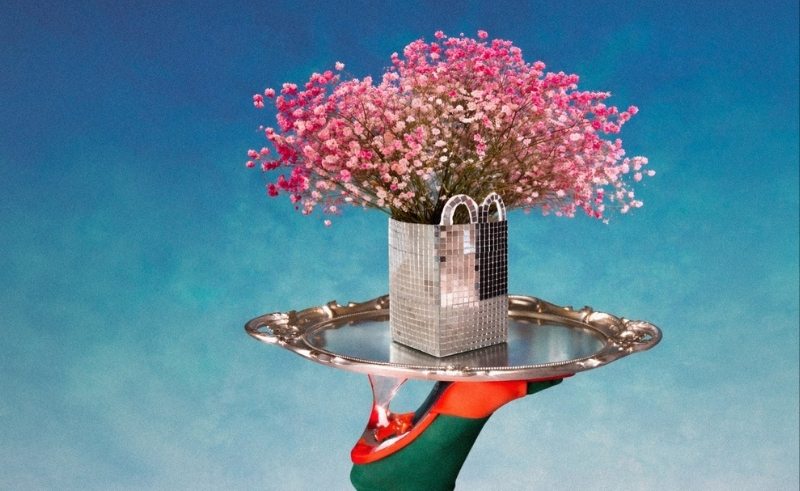
"Why is this a Happy Meal box?" she remembers thinking. "Why can't we give it a personality, maybe let it be a disco vase."
She then grouted it, tiled it with mirror disco tiles until it caught light from every angle, crowded with small silver reflections. When she was done, she had the first Object Disorder piece, and the brand had its founding myth.
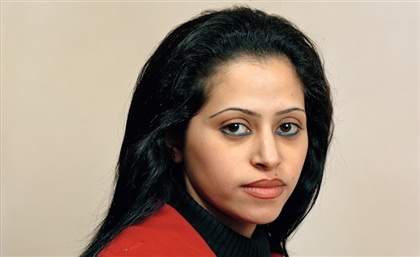
Object Disorder is Mekawy’s furniture design practice, though “furniture” feels too stable a word for what she makes. Trained as an interior designer, Mekawy always found herself more consumed by the furniture inside the room than the room itself.
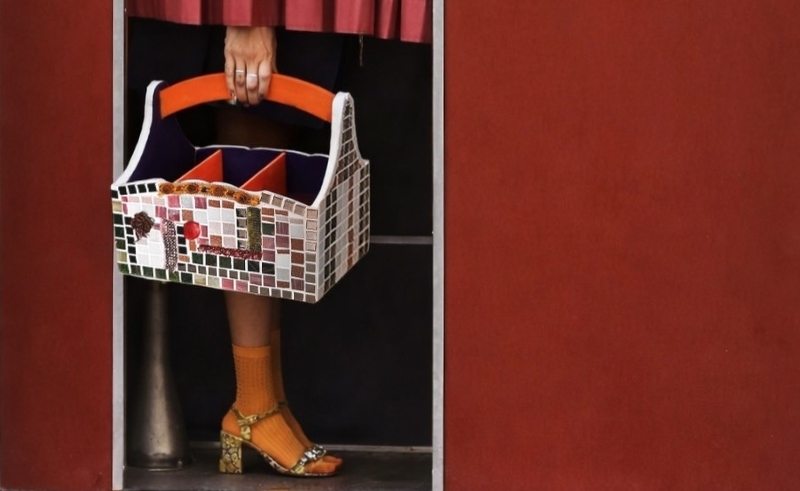
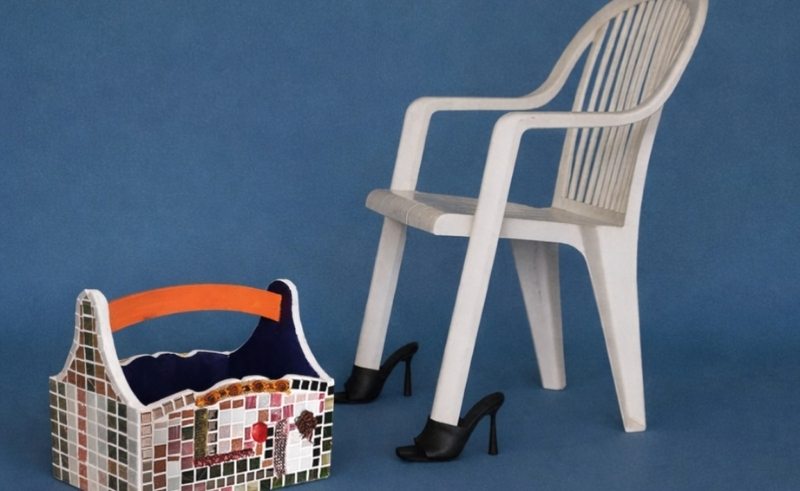
The objects she makes sit in a truly unclassifiable territory, chimeric by nature, hybrid forms composed from visual languages that should cancel each other out but instead become strangely cohesive.
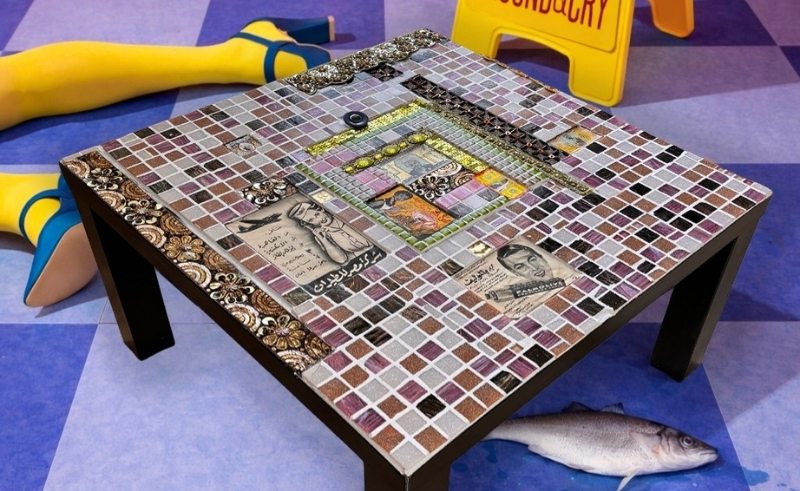
They are furniture, but they could be sculptures or installations and beautifully controlled collapse. They are covered in mosaic tiles, sequinned fabric, grout, buttons collected from around the house, clippings from decades-old Egyptian magazines - vintage advertisements Mekawy fell on at Souq Diana, full of faces and perfume labels and Arabic typography that now press up against disco mirror and embroidered trim on the surface of a coffee table. "I felt like it created some dialogue in the furniture piece," she says of the vintage clippings. "That was the most interesting thing to play with."
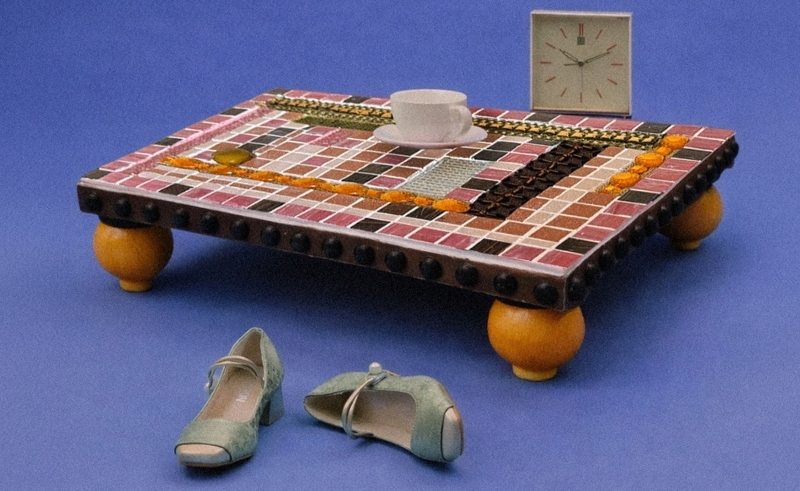
There is no clean way to describe the faintly Frankensteinian aesthetic. "Everything I make is just disordered," Mekawy offers, by way of explanation. "You wouldn't imagine it existing somewhere mixed with fabric, mixed with sequins, mixed with buttons, there's grout involved, there's so many materials involved. Yet it looks put together, but it's not, if that makes sense."
The process Mekawy uses is as intuitive as the results are. Mekawy follows no blueprint and there is no design brief she presents to herself before cutting into a roll of embroidered trim. "It's very trial and error," she says. "I love pushing the materials outside of their box and their intended purpose. I put it in the wall, in the tiles then I start cutting them into abstract forms and seeing what these patterns could create. Would this look nice here? It's me negotiating with the materials."
The negotiation often feels like sharing the crisis. Months before Object Disorder came into being, Mekawy was in one herself. “The objects themselves don't fully know what they are yet and honestly, neither do I sometimes. But I like the confusion, and I like the idea that not everything needs to make sense."
Threaded through all of it is humor; think of it as absurdity as a legitimate design tool. "Humor makes the pieces feel alive. A lot of these objects, to be honest, they're a bit absurd. They're not your typical."
Mekawy’s fiancé is in on it too. Every Instagram post is accompanied by an original audio piece he composes in response to the object, so that whatever visual surrealism she builds acquires an acoustic dimension that belongs to that particular object and its particular crisis.
Right now, Object Disorder is in the middle of a becoming with a proper collection in progress an armchair, a bench, a coffee table, a mirror fan and a recent commission that gave the work new coordinates; a giant heart-shaped sculpture built for a wedding, designed to hold guests' handwritten notes for the couple.
- Previous Article SceneNoise x Amsterdam Dance Event Present CROSSFADE: Egypt
- Next Article 100 Pieces of Abbasid Gold Jewellery Unearthed at Qassim