





Gaza's Green Rock Builds Temporary Shelters From Bricks Made of Rubble
Suleiman Abu Hassanin is not an engineer. Since 2021 he and three other displaced men have self-funded Green Rock, developing a cement-free brick from Gaza's rubble using a Roman technique.

Israeli attacks have destroyed or damaged more than 90% of homes in Gaza and displaced more than 90% of its people, according to the United Nations Human Rights Council. The destruction has left more than 60 million tonnes of rubble, the UN Environment Programme reports, roughly the weight of 10 Great Pyramids of Giza.
Green Rock, a community initiative in Gaza, is turning that rubble into bricks. The aim is to let displaced families rebuild from the remains of their own houses.
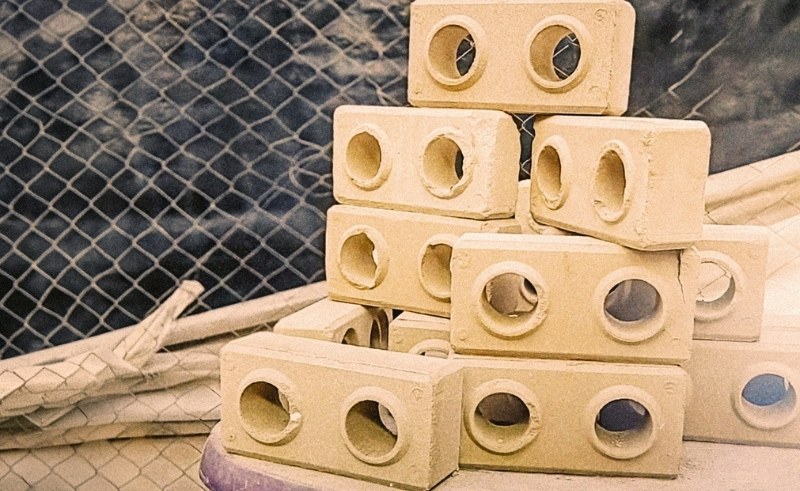
Four men run it out of a small workshop. Founder Suleiman Abu Hassanin recruited three other displaced men to produce what they call LEGO bricks, which do in fact look like LEGOs. But unlike most bricks, these contain no cement at all.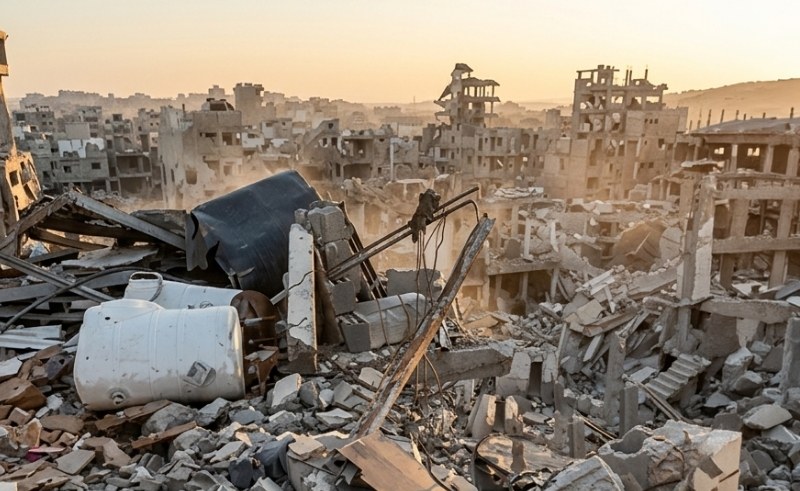
"The idea really goes back to before the war," Abu Hassanin said when SceneHome spoke to him in May. "In Gaza we'd had wars before this last one, in 2021, 2018, 2014, 2008, and we had a lot of rubble we weren't making any use of. And we'd been under siege for 20 years, a siege on cement and on building materials."
Conventional concrete bricks are around 10% cement, which is what gives them strength. Cement is also expensive, slow and environmentally costly, and it has been restricted from entering Gaza for years. Green Rock's answer was to build a brick that doesn't need it.
"In the most recent phase we succeeded in developing a zero-cement brick using the technique the Romans used in antiquity, where the bonding between the particles happens through the carbonation process," Abu Hassanin said.
The process is manual throughout. The team crushes rubble by hand, removes impurities and sifts the material into a metal press. The press moulds the rubble and soil mixture into a single brick with two large holes, sized to run electricity and water lines through.
Abu Hassanin says the result cuts construction costs by up to 60%, partly because the bricks need no plastering or finishing. He says they also insulate better than concrete.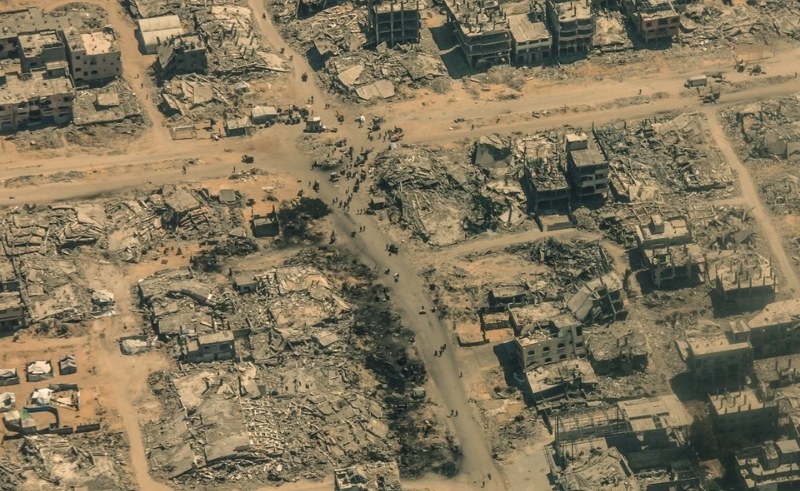
Gaza has seen a version of this idea before. Green Cake, founded in 2016, made cheaper bricks from rubble and coal ash to work around the same blockade. Its founder Majd Mashhrawi told Middle East Eye that the mixture still required some concrete. Green Rock's claim, however, is that it has removed cement entirely.
Abu Hassanin came to this from a field outside of construction.
"Actually, I'm not an engineer," he said. "My specialisation is very different and very far from engineering; my specialisation is Management Information Systems. But my passion, my love of finding a solution, and my belief in myself that we can make something out of nothing, that's what pushed me and encouraged me to keep going on this path."
He wants the families he builds for to work on the bricks themselves. "At Green Rock we have plans for the displaced person themselves to help us, to go from being a recipient of aid to being an essential part of the solution to the problem," he said. "This will create a circular economy for the displaced families; everyone will work."
The obstacles are constant. With Gaza's infrastructure largely destroyed, electricity, materials and funding are all difficult to hold onto. Rubble also carries a risk of asbestos, which Abu Hassanin says he is watching closely.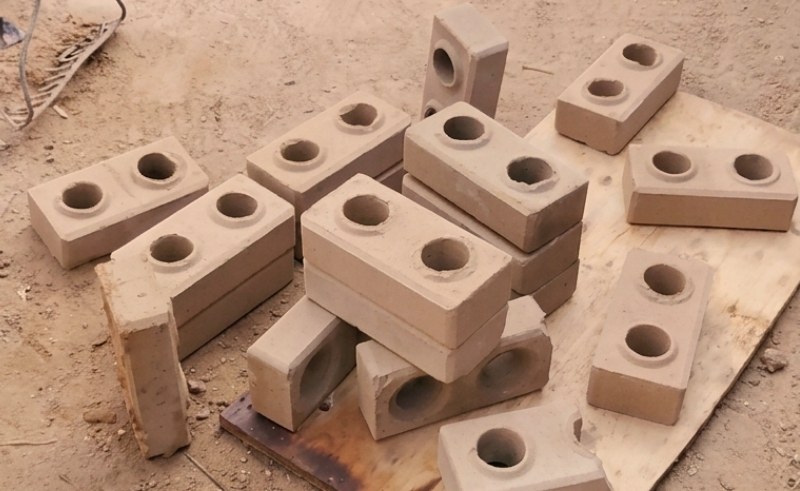
"We're following up with the Debris Management group in the Gaza Strip, which identifies the locations where asbestos is present," he said. "They're now working in partnership with UNDP to identify the sites that contain asbestos."
Money has been the hardest part of the project. Green Rock has funded itself since 2021, spending between 10,000 and 13,000 US dollars of its own, with some support recently from Palestine's Ma'an Hub for Innovation and Entrepreneurship. A GoFundMe was not able to raise funds, because the platform could not verify Abu Hassanin's identity from Gaza, and there is no other donation link in its place.
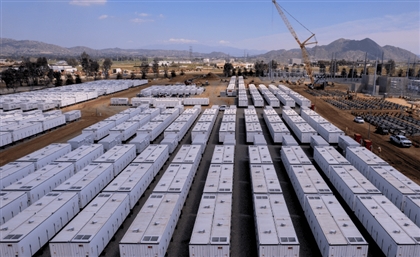
Construction hasn't started yet, but the first prototype is finished and the team is ready to begin building the three by four metre shelters. This work earned Green Rock a nomination for BUILD Magazine's 2026 Sustainable Building Awards, run by a UK publication covering global construction and property. The winners will be announced in December.
"This will have a positive impact psychologically, socially, and economically," Abu Hassanin said. "God willing."