





Elias Khuri Revisits an Unbuilt West Bank Town Amidst Heritage Threats
As access to Sebastia's heritage sites becomes increasingly restricted, Elias Khuri revisits an unbuilt proposal.
For years, Sebastia has been at the centre of conversations around heritage preservation in Palestine. Located northwest of Nablus, the hilltop town contains layers of history that stretch across centuries, from ancient Samaria and the Roman city of Sebaste to the Ottoman village that remains inhabited today. Roman columns stand among olive groves, agricultural terraces extend across the surrounding hills, and archaeological remains sit alongside a living community.
Access to that heritage, however, has become increasingly restricted.
It is this reality that led Palestinian architect Elias Khuri, in collaboration with Davide Pagliarini, to revisit an unbuilt proposal he first developed in 2011. Recently republished, the project sought to reconnect residents with the archaeological landscape through a pathway and visitor centre designed in response to the site's political and physical divisions. "Sebastia is a beautiful but complicated city," Khuri tells SceneHome.
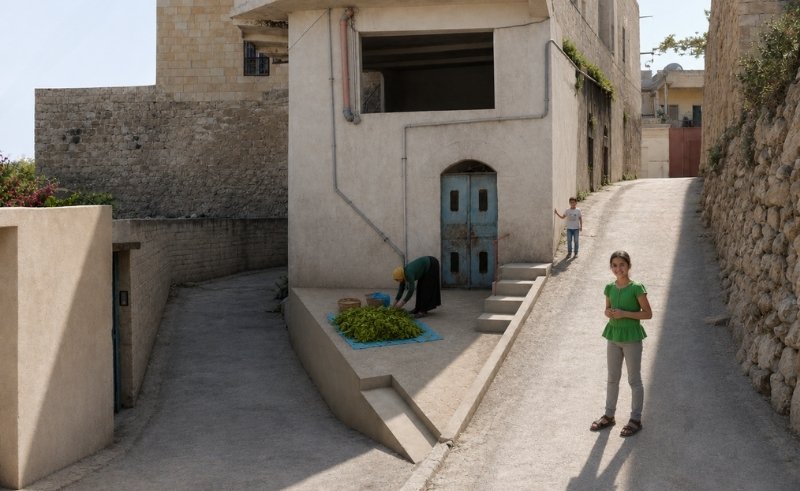
Like much of the West Bank, Sebastia is divided between Areas A, B and C. Residents live primarily within Areas A and B, while much of the archaeological landscape falls within Area C. The archaeological remains, including much of the Roman city, sit within the occupied part of the town, creating a physical separation between the community and heritage sites that form an important part of Sebastia's history.
The project emerged from a desire to create a connection between the village and the historic landscape despite these conditions. Unable to build extensively within the archaeological area, Khuri focused on a pathway that could guide people through the site while supporting everyday activities within the town. "The aim of the project was to create a pathway that would try to link the people with the historical city," he says.
The proposal followed existing routes through Sebastia, introducing a series of lightweight interventions positioned at points where they could support both visitors and residents. "We wanted the pathway to become integrated with the functions of the people in the city," Khuri explains. Steps, seating areas and small structures were distributed along the pathway, creating places for gathering, resting and informal use.
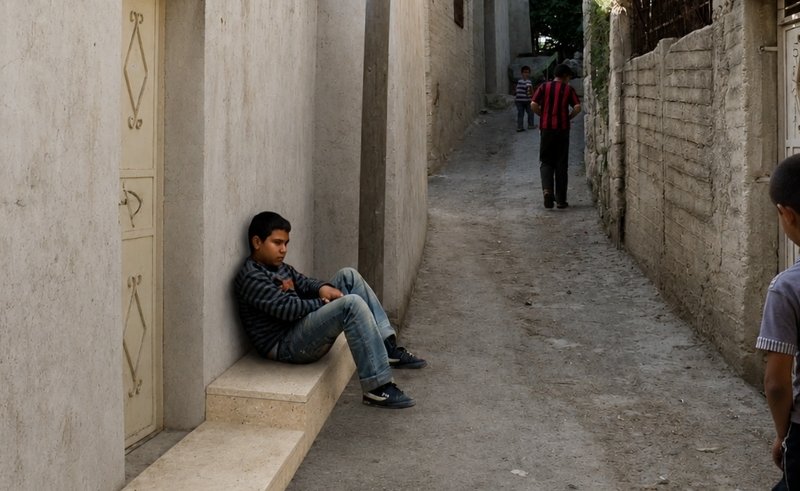
Some interventions were designed to accommodate local vendors, while others could be used by children and residents moving through the site. As visitors progressed along the route, they would encounter a sequence of spaces connecting daily life in the village with the archaeological landscape beyond.
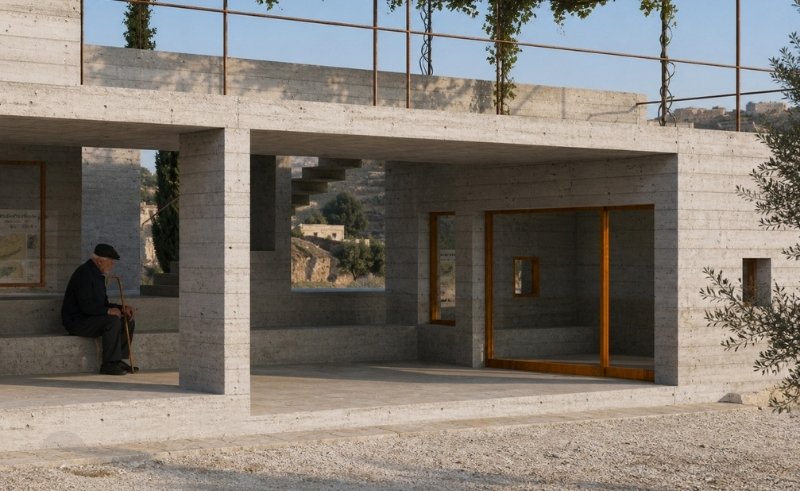
The pathway concluded at a proposed visitor centre overlooking the Roman ruins. Positioned on elevated ground, the structure occupied a large open area created by the fragmentation of the site. From this point, visitors would have been able to look directly across the landscape towards the archaeological remains scattered among the olive groves below. "We are trying to visually connect with the ruins, the structure is trying to absorb this emptiness and visually bring the ruins closer," Khuri says
Conceived as a lightweight structure, the building was organised around a series of indoor and outdoor spaces. The proposal included a patio, a garden planted with local species, a small store and an outdoor seating area formed by stone benches integrated into the topography. An auditorium provided space for visitors to learn about the history of Sebastia and the ideas behind the project itself. Stone steps built into the hillside led to the roof, where visitors could look out across the archaeological landscape from an elevated vantage point.
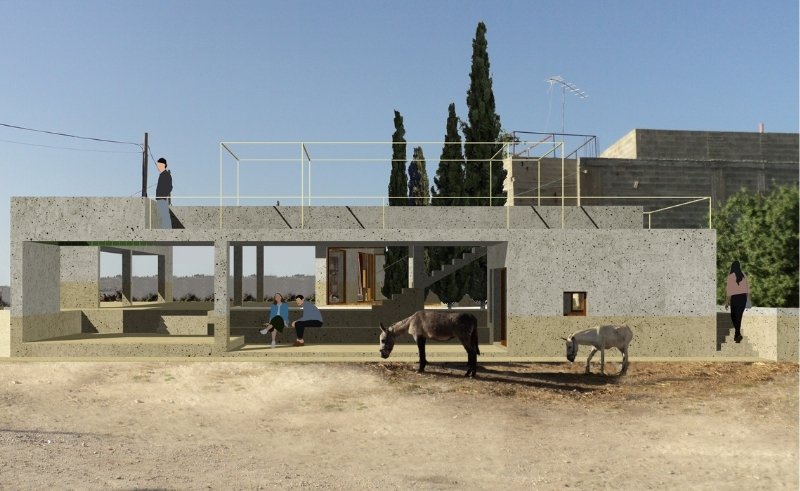
The building's irregular form drew from the character of Sebastia's built environment. A stone base anchored the structure to the hillside, while its geometry responded to the village's informal architecture and the site's natural topography. The terrain itself helped shape terraces and seating areas around the building. "What we're trying to say is that informal architecture is beautiful," Khuri explains.
Landscape formed an important part of the proposal. The planting strategy drew directly from species found throughout Sebastia, including grapevines, almond trees, herbs and local apricot varieties. Many of these plants continue to play a practical role in daily life, providing food, shade and medicinal uses while reflecting the agricultural traditions of the region.
"When you visit the homes in Sebastia, you see grapevines in front of the houses," Khuri says. "Most of the plants we wanted to use were not just plants that look good, but plants you can eat or use in everyday life." The visitor centre also included spaces where women from the area could sell locally made products, extending the project's focus on connecting heritage, landscape and community activity.

Underlying the proposal was a broader architectural position that continues to inform Khuri's work. He describes Palestinian architecture as being shaped by interruption and incompletion, an idea that informed the language of the project itself. "The language I tried to use in this project is directly related to my belief of what Palestinian architecture currently is, it is an incomplete architecture, similar to the structure we tried to create," he says.
Although the project was never realised, it remains one of Khuri's most personal works. He decided to republish it at a moment when concerns over Sebastia's future continue to grow and efforts to preserve the site's heritage have become increasingly urgent. "There are people trying to save Sebastia at the moment, we're trying to work together to get the word out about the land being taken over as much as possible," he says.
"This project is very close to my heart, you feel the responsibility as a Palestinian architect to continue to bring Sebastia back into the conversation," he says. For Khuri, bringing the project back into public view is part of a wider effort to keep attention focused on Sebastia and its heritage.
- Previous Article SceneNoise x Amsterdam Dance Event Present CROSSFADE: Egypt
- Next Article Akedly: The Egyptian SaaS Startup Taking OTPs Beyond SMS