






Egyptian Designer Mohamed Ali Curates a Home of Style and Influence
Inside Mohamed Ali’s home, where cinema, literature, and global style merge as a personal, curated lived gallery.

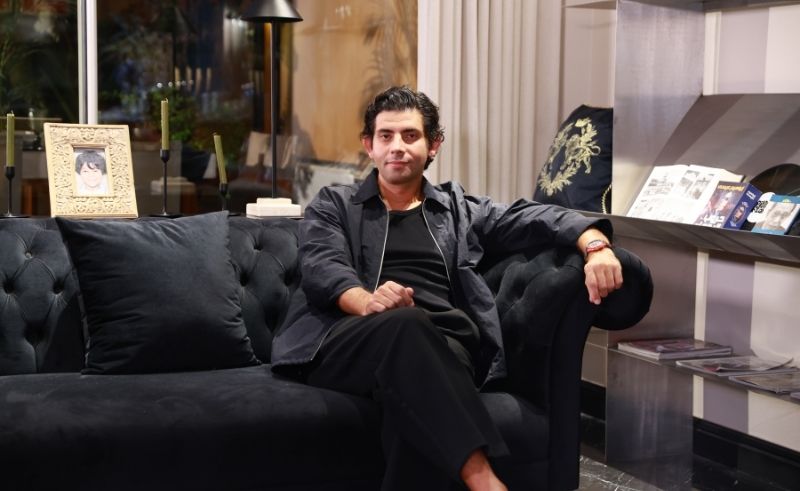
Mohamed Ali, Managing Partner of Design Avenue, brings the same compositional rigour to his home that defines his studio’s signature approach, a practice known for working with unexpected materials and combining contrasting styles. The interior of his home is shaped by the influences that have marked his life, from cinema and literature to music and cultural figures he admires. Rather than following a single aesthetic, the house unfolds as a reflection of his personal convictions and as a deliberate showcase of his collections, with every piece given its own stage, turning the home into a lived gallery of his tastes and passions.
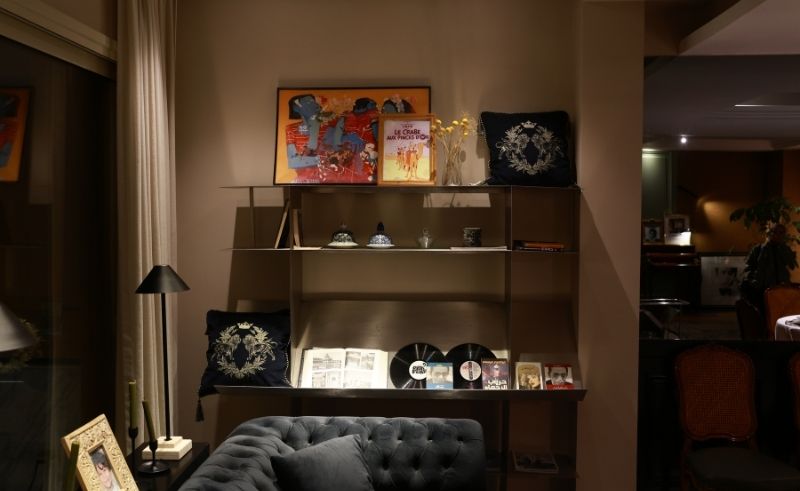
“The lobby reflects the world we are stepping into,” Ali says, welcoming us into the first space of his home. He calls it “the display area,” and it feels almost like entering a carefully curated gallery of his life and influences. Two Eclectic stainless steel consoles sit side by side, stacked with music, cinema, and objects he has collected over the years. Each piece hints at his interests, inviting a closer look. On the wall, three artworks catch the eye, but the one closest to his heart is the famous 1960 Schulke magazine poster of Muhammad Ali boxing underwater. “He wasn’t just a fighter in the ring,” Ali explains. “He was a fighter for freedom, for conviction, for living by his own principles.” Opposite the consoles lies a handmade Iranian rug, its intricate patterns and rich texture providing a tactile anchor to the objects around it.
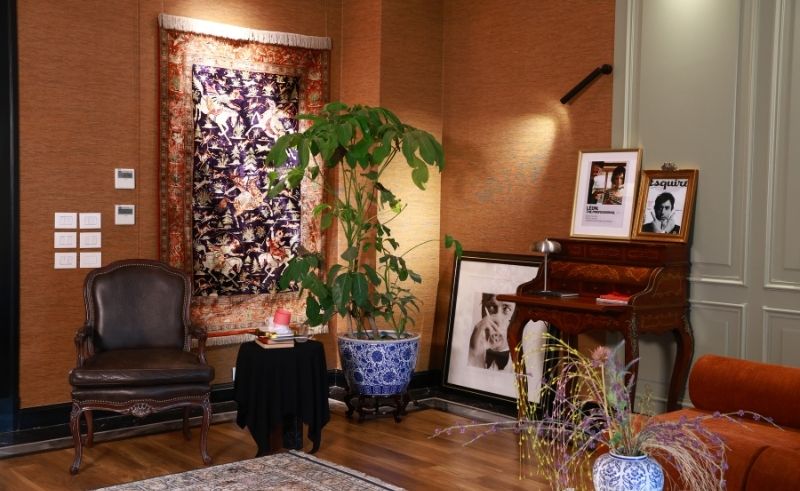
Moving from the lobby into the reception area, the first piece to command attention is a French console in the Napoleon style. Slender yet assertive, it rests on delicately carved legs with gilded accents tracing its edges. The craftsmanship is meticulous and ornamental, giving it a certain gravitas that introduces a classical layer to the space, setting a tone of timelessness before the room gradually reveals its more personal narrative.
This very corner is where his cinematic references gather. Above and around it, film posters of Roger Moore as James Bond, Léon: The Professional, and Robert Downey Jr. chart the thread of cinema running through the home. “This is the corner I love most,” he notes. It’s a layered vignette of influence where classical French detailing is paired with modern film culture.
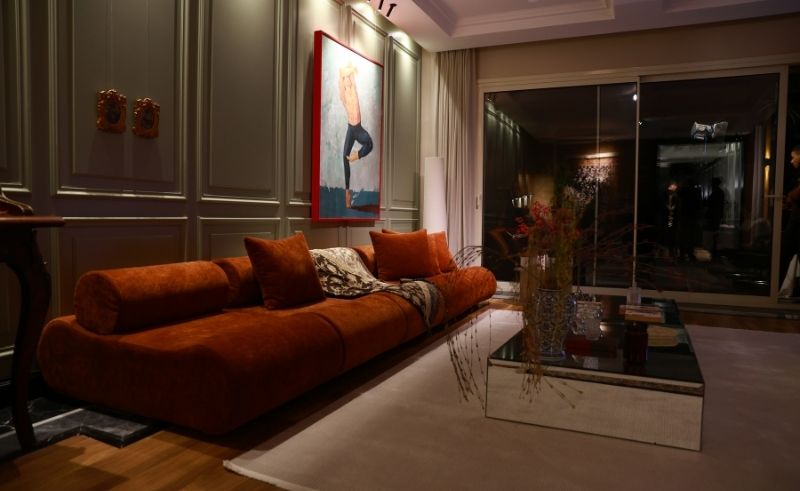
Beyond this corner, the reception opens into the main living area, where the atmosphere shifts to focus on interaction. An oversized sofa sits low to the ground, its generous proportions encouraging proximity and conversation rather than distance. The television, positioned laterally on a studio easel to camouflage it as a painting, is deliberately secondary. “I wanted people sitting in front of each other, not focused on the TV,” Ali says, reinforcing the idea that this is a space designed for exchange, not passive viewing.
Around it, the layers of reference continue. A painting by Egyptian artist Nour Abu Saada introduces a contemporary local voice, sitting alongside books by Mostafa Mahmoud and imagery of Giorgio Armani. Egyptian literary thought paired with global fashion iconography in a single composition mirrors Ali’s own range of influences.
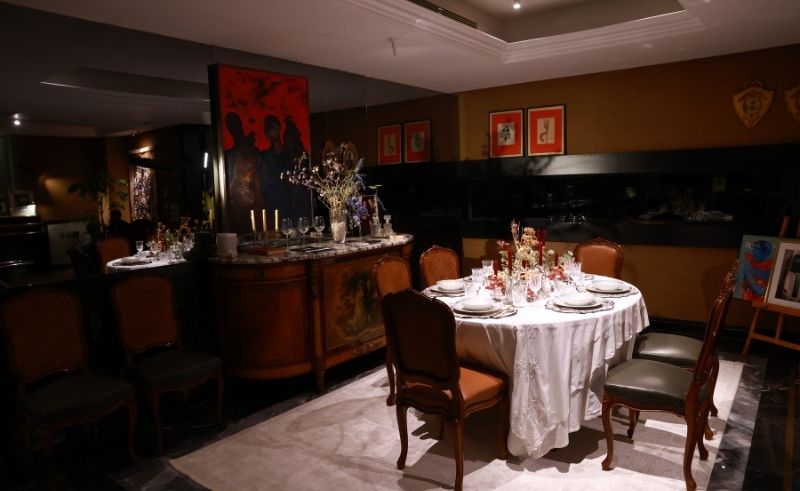
Mohamed Ali describes his dining area as “a collaboration of cultures,” a phrase that echoes the layered dialogue seen throughout the house. Once again, a French piece is paired with a painting by Egyptian artist Ziad Fawy, surrounded by personal photographs and carefully collected objects. His approach to dining is structured. “I don’t like phones, social media, or televisions at the table,” he explains. “I want people to sit as long as possible before and after the meal.” Here, the table setting is designed to prolong conversation and attention.
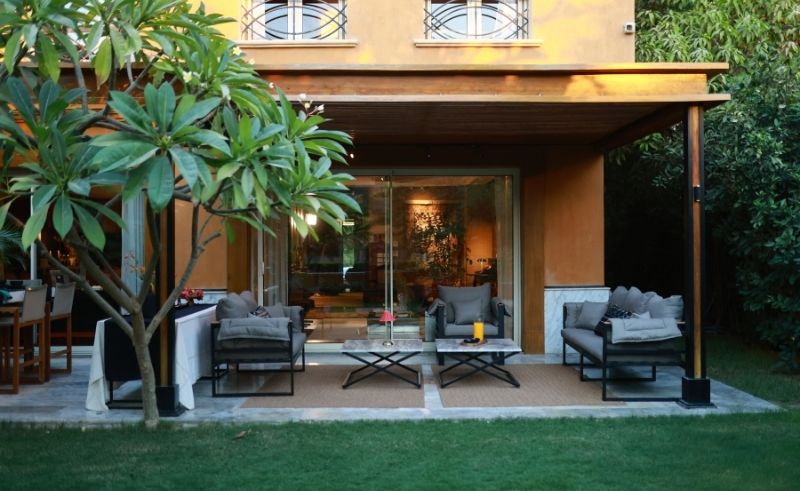
Opposite the dining area, natural light defines the reading area positioned closest to the sun. An Eclectic stainless steel library houses works by Ihsan Abdel Quddous, Ibrahim Eissa, and Mostafa Mahmoud—writers long associated with commentary, critique, and cultural reflection. The selection reinforces the intellectual backbone of the house, revealing a mind shaped as much by debate and discourse as by design.
Related Articles

Trending This Week
-

-
 Sep 10, 2026
 -
 Sep 10, 2026
 -