





Egypt’s Stadium Evolution Ahead of Its Potential AFCON Bid
We take a look at the nation's stadiums after the Egyptian Football Association announced its intention to bid for the 2032 or 2036 tournaments.

When the Egyptian Football Association announced its intention to bid for the 2032 or 2036 Africa Cup of Nations, the headline was about football. But the more compelling question sits elsewhere: what would Egypt’s stadium landscape look like by the time the tournament returns?
The nation’s football federation has indicated that the bid will move forward pending state approval, aligning with CAF’s shift to a four-year hosting cycle beginning in 2028. It’s a structural change that reduces the frequency of tournaments and, by extension, heightens the significance of each host selection. With the 2027 edition already awarded to a tri-nation East African partnership of Kenya, Uganda and Tanzania, future tournaments will be fewer, further apart, and likely assessed through a wider infrastructural lens.
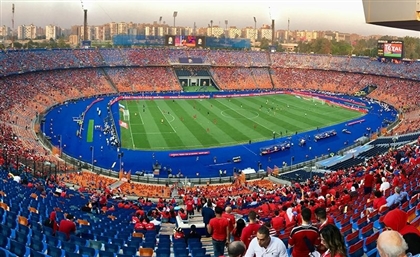
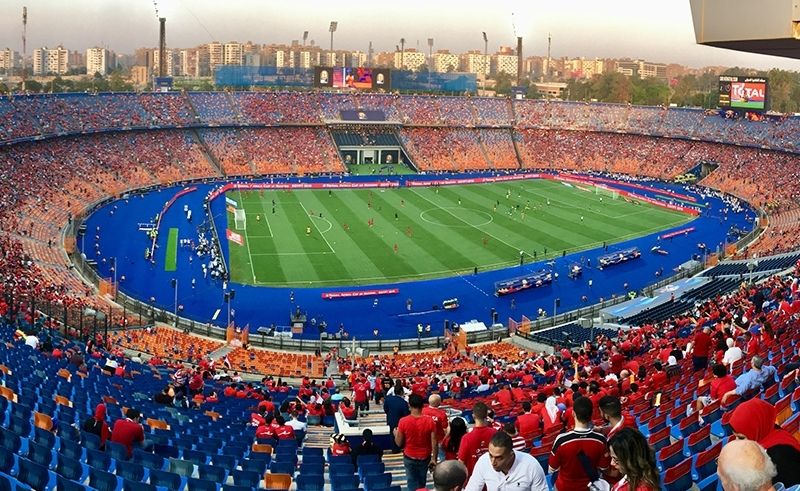
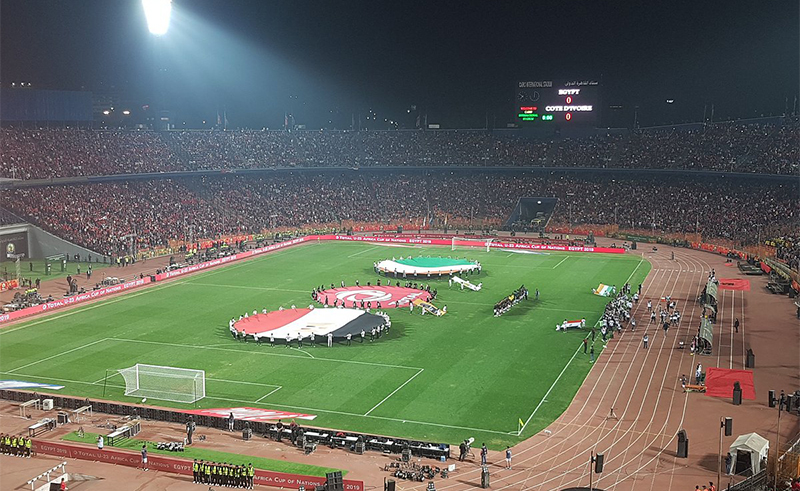
Egypt has hosted AFCON five times, most recently in 2019. Those tournaments relied on an established network of venues including Cairo International Stadium and Alexandria Stadium. These structures are rooted in a mid-to-late 20th century architectural logic — monumental, axial, concrete-forward. Built for capacity and ceremony, their forms prioritised spectacle and durability, with limited emphasis on environmental responsiveness or district-scale integration.
Parallel to that legacy network sits Borg El Arab Stadium, which opened in 2009 and is emblematic of a transitional phase in Egypt’s stadium design. Larger in scale and more infrastructurally ambitious, it marked a shift toward mega-venue thinking. It is the second largest stadium in Egypt and the third largest in Africa with expansive footprints, wider concourses, increased parking capacity but is still conceived primarily as a singular event destination rather than as part of a mixed-use district.
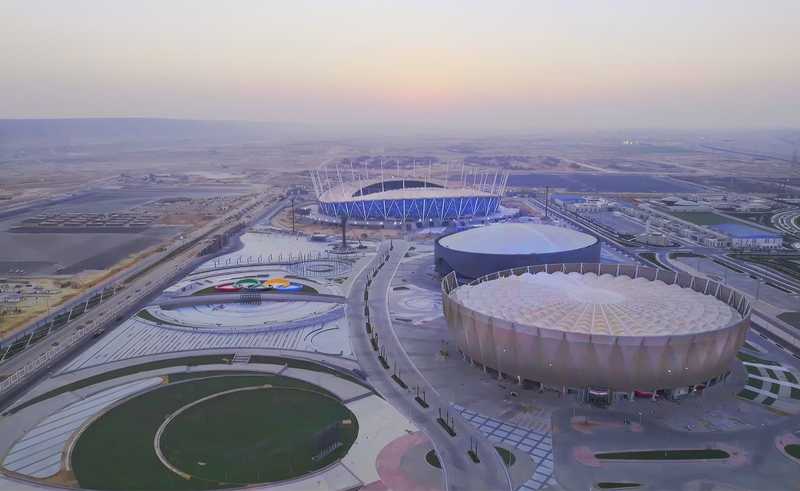
A bid in 2032 or 2036 would unfold within a different spatial vocabulary. Over the past decade, Egypt’s sports infrastructure has expanded outward, both geographically and conceptually. At the centre of that expansion is Egypt International Olympic City, anchored by MisrStadium.
Here, the stadium operates less as a standalone monument and more as an anchor within a master-planned campus, integrated with training complexes, athlete housing, medical facilities and layered circulation networks designed to manage both event surges and daily use. This shift from object to ecosystem marks a broader recalibration in how sporting venues are conceived locally.
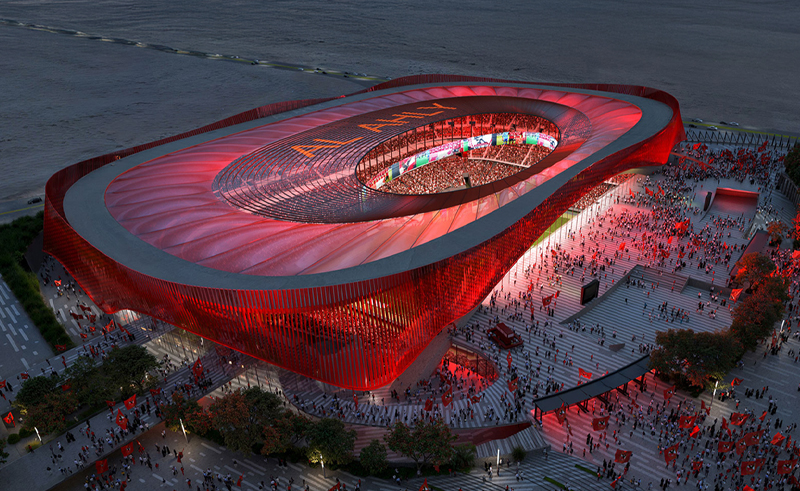
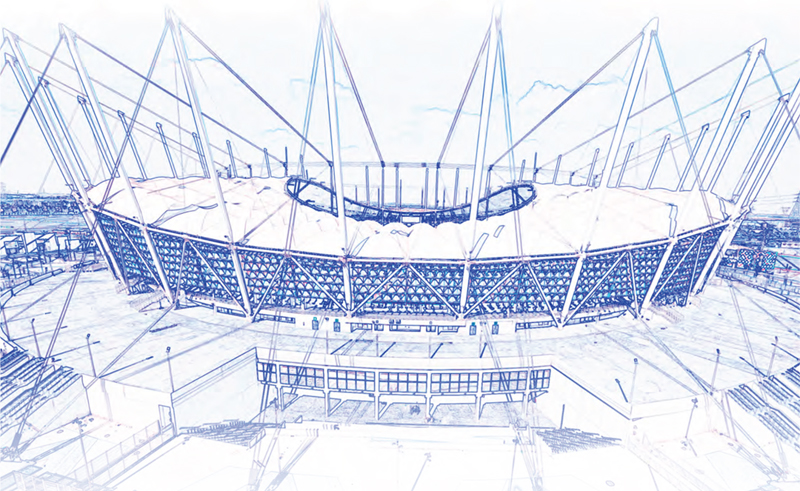
The unveiling of Al Ahly’s forthcoming 42,000-seat stadium, designed by Gensler in collaboration with Buro Happold and investor El Qalaa El Hamraa, reinforces that recalibration. Positioned near Sphinx International Airport between Cairo and Alexandria, the project responds directly to aviation height restrictions by recessing the pitch below grade, effectively lowering the stadium’s profile while intensifying its internal atmosphere.
The surrounding landscape is not decorative but performative, assisting with passive cooling strategies in a climate where thermal management is central to stadium design. Its asymmetric bowl geometry and cable-net roof depart from the rigid symmetry of earlier Egyptian venues, favouring a more fluid, sculptural identity that reads dynamically from multiple vantage points. Beyond the arena itself, the development extends into a wider sports city framework incorporating educational, medical and religious components, embedding the stadium within a functioning urban micro-district rather than isolating it as a singular landmark.
If Egypt’s bid advances, it would not hinge on the unveiling of one signature project. It would present a layered portfolio. Legacy civic arenas that have already proven operational capacity, large-scale contemporary complexes conceived through integrated master planning, and next-generation stadiums designed around environmental logic and experiential intensity. In that sense, a future AFCON in Egypt would, in effect, become a snapshot of architectural transition from monumentality to integration, and from standalone arenas to infrastructure networks calibrated for both spectacle and daily life.