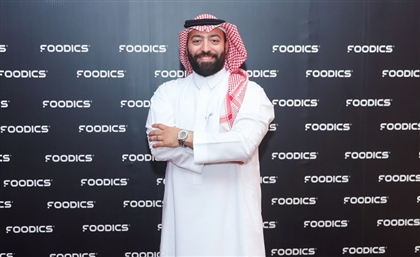






Datecrete Turns UAE Date Pits Into Cement-Free Design Material
Datecrete’s material made from discarded date pits has won a 2026 Seoul Design Award prize and reached two Dezeen Awards shortlists.

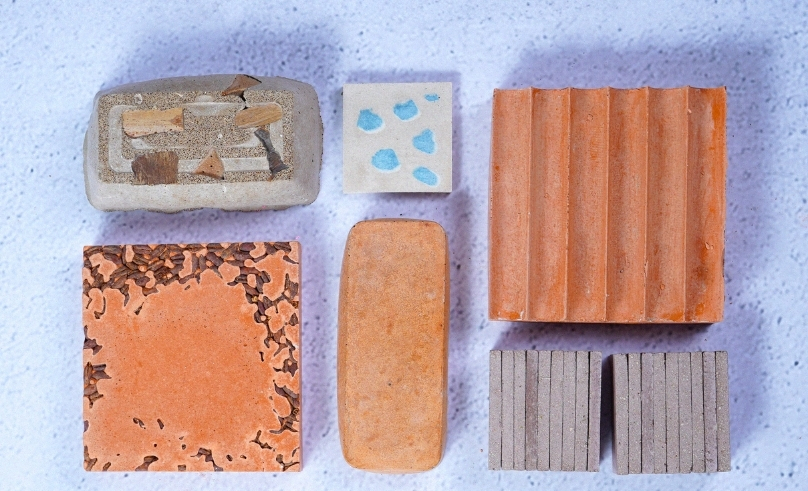
It looks like concrete and even smells like concrete, but its story begins with a date pit.
Every date leaves one behind, and across the Arabian Peninsula, the fruit is harvested and processed at an industrial scale, leaving its seed to be discarded.
Sara Farha and Khaled Shalkha saw potential in this by-product and began investigating how it could be turned into a building material.
Through research and repeated testing, the co-founders developed Datecrete, a concrete-like material made by grinding date pits and mixing them with a natural binder developed by the studio.
Their UAE-based practice, Datecrete Studio & Lab, has since won the designboom Special Prize at the 2026 Seoul Design Award.
The Seoul Design Award recognises projects addressing social and environmental challenges through design.
Datecrete received its designboom Special Prize in 2026 and is also shortlisted in Material Innovation and Sustainable Design at the 2026 Dezeen Awards.
"Concrete, brick and timber were once innovations themselves, materials are technologies, and they continue to evolve," Shalkha says.
Farha and Shalkha come from backgrounds in chemistry, architectural engineering and material science, and their aim has been to find a use for something that is often thrown away.
Their patent-pending binder system is designed to work without cement, resin or petrochemicals, allowing the ground date pits to form a concrete-like material. “We didn’t start with the assumption that date pits would work, we started by asking whether there was a scientific reason they might,” Farha says.
Date pits contain plant fibres that make them worth exploring as a potential building material. Other agricultural leftovers, including hemp, flax and rice husk, have also been studied for this purpose. Farha and Shalkha wanted to see how date pits could be put to similar use, developing a mix that would produce a solid material suitable for design applications.
Changing the mix could affect the finished material, so the team tested different combinations before settling on a version they could work with.
"Every variable influences another, changing the particle size and you affect packing density. Change the binder chemistry and you affect curing. Developing a new material is never a linear process," Farha explains.
The work has since moved beyond the lab into objects people can see and use. Datecrete’s catalogue includes furniture, tiles, panels, pavers and sculptural pieces, with options for different colours, textures and finishes.
The studio has also tested how the material holds up against sunlight, wear, moisture and heat as it explores its potential uses. Its Datecrete Signature 2026 collection features minimalist, futuristic tables and chairs made using the date-pit material.
For now, the studio’s applications focus on furniture and design elements, with larger-scale architectural uses still under exploration.
Alongside Datecrete, Farha is pursuing a PhD that documents the research behind the material. She hopes the work will help her and other researchers explore ways to use different kinds of agricultural waste in the future.
The project also stems from a broader interest in regional architecture. Buildings were once closely tied to the landscapes around them, using materials that reflected local resources, climate and construction techniques.
As building materials became increasingly global, many cities began to share similar material palettes, regardless of where they were located. “We wanted to ask what contemporary architecture in the Arabian Peninsula might look like if it evolved from today’s resources,” Shalkha says.
To develop the binder, the studio looked at regional building technologies that predate the widespread use of Portland cement, using that research as a starting point for its patent-pending natural binder system. The team then tested and adapted the system specifically for working with date pits.
The team then used material testing to develop a system suited to working with date pits.
For now, date pits remain the studio’s main focus, supported by a supply chain the founders have developed around them. But they see room to apply what they have learnt to other agricultural leftovers, too.
Their wider ambition is to find ways for resources from the region’s food industry to become useful in its building industry.
For Farha, that evolution starts with the choices designers make about the materials they use and where they come from.
"I’d like architects to become curious again about where materials come from and why they’re made the way they are," she says.
Datecrete begins with a familiar regional crop and a part of it most people rarely think about. The fruit is eaten, the pit is left behind, and Farha and Shalkha are exploring how that discarded piece could find a place in the spaces people live in.
Related Articles

Trending This Week
-
-
 Oct 15, 2026
-
-