





Bahrain’s First Indoor Equestrian Arena at the Royal Stables Complex
Palm & Palazzo designs an indoor dressage arena within Bahrain’s royal stables, blending tradition and structure.

The royal stables in Zallaq already carry a distinct architectural identity shaped by Bahraini building traditions. When architectural and interior design studio Palm & Palazzo was commissioned to design an indoor horse arena within the site, the brief was to create a training facility that responds to the existing character of its surroundings while accommodating the requirements of Bahrain's national dressage team.
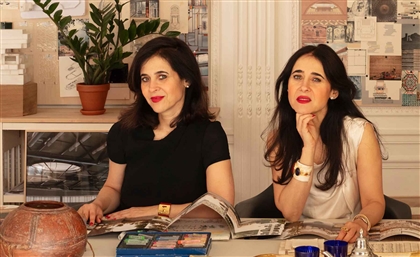
The project, known as the Alfursan indoor horse arena, forms part of the wider royal stables complex. Designed as an indoor facility for dressage training, an equestrian discipline where horse and rider perform a series of controlled movements guided by subtle cues and years of training, the arena introduces a series of spaces for riders, horses, and spectators within the grounds of the royal stables. “The inspiration was the sport and the surrounding of the plot, it's all about the harmony between the horse and the rider," says Maryam Al-Amsari, founder and creative director of Palm & Palazzo.
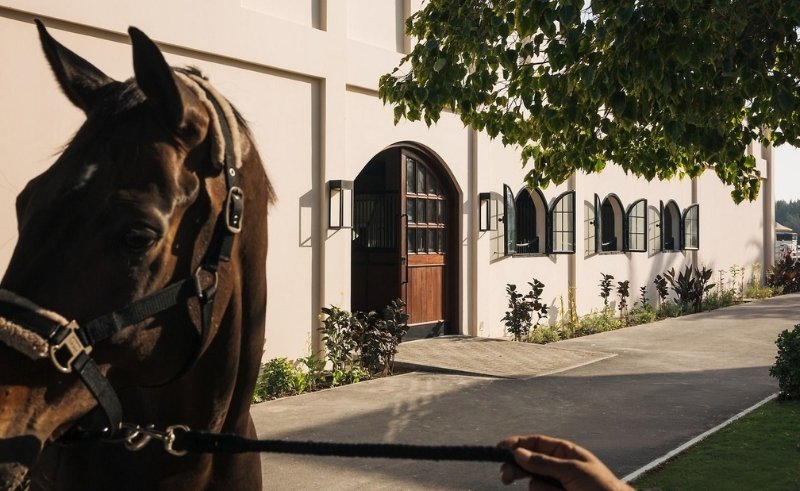
The commission came from Shaikha Noora Bint Hamad Bin Isa Al Khalifa, head of Bahrain's national dressage team, who sought an indoor arena where the team could train within the royal stables. For Palm & Palazzo, the response began with the architecture present on site. “The royal stables already have the Bahraini architecture all around, so what we wanted to do is adapt that in the indoor horse arena, but with a twist,” Al-Amsari explains.
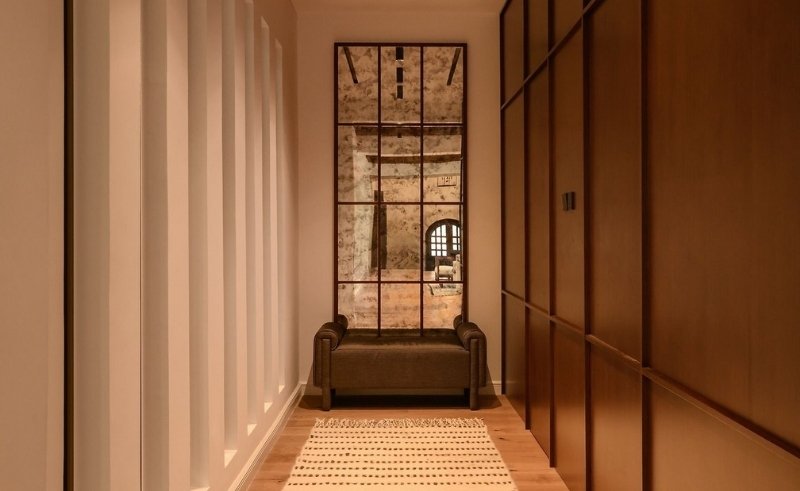
The studio drew from the proportions and detailing of the surrounding buildings, carrying familiar architectural elements into the new structure to establish continuity across the site. Particular attention was given to the use of danchal, a traditional Bahraini timber ceiling system that appears throughout the project. “At the entrance where it leads you to the majlis, the view deck and the horse hallway, we have that same language continued inside the horse box area and also the majlis itself,” Al-Amsari notes.
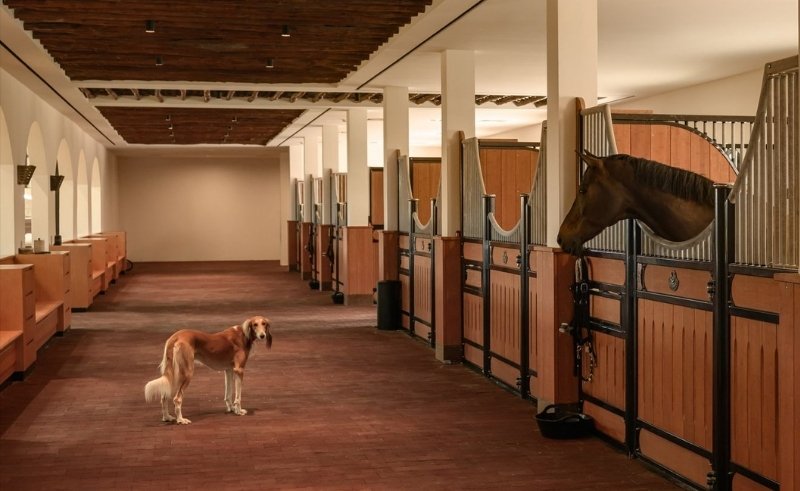
At the centre of the project is the main riding arena, enclosed within a steel structural frame. Around this volume, supporting functions are arranged in sequence. A corridor lined with seven horse boxes runs alongside the training space, while storage and service areas support the daily routines of riders and horses.
The arena was designed not only for training but also for viewing. An elevated viewing deck overlooks the arena from approximately two metres above the riding surface, providing clear sightlines across the training area. “The viewing deck is higher than the horse arena training area, so that have a better view. It's a seating area where stay there and chill and look over the whole place,” Al-Amsari adds.
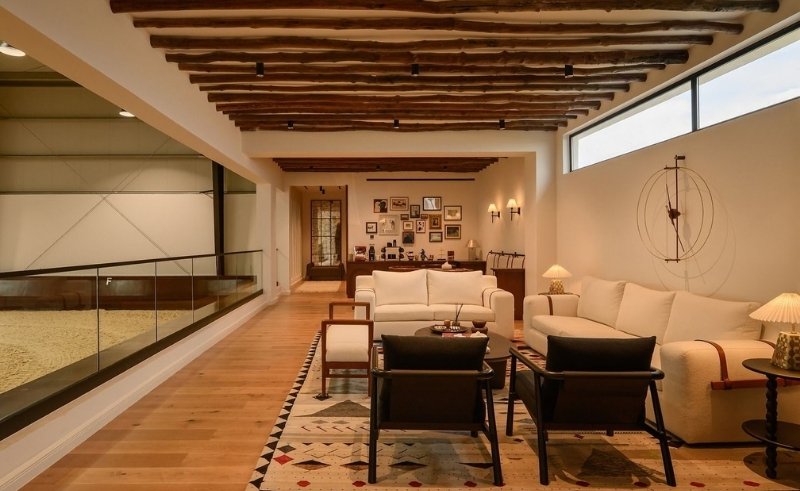
The building is accessed through three separate entrances. One leads directly to the riding arena, another serves the horse boxes and support spaces, and a third provides access to the viewing areas above. This arrangement allows training, horse care, and spectator activities to operate in parallel while keeping circulation routes distinct throughout the facility.
The structure itself presented one of the project's primary challenges. As Bahrain's first indoor horse arena, the project required a large, enclosed space capable of accommodating equestrian training while responding to the architectural character of the wider complex. “It was a challenge since it was the first of its kind in Bahrain, the challenge was the structure itself. How are we going to make it look as good as possible?" Al-Amsari reflects.
The arena combines a steel frame with areas of blockwork, allowing the structure to remain partially visible throughout the building. Rather than concealing the construction entirely, Palm & Palazzo worked with the dialogue between exposed steel and masonry elements to define the interior character. The site's location also informed several design decisions. Positioned within an open area of Zallaq, the arena is exposed to strong coastal winds due to the absence of surrounding development. “It's an open area, you don't have any high-rise buildings or any buildings at that area,” Al-Amsari notes.
The site's exposed conditions informed the treatment of the surrounding landscape. Palm trees and other climate-appropriate planting were introduced around the perimeter to form a protective edge around the arena. “Landscaping helped a lot, creating boundaries around the arena itself, again with palm trees and also other types of planters,” Al-Amsari explains. The planting strategy was developed around species suited to the local climate while supporting the long-term resilience of the site.
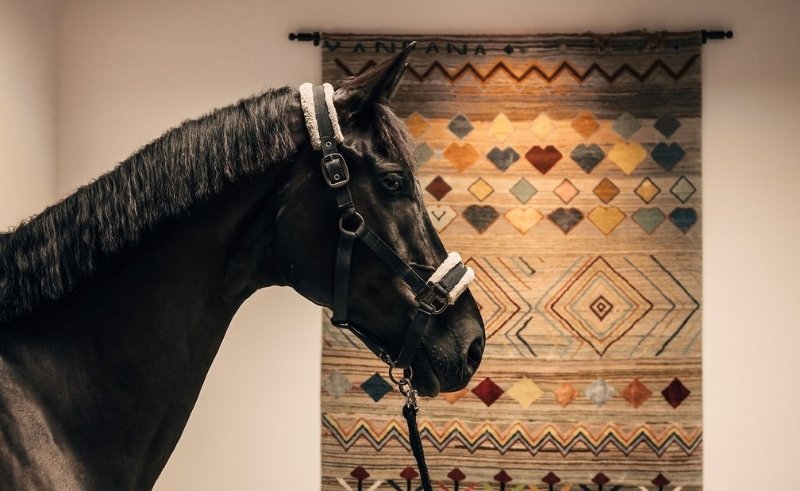
Alongside its equestrian programme, the project incorporates works by Bahraini artists throughout the interior. Integrated into circulation routes and gathering spaces, the artworks contribute to the daily experience of the building and reinforce its connection to local creative culture. The arena was designed to support both daytime training and evening use, ensuring the facility can accommodate the varied schedule of the national team throughout the year.
- Previous Article How Mahmoud El-Gohary’s Vision Led Jordan to the 2026 World Cup
- Next Article The SceneStyled Moonchild Edit