





Artist Mariam Anwar Revives the Colours of Ancient Egypt
By reviving ancient Egyptian pigmentation, Mariam Anwar transforms tempera into vibrant, hand-painted modern furniture.
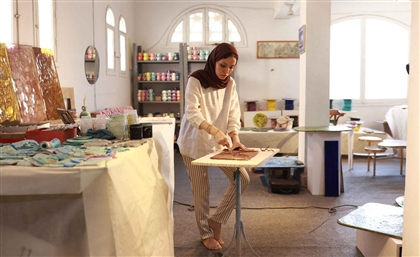
Looking at ancient Egyptian temples, it’s impossible not to notice the colours. Bright, detailed, and still visible after thousands of years. The trick? Tempera, the technique the Egyptians used, mixing mineral pigments with egg yolk to make their walls come alive. Mariam Anwar works with the same method, adapting it for wood furniture and miniatures that bring those ancient techniques into contemporary interiors.
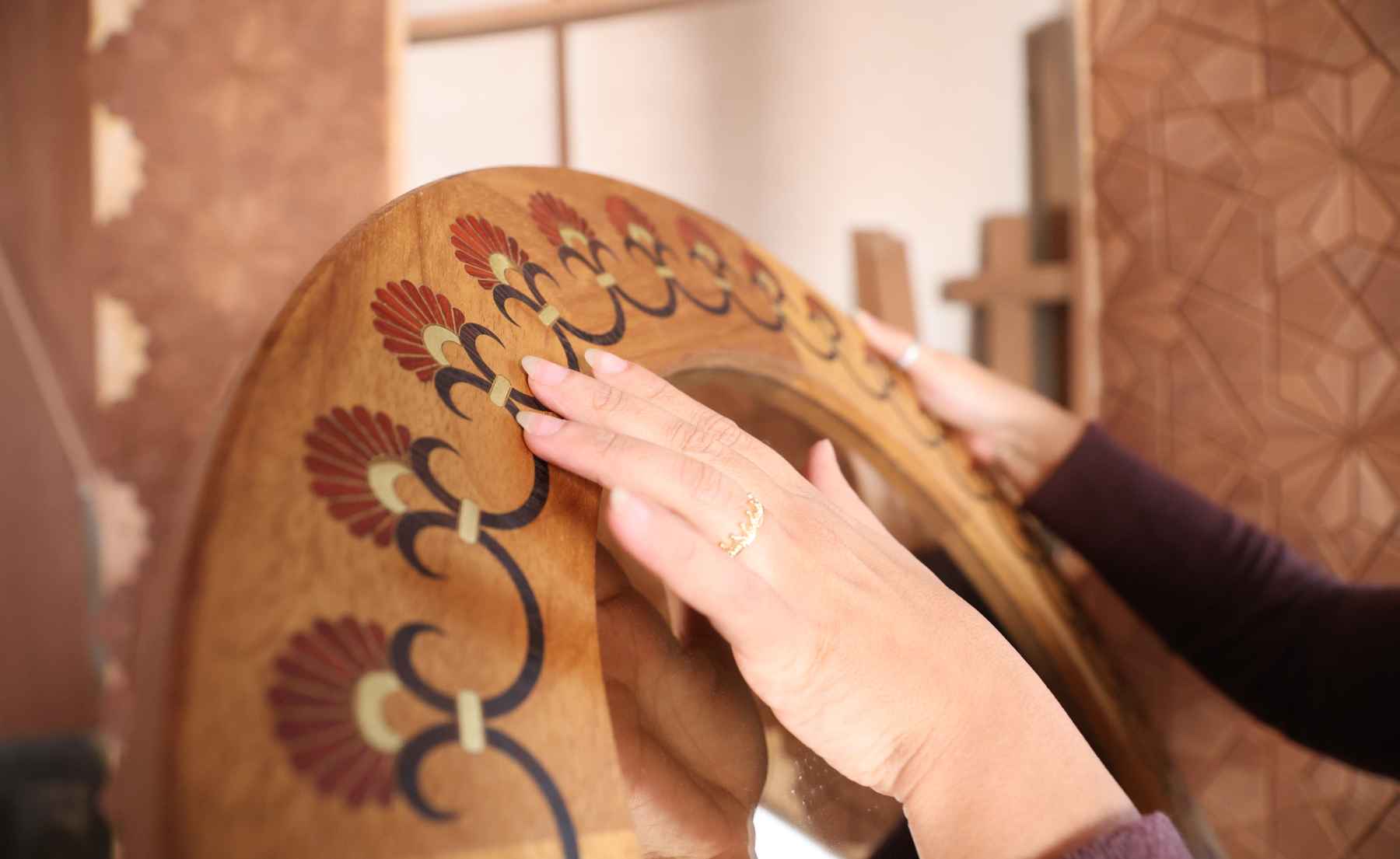
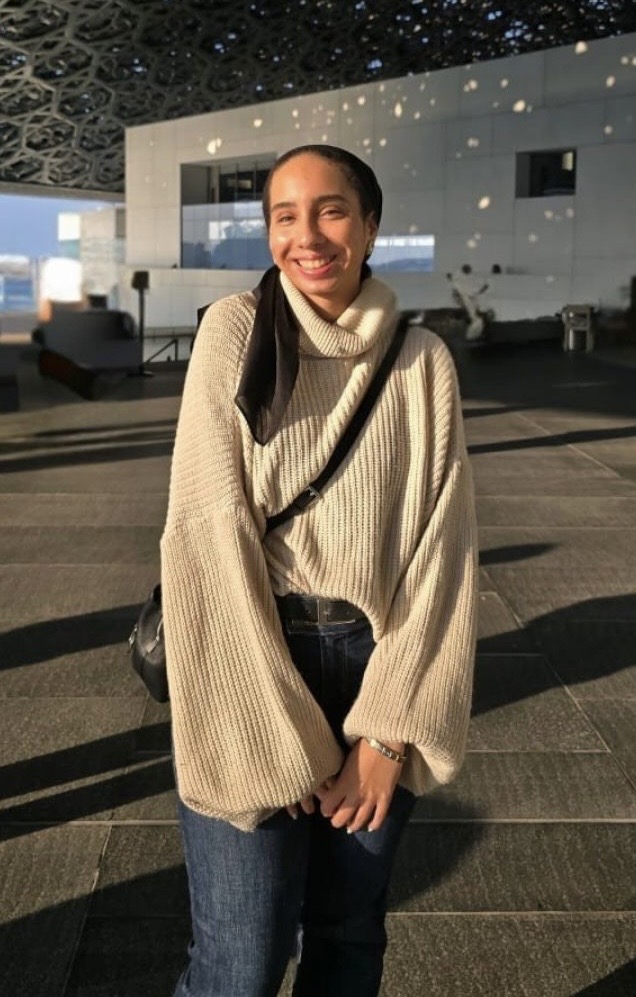
“I’ve always loved colours,” Anwar says. “When I joined Jameel House, I discovered tempera, and I knew this is what I wanted to do.” She studied graphics and animation at the Faculty of Applied Arts, drawn to the vibrant worlds of Egyptian cartoons she grew up watching. After years in animation, she began experimenting with furniture, painting tables, chairs, and cabinets. When the COVID-19 pandemic interrupted her practice, she focused on heritage crafts at Jameel House of Traditional Arts Cairo, where she mastered tempera on paper and then adapted it to wood. “In the start it was difficult to work with because the colours would not be as vibrant,” she explains. “After lots of experimentation this was no longer the issue.”
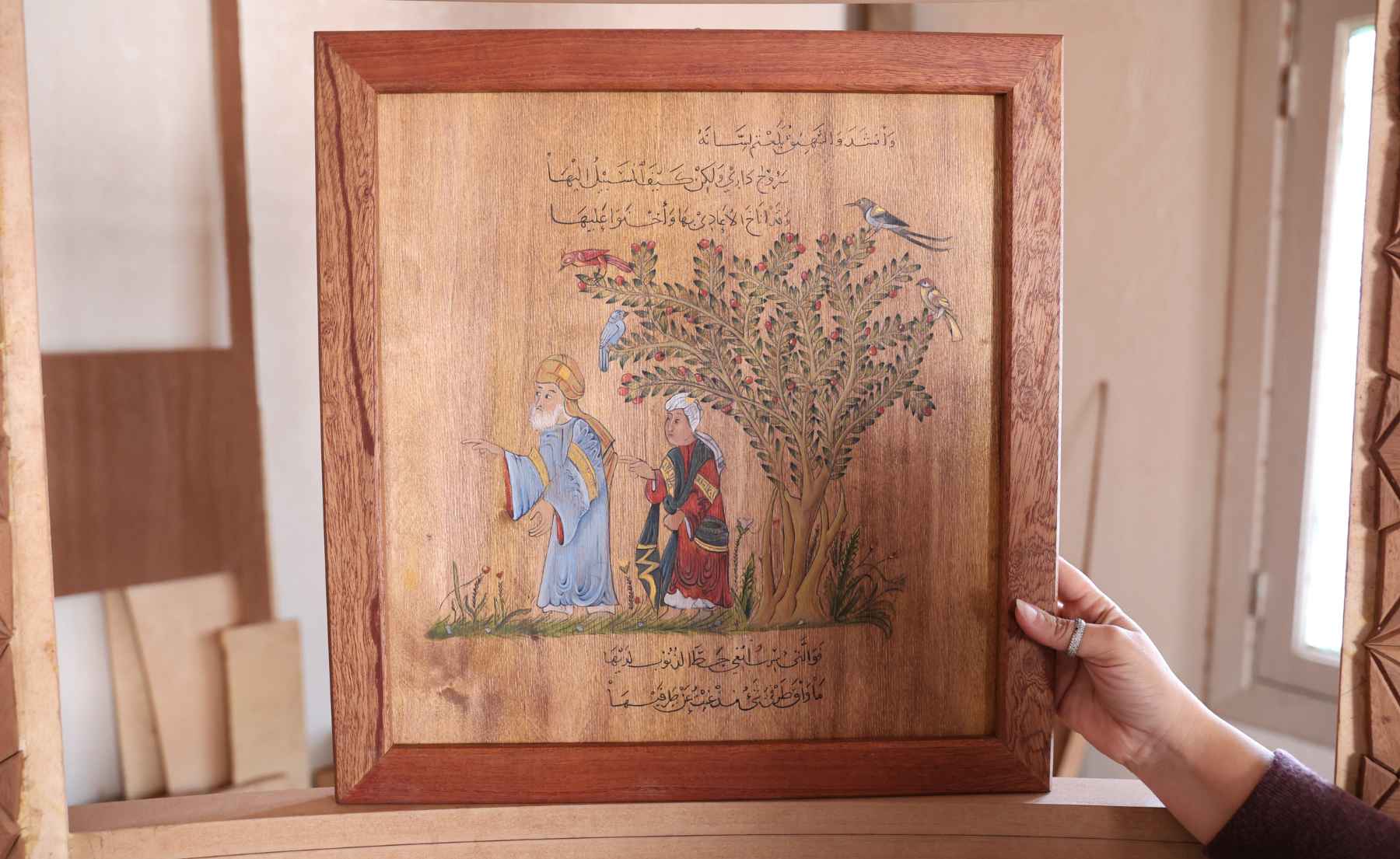
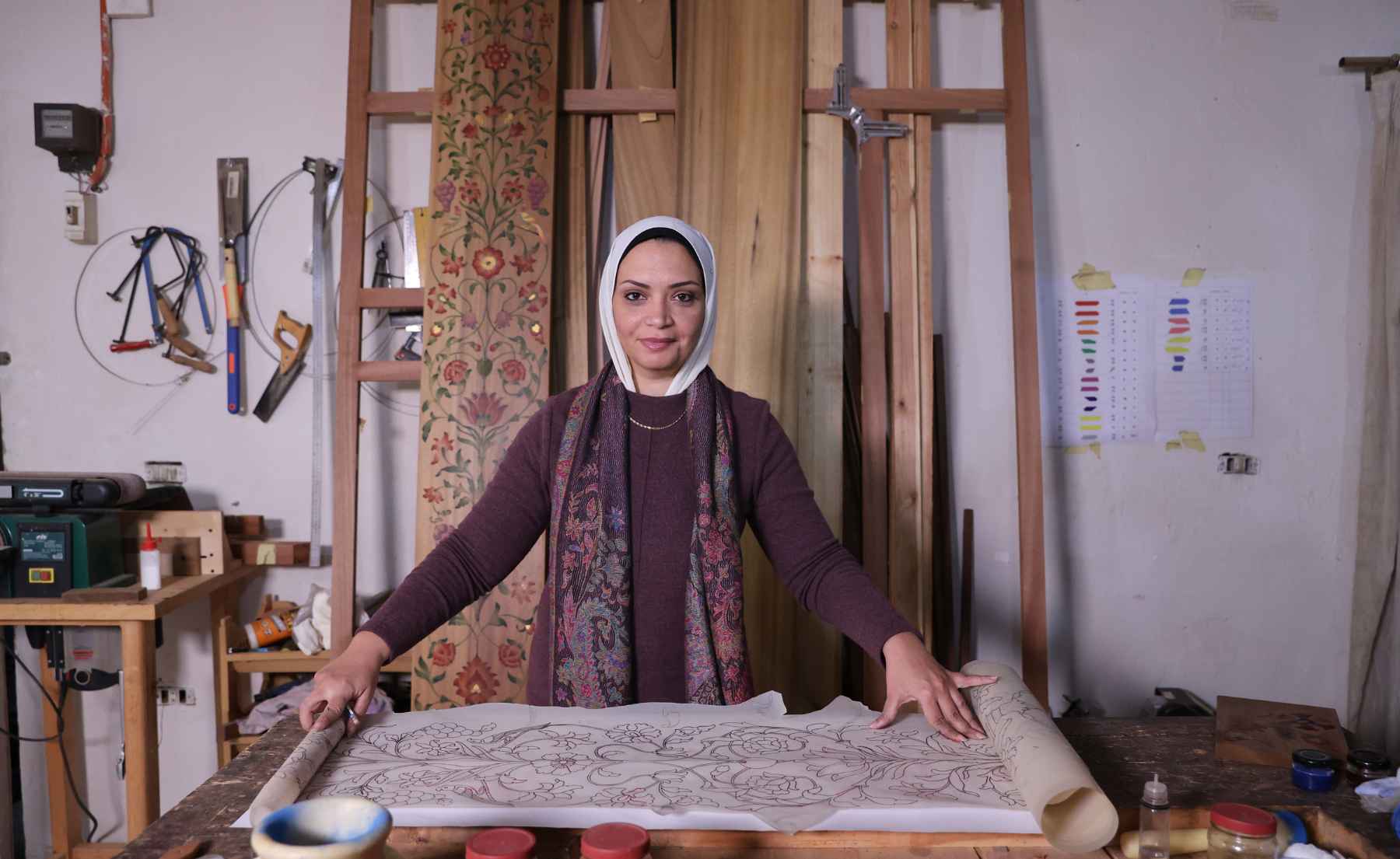
Her work begins with research. Scripts, manuscripts, or historical motifs inspire her compositions. “I need to know the era, the details,” she says. “It doesn’t have to be already on wood. I take it apart and see how I’m going to use each piece.” These elements are broken down, sketched, and scaled to fit each object. The final pieces are functional yet detailed, with layered colours that reference their ancient roots without feeling like reproductions.
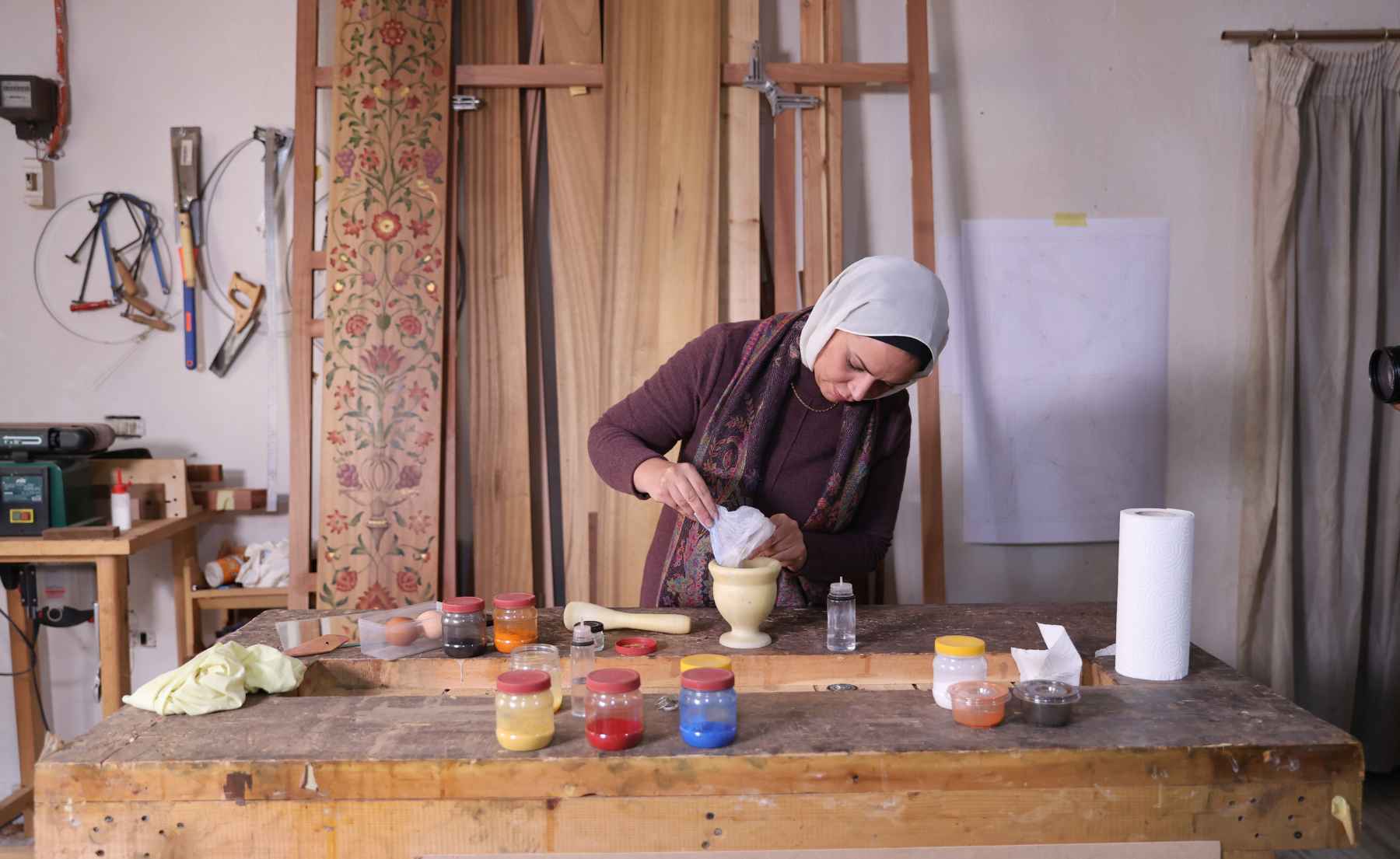
Making the pigment itself is meticulous. Minerals are ground and combined with egg yolk, then adjusted for tone, thickness and longevity. “Creating the colours is the most difficult part,” she notes. “It could take a day or two because I need to perfect the shade, the thickness, and make sure nothing happens to it.” Each colour is applied by hand, built up gradually across wood surfaces, whether a chair, cabinet, or miniature panel. Recent projects explore miniatures, which are then developed into functional pieces that can be used in homes while retaining meticulous detail.
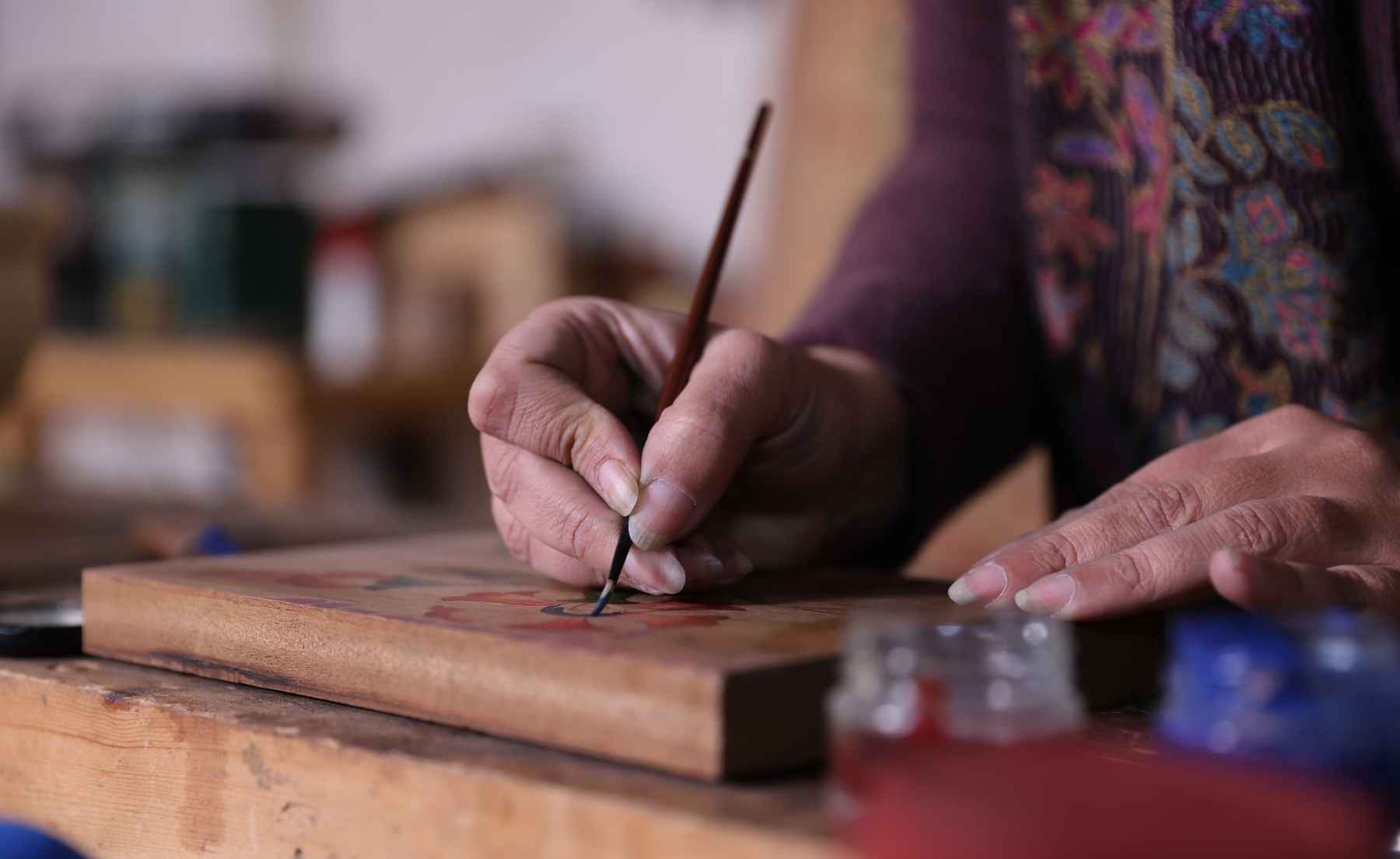
Anwar also teaches tempera, guiding others through the technique while encouraging contemporary adaptation. “The idea of tempera is that everything is natural,” she says. “The colours feel like they have a soul, which is very different from regular colours.” In her studio, colour becomes both material and object. Ancient methods meet modern interiors, and the vibrancy of Egyptian pigments finds a new life in everyday objects.
- Previous Article Your Guide to Celebrating Easter in El Gouna
- Next Article Saudia & Saudi Arabia Railways Link Air & Rail Booking Systems