






Arab Architecture in Spaces Where No Men Are Allowed
Exploring how architecture in the Middle East shapes women’s freedom, safety and presence in public spaces.
Cities are never neutral. They are shaped by assumptions about who moves freely, who lingers, and who must remain alert. In the Middle East, where social and cultural distinctions between public and private remain significant, these assumptions profoundly shape how women navigate urban space. As feminist geographer Leslie Kern notes in 'Feminist City', inherited gender roles influence not only movement but perception, with women constantly negotiating distance, timing, clothing and exposure. Architecture in this context becomes a powerful mediator.
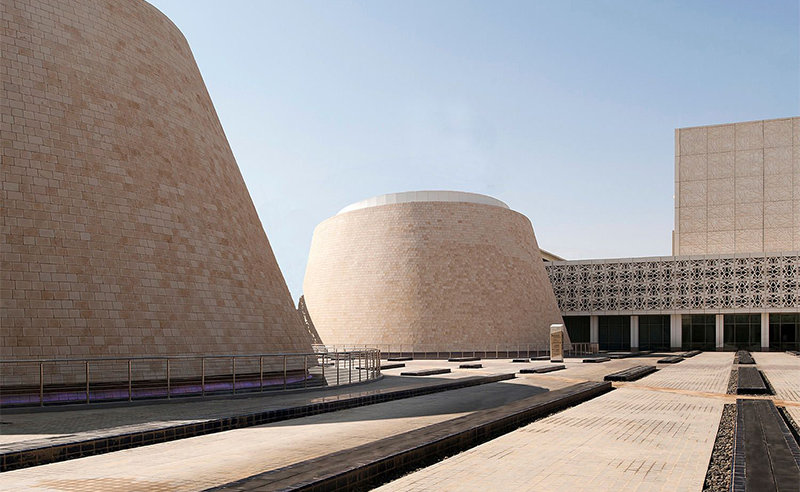
In Riyadh, Princess Nora Bint Abdulrahman University exemplifies women-centred infrastructure at an extraordinary scale. Spanning 32 million square feet and accommodating up to 60,000 students, the campus was designed by Perkins+Will in collaboration with Dar Al-Handasah. It contains research centres, sports facilities, residences and a monorail. Rather than inserting women into a coeducational framework, PNU establishes a parallel urban environment organised entirely around their education and daily life.
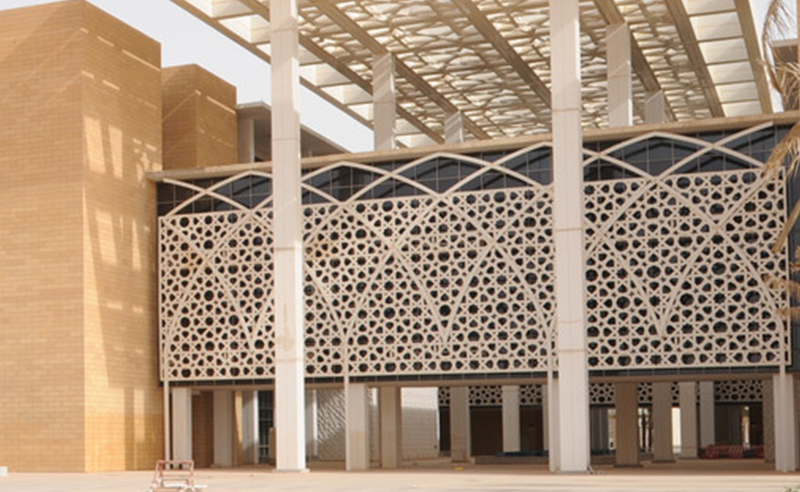
Some of the architectural elements take inspiration from historical elements that were used to create privacy around buildings. Mashrabiya screens filter light and visibility across the campus, offering privacy without total enclosure. Women move freely within its perimeter, but this freedom exists within defined limits, showing that their independence is shaped by the boundaries of the space.
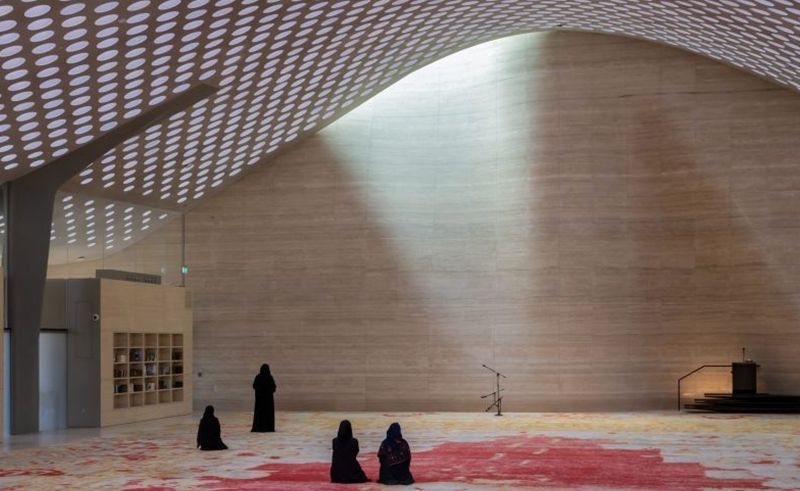
Al-Mujadilah Center and Mosque for Women in Doha approaches this negotiation differently, rethinking sacred and civic space simultaneously. Designed by Diller Scofidio + Renfro and conceived by Her Highness Sheikha Moza bint Nasser, the 4,600 square metre complex is the first contemporary mosque built specifically for women in the Muslim world. It combines worship, education, and debate under one roof. A flowing perforated roof punctured by 5,500 conical openings diffuses natural light across a column-free prayer hall that accommodates up to 750 worshippers and expands during Ramadan. Olive trees rise through the interior, connecting ritual to landscape, while a 39-metre mesh tower reimagines the minaret as a kinetic gesture, restoring a sense of ceremony to the call to prayer.
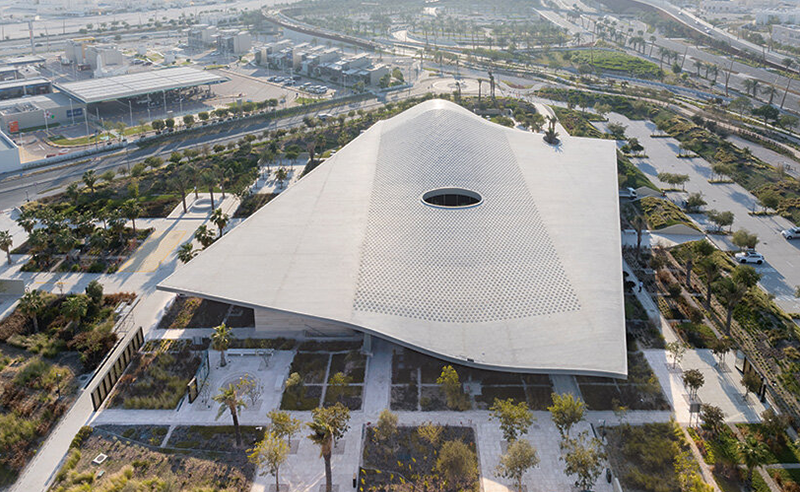
The mosque’s significance lies in its outward orientation. A library of over 8,000 volumes and spaces for public discussion and international summits transform privacy into a platform for civic and intellectual engagement. Here, privacy allows women to engage.
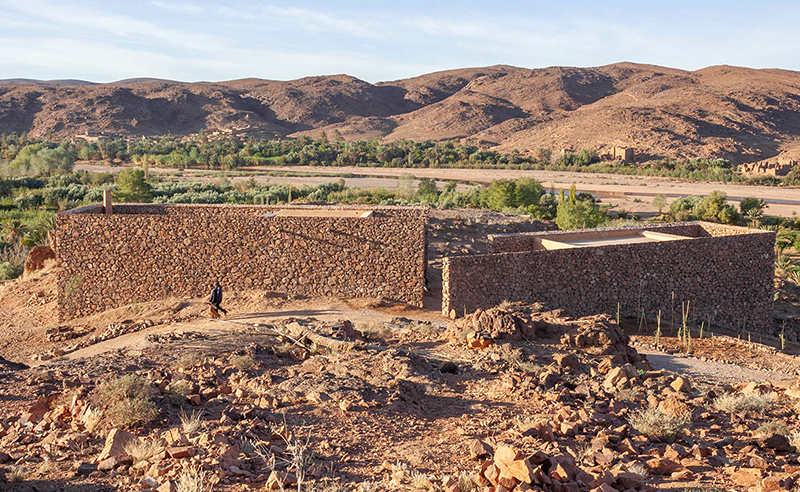
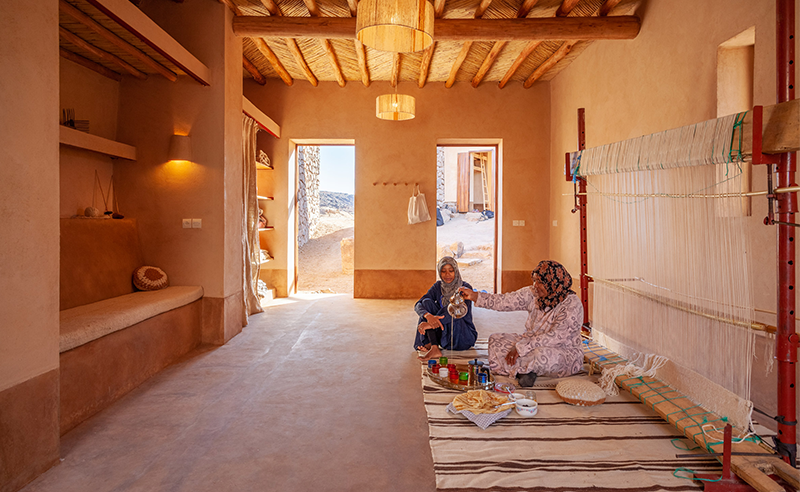
By contrast, the Women's House of Ouled Merzoug near Morocco’s Atlas Mountains operates at the scale of village life. Developed collaboratively by a local women’s association and Hasselt University’s Building Beyond Borders programme, the building emerged from workshops that defined its programme collectively. Sited where two informal paths intersect, it is embedded in everyday circulation. A central courtyard links a weaving atelier and communal bakery, while gardens extend more intimate functions. Local craftswomen contributed to construction and interiors. The project demonstrates that safety and belonging can be created through participation rather than enclosure.
The Abu Dhabi Ladies Club presents a different interpretation of privacy and autonomy. Designed by Urbanism Planning Architecture, the 12,000 square metre clubhouse anchors a landscaped complex overlooking a lagoon on the Persian Gulf. Organic forms enfold a semi-covered festival space, while stone cladding and Carrara Calacatta marble signal refinement. Pools, sports facilities, restaurants, boutiques, and a kindergarten define leisure within a controlled environment. The protected lagoon, separated from the open sea by breakwaters, allows women to swim and sunbathe free from outside view. Privacy is engineered at a territorial scale, offering freedom within carefully designed boundaries.
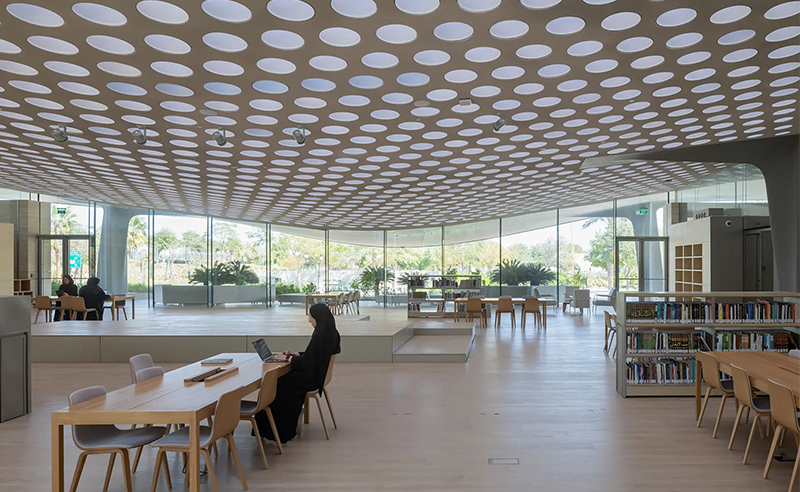
Across these examples, women-centred architecture in the Middle East defies simple classification. It can be institutional and monumental, sacred and discursive, participatory and local, or luxurious and enclosed. Each responds differently to gendered realities, but all recognise that space shapes behaviour and belonging. Designing safe public environments requires attention to lighting, visibility, circulation, and programme, but also to how women experience and inhabit space. The question is no longer whether women belong in the city; it is how the city is structured to receive them.
- Previous Article Mo Salah’s Record-Breaking Liverpool Legacy in Numbers
- Next Article The Ancestral Resilience of Omar El Farouk’s Fayoum Home
Related Articles
Trending This Week
-

-

-

-
 Sep 04, 2026