





How a 4th Generation Alexandrian Greek Revived a Community Cornerstone
As one of the few Greeks left doing business in Alexandria, George Siokas wanted to keep alive his grandfather’s memories of Asteria—but challenges still remain for doing business in the city.
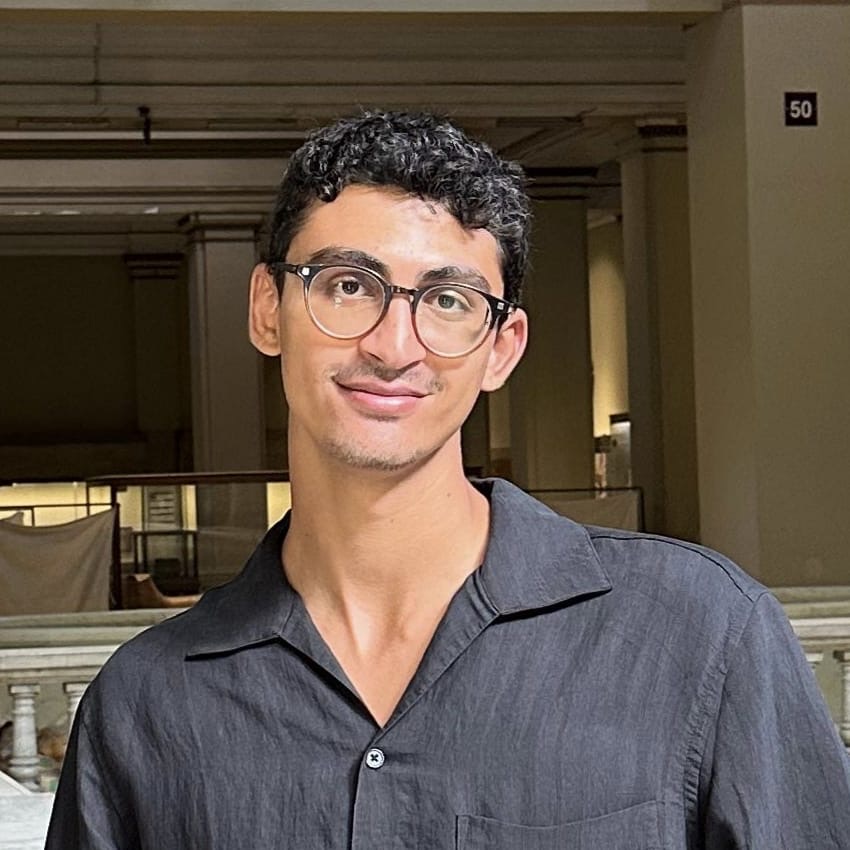
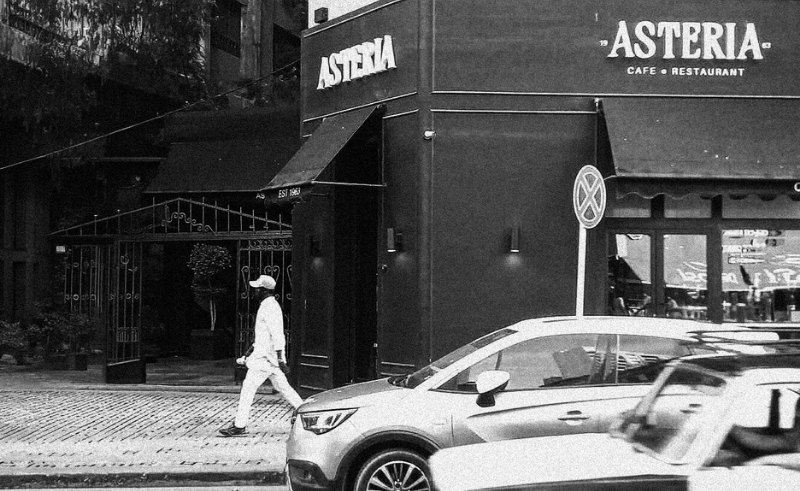
There are few places as steeped in collective memory as Asteria, which has been a landmark of Alexandria’s Safeya Zaghloul street since it first opened in 1963 and—according to local legend—introduced pizza to the city for the first time. My earliest memories there are with my grandfather, memories that are draped in the hazy hues of the restaurant’s sunlit interior. As it turns out, George Siokas, the fourth generation Alexandrian Greek who’s helped bring Asteria back to life, shares very similar memories.
“Whenever I was staying with my grandfather, he would take me with him every day to Asteria,” Siokas tells me over the phone. His grandfather was the manager of Asteria, which was owned by Siokas’s great-granduncle, Panagiotis Soulos. “Every morning at 8 AM he would sit me aside and get me my breakfast and juice, and I’d spend the day with him at the restaurant until he was done.” On Friday noon, his grandfather would take him across the street to Cinema Metro, where there was usually something playing for children.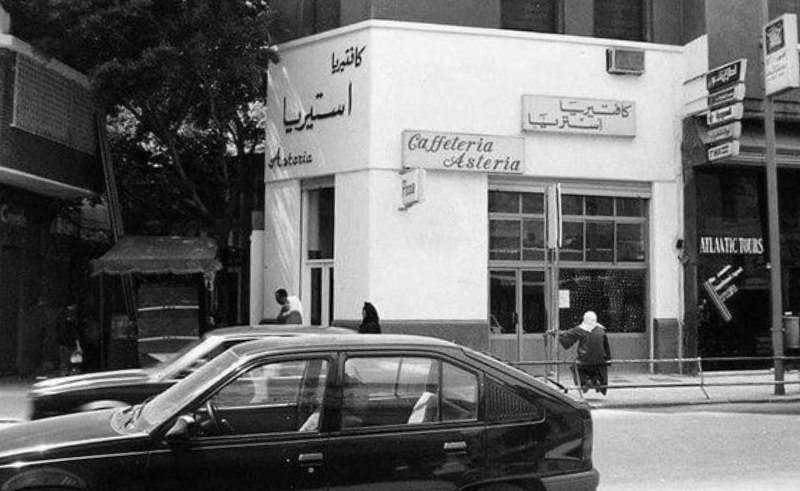 George Siokas comes from a family of Alexandrian Greeks, a community that once numbered in the hundreds of thousands and operated many of the establishments at the heart of 20th century cosmopolitan Alexandria, establishments like Le Metropole Hotel, Pastroudis, Santa Lucia, Délices and Sofianopoulo. His great-granduncle was the owner of many of these establishments, including Asteria, but many Greek-owned places in the city have since closed or changed ownership.
However, when Soulos passed away in 2002, Asteria became mired in ownership issues that led eventually to its closure around 2011. Siokas’s father ended up assuming control of Asteria under the holding company Santa Lucia Group, but the troubles which faced Asteria mirrored the ones facing the shrinking Alexandrian Greek community, and Siokas’s own trajectory. When he graduated from high school, Siokas left Egypt to attend university in the US before moving to Greece, the homeland to which most Alexandrian Greeks have returned since the 1950s. It was Siokas’s high school friends who convinced him to come back to Egypt for a visit in the summer of 2020.
“Circumstances happened that made me stay a bit longer, and I ended up getting involved in some of the restaurants and the business side of things here,” Siokas explains. He enjoyed the challenge, and his two-week stay has since turned into six years of living in Egypt. “There are very few Alexandrian Greeks left in the city, and even fewer living and doing business here,” Siokas says. “I am one of the very few left.”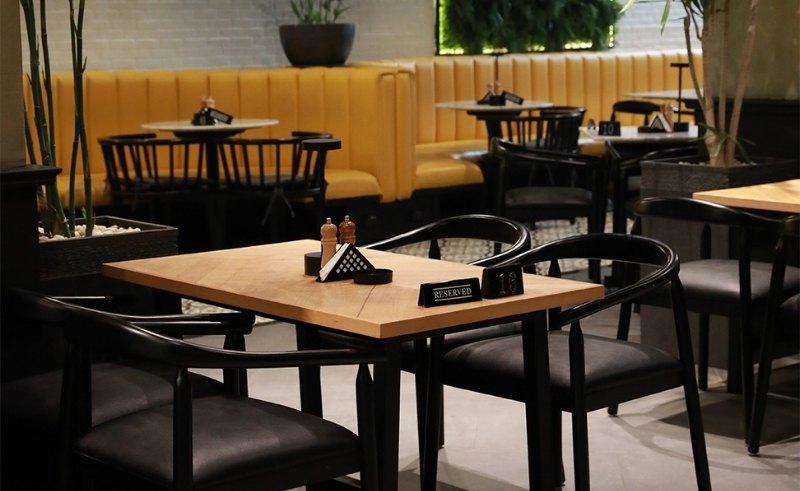 One of the first projects that Siokas took up within Santa Lucia Group, where he now serves as Vice President, was bringing back Asteria. “Asteria is a historic place, and our driving force for reopening it wasn’t profit-driven, but nostalgia. It was also a personal target of mine to reopen Asteria because I had so many childhood memories of my grandfather taking me there. It was part of the family. I felt we had an obligation to the people who also have so many memories of the place.”
Siokas’s grandfather, in particular, wanted to see Asteria reopen within his lifetime. When Siokas moved back to Egypt, many of the plans for Asteria were already put in place but had been delayed due to COVID. “We started doing the reworks five years before it actually opened,” Siokas says. “My personal effort was keeping the sunlight and the bar area in the back, and keeping the same menu that our old customers remembered.” Siokas brought in a Greek-Italian chef who helped redevelop the menu and train the new kitchen staff.
When Asteria reopened in 2024, although the aesthetics of the place had been changed almost entirely to become more modern-sleek, the restaurant still retained its same elegant, unpretentious feel.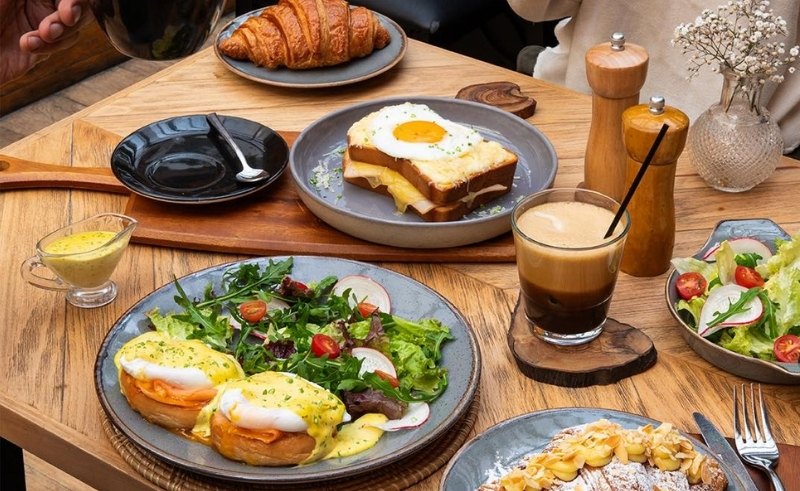 “I was pleasantly surprised to see many familiar faces who came and said they were so happy to be back, and even people I didn’t know who were asking me about my grandfather and sharing with me their memories.” Upon re-opening, Asteria became once more the gathering point that it had once been for so many families spending the day in Alexandria’s Downtown. “Asteria was always a spot, you know, a part of the old Alexandria. It really made us happy to see people having a place they felt was their home again. There really aren’t too many places left like that.”
However, as is the case across much of Alexandria, nostalgia often fails to be a sustainable business model. Though it wasn’t profit that pushed Siokas and Santa Lucia Group to reopen Asteria, he admits it’s been a challenge to generate much revenue from it.
“Our other restaurants are really the horses that pull the carriage,” Siokas says, referring to Santa Lucia (which, a short walk away from Asteria, has been open since 1932) and White & Blue, their restaurant at Alexandria’s seaside Greek Club with stunning views across the corniche.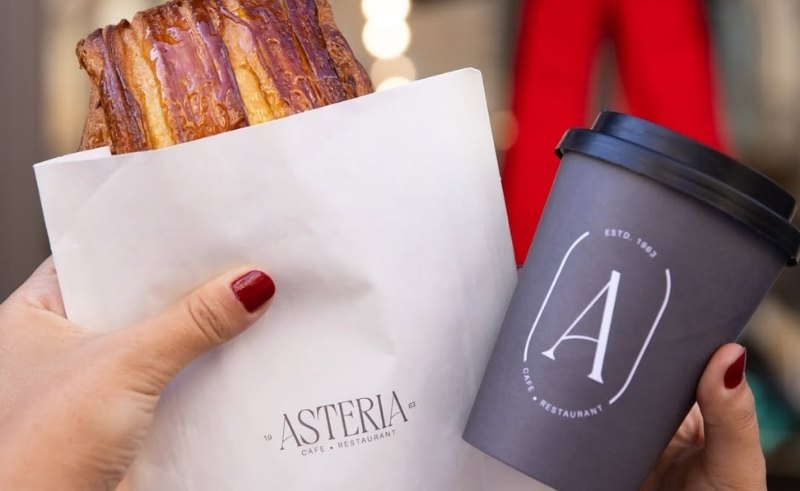 “Honestly, we’re now trying to branch out of Alexandria as much as we can. As a group, expanding in Alexandria’s restaurant scene doesn’t make much sense, business-wise. It’s difficult to provide a quality product here at a price that’s good enough to make people come back.”
Siokas himself spends only half the week in Alexandria, and heads to Cairo during weekends, where most of his friends have moved. The struggle he experiences as a businessman is the same he encounters in his personal life: most upscale places are clustered in Cairo, Sahel and Gouna, and Alexandria just can’t compete.
As they push elsewhere in Egypt, the Santa Lucia Group is focusing mainly on their White & Blue brand, which specializes in seafood and Greek cuisine. They’ve already opened one restaurant in Hyde Park in New Cairo and two beachside locations in Sahel, at Gazala Bay and Almaza Bay. This year, they’re also planning to open White & Blue in Gouna’s Fanadir Marina.
While this evolution means a step away from Alexandria and the nostalgia-steeped roots of the business, it marks an important transition. Not much of Greek Alexandria remains. Siokas, leading the Santa Lucia Group, represents a new generation ensuring that their heritage is not just relegated to the past, but becomes part of the fabric of today’s Egypt and its rapidly evolving restaurant scene.