





Eugénie Cafe is a Declaration of Love to Khedival Cairo
Designed to evoke the Downtown of old, Eugénie is painted with historical love in more ways than one.
I went to Eugénie on a dusty, stormy day in January. Cardboard boxes that were not weighed down went flying, trash cans were tipping over, and birds hung low in the air, struggling to fly against the stinging wind. Cairo’s typically tormenting sun was blotted out; a hazy, ineffectual disk in the sky.
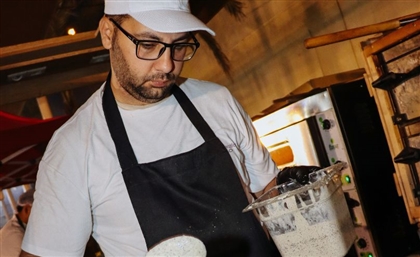
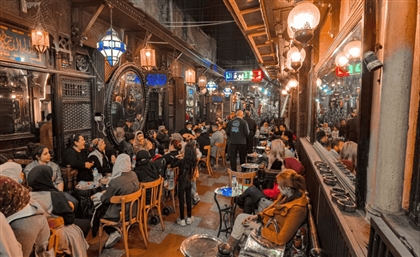
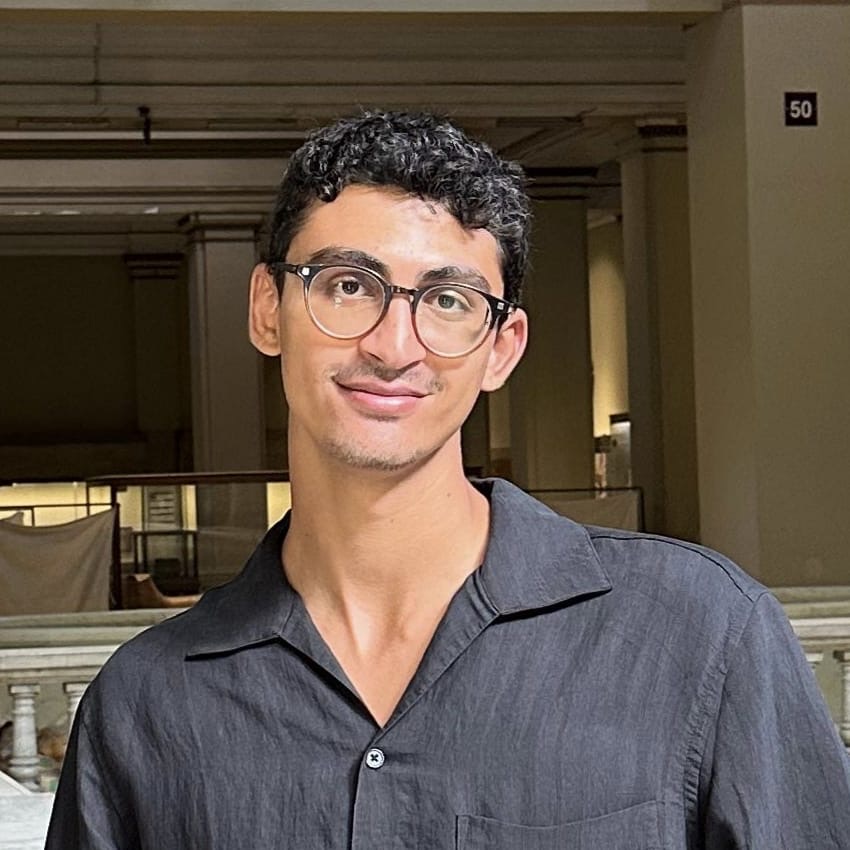
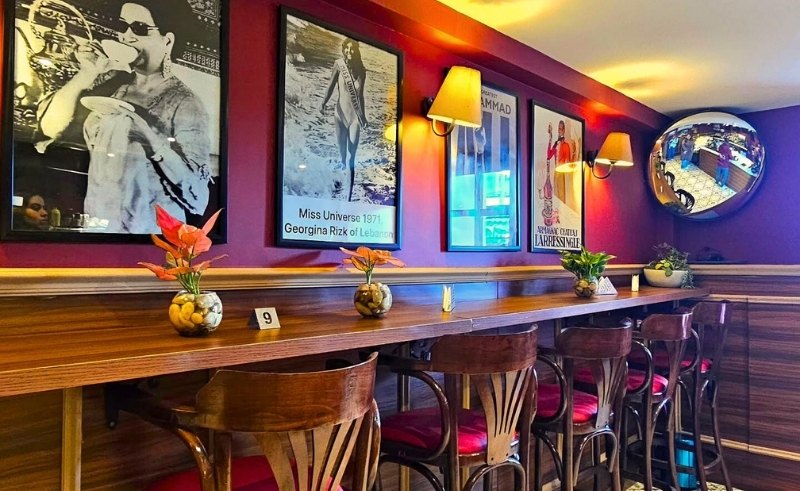
When I stepped into Eugénie, things calmed for a moment—but only just. A host of young waiters hurried back and forth between the bar and the two rooms that formed the cafe, from which I could hear but not yet see the bubbling energy of a cafe overflowing with patrons. Customers were waiting by the entrance for a table to free up, behind them framed posters of Muhammad Ali, Georgina Rizk, and Umm Kulthum—some of the many hung on Eugénie’s blood red walls. The sound of the wind outside could no longer be heard. In its place: Dalida’s ‘Paroles, Paroles’.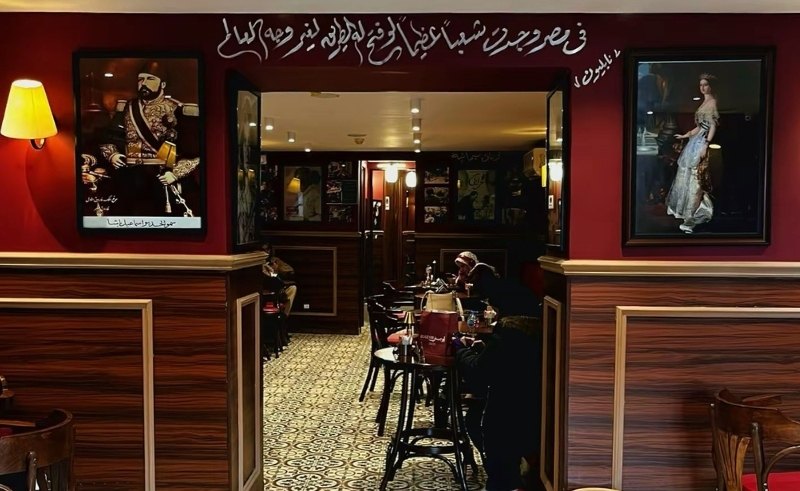 Because all the tables were full, Mohamed Hamada, the person I came to meet, had one of the outdoor tables brought inside and planted right in the middle of the cafe. Hamada, 29, is the co-owner of the cafe alongside his friend, Amr Emad.
Before opening the cafe, Hamada was employed in tourism, describing himself as a “very ordinary guy.” In his early 20s he had travelled abroad for work and returned with less money than he’d left with, which led him to vow he would never leave Egypt again until he made it here. He took up employment in tourism, working the front reception of a hotel from 8 AM to 4 PM at one hotel, and after 4 PM would head to work at another hotel. In April 2025, when he had saved up enough money, and with this idea building inside of him to open a cafe, he and Emad decided to take the leap and launch Eugénie .
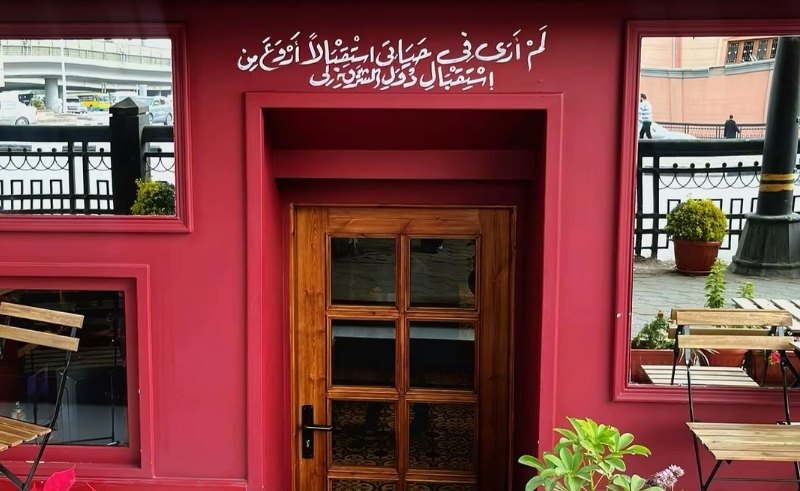 “We took the place without even seeing it, without any budget or any plan,” says Hamada. “We just had a vision. I wanted it to be like something from the Downtown of the old days, when it was first created.”
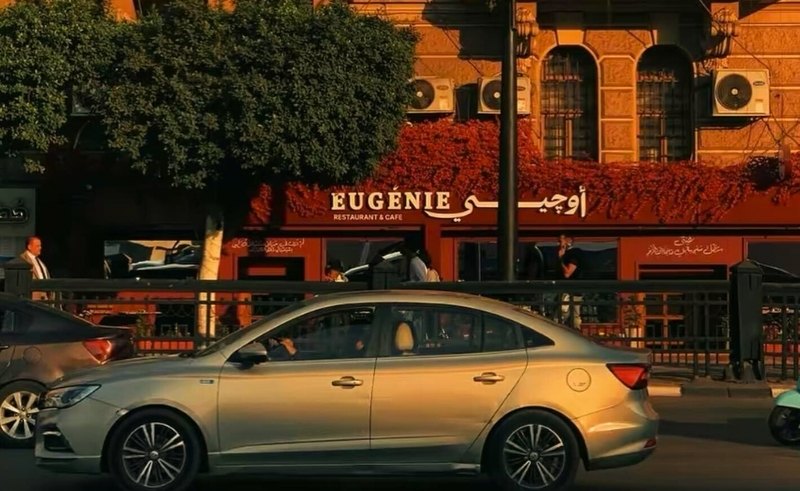
It was Khedive Ismail who began building what we now know as Downtown Cairo in the 1860s, inspired by Paris where he was educated. While the lasting effects of Ismail Pasha’s modernisation efforts endowed Egypt with tremendous debt and led almost directly to its colonisation by Britain, Hamada finds in that era an aesthetic worth replicating. And, located directly opposite the Egyptian Museum in Tahrir and adjacent to the similarly rose-hued Franciscan Sisters’ School, Eugénie is located right in the heart of the history it is recalling.
“When we began renting the space, it was extremely rundown and had a busted piping system. It took us seven months to create the cafe.” The pair encountered seemingly endless challenges in those seven months it took them to put to the place together, not least because everyone around them advised them to drop their vision of turning it into a classically-inspired space. But Hamada would not compromise.
 “We named the cafe after Empress Eugénie of France, whom the Khedive Ismail met in Paris and was madly in love with. Jealous after she married Napoleon III, the Khedive invited her to Egypt to witness the opening of the Suez Canal and built the Gezira Palace for her, which is now the Marriott Hotel.”
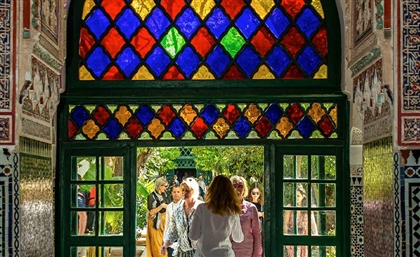
Eugénie Cafe manages to capture that ill-fated romance. It is more than just a date spot; its colours, a deep, dramatic red, its warm lighting, nd its low ceilings (which initially posed a challenge for Hamada’s vision when he met with architects and interior designers) create an atmosphere of intensity, of unrequited love. The Andalusian tiles lining the floor only add to the latent tension. Maximalist in every sense of the word, Eugénie’s impressive interior feels less like a love letter and more like a love confession or declaration—a spurned display of passion, like the story behind its name.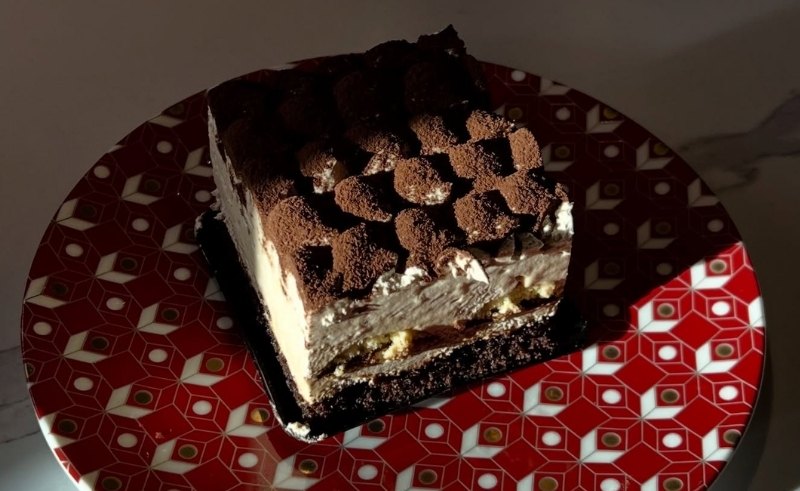 It is also a collage of its founder’s kaleidoscopic taste, almost like a mood board in cafe format. Besides the nostalgic design elements evident in the choice of chairs, tables and lamps, different corners of the room carry thematic collections ranging from film memorabilia of Adel Imam’s 1984 film, 'El Hareef' (scenes of which Hamada tells me were shot in the building above Eugénie), to photos of Arab stars of old like Omar Khorshid and Madiha Kamel, to Victorian porcelain plates and paintings, to a portrait of the Khedive Ismail himself. There are excerpts of texts from Hamada’s readings, quotes about Egypt from Herodotus’ 'Histories' and from Napoleon, as well as century-old poetry Hamada found second-hand. There are also TVs mounted on the wall—but in a place like Eugénie, they quickly became redundant and are almost never turned on.
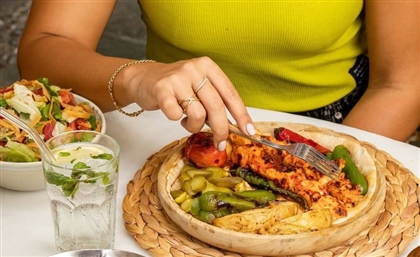
Since opening in November 2025, Eugénie has quickly found a loyal customer base, and there’s often people waiting at the door for a seat to free up. “We didn’t hire any marketing agencies or pay any influencers or anything, though many offered to market our cafe on their page.” Instead, drawn by the cafe’s aesthetic, the cafe became a popular photo spot and word of it got out organically via Instagram and TikTok.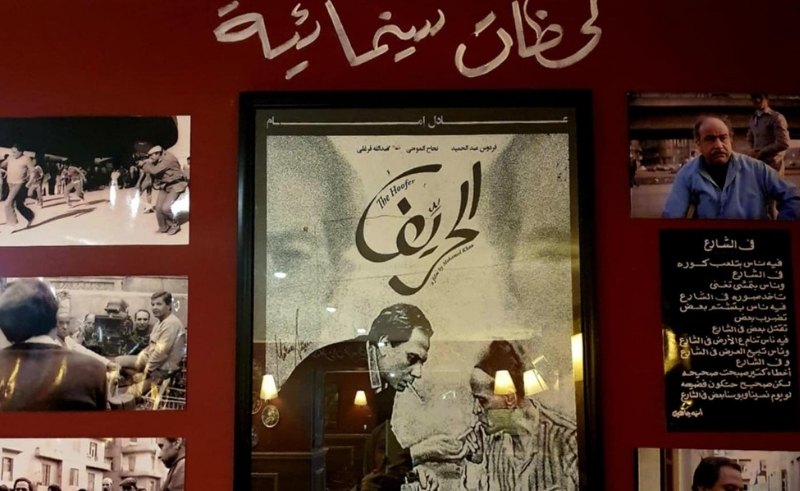 Besides the photo-takers, Eugénie’s clientele is diverse. In the mornings, when Fairuz is playing, students come to study, while later in the afternoon and evening when the music dips into jazz and late century Egyptian classics like Ferqet El Masryeen and Mohamed Mounir, it’s often a mix of friend groups and couples. As of yet, Eugénie’s menu doesn’t do much to stand out on its own—serving a typical selection of coffee, sandwiches, and pastries—but Hamada plans to introduce an in-house bakery in the future.
The evocative aesthetics of a 19th century environment—and a warm cup of tea or coffee—are more than enough for most. When I left the cafe, the wind was blowing more fiercely than before, and the sky was even more yellow. But that did not stop two girls from taking photos next to the cafe’s French window-style doors, smiling at the camera as the apocalyptic weather raged on.