






Veeza AI Wants to Make Global Mobility Easier for the Global South
Egyptian startup Veeza AI is using consumer AI to simplify the tourist visa process for people across the Global South.
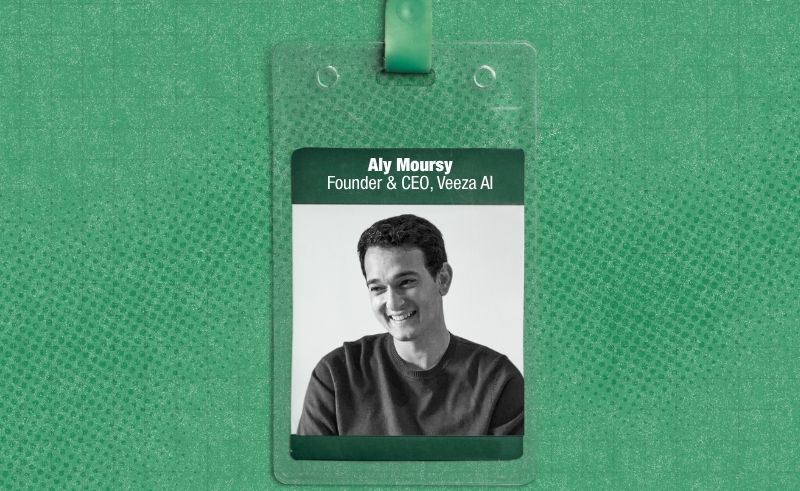
For this instalment of NextGen, our series spotlighting emerging entrepreneurs across the region, we meet Veeza AI, a consumer AI company building computer-use technology around one of the more frustrating parts of international travel: applying for a visa.
Having grown up between the West and Dubai and held an Egyptian passport until he was 22, Founder and CEO Aly Moursy had experienced both sides of the divide. His Western friends, he says, often had little understanding of what a tourist visa involved.
Moursy had been working in technology for years when he quit his job, intending to spend a year thinking about what kind of AI company he wanted to create. He initially imagined an applied AI lab in Cairo that would use existing models in new ways rather than train them from scratch.
He found himself constantly coming back to a particular gap he’s seen in the region's AI ecosystem. "There are no consumer AI products from the region," Moursy says. "Everybody that's trying to do something in AI, it's either going to be B2B or a SaaS company, they're doing a CRM or they're doing AI finance. But no one is trying to do consumer AI."
Rather than taking an existing Western idea and adapting it for the region, Moursy wanted to find problems that Arabs already understood, hated dealing with and were willing to pay to solve. Visa applications fit the criteria. The process is repetitive, time-consuming and often complicated enough that people already pay others to help them navigate it. "Consumer is always very hard. It's our responsibility to solve our own consumer problems by ourselves," he says. "People in the West are not going to solve the visa problem because they don't know it even exists. Joe Smith from the Bay Area is not going to solve this very vertical problem because he doesn't know it exists."
Veeza AI uses what Moursy calls computer-use AI, allowing an agent to operate a computer much as a person would. Rather than simply explaining visa requirements, the platform can navigate websites, handle forms and automate the application process, one user at a time. "Applying to visas is not supposed to be a human activity. It's a waste of time and cognitive space,” he says.
The first line of code was written on January 18th. Moursy spent a month figuring out whether the idea was technically possible, then three months building the first version. On April 19th, Veeza AI launched a closed beta.
A LinkedIn post and several TikToks quickly went viral, sending people to a growing waiting list. "It was a disaster," Moursy says. "I didn't know what to do."
The response also highlighted the challenge of automating a process where mistakes can have serious consequences. Visa applications are high-stakes, and Moursy says the company has had to balance growing demand with making sure the service can handle each application properly.
Two months after the closed beta, on June 7th, Veeza AI launched its public beta.
Veeza AI is now part of Y Combinator, something Moursy had been pursuing since his teens. He first became interested in the accelerator in 2013, later joining a YC-backed startup as an early employee before unsuccessfully applying himself at 19. This time, he arrived with a working product and paying customers. For Moursy, the appeal was less the funding than the community, connections and speed the programme could bring.
“I want to make an impact as fast as possible, and as big as possible,” he says.
The company began with Moursy as a solo founder and has since added another team member. He intends to keep the operation lean, using AI to handle work that would traditionally require a larger staff. Veeza currently has thousands of users, while a WhatsApp beta community of around 400 people has generated more than 10,000 messages of product feedback.
For now, the company remains focused on visas, including one of the process’s most frustrating bottlenecks: appointments. Veeza cannot create slots that do not exist, Moursy stresses, but its technology can identify legitimate availability and help users act on it.
“I’m not getting you appointments that don’t exist. They have to exist,” he says. “But I am the first person to know that they are. And we get them legally and ethically.”
Eventually, however, Moursy sees the visa application as the entry point to something much broader. His goal is to build an AI travel agent for people in the Global South, particularly travellers whose passports make international mobility more complicated. Once a visa is secured, the same platform could extend into student and work visas, flights, hotels and other parts of the journey through integrations and partnerships with travel agencies and governments.
“If they can’t get a visa, they can’t get anything else,” he says. “They can’t get their flights or hotels.”
Five years from now, Moursy’s measure of success is less about a particular revenue figure or user count than brand recognition. He wants Veeza to become so closely associated with the process that the company name becomes shorthand for getting a visa.
“I want it so that when anybody in the Global South thinks of visa, right, they misspell visa as V-E-E-Z-A,” he says. “That’s how much I want to be involved.”
Related Articles

Trending This Week
-

-
 Oct 15, 2026
 -

-