





Oasys Wants to Rebuild the Infrastructure of Behavioral Health
Founded in 2024, Oasys is building a unified platform that connects clinical workflows, data, and AI to help behavioral health practices operate more efficiently.


Behind many mental healthcare practices sits a patchwork of software that rarely speaks the same language. Patient records live in one place, billing in another, scheduling somewhere else entirely. Data is scattered. Time disappears into administrative work.
For clinicians, the upshot is a system that tends to demand as much attention as the patients themselves.
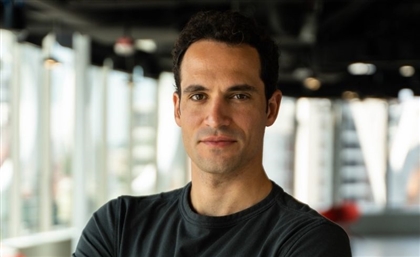
It’s a reality that helped inspire the founding of Oasys, a New York-based healthtech startup launched in 2024 by Egyptian entrepreneur, Hashem Abdou, alongside Raffay Rana, and Dawit Fasika. Their premise is straightforward, even if the problem itself is anything but: the infrastructure underlying behavioural healthcare has not kept pace with the sector’s growth.
“Behavioral healthcare is one of the most important and fastest-growing sectors globally, yet it is still powered by fragmented, outdated infrastructure,” Abdou tells StartupScene. “Clinicians are forced to operate across disconnected systems, spending a significant portion of their time on administrative work instead of patient care, while lacking the data needed to truly understand outcomes.”
The company is positioning itself around a simple idea that Abdou and his co-founders believe has been largely overlooked. Most existing tools address one part of the problem, but few attempt to address the entire ecosystem.
“Most solutions focus on either workflow (EHRs, billing tools) or insights (analytics, AI), but not both in a deeply integrated way,” Abdou explains. “We saw that the real opportunity is owning the full system where workflows generate data, and that data feeds back into better care and better operations.”
This feedback loop sits at the center of Oasys’ strategy. The platform consolidates the functions that behavioral health practices typically juggle across multiple products. Electronic health records, billing, scheduling, and patient engagement live inside a single system. Layered on top is analytics and AI designed to interpret the data those workflows produce.
“Oasys is a modern operating system for behavioral health practices,” Abdou says . “We combine EHR, billing, scheduling, and patient engagement into a single platform, and layer in real-time analytics and AI to help clinicians make better decisions while saving significant time on administrative work.”
The initial focus is on practices that have outgrown the limitations of older software.
“We primarily work with growing behavioral health practices and clinic networks, typically multi-provider organizations that need more robust infrastructure than legacy tools can provide,” Abdou says.
Yet building new infrastructure inside healthcare rarely moves at startup speed. Trust, particularly when clinical records are involved, tends to accumulate slowly.
“We are introducing a new standard in an industry that is understandably cautious,” Abdou notes. “The challenge is not just building a better product, but earning the trust required to become the system of record for care delivery.”
For now, the company itself remains lean.
“We’re a small, highly focused team across engineering, product, and operations, with backgrounds in healthcare, data science, and high-growth startups,” Abdou says.
The ambition, however, stretches further than software features. Abdou frames the long-term goal less as a product and more as a layer within the healthcare system itself.
“Success is becoming the default infrastructure layer for behavioral health,” Abdou explains. “Powering how practices operate, how clinicians make decisions, and ultimately improving patient outcomes at scale.”
If that vision materialises, Oasys would occupy a tacit but consequential role: the technology beneath the day-to-day mechanics of behavioral healthcare, shaping how clinics run and how clinicians understand the care they deliver.
- Previous Article The Region's Largest Water Theme Park Is Opening in Saudi
- Next Article 1980 Coffee Adds Chicken Caesar Bagel to the Menu