





‘The Clown of Gaza’: A Hauntingly Humorous Story at Reel Palestine
Directed by Abdulrahman Sabbah, the film refuses to fixate solely on trauma, instead threading laughter through the backdrop of war.

Created initially for pleasure, cinema—from its simplest form to its most grandiose—was always meant to entertain. There are instances, however, when the camera’s purpose shifts: to demand attention rather than offer distraction, to serve as a mechanism of exposure rather than an agent of escape. Nowhere is this darker potential more evident than in the 12th edition of the Reel Palestine Film Festival at Dubai’s Cinema Akil, where the shadows of the screen illuminate narratives that are at once fragile and unflinchingly real.
Across its carefully curated programme—spanning feature-length, short form, and documentary—Palestinian voices are gathered, amplified, and allowed to resonate. 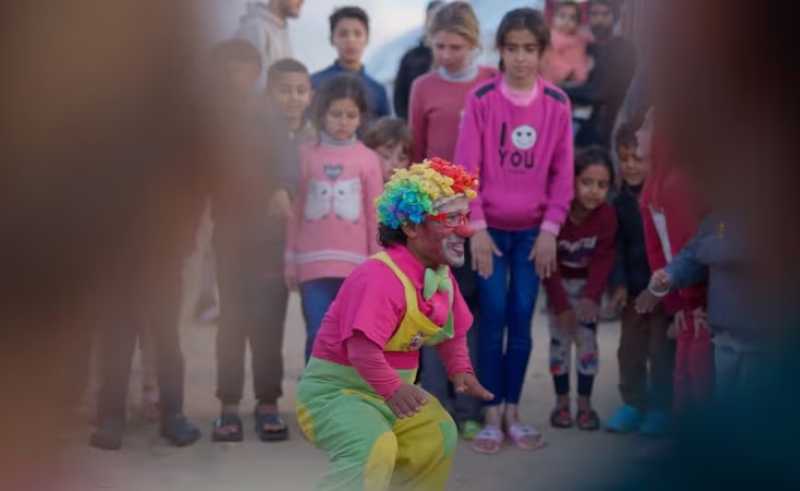 Among them, one story rises with both levity and heartbreak: ‘The Clown of Gaza’ (2025). Directed by fellow Gazan Abdulrahman Sabbah, the film refuses to fixate solely on trauma, instead threading laughter through the backdrop of war. Sabbah introduces the film by reminding viewers of the instability of Palestinian life and how “dreaming is a form of resistance”.
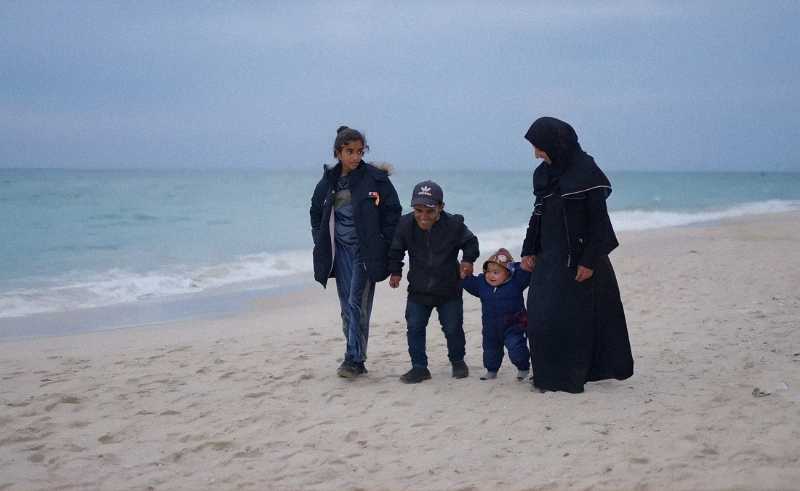
 The opening shot introduces Alaa Meqdad and his family in a tent camp, displaced by the bombings of Gaza City. The camera glides alongside a campfire, as we learn that the people populating the borders of Raba are not just numbers—they are daughters, sons, accountants, entertainers, students.
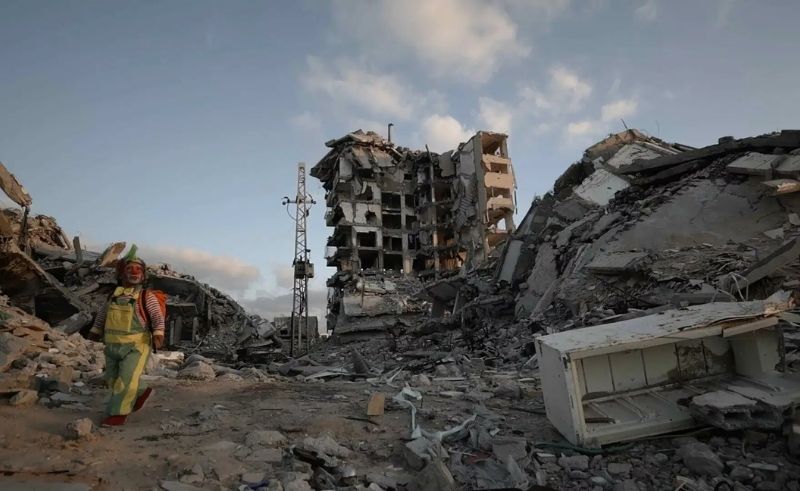
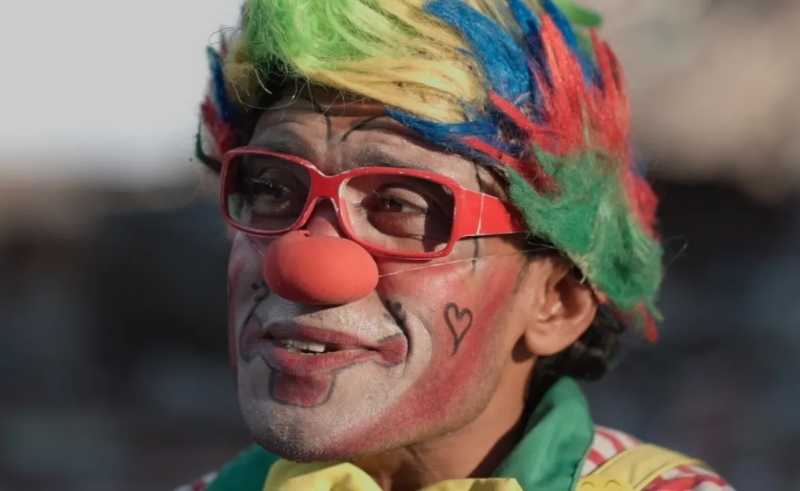
Our protagonist, Meqdad, is a disabled clown affectionately known as Uncle Aloosh, who once performed in Gaza’s theaters and now brings joy to children in the refugee camp. In a landscape defined by grief, his work feels almost inconceivable—but it is proof that laughter can survive amid rubble.
Life’s mundane labour ceases to stop despite the chaos: washing, tidying, cooking unfold beneath a sky punctuated by the distant roar of airstrikes. In one scene, Meqdad haggles for tomatoes and garlic, the camera cutting abruptly to the infinite destruction behind him. As he returns to the camp, neighbours recognise the beloved performer: “See you at home soon,” he says to one man—yet whether that home will remain is uncertain.
 Optimism threads through even the smallest gestures. “We will make something out of nothing,” Meqdad declares as he fashions a new costume from scraps of fabric. The children squeal with delight; for a fleeting moment, the soundscape fills with innocent laughter and song. Vibrancy flares across the screen, only to be overtaken once more by devastation.
The film’s final act brings news of a ceasefire. Roads to Gaza City reopen, and Meqdad joins thousands on the long walk back—a long journey condensed to minutes on screen. Amid the city’s wreckage, the camera trembles in despair. In Meqdad’s family home, a lone aloe vera plant endures, stubborn against the impoverished soil.
Through the rubble, Meqdad unearths photo frames, jewelry boxes, and children’s toys, all coated in dust. Among them, a shard of glass catches the light; whether it reflects Uncle Aloosh or Alaa Meqdad is left ambiguous. “In primary school, classmates grow up but you don’t. It was incomprehensible for me,” he reflects—an acknowledgment that his identity, whether in life or performance, is entangled with both limitation and liberation.
As the film closes, Uncle Aloosh’s colourful costume reappears against the bleak skyline—a final testament to resilience, and a reminder that joy and sorrow remain forever entwined.
Optimism threads through even the smallest gestures. “We will make something out of nothing,” Meqdad declares as he fashions a new costume from scraps of fabric. The children squeal with delight; for a fleeting moment, the soundscape fills with innocent laughter and song. Vibrancy flares across the screen, only to be overtaken once more by devastation.
The film’s final act brings news of a ceasefire. Roads to Gaza City reopen, and Meqdad joins thousands on the long walk back—a long journey condensed to minutes on screen. Amid the city’s wreckage, the camera trembles in despair. In Meqdad’s family home, a lone aloe vera plant endures, stubborn against the impoverished soil.
Through the rubble, Meqdad unearths photo frames, jewelry boxes, and children’s toys, all coated in dust. Among them, a shard of glass catches the light; whether it reflects Uncle Aloosh or Alaa Meqdad is left ambiguous. “In primary school, classmates grow up but you don’t. It was incomprehensible for me,” he reflects—an acknowledgment that his identity, whether in life or performance, is entangled with both limitation and liberation.
As the film closes, Uncle Aloosh’s colourful costume reappears against the bleak skyline—a final testament to resilience, and a reminder that joy and sorrow remain forever entwined.
- Previous Article Is Hamza AbdelKarim’s Barcelona Move a Shift For Egyptian Footballers?
- Next Article Driverless Pod Plan to Link Metro Stations in Dubai