





48 Hours in Damietta
Damietta has no monuments to speak of. What it has instead — seafood, craft, and a river that runs out of land — is better.
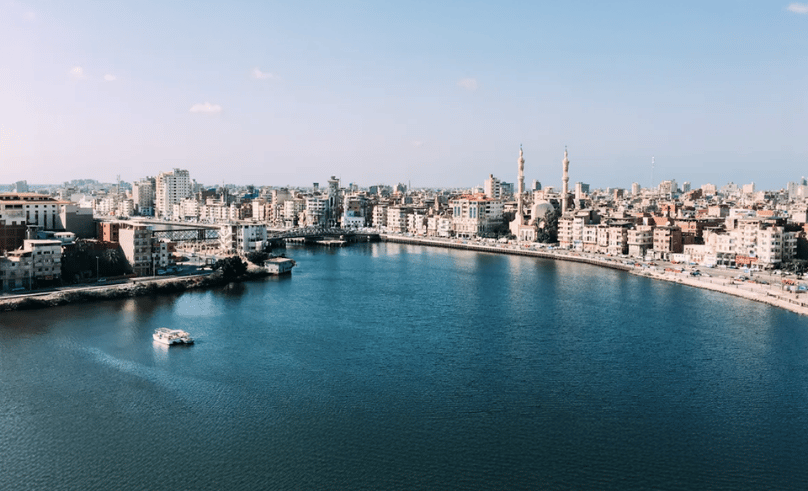
When Egyptians start trading recommendations for long weekends and spontaneous road trips, Damietta tends to get left off the list. Not because it lacks character (it has that in abundance) but because it lacks the obvious hooks. No pyramids, no temples rising out of the sand, no UNESCO placard to photograph and move on from. In a country that has arguably more ancient spectacle per square kilometre than anywhere else on earth, a city whose main claims to fame are furniture and fish can struggle to make the case for itself.
But here's the thing: it shouldn't have to.
The city sits where the Nile's eastern branch finally meets the Mediterranean, a collision of river and sea that has made it one of the most strategically coveted ports in the region for the better part of a millennium. The Crusaders tried to take it twice. Trade routes connecting the African interior to European courts once ran directly through its docks. None of this announces itself loudly when you arrive. Damietta absorbed its own history the way busy cities do: by building over it and carrying on.
What it has, instead, is texture. Workshops where craftsmen sand and lacquer furniture destined for homes across the Arab world. A seafood culture serious enough that the guide below will ask you, without a hint of embarrassment, to eat fish every chance you get. A waterfront where the Nile quietly disappears into the sea at a spot locals call El Lesan; one of the more quietly dramatic geographical moments Egypt has to offer.
FRIDAY
09:00 Start with breakfast at local favourite Cafe Supreme
-172862a7-3e90-44d9-88d5-026125fb44c1.png) There are few better places to take the measure of modern Damietta than Cafe Supreme. The restaurant has become a fixture of the city's breakfast scene, attracting everyone from students and families to businesspeople stopping in before work. The menu is extensive, though most regulars keep things simple with eggs, pastries, sandwiches and coffee. An early arrival usually means a quieter dining room and enough time to ease into the day before setting off for the Corniche and the city's historic centre.
10:30 Follow the Nile along the Corniche
There are few better places to take the measure of modern Damietta than Cafe Supreme. The restaurant has become a fixture of the city's breakfast scene, attracting everyone from students and families to businesspeople stopping in before work. The menu is extensive, though most regulars keep things simple with eggs, pastries, sandwiches and coffee. An early arrival usually means a quieter dining room and enough time to ease into the day before setting off for the Corniche and the city's historic centre.
10:30 Follow the Nile along the Corniche
-952f24b2-90a8-4f89-b002-b443ffcce428.png) Every Egyptian river city has a Corniche, but Damietta's possesses a distinctly working character. Fishing boats move steadily along the water while cargo traffic occasionally reminds visitors that this remains an active port city rather than a destination built solely for tourism. The walk reveals a side of Damietta often overlooked by outsiders; a city whose relationship with the Nile remains deeply practical. Early morning light reflects across the river, fishermen prepare their equipment, and the city gradually comes to life around the waterfront.
12:30 Visit one of Egypt's oldest mosques
Every Egyptian river city has a Corniche, but Damietta's possesses a distinctly working character. Fishing boats move steadily along the water while cargo traffic occasionally reminds visitors that this remains an active port city rather than a destination built solely for tourism. The walk reveals a side of Damietta often overlooked by outsiders; a city whose relationship with the Nile remains deeply practical. Early morning light reflects across the river, fishermen prepare their equipment, and the city gradually comes to life around the waterfront.
12:30 Visit one of Egypt's oldest mosques
-8c9d583c-d61a-45c8-8818-4a211f29d400.png) The Amr ibn al-As Mosque occupies an important place in Damietta's history. Though rebuilt and restored numerous times over the centuries, the site remains among the oldest Islamic landmarks in the governorate. The mosque's relatively restrained architecture stands in contrast to the monumental religious buildings of Cairo. What makes it interesting is not grandeur but continuity. Generations of Damiettans have passed through these doors, creating a living connection between the modern city and its earliest Islamic history.
14:30 Lose yourself in the old souks
The Amr ibn al-As Mosque occupies an important place in Damietta's history. Though rebuilt and restored numerous times over the centuries, the site remains among the oldest Islamic landmarks in the governorate. The mosque's relatively restrained architecture stands in contrast to the monumental religious buildings of Cairo. What makes it interesting is not grandeur but continuity. Generations of Damiettans have passed through these doors, creating a living connection between the modern city and its earliest Islamic history.
14:30 Lose yourself in the old souks
-f6c81faf-8373-4e27-9aa9-92fe4de5370a.png) Damietta's reputation as Egypt's furniture capital is impossible to ignore once you reach the older commercial districts. Workshops, carpentry stores, hardware merchants and family businesses fill streets that have functioned as marketplaces for generations. The appeal lies in observation rather than shopping. Craftsmen work behind half-open doors while merchants discuss orders over tea. Unlike many historic markets that now cater primarily to tourists, these streets remain largely focused on local commerce, giving visitors a rare glimpse into everyday life.
16:30 Order seafood the Damietta way at Daadour
Damietta's reputation as Egypt's furniture capital is impossible to ignore once you reach the older commercial districts. Workshops, carpentry stores, hardware merchants and family businesses fill streets that have functioned as marketplaces for generations. The appeal lies in observation rather than shopping. Craftsmen work behind half-open doors while merchants discuss orders over tea. Unlike many historic markets that now cater primarily to tourists, these streets remain largely focused on local commerce, giving visitors a rare glimpse into everyday life.
16:30 Order seafood the Damietta way at Daadour
-6897b9ba-5bc6-4424-a40d-a30196b2ba34.png) Few restaurants are as closely associated with the city as Daadour. Generations of visitors have come here for seafood prepared with remarkable simplicity. The process remains reassuringly straightforward: select your fish, choose how you would like it cooked, and allow the kitchen to handle the rest. Sea bass, mullet, shrimp and calamari are among the most popular choices. The restaurant's enduring reputation stems from its consistency. In a city known for seafood, that is no small achievement.
18:30 Watch the city settle into evening by the water
Few restaurants are as closely associated with the city as Daadour. Generations of visitors have come here for seafood prepared with remarkable simplicity. The process remains reassuringly straightforward: select your fish, choose how you would like it cooked, and allow the kitchen to handle the rest. Sea bass, mullet, shrimp and calamari are among the most popular choices. The restaurant's enduring reputation stems from its consistency. In a city known for seafood, that is no small achievement.
18:30 Watch the city settle into evening by the water
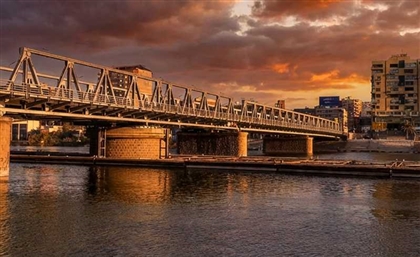
-ca9b8012-96de-4ad4-8fc0-34f7b54e33dd.png) The area around Al-Bahr Mosque and the adjacent waterfront comes alive at sunset. The mosque's silhouette becomes increasingly prominent as daylight fades, while the Nile takes on a copper glow beneath the evening sky. Locals gather along the riverbank, families stroll the promenade, and cafés begin filling with customers preparing for a long night. There may be more famous sunsets in Egypt, but few feel as connected to the daily life of a city as this one.
SATURDAY
The area around Al-Bahr Mosque and the adjacent waterfront comes alive at sunset. The mosque's silhouette becomes increasingly prominent as daylight fades, while the Nile takes on a copper glow beneath the evening sky. Locals gather along the riverbank, families stroll the promenade, and cafés begin filling with customers preparing for a long night. There may be more famous sunsets in Egypt, but few feel as connected to the daily life of a city as this one.
SATURDAY
09:00 Have breakfast at Khaled Pastry
-7ad9a8e3-e496-4962-83e1-9843951c6e2a.png) Khaled Pastry has been on Salah Salem Street since 1959, which in Damietta terms means it has outlasted several versions of the city around it. The focus is oriental sweets and pastries: konafa, baklava, fresh-baked goods that arrive early and move quickly. It is not the kind of place that asks much of you. You point, you pay, you find somewhere to sit. The city is just waking up, and this is a perfectly reasonable way to meet it.
10:30 Explore an Andalusian-style mosque
Khaled Pastry has been on Salah Salem Street since 1959, which in Damietta terms means it has outlasted several versions of the city around it. The focus is oriental sweets and pastries: konafa, baklava, fresh-baked goods that arrive early and move quickly. It is not the kind of place that asks much of you. You point, you pay, you find somewhere to sit. The city is just waking up, and this is a perfectly reasonable way to meet it.
10:30 Explore an Andalusian-style mosque-c6a22c52-9497-4783-a097-202bd80f6496.png) The most celebrated of Damietta's mosques sits right on the eastern bank of the Nile and earns the attention. Built in Andalusian style across 1,200 square metres, with five domes, two minarets, and walls covered in Islamic inscriptions, it is grander and more ornate than the Amr ibn al-As Mosque visited yesterday; a different chapter of the city's religious history, and a better-looking one to photograph from the outside.
12:30 Wander around Elgerby Street
The most celebrated of Damietta's mosques sits right on the eastern bank of the Nile and earns the attention. Built in Andalusian style across 1,200 square metres, with five domes, two minarets, and walls covered in Islamic inscriptions, it is grander and more ornate than the Amr ibn al-As Mosque visited yesterday; a different chapter of the city's religious history, and a better-looking one to photograph from the outside.
12:30 Wander around Elgerby Street
-a31b684e-74c4-44e8-a4ac-703c994d32c0.png) Yesterday covered the commercial side of old Damietta — the workshops, the hardware merchants, the furniture souks. Elgerby Street is its quieter counterpart, a stretch of traditional houses with carved wooden balconies, ornate facades, and the kind of latticework that makes clear the city's furniture obsession did not start with the showrooms. The best time to walk it is mid-morning, before the heat settles in.
14:30 Take a boat ride on the Nile
Yesterday covered the commercial side of old Damietta — the workshops, the hardware merchants, the furniture souks. Elgerby Street is its quieter counterpart, a stretch of traditional houses with carved wooden balconies, ornate facades, and the kind of latticework that makes clear the city's furniture obsession did not start with the showrooms. The best time to walk it is mid-morning, before the heat settles in.
14:30 Take a boat ride on the Nile
-a3e7b458-d92b-41d4-81bb-11617cab12c6.png) Most people see the Nile from the bank and call it a day. The fishermen along the Corniche will take you out on the water for next to nothing, and the city looks entirely different from there: the Al-Bahr Mosque from the river, the fishing boats at close range, the Delta light sitting flat across the surface. It takes an hour at most and is not something most visitors think to do, which is precisely the reason to do it.
16:30 Have seafood with a view at Sea Door
Most people see the Nile from the bank and call it a day. The fishermen along the Corniche will take you out on the water for next to nothing, and the city looks entirely different from there: the Al-Bahr Mosque from the river, the fishing boats at close range, the Delta light sitting flat across the surface. It takes an hour at most and is not something most visitors think to do, which is precisely the reason to do it.
16:30 Have seafood with a view at Sea Door
-6751724e-06b3-4e78-85a2-df11bf6b051d.png) Sea Door operates out of the eleventh floor of the El Ghorfa El Togareya Tower on the Nile Corniche, which sounds improbable for a seafood restaurant but works entirely in its favour. The views are good, the seafood soup is excellent, and the grilled fish arrives the way it should in a city that has been eating from this river for centuries. The most elevated meal of the weekend, in every sense.
18:30 Satisfy your sweet tooth at El Badry Sweets
Sea Door operates out of the eleventh floor of the El Ghorfa El Togareya Tower on the Nile Corniche, which sounds improbable for a seafood restaurant but works entirely in its favour. The views are good, the seafood soup is excellent, and the grilled fish arrives the way it should in a city that has been eating from this river for centuries. The most elevated meal of the weekend, in every sense.
18:30 Satisfy your sweet tooth at El Badry Sweets
-874a6135-4be9-4407-ad5d-bf832273229c.png) Meshabek — deep-fried batter, honey-soaked, crunchy outside and chewy within — is Damietta's signature sweet, and El Badry has been making it for over seventy years without apparent interest in changing anything. The shop draws crowds daily; the bags leave quickly. By this point in the weekend, between the feteer and the seafood, this is simply the last piece of a full education in what the city eats.
Meshabek — deep-fried batter, honey-soaked, crunchy outside and chewy within — is Damietta's signature sweet, and El Badry has been making it for over seventy years without apparent interest in changing anything. The shop draws crowds daily; the bags leave quickly. By this point in the weekend, between the feteer and the seafood, this is simply the last piece of a full education in what the city eats.
- Previous Article SceneNoise x Amsterdam Dance Event Present CROSSFADE: Egypt
- Next Article Nationwide Anti-Drug Campaign Rolls Out Across the UAE