






SELECTS: Photographer Usf Sherif Reimagines Egyptian Heritage
Egyptian creative director and photographer Usf Sherif reimagines heritage, identity, and fashion through a surreal post-apocalyptic Egyptian world.
Egyptian creative director and photographer Usf Sherif imagines a future in which Egyptian heritage has survived, though not intact. His latest project dismantles familiar symbols and reconstructs them within a post-apocalyptic world, asking what tradition might become when it is questioned and reinterpreted.
Sherif, whose work has appeared in PhotoVogue, uses surrealist fashion photography to examine identity and the narratives surrounding it. Here, he empties Egypt of its crowded streets and constant movement, leaving a sparse landscape strewn with cultural fragments.
A shisha, mawlid imagery, familiar sayings and Egyptian materials are removed from their usual settings and recast as symbols. A patchwork car cover becomes part object, part landscape, while exposed skin and unexpected silhouettes sit against references rooted in tradition.
Egyptian model Imaan occupies the centre of this imagined future. Her features make the images immediately familiar, yet her presence unsettles the expectations attached to them. Identity emerges as something inherited, but also chosen, challenged and remade.
Sherif leaves the images open to interpretation, hoping they encourage viewers to interrogate what has been handed down. “It’s okay to think,” he says. “It’s okay to question.”
For this SELECTS, Sherif breaks down five looks from the shoot and the visual language behind them.
Look One
“This is inspired by the lights of Egyptian streets at night. It represents nightlife in Egypt, freedom, and the feeling of letting go a little. Any celebration has dance, and dance itself has roots in Egypt. The silhouette wasn’t meant to become a costume. It was inspired by the shape of someone dancing, created through crystals similar to those you would find on a traditional tablecloth. The jewellery also carries Falahi influences, bringing another layer of Egyptian identity into the look.”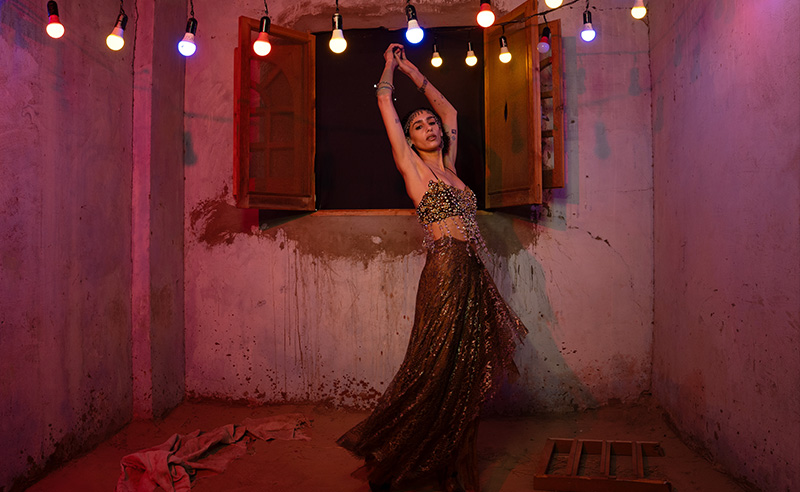 Dress | Espace Meld
Look Two
“The shisha was the main inspiration for this image. It I felt like it belonged in this world. It exists in almost every Egyptian household, and here it becomes something that brings life into a place that is supposedly dead. The contrast here with the shisha is important. In the middle of this empty, ash-filled world, this familiar object creates a sense of presence.”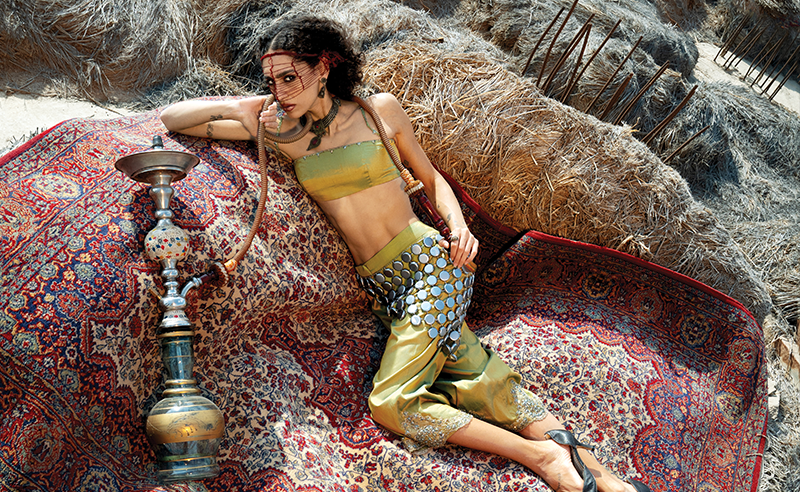 Outfit | Espace Meld
Accessory | By Waksa
Look Three
“The empty, broken-down world is represented through the patchwork car. Having the model stand on top of it made her feel almost like a war hero, someone who has survived and is standing above what remains."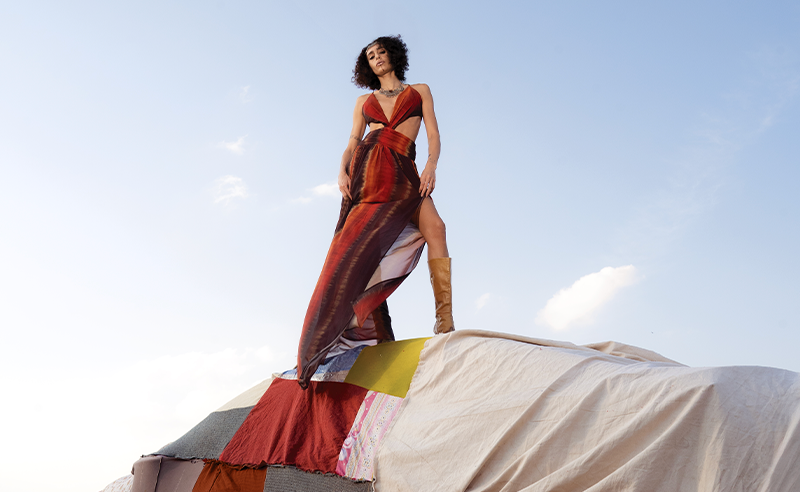
Dress | Kika
Look Four
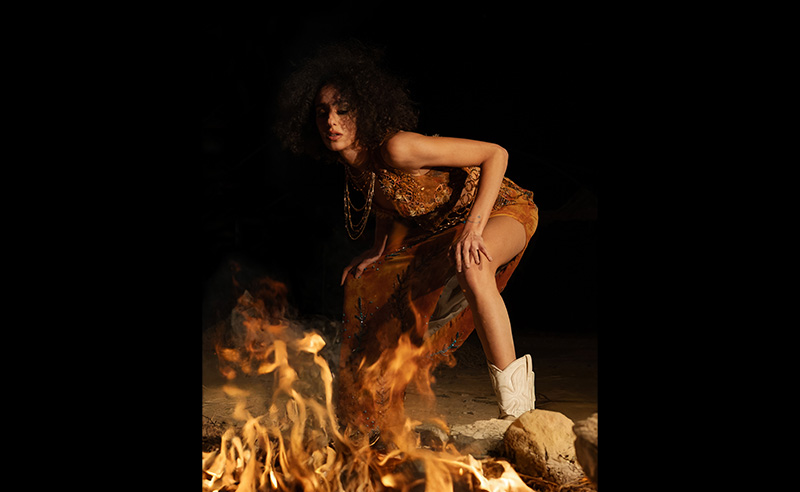
“The fire was not originally a solid concept. I was actually against it at first, but it became a kind of guilty pleasure that ended up making sense within the story. In a post-apocalyptic world, you have three elements of life coming together in one image, even when everything around it suggests there is no life left. Fire represents power and strength. She started the fire. She looks like she owns the land. For me, it reflects the feeling of questioning things and stepping away from expectations. When you stop following the stigmas placed on you, you begin to feel like you own your own life.”
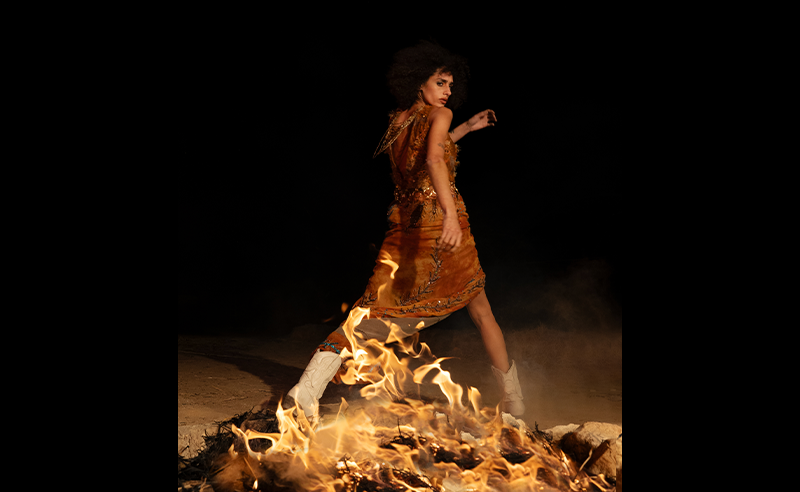 Dress | Espace Meld
Look Five
"For the styling, we wanted something that wouldn’t compete with such a powerful image. We chose a look that reveals more skin to avoid creating too much visual heaviness. The material itself is Egyptian, and the three belts represent a warrior-like feeling. If nothing else can hold you, this will.”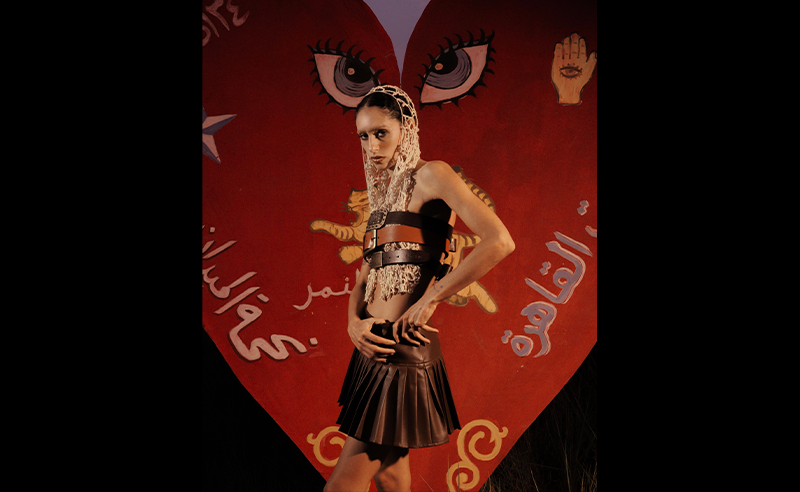 Skirt | Kika
Belts | Nagskin
- Previous Article SceneNoise x Amsterdam Dance Event Present CROSSFADE: Egypt
- Next Article The Intricate Beauty of Ben Youssef Madrasa
Related Articles

Trending This Week
-
 Oct 06, 2026
 -
-
-