



Who Is Dina Mostafa, Saudi’s First Female Asian Games Medallist?
Dina Mostafa opens up about her historic bronze, handling the pressure of competing and her ambitions for a world title
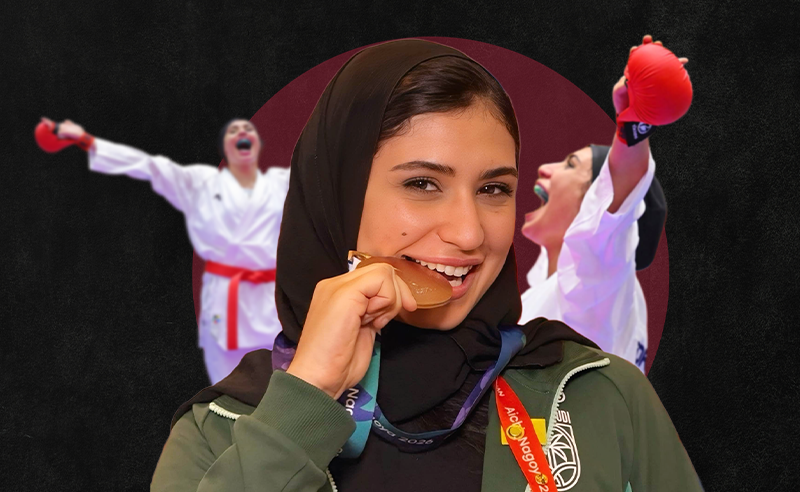
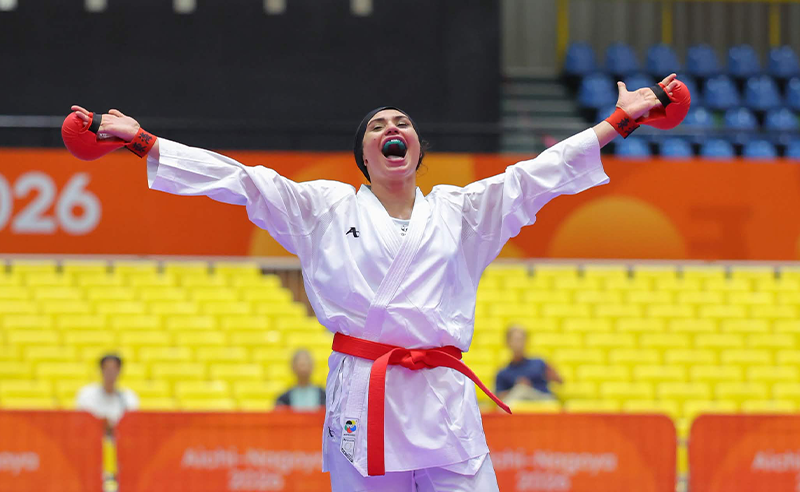
Three points down, with the clock ticking away, Saudi karateka Dina Mostafa was on the brink of defeat at the Aichi-Nagoya 2026 Asian Games.
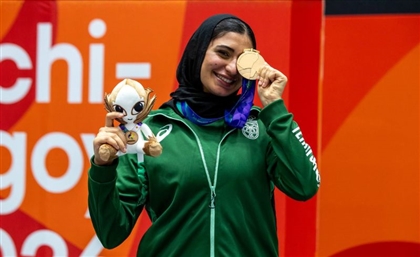
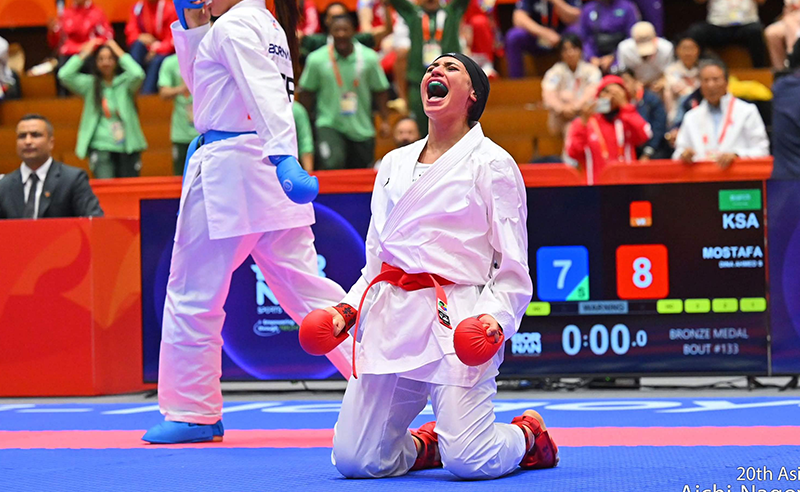
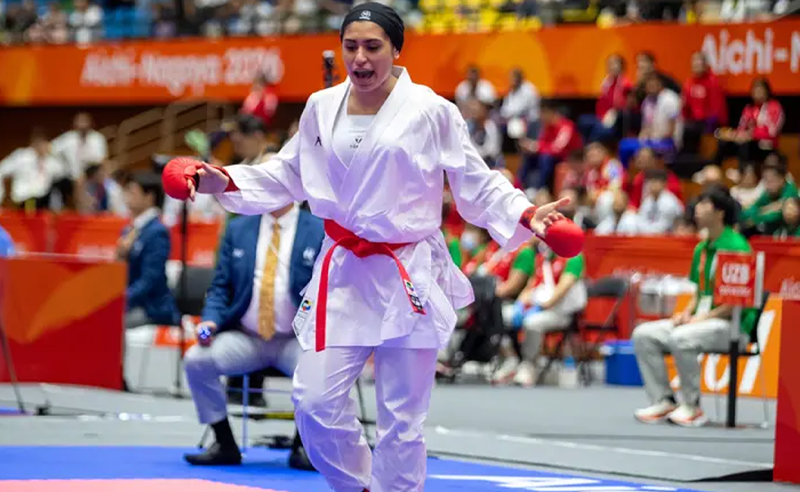
Across the mat stood Nepal’s former Asian champion Arika Gurung, but Mostafa refused to let the deficit dictate the outcome. Point by point, she fought her way back, eventually turning the bout around to win 8-7 and claim bronze in the women’s +68kg kumite at the Aichi-Nagoya 2026 Asian Games in Japan.
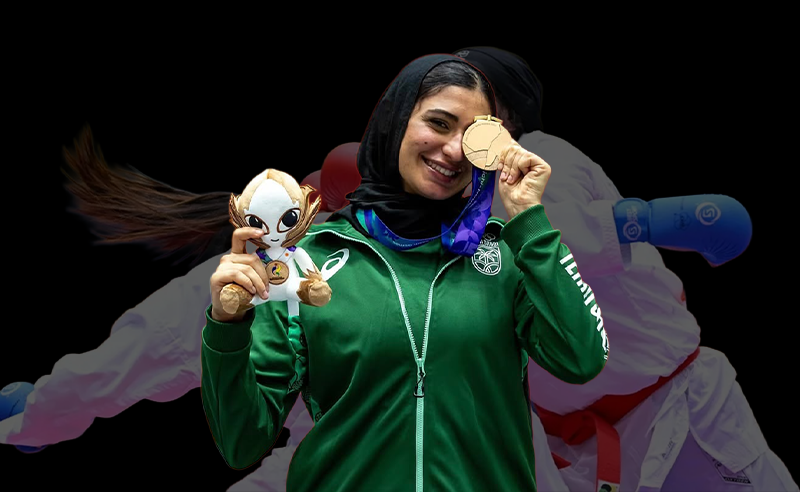
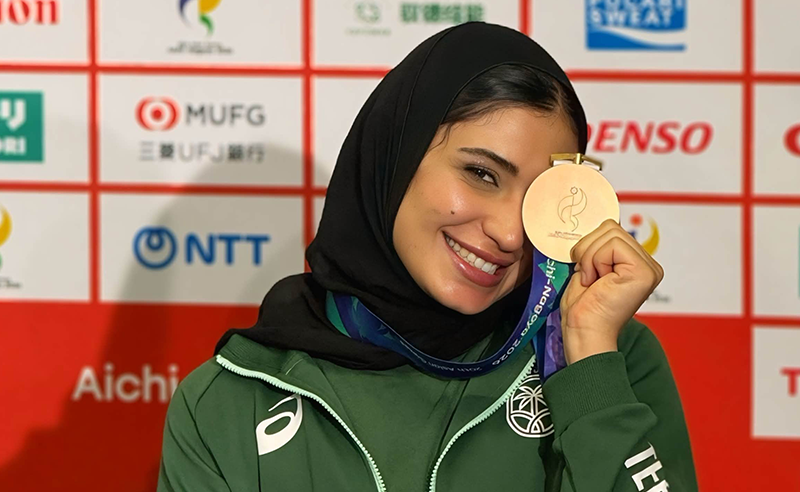
The result made history. Mostafa became the first Saudi female athlete to win a medal at the Asian Games, placing her name in a new chapter of Saudi sporting history.
But the bronze wasn't the beginning of her story. Long before those dramatic final minutes were years of training, injuries, sacrifices and moments of doubt that rarely make it to the competition floor.
In a conversation with SceneSports, Mostafa looks back at the journey that brought her to Nagoya, the mindset that helped her complete one of the Games’ most dramatic comebacks, and what she hopes her achievement can mean for the next generation of Saudi female athletes.
 Who is Dina Mostafa, beyond the athlete people came to know after Nagoya?
I’ve spent many years between training, competitions and tournaments. The public may have gotten to know me much more after Nagoya, but for me, this medal was not the beginning. It was the result of years of hard work and dedication.
I’ve always liked challenging myself and setting bigger goals. Nagoya was an important moment in my career, but it came after a long journey that started much earlier.
How did you first get into karate?
I started karate when I was young, and at first I never expected it to become such a big part of my life. Over time, I fell in love with the sport, especially the competition and the challenge of constantly improving.
As I developed, my passion grew until karate stopped feeling like a sport - it became a way of life.
What has been the most difficult period of your career, and what were some of the challenges people never saw?
The hardest periods were the injuries and the pressure that came with them, especially when you know you are not at your best but still have to train and compete.
People see an athlete during a tournament, but they don’t see the months and years that come before it: the exhaustion, anxiety and moments when you question whether you can keep going.
I went through times when I asked myself if I was capable of continuing, but I always came back to why I started. That helped me keep moving forward.
 You went from 0-3 down to winning 8-7. What was going through your mind during those crucial minutes?
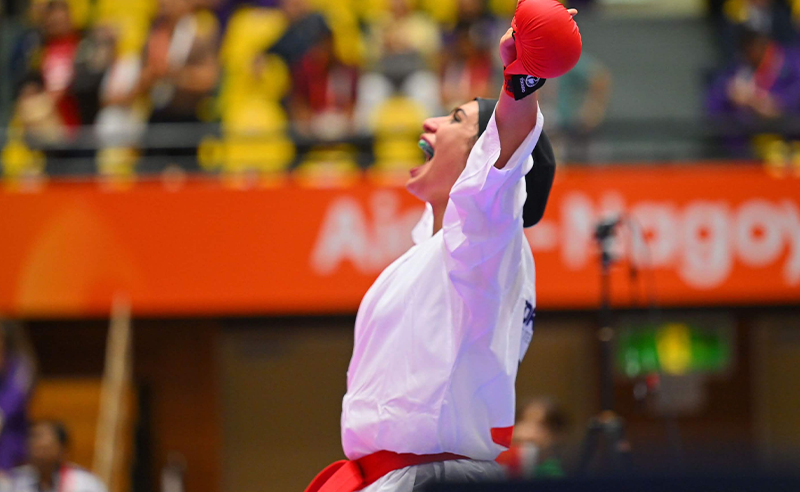
I was trying not to think too much about the score. I focused on the point in front of me rather than what had already happened.
When I went 0-3 down, I knew the match wasn’t over and that I still had time to come back. I took it one point at a time, and every time I scored, my confidence grew.
The most important thing was staying focused and not letting the pressure take over. I kept telling myself that I could make up the points, and eventually that is exactly what happened.
When the match ended and they announced your name as the winner, what was the first thing you thought about?
The first thing I felt was overwhelming happiness, mixed with a feeling that I couldn’t quite process what had happened.
All the pressure and everything I had gone through in the lead-up to the competition felt like it passed in front of me in one moment. Then I thought about my family and everyone who had supported me and believed in me.
I didn’t reach that moment on my own. So many people helped me get there.
 You are now the first Saudi female athlete to win a medal at the Asian Games. What does that mean to you?
It means a lot because I don’t see it as a personal achievement alone. I’m incredibly happy to have been part of such a historic moment for Saudi sport.
I hope this medal becomes the beginning of even bigger achievements for Saudi female athletes. I also feel a sense of responsibility because I know there are young girls who might look at me and see that reaching this level is possible.
How did you navigate the pressure of competing at the Aichi-Nagoya Asian Games?
I tried not to think too much about the scale of the event. Instead, I focused on what I could control: my breathing, concentration, strategy and making sure I gave everything I had in every point.
I reminded myself that I had trained for this moment. I didn’t need to suddenly become someone else or do something impossible. I just needed to be Dina, the athlete who had trained for all those years.
I also knew that some of the athletes I was competing against were among the highest-ranked in the world, including an Olympic champion. They had more expectations and reputation to protect. I tried to turn that pressure around in my head and ask myself: “What am I afraid of?”
I just had to compete and show what all those years of work had given me.
 What have you had to give up or sacrifice to pursue your career in sport?
Professional sport takes a lot of your time and comes with sacrifices, whether that means missing time with family, celebrations, outings with friends or other simple things in life.
Training camps, travel and competitions mean you sometimes have to give those things up.
But sport has also given me experiences, memories and relationships that I would never have had otherwise. So I wouldn’t necessarily say I was deprived of those things. I chose a path that comes with its own sacrifices.
What do you think still needs to improve for Saudi female athletes?
I think the most important thing is consistency in supporting female athletes and giving them more opportunities across different sports, from the younger age groups through to professional and international competition.
When an athlete has access to a good training environment, specialised coaches, training camps and strong competitions, she has much more room to develop.
What is happening now is a positive beginning. The most important thing is that we continue building on it and create more opportunities for girls to develop their talent and reach the highest levels.
 What would you tell young Saudi girls who is hesitant to start combat sports?
I would tell her not to be afraid of starting.
You don’t have to know from the first day where you are going to end up. Take that first step, try it, learn and, if you love the sport, keep going.
You might lose or go through difficult periods, and that is completely normal. Don’t let your fear of failure stop you from discovering how far you could go.
What do you hope people to be saying about Dina Mostafa five years from now?
I hope they say that Dina didn’t stop at the Nagoya medal, and that she continued developing and went on to achieve even bigger things.
I hope that by then I will have won a world medal, hopefully a gold one, and left a lasting impact on Saudi sport.
I don’t want my legacy to be only about the medals I won. I also want to inspire a new generation of female athletes and show them that they can aim for these stages too.
 You have spoken about your ambition to win a world gold in 2027. What do you still need to improve to get there?
I don’t think there is one specific thing missing. Winning a world title requires improvement in every detail: technically, tactically, physically and mentally.
Nagoya gave me a lot of confidence, but it also showed me that there are higher levels I still want to reach. My goal now is to learn from every experience, train smarter and harder, and enter 2027 ready to compete for gold.
The bronze showed me what I’m capable of. Now I want to see how much further I can go.
- Previous Article Riyadh Airport Will Close Until October 17th
- Next Article Temple Skate Shop is on a Mission to Connect Egypt Through Four Wheels