






Five Egyptian Athletes Navigate Motherhood, Comebacks and Retirement
Nada Hafez, Samar Hamza, Feryal Ashraf, Farida El Askalany and Nouran Gohar describe how motherhood changed their careers, from Olympic competition to retirement.

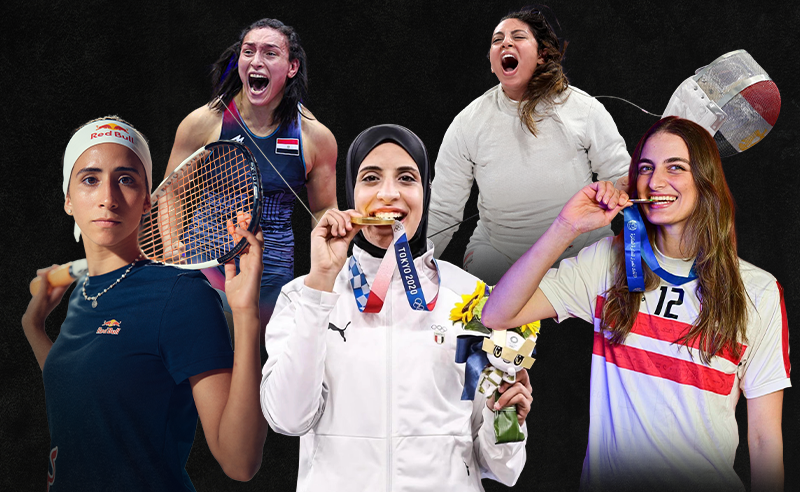
Pregnancy and childbirth can change the course of a professional athlete’s career before she has even decided what she wants that career to become.
Training has to adapt. Selection can become uncertain. Contracts and bonuses can change. Recovery is measured against competition calendars, while family expectations and sporting institutions can place their own limits on what a comeback is supposed to look like.
Egyptian female athletes describe another pressure running through all of this: the expectation that sport should eventually give way to the rest of a woman’s life. School, marriage and motherhood can each become reasons for people around them to ask when they will stop.
Nada Hafez, Samar Hamza, Feryal Ashraf, Farida El Askalany and Nouran Gohar reached very different answers.
One competed at the Olympics while seven months pregnant. Others returned to competition within months of giving birth and won medals. One eventually chose to retire because she wanted more time with her son.
Their experiences show that motherhood does not produce one kind of sporting career. The conditions around an athlete, from federation support and money to family life and her own ambitions, can shape what happens next just as much as physical recovery.
1. Nada Hafez: "Ever since I was a child, everyone has been telling me to retire"
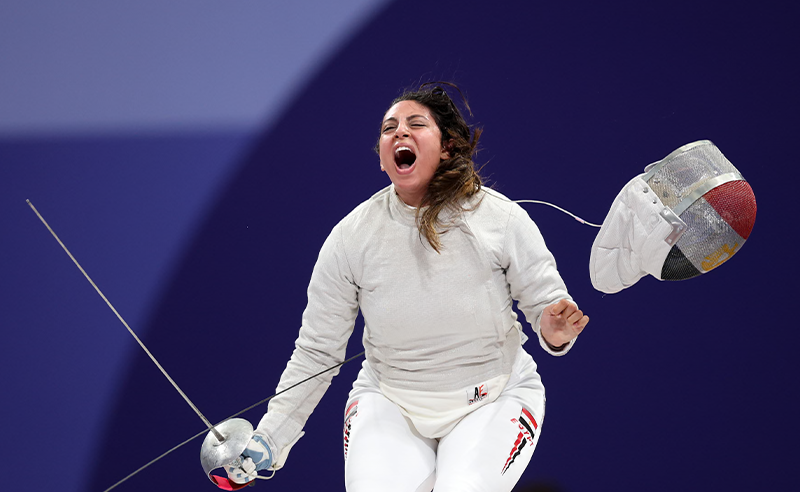 Nada Hafez, a member of Egypt’s national fencing team who competes in sabre, discovered she was pregnant before qualifying for the most recent Olympic Games.
She found herself facing an experience she had never planned for, but decided to keep competing and take things one step at a time, with support from those around her.
“I was scared because I didn’t know of any previous experience I could turn to,” Hafez says. “But gradually, I started to understand the changes my body was going through, when I could push myself and train intensely, and when I needed to rest.”
Hafez continued competing until her seventh month of pregnancy and went on to compete at the Paris 2024 Olympics, where she faced Elizabeth Tartakovsky, the tournament’s seventh seed and world No. 10 at the time.
Despite the criticism she received for her decision, she felt that her pregnancy gave her an additional source of motivation.
“I wasn’t afraid of facing the world’s seventh-ranked fencer. I saw it as a challenge, and I felt ready to do the impossible for my son,” she says.
After giving birth, Hafez competed at the Egyptian National Championships, winning a medal before going on to finish second in the individual event and first in the team event at the African Championships.
Although she returned to competition within just two months, the comeback was not without its difficulties.
“Dealing with the pressure and accepting defeat were among the hardest challenges I faced during my comeback,” she says.
“Ever since I was a child, everyone has been telling me to retire because of my final year of high school, my admission to medical school, my marriage, and my pregnancy, as though Egyptian women are expected to stop playing sports whenever something in their lives changes.”
Hafez believes that every athlete’s pregnancy is different, depending on the sport and her health circumstances.
However, she stresses the importance of sports federations providing women with the same support and opportunities afforded to men.
She remains committed to returning to competition after her second pregnancy and competing in her fourth Olympic cycle.
2. Samar Hamza: “Samar is finished after marriage and having children”
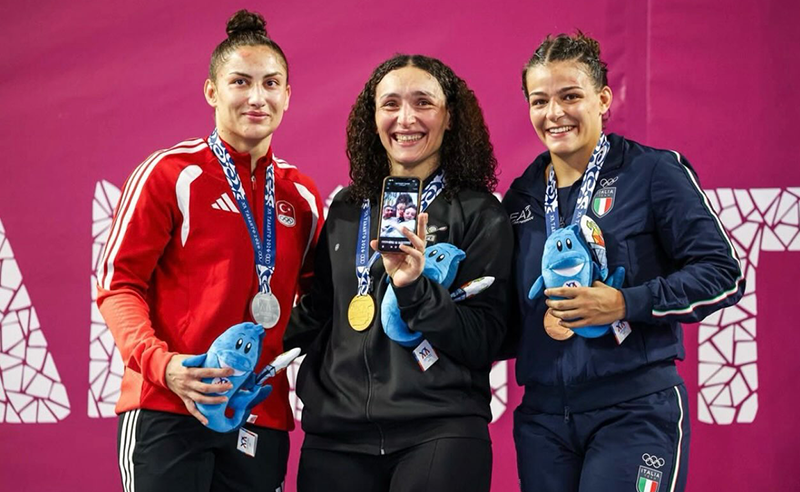 Samar Hamza, a member of Egypt’s national wrestling team, discovered she was two months pregnant before undergoing knee surgery following an injury to her medial collateral ligament, as well as a collarbone injury.
Her pregnancy changed how she approached treatment and pain management, but she did not abandon her goal of returning to wrestling.
Two months after giving birth, she resumed training and began the process of rebuilding her fitness after gaining 30 kilograms during pregnancy. Hamza explains she went through a period of frustration and doubted whether she would be able to return.
Her husband, Ahmed, became her biggest source of support, helping her navigate the pressure.
Hamza eventually returned to competition and won gold at the Mediterranean Games as a mother. She recalls one federation official telling her that he had not expected her to regain her level, acknowledging that she had exceeded his expectations.
Hamza’s experience shows how motherhood, which some view as an obstacle to an athlete’s career, can instead become a powerful source of motivation.
At the same time, her story highlights the importance of support from sporting institutions and federations, particularly when athletes are forced to confront doubts about their ability to return to their previous level.
3. Feryal Ashraf: "I was afraid I wouldn’t be able to come back"
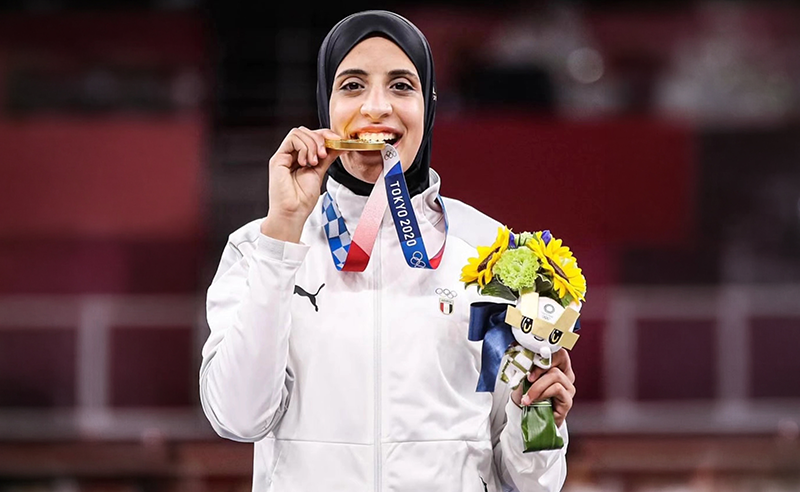 For Feryal Ashraf, a member of Egypt’s national karate team, motherhood did not diminish her passion for sport. Instead, it presented her with a new experience accompanied by the fear that she might not be able to return to competition.
Nevertheless, she chose to view pregnancy as an opportunity to rest and rediscover her love for the sport.
Ashraf returned to the gym just 15 days after giving birth and resumed competition three months later.
Despite the challenges of regaining her fitness, she won the Mediterranean Games in one of her first major competitions after returning, even after sustaining an injury during her opening match.
"If I could go back in time, I would make the same choices all over again." ashraf exclaims. "There is a mindset in Egypt that once a woman gets married, she should retire. But we, as women, are capable of coming back, representing our country, winning championships, and earning medals."
Ashraf also faced challenges related to recognition and financial support. The value of her contract was cut in half, and she received no bonuses during her pregnancy.
Her experience raises questions about whether financial and institutional support for female athletes continues throughout pregnancy and after childbirth, rather than leaving athletes to bear the consequences of their decision to have children alone.
4. Farida El Askalany: "I don’t want to fall short of my responsibilities to my son because of sport"
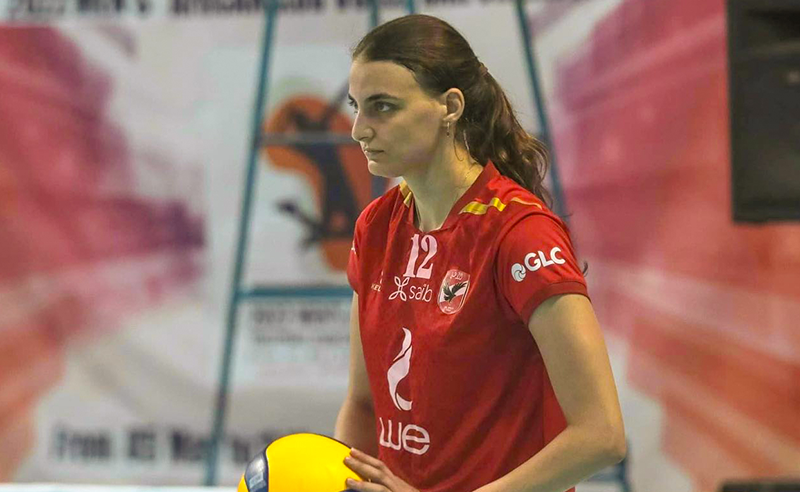 Although her pregnancy had not been planned for that particular point in her life, Farida El Askallany, a member of Egypt’s national volleyball team, welcomed it as a blessing and was not afraid of the changes it would bring.
“I wasn’t planning to get pregnant at that time, but I wasn’t afraid because I trust in God’s timing,” she says.
“I found out I was pregnant during a national team training camp at Hassan Mostafa Sports Hall, just two weeks before the African Championships, so I left the camp immediately.”
Askalany returned to training a month and a half after giving birth and tried to balance sport with caring for her son. She brought him along to training sessions and training camps, and even took him with her to the World Championships in China.
Over time, however, she found it increasingly difficult to maintain that balance and realised she wanted to spend more time with her son.
She decided to retire, without viewing her decision as a loss for her career.
"Motherhood is both a difficult and beautiful experience. If I could go back in time, I would make the same decisions and would have no regrets," she says.
"Choosing motherhood does not diminish the value of the years I spent on the court."
Her experience offers a different but equally important perspective on the conversation. Success should not be measured solely by an athlete’s ability to return to competition, and retirement does not erase what she has achieved.
What matters most is that the decision comes from her own choices and circumstances, rather than pressure pushing her in one direction or another.
5. Nouran Gohar: “Balancing sport and motherhood is harder than it seems, but it is worth it”
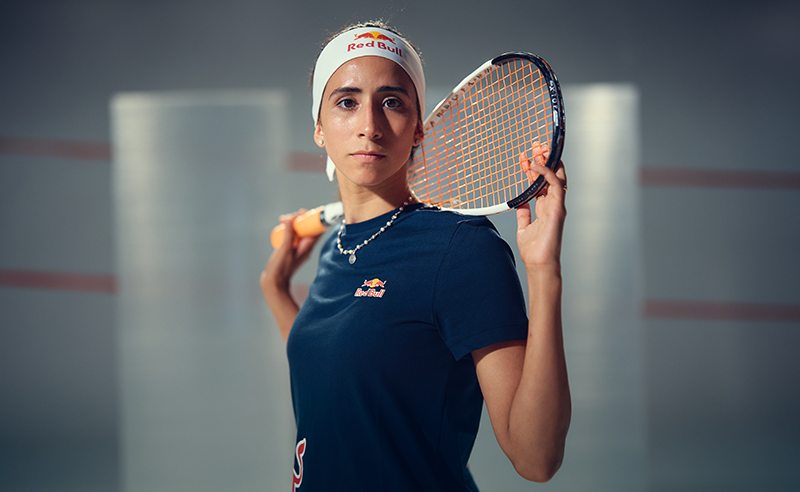 Egypt’s squash champion Nouran Gohar faced a different challenge after having a child.
She had never imagined she could continue competing at the highest level after giving birth and once viewed balancing motherhood with professional sport as impossible.
Gohar became pregnant while at the peak of her career as the world’s top-ranked player, having already won 36 PSA titles, including the World Championship. Yet even at that level of success, she felt something was missing.
"I started feeling that something was missing from my life. Sporting success no longer made me happy," she explained to SceneSports.
“When pregnancy came along, it became a challenge for me and an opportunity to prove that returning to competition after having a child isn’t impossible.”
Four months after giving birth, Gohar competed in her first tournament since returning, at the Qatar Classic 2026. She describes the feeling before her opening match at the Qatar tournament as being like a child going to school for the first time, feeling nervous and unsure of what to expect.
She won the match and reached the quarter-finals, with her daughter there to watch her compete.
Gohar believes female athletes face additional considerations that men do not have to navigate to the same extent. They must find a way to balance competition with building a family while considering how having a child could affect their sporting futures.
Her experience captures just how much harder a comeback can be than people imagine, but also why the effort is worthwhile.
After a demanding training session, seeing her daughter smile can make all the exhaustion feel a little less difficult to bear.
What support do mothers need in sports?
The five women did not follow the same path, and there is no reason they should have.
Some wanted to return as quickly as possible. Others needed more time. Farida El Askalany decided that stepping away from competition was the right decision for her and her son. That choice does not make her career less successful than those who came back and won again.
Their stories also show how much of a comeback is decided beyond the athlete herself. Contracts, federation support, childcare, family circumstances and the willingness of sporting institutions to keep investing in women through pregnancy can determine how many options remain open.
Returning to competition should not become another test women are required to pass after becoming mothers. Retirement should not be treated as proof that motherhood ended a career that would otherwise have continued indefinitely.
Nada Hafez, Samar Hamza, Feryal Ashraf, Farida El Askalany and Nouran Gohar made different decisions under different circumstances. The common ground is simpler: motherhood changed their careers, and each of them still deserved the space, support and time to decide for herself what came next.
- Previous Article MNT Tech Receives LE 4 Billion Capital Injection After IPO
- Next Article KOTN’s ‘I’ve Got a Guy’ Stars ‘Adults’ Actor Malik Elassal
Related Articles

Trending This Week
-
-
 Oct 24, 2026
-

-