




Aziza Sbaity Is the Fastest Woman in Lebanese History
The Lebanese sprint record holder's journey from Liberia to the track, finding belonging through sport and building new opportunities for the next generation.
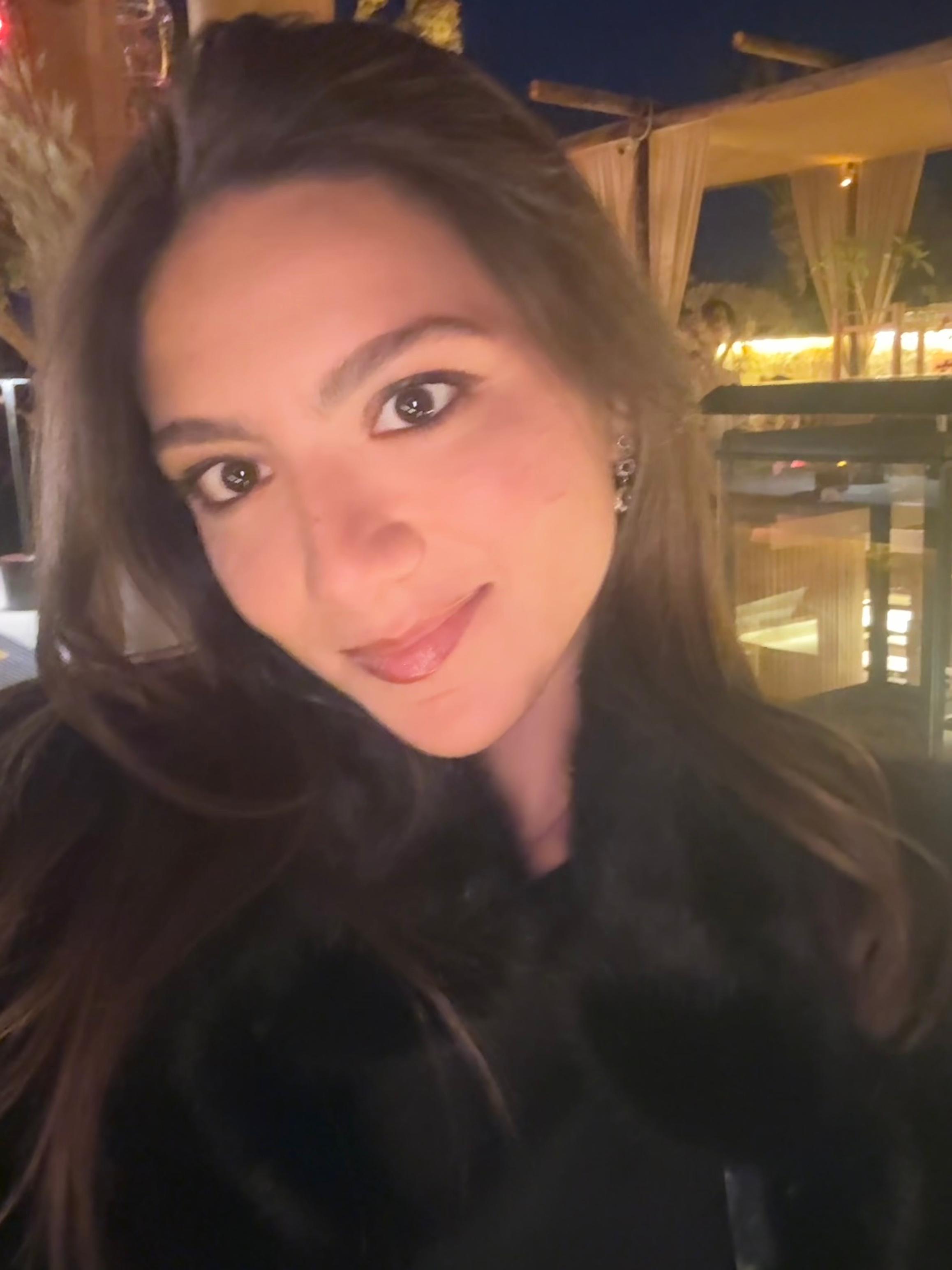
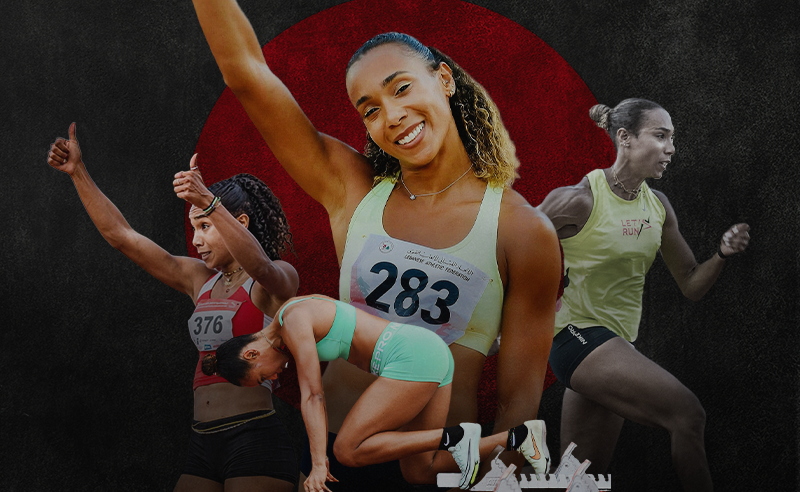
On the track, the Lebanese sprinter has built a career around fractions of a second. Her 11.54 second 100m personal best, set in Weinheim, Germany, in May 2023, stands as Lebanon's national record. Away from competition, Sbaity's story stretches far beyond the finish line, shaped by questions of identity, belonging, representation, and what it means to make space for others.
Born in Liberia to a Liberian mother and Lebanese father, Sbaity moved to Lebanon at 11, carrying two roots into a country where she would have to find her footing all over again. Today, she is known as one of Lebanon's standout sprinters and a BBC 100 Women honouree.
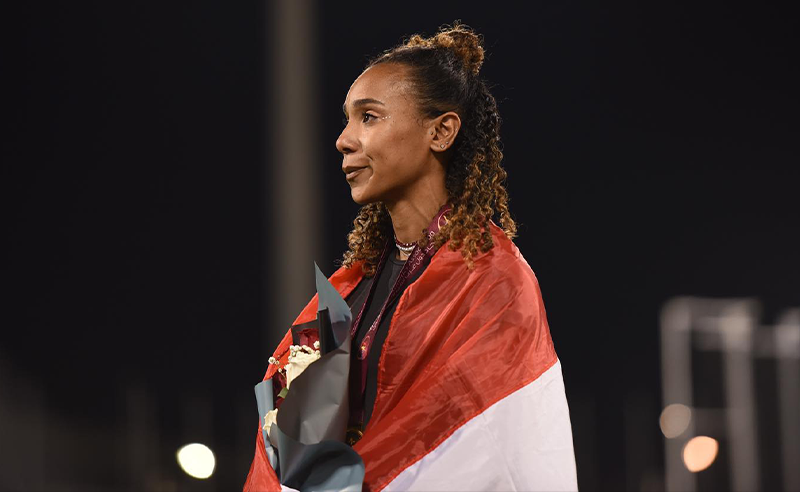 Long before the records and recognition, sport offered her something more personal: a place where she could belong.
Sbaity's childhood in Liberia was spent in a diverse, international school environment. Moving to Lebanon brought a very different experience.
She found herself navigating racism and bullying, often standing out as one of the few Black children around her. Even within her own family, she recalls moments when strangers made assumptions about her place beside her Lebanese stepmother and siblings.
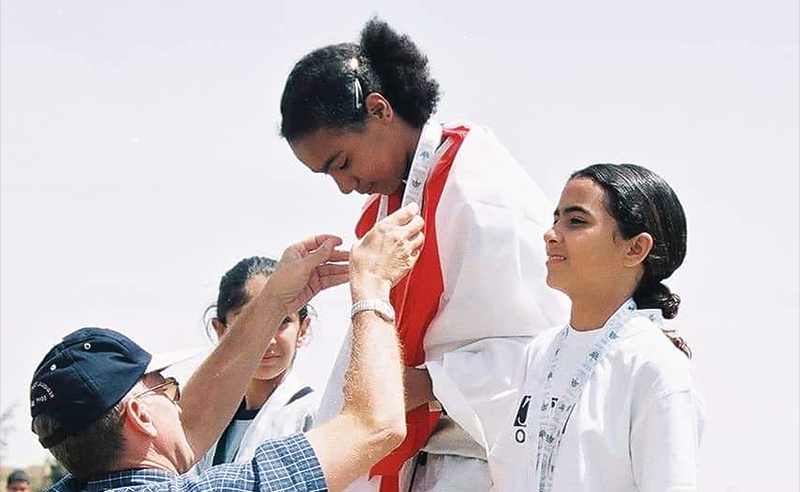
At school, sport became a way to be seen beyond those assumptions. Basketball was initially her focus, but a track tryout revealed a different kind of talent. She was fast, and soon that speed began to give her a new identity.
"It kind of gave me the identity of not just, you know, like the Black girl. It was like the fast girl and the strong girl," Sbaity told SceneSports.
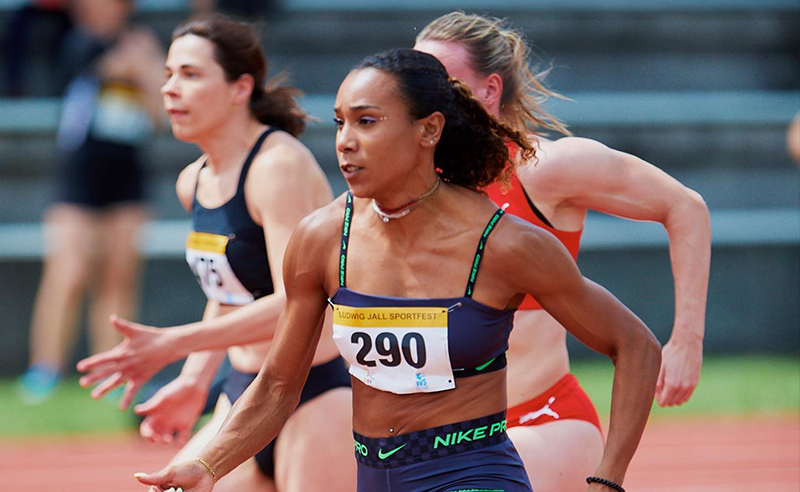 The track also gave her something to work towards. Through her school's competitions and regional SABIS tournaments, she began travelling, competing and experiencing sport as something that could connect her to a wider community.
"It was a safe haven for me. It was a place where I found myself, where I felt that I belonged."
As she moved through those competitions, the meaning of competing began to change. Athletics was no longer simply something she was good at. It became a way of carrying the people and place she represented with her whenever she stepped onto the track.
"I just learned more about representing something bigger than you," she said.
By 17, Sbaity had earned her place on Lebanon's national team and won her first national title. The decision about which sport would define her career was already clear.
"I never held a basketball ever again," she said.
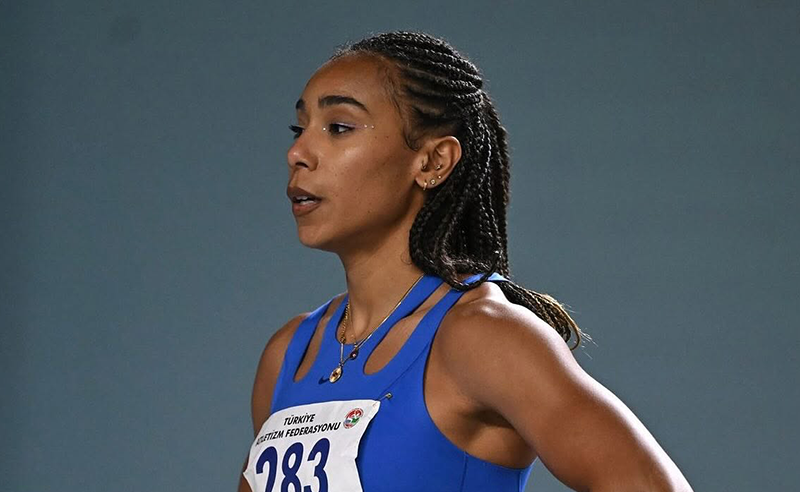 That commitment was tested almost immediately, at the 2009 Francophone Games in Lebanon, her first taste of international competition. She did not win a medal, but the experience gave her an early understanding of what it meant to compete under the Lebanese flag.
The opening ceremony remains one of the moments she remembers most vividly. Walking into a stadium filled with around 30,000 people, surrounded by lights, music and thousands of spectators, she found herself overwhelmed.
"I was just crying and I couldn't believe it. I didn't know I was going to cry at that point, but it was just so overwhelmingly beautiful," she recalled.
"Ah, okay, so this is what it feels like to represent your country."
Lebanon became the country she represented on the track, while Liberia remained an equally important part of who she was.
"From a young age, I knew I was both Liberian and Lebanese. It was never a question. I'm very attached to both of my roots."
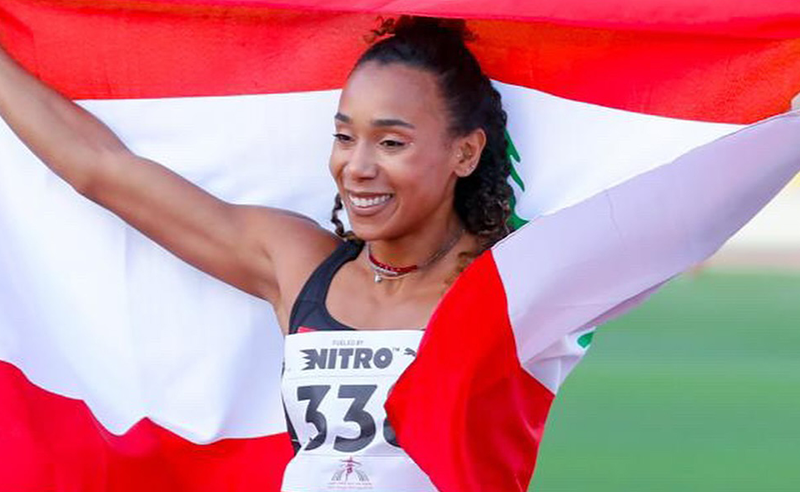 That dual identity has occasionally needed explaining to others. Sbaity has encountered people surprised that she is Lebanese or that she speaks Arabic, particularly those who assumed she was a foreign athlete competing for Lebanon.
"But it just so happened that my path took me towards representing Lebanon," she said.
Explaining her own identity so often eventually pushed her to speak up about identity more broadly. She began addressing racism, migrant communities and acceptance in public, working with NGOs and speaking at schools and universities.
Social media became another outlet for those conversations. "My Instagram has always been the place where I verbalise my thoughts," she explained.
The conversations became more prominent in 2020, when the global protests following George Floyd's killing prompted Sbaity to speak more openly about racism. She challenged the disconnect she saw between conversations about racism abroad and the experiences of Black and migrant communities in Lebanon.
"I knew I could use my voice for something much bigger than myself," she said.
Her work beyond competition was recognised in 2023, when she was named to the BBC's 100 Women list, honouring her advocacy around inclusion and equality alongside her work with young people.
The same year also marked a major point in her sporting career. In May, she ran 11.54 seconds for the 100m in Weinheim, setting a Lebanese national record that still stands.
"My journey wasn't just about track and field, or about chasing medals, records and more wins."
That record proved harder to build on than to set. She described 2024 as a difficult season, followed by an Achilles injury in 2025 that kept her out for the year.
"I feel like my brain and my body are still trying to sync up and bring out the same performances, or even better ones, that I had in 2023," she said.
 For an athlete measured in hundredths of a second, the process can be frustrating. The target is familiar, but reaching it again has taken time.
"It's been a tough few years. But that's how I know I really love the sport. It really means the world to me."
Recovery hasn't slowed her down elsewhere. Alongside her own comeback, Sbaity is preparing to launch Stride, a project focused on giving more people in Lebanon an opportunity to get into track and field.
The idea grew from seeing a gap in access to the sport, closely connected to her own experience of discovering athletics at school. "Stride is really about giving people the opportunity to get into track and field," she explained.
"I thought to myself 'Okay, this is missing. Let's fill that gap and make it work properly.'"
She continues to compete and work her way back towards the level she reached in 2023, while also looking at what can be built around the sport for those coming after her.