





YADD Community Brings Craftsmanship Centre Stage to Cairo Design Week
YADD Community brings artisans, tools and live demonstrations into Heliopolis to show how traditional craft shapes contemporary design and who does the making.

A finished object begins with a design, but it is shaped just as much by the person who makes it. Wood has to be cut, clay shaped, mother-of-pearl laid, glass blown and fibres woven before an idea becomes something you can actually hold.
A finished object carries more than a designer's sketch. It also carries the hands that perform the labor: cutting the wood, shaping the clay, laying the mother-of-pearl, blowing the glass, weaving the fibres and work a material until an idea becomes something physical.
Cairo Design Week's new YADD Community initiative is built around that part of the process.
The programme makes its debut during the festival's fourth edition, running from November 19 to 28, with an exhibition at Ghurnata Community Space in Heliopolis that puts artisans and the knowledge behind their work at the centre of the conversation.
Created by Creative Districts and curated by designer Shewekar El Gharably and her namesake studio, Past, Present & Future: Craft in Continuity looks at where traditional crafts come from, how they are practised today and how those skills might continue to develop through contemporary design.
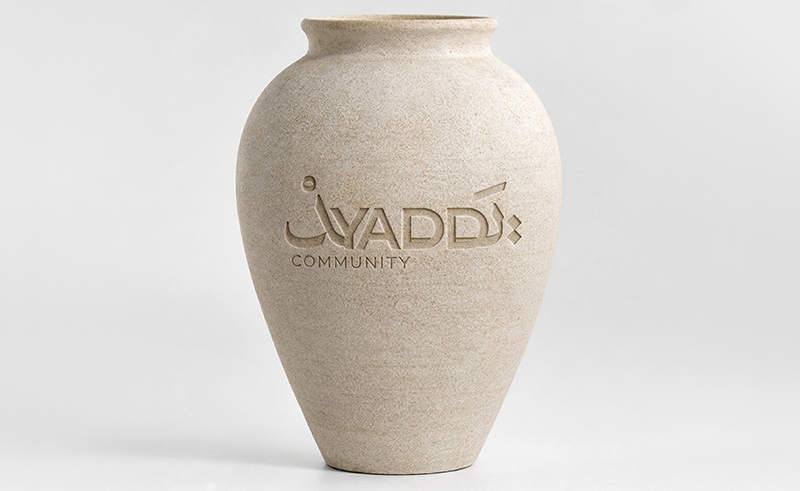
YADD takes its name from the Arabic word for hand. El Gharably sees that hand as too often missing from the way finished design is discussed.
"We have so many talented craftsmen and women and artisans in Egypt who don't get their much-deserved spotlight and recognition," she says.
Those craftspeople work across practices including mother-of-pearl inlay, mashrabiya woodwork, pottery, glassblowing, handmade rugs, copperwork, straw weaving and khayamiya,
-aae2c4be-521d-425d-8762-17708a43aaff.jpg) Egypt's tradition of colourful textiles. Their work may appear beneath a designer's name, though the finished piece carries decisions made through years of material knowledge.
"Even if a designer has a sketch, the skill and mastery of an artisan is reflected onto the work and craft produced," El Gharably says.
"The final product is, ultimately, part designer and part craftsperson because their spirit and the way they work goes into the final design and the final aesthetic of everything."
YADD follows that relationship through three spaces dedicated to the past, present and future of craft.
The first, on the ground floor of Ghurnata, begins with where the practices came from.
Historical references, images, material samples and prototypes will trace the crafts featured in the exhibition through the regions and communities that developed them, giving visitors context for techniques that can otherwise appear only as decoration on a finished object.
The next space moves into the workshop. Raw materials, sketches and tools will sit beside different stages of production, with live demonstrations showing the decisions and physical skill hidden inside the final piece.
Pottery, for example, will be presented through the preparation of clay and its movement onto the wheel, allowing visitors to follow the material as it is worked into form.
El Gharably sees that visibility as useful to designers too. Understanding the limits and possibilities of a technique can change the way they draw, combine materials and approach the person responsible for making the work.
"When designers see the process, they may figure out what they could change or add, even if it's another craft, to make the piece ever more special," she says.
The exhibition brings together pottery, rugs, glass, mother-of-pearl, woodwork, arabesque, khayamiya, straw weaving, copperwork and other forms of material craft.
The final space takes those skills into new collaborations.
Designers will combine two different crafts within a single work, testing what happens when techniques usually practised separately are asked to solve the same object.
The resulting pieces and installations are intended for contemporary living spaces, giving established methods somewhere new to go and giving designers a deeper relationship with the material knowledge behind them.
El Gharably also sees economic stakes in keeping that knowledge alive.
Craft is work. It can support livelihoods, industries and local manufacturing, and it can give Egyptian products a language rooted in the skills and materials already present here.
-26afaaa5-997e-49dc-b382-514e2b49976d.jpg) She points to established craft economies in countries including India and Morocco as examples of traditional skills continuing to generate work, exports and cultural value.
"Craftsmanship and craftspeople can contribute to economic development while strengthening a country's cultural identity and heritage, with the potential to increase tourism and sales of locally made products and furniture," she says.
YADD's idea of handwork will also move outside the exhibition rooms.
Craft You Can Taste extends the programme into food, focusing on the processes behind things usually encountered only when they reach a table. Turkish coffee, kunafa, atayef and samosas are among the foods set to be prepared by hand through the exhibition's café concept.
The addition stretches YADD's definition of craft beyond decorative objects towards the repeated skills people inherit, practise and pass on through everyday life.
Its first Cairo Design Week appearance ultimately places the maker back inside the story of design.
The objects remain important. YADD asks visitors to look long enough to see the people, knowledge and labour that made those objects possible in the first place.
- Previous Article Shbash Takes a Laid-Back Victory Lap on Trap Single ‘MASAFAT’
Related Articles
Trending This Week
-

-

-
 Nov 08, 2026
-
 Nov 09, 2026