



When Historic Buildings are Restored, Who Pays to Maintain Them?
Restoring heritage is only half the story—what happens after the scaffolding comes down? From Palestine to Egypt, SceneHome traces who funds maintenance once the work is done.

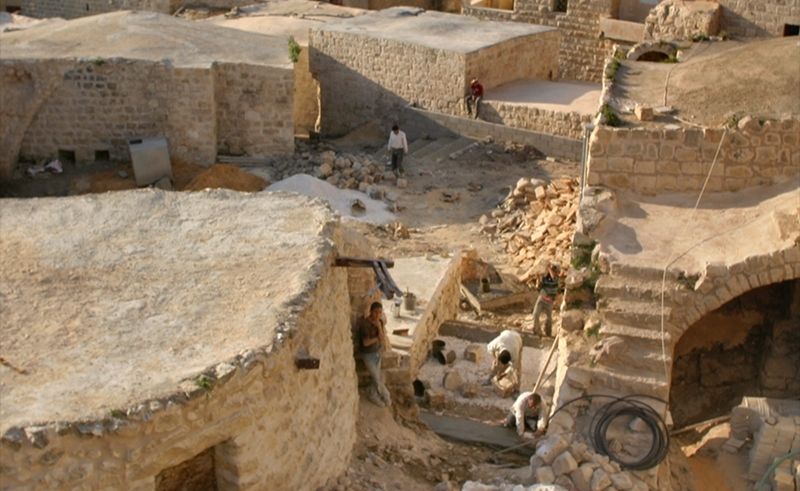
Across the Arab world, architects are working to restore heritage sites. The process is long, expensive, and often requires multiple sources of funding. So, what happens after all that hard work? Who funds maintenance once the project is finished?
SceneHome searched for answers across Palestine, Syria, the UAE and Egypt through experts who have led projects within these countries’ distinct political and economic landscapes. In Palestine, the RIWAQ Centre for Architectural Conservation hands the finished project over to the community. In Syria, the Citadel of Damascus avoided maintenance costs unintentionally, by keeping its doors shut during the civil war. In the UAE’s Al Jazeera Al Hamra Heritage Village, the government foots the bill. And in Egypt, Athar Lina encourages local communities to care for their heritage by fostering a sense of responsibility for their neighbourhood.
Palestine: Trading Restoration for 15-Year Stewardship
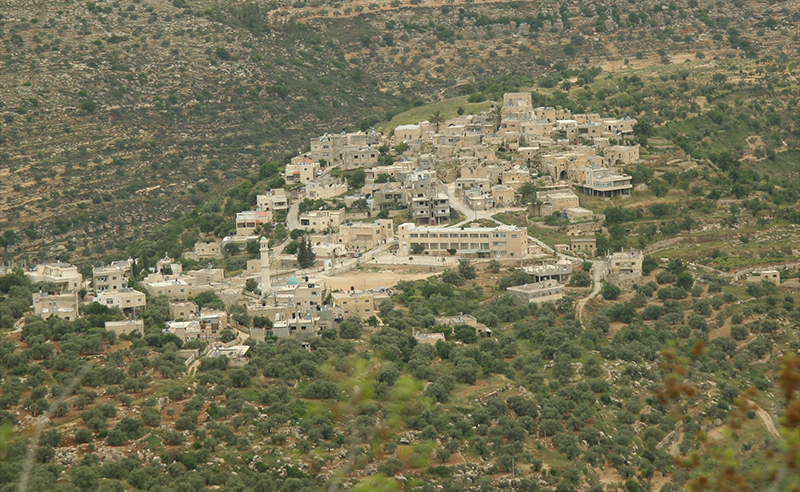
About 25 years ago, RIWAQ Centre for Architectural Conservation developed a model for post-project maintenance that addresses fragmented land ownership, a lack of funding, and community needs.
RIWAQ identifies the building they want to restore and makes a deal with its current owner: in exchange for full (and free) restoration, the owner gives their building to the community for the next 15 years. An organisation takes over—perhaps a students' association or youth club—and keeps the restored building in good condition until they return it to the original owner.
The RIWAQ model speaks uniquely to the context of Palestine, where local NGOs like RIWAQ carry a huge responsibility to protect historical sites in the absence of government support and funds, and in the face of ongoing erasure of Palestinian cultural heritage.
“If we wait too long, the majority of Palestine’s built heritage will be destroyed,” Yousef Taha, RIWAQ’s Restoration Unit Director, said.
Before COVID, RIWAQ restored about 10 buildings per year. Now, as the international organisations they once relied on have pulled much of their funding—which has been exacerbated by Israel's genocidal war on Palestine—they only have the capacity to restore two to three buildings per year. This means that once they finish one project, they must use their limited time and resources wisely and move on to the next. So, when the people responsible for the restored building don’t take care of it properly, they can’t always follow up on the maintenance needs of the site.
“We prefer to spend the time on new projects to preserve as much as we can,” Taha explained. RIWAQ is racing to complete as many projects as they can while occupying forces seize control of and destroy Palestinian heritage sites across the West Bank.
This model for post-restoration maintenance might not make sense in other countries, Taha said, “but the most important thing is not the model that you use, it's the dialogue with the community to determine the best use for the building.”
Syria & UAE: From Closure to Continuous State Support
In nearby Syria, the Citadel of Damascus lived through the Syrian Civil War. This was one of the UNESCO World Heritage sites that architectural conservator Hala Shankhour worked to restore and protect during the 13-year war.
After she finished the restoration project over a decade ago, the site remained closed to the public until December 2025, a year after the war ended.
“At the time, we didn’t have a regular maintenance plan or plan for the future,” Shankhour said. "But since there were no visitors at the Citadel, there was no need for maintenance."
Shankhour explained that the Citadel project was partially completed in collaboration between the Italian and Syrian governments, with involvement from several Italian universities and NGOs, and that restoration projects typically receive a mix of public (government) and private funding—“but government funding is the most sustainable source.”
Unlike the Damascus Citadel, Shankhour’s current project is funded by a large budget from the Ras al Khaimah government budget—restoration, maintenance and all. For the past six years, Shankhour has worked as the Director of Archaeology and Preservation at the Department of Antiquities and Museums in Ras Al Khaimah. She oversees the conservation of Al Jazeera Al Hamra Heritage Village, the UAE’s last remaining pearling village.
“It is the most successful project I’ve worked on,” she said. Whereas the Citadel was not in use, Al Jazeera Al Hamra has opened up to the public as they continue to work on restoration. This means that they are able to repair the structure or weather damage with their existing budget whenever necessary.
“If there is no funding for maintenance, you will lose the building to time,” Shankhour said, which happens far too often to historical sites around the world.
Egypt: Community Benefit as a Path to Preservation
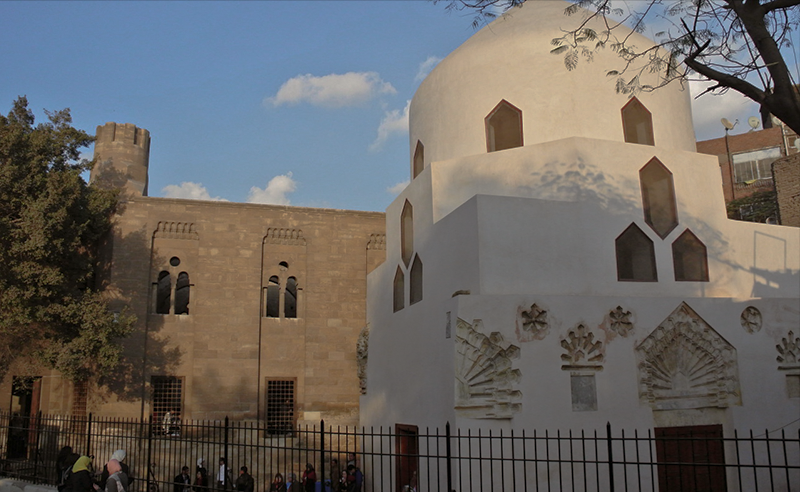
Cairo-based architect and conservationist May al-Ibrashy agreed that maintenance is difficult without a plan for how to use the site or building after it is restored. She is the founder and chair of Megawra—Built Environment Collective, an organisation that links heritage with sustainable development and community empowerment. Through this, she coordinates the Athar Lina Initiative in Historic Cairo’s Al-Khalifa neighbourhood, where community engagement is the backbone of heritage protection.
“The idea is that people take care of their heritage if they benefit from it,” al-Ibrashy said. “It's become a triangle between communities, the heritage in the area they live, and the environment.”
In Al-Khalifa, Athar Lina’s maintenance work falls under three main categories: listed heritage sites such as domes and mausoleums, unlisted buildings rehabilitated for different uses, including their office and the Al-Khalifa Community Center, and open public spaces like the Khalifa Community Park.
“The conservation of the listed heritage sites—the monuments that are operated and or owned by the Ministry of Tourism and Antiquities, is tricky,” al-Ibrashy explained. “In this case, if the building is not open to visitors or is part of an adaptive reuse plan, it's extremely difficult to make sure that maintenance happens.”
But in many cases, after finishing a project, al-Ibrashy said, there isn’t enough funding for maintenance, and the building is misused or deteriorates.
Al-Ibrashy said that long-term maintenance in Egypt requires addressing three key issues. First, decentralising the revenue created by heritage sites is critical, through tickets, charity or other use.
“The revenue that is generated goes back to a central state budget,” she said, which creates delays and inefficiencies. Redirecting a percentage of the generated income back into upkeep would ensure faster, more consistent maintenance with less bureaucracy.
Second, adaptive reuse must prioritise local needs. “It has to be something that is beneficial first and foremost to the community,” Ibrashy said, ensuring that both the building and its surrounding area gain value. Finally, broader infrastructure challenges must be tackled to avoid maintenance from the beginning—issues like waste management, rising groundwater, and unstable electrical networks are major sources of damage.
“If you address Egypt’s systemic endemic problems,” al-Ibrashy said, “this will make a very big difference.”
- Previous Article Moroccan Retail Platform z.systems Raises $1.65M in Seed Funding
- Next Article The Ancestral Resilience of Omar El Farouk’s Fayoum Home