




Egypt’s Annual Water Demand Reaches 88.55 Billion Cubic Metres
Official figures show Egypt’s water demand exceeds renewable resources, with agriculture accounting for more than three quarters of total use.

Egypt’s annual water demand has reached 88.55 billion cubic metres, exceeding the country’s renewable water resources, according to figures presented to the Egyptian Senate.
The data was delivered during a plenary session by the Ministry of Water Resources and Irrigation, outlining how water is consumed across sectors and how authorities are managing the growing shortfall.
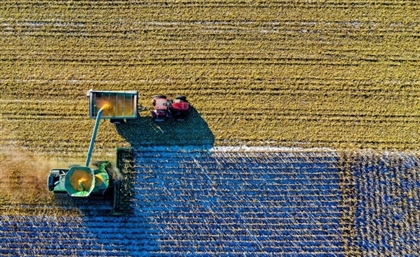
Agriculture remains the largest consumer, accounting for 68.1 billion cubic metres annually, followed by drinking water at 12.45 billion cubic metres, industry at 5.5 billion cubic metres, and other uses at 2.5 billion cubic metres.
By contrast, Egypt’s renewable water resources are estimated at 65.35 billion cubic metres per year. These include the country’s 55.5 billion cubic metres share of Nile waters, around 650 million cubic metres from desalination, 1.3 billion cubic metres from rainfall, and 7.9 billion cubic metres from deep non renewable groundwater.
To bridge the gap, the ministry currently relies on the reuse of approximately 23.2 billion cubic metres of water each year. Officials noted that per capita water availability has declined sharply over decades, falling from around 2,000 cubic metres per year in 1962 to roughly 500 cubic metres today.
Population growth has slowed in recent years, decreasing from 1.95 million in 2011 to 1.28 million in 2024, but pressure on water resources continues to intensify. The ministry outlined the ‘Egypt Water System 2.0’ strategy, a comprehensive framework built around five main pillars.
The first focuses on water treatment and reuse for food production, supported by an agricultural drainage network extending 22,000 kilometres and major wastewater treatment projects including New Delta, Bahr Al Baqar, and Al Mahsameh, which together are expected to add 4.8 billion cubic metres per year.
Desalination is also being expanded to support intensive agricultural activity. The second pillar centres on smart water management, using rainfall forecasting, satellite imagery, drones, and digital platforms to monitor irrigation systems, canals, shoreline changes, and water distribution in real time.
Machine learning models are being deployed to improve crop irrigation planning. Digital transformation forms the third pillar, with geographic information systems, digital licensing, and detailed mapping of water networks supporting data driven decision making.
Infrastructure rehabilitation is the fourth pillar, covering upgrades and maintenance works at key sites such as the High Dam, the Toshka spillway, the Dirot Barrages, and major canals across the country.
The fifth pillar addresses climate adaptation and mitigation through coastal protection projects in Alexandria, Damietta, Matrouh, and Rasheed, alongside flood protection infrastructure capable of absorbing up to 350 million cubic metres. Authorities have also converted 284 groundwater wells to solar power to reduce energy demand.
Additional measures include regulating Nile and branch flows, removing unauthorised constructions along waterways, modernising agricultural practices, and expanding public awareness campaigns under the Ala El Qadr initiative.
- Previous Article Tax Authority Launches Consultation Platform for Businesses
- Next Article The Middle Eastern Pulse of Leighton House