





Voqal AI is Building Voice Tech That Understands How Arabs Speak
The Cairo-founded startup is betting that the region's biggest tech habit isn't typing - it's talking.

Agentic AI and voice AI remain developing fields in MENA, with most deployments still closer to pilot projects than mature, production-grade infrastructure. Enterprises across the region have moved quickly to experiment with autonomous systems, but most deployments stay narrow in scope, handling discrete tasks rather than full workflows. Voice technology carries its own regional complication. Arabic is not one language but several, with Gulf, Egyptian, Levantine and Maghrebi dialects differing in vocabulary, phonology and rhythm, and most voice models on the market were trained on Modern Standard Arabic, a register few people use in daily conversation. The gap between what these systems understand and how people actually speak has become one of the defining problems for anyone building voice AI in the region.
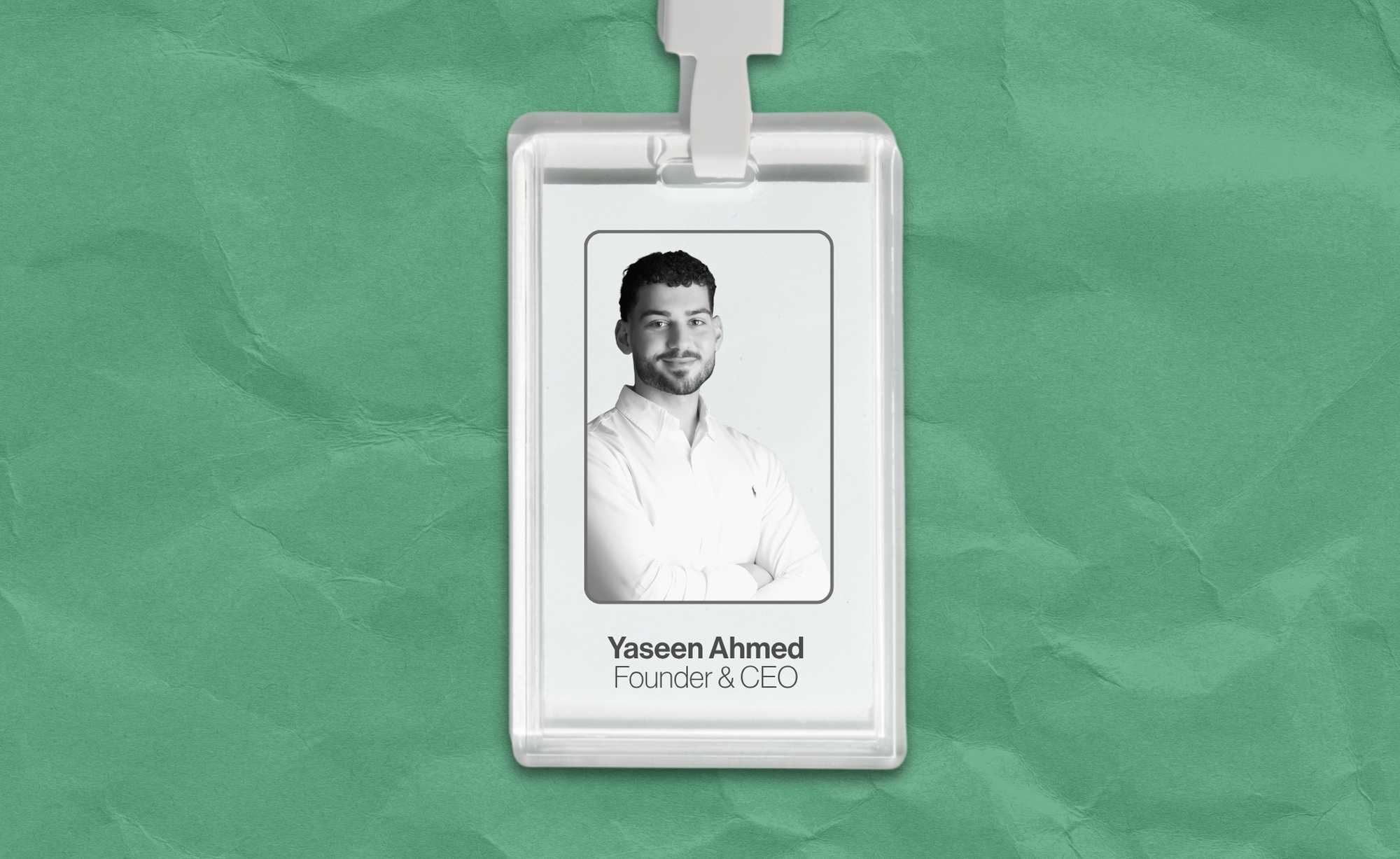
Voqal AI, founded in 2025, is positioned inside that gap. The company builds an agentic layer for consumer apps that runs on voice, aimed initially at e-commerce, quick commerce and fintech platforms in Egypt, Saudi Arabia and the UAE. Its founder and CEO, Yaseen Ahmed, describes the company's starting point as a problem most apps in the region were never built to solve.
"Across mobile apps, there's tons of friction, there's high customer drop off," Ahmed said. "Big e-com and Q-com companies know exactly where the customers are dropping off. They're always looking to reduce the amount of friction from intent to action."
Voqal AI’s answer replaces tapping through menus with speaking a request directly. Ahmed gave an example from an e-commerce context. "It could be something like, I'm looking for a healthy breakfast under 500 calories. The agents would just go in the app or the menu, pull up the data that's there, find items, and add them to the cart automatically. It's just natural human communication."
That communication has to happen in dialect, not formal Arabic. "Majority of the models out there are trained on MSA, Modern Standard Arabic," Ahmed said. "When you have a model trained on fusHa, and then you say something in Egyptian, that's not necessarily going to be transcribed in the best way possible. It causes misunderstanding. The model might hallucinate, might not understand your intent." Voqal AI has built its dialect accuracy to above 97 percent across the Egyptian, Saudi and Emirati dialects it currently supports.
The bet behind the company is less about the novelty of voice than about a documented regional habit. "Statistically, the MENA region is the biggest user of voice in the world," Ahmed said. "That's natural behavior in the region. People would rather send a voice note than type something out." He extended the observation past phones. "Think of it even in the streets. In Toronto, why is the street quiet? Why is everybody here honking? Because people are vocal, they try to communicate using voice or some sort of sound. That's their behavior, that's their nature." The company's name follows from the same idea. "People in the region are very vocal about what they want, their intent."
Asked to describe the product directly, Ahmed kept it to a single line. "Voqal AI is an agentic harness for consumer apps that's powered by voice. Any business can make their consumer app both voice and agent enabled in 10 lines of code." He set that against the alternative most companies face. "Building a system like this in-house, even for some of the biggest tech companies in the region, would take months of development, months of research, and months of making sure that it's reliable in production."
Ahmed argues the value extends past speed. Businesses using Voqal AI gain visibility into intent that tapping never provided. "Businesses know what people are looking for, but they don't know why they're doing that," he said. "Somebody's searching for eggs or oats or milk. Through voice, if somebody says, I have a World Cup watch party and I'm looking for snacks, the business ends up learning a lot more about their users than just through traditional tapping." A newer layer has emerged from that work, one Ahmed says he did not anticipate when he started the company. Paymob, a merchant platform where Voqal AI is live, is building a case study around reading customer sentiment through tone of voice alone. "They can actually analyse the user, how upset they are, how happy they are, just through the tone of voice," Ahmed said. "Somebody's getting mad that a certain feature doesn't exist in the app. That's something you would never have known before."
Adoption has not been automatic. Ahmed described resistance rooted in habit rather than technical doubt. "A lot of people think this is a nice-to-have. Some people think it's a gimmick." He traces the hesitation to how entrenched the tap-based interface already is. "Graphic user interfaces, as we know them, were invented 30 years ago, and that's all we've known since. You can't tell people, this is the behavior that you've known for 30 years, alright, it's now time to change it." He points to money transfers as a concrete case for what changes when voice replaces taps. "It takes like 22 to 23 taps on your phone just to send some money. When I can do that in a second, hey, transfer 1,300 to Mohamed, in Arabic, in my dialect, it's a lot quicker."
Asked what success looks like five years out, Ahmed returned to the same premise the company was built on. "I want everybody in the region to be interacting with software using their natural behavior, which is voice. I want people to be vocal about what they want and just get things done quicker."