




SehaTech: The Digital Spine Supporting Egypt’s Universal Health Vision
SehaTech is building the missing infrastructure behind Egypt’s health insurance system, using technology to streamline claims, reduce fraud, and improve access, backed by leading regional investors.

Egypt’s healthcare system carries a burden that numbers alone cannot fully capture: fewer than 10% of Egyptians hold private health insurance. An estimated 60% of the population has no formal coverage at all. The culprit lies in fragmented hospital systems, manual approvals that take days rather than minutes, paper-heavy claims processes that haemorrhage money on both sides of the transaction, and a fraud problem that has calcified into an accepted cost of doing business. The Egyptian government’s Universal Health Insurance Law, passed in 2018, began a phased attempt to address the macro picture. But legislation, however well-intentioned, cannot on its own digitise the back office of an entire industry.
This is where SehaTech comes in.
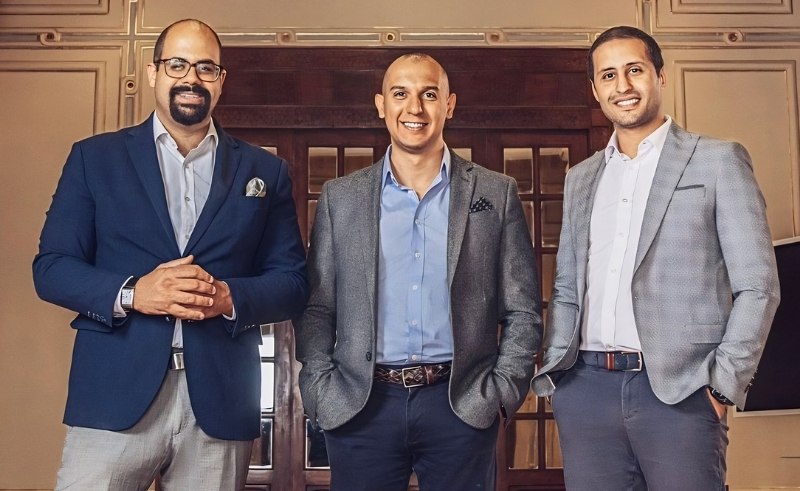
Founded in 2022 by Mostafa Tarek, Mohamed Elshabrawy, and Omar Shawky, the Cairo-based insurtech was built on the idea that the reason Egypt’s health insurance system fails is not a shortage of willing payers or patients, but a total absence of functional infrastructure between them. “SehaTech was founded to address the deep inefficiencies and fragmentation in healthcare administration across emerging markets,” Tarek says. “Legacy systems are often manual, slow, and lack transparency for both patients and insurers.” The vision was to build an end-to-end, technology-first health insurance infrastructure platform that simplifies access to care, automates operations, and creates a more efficient, transparent ecosystem for all stakeholders.
SehaTech’s investor base reflects its positioning as a company playing a longer game than most, with the 2023 pre-seed of $850,000 coming from A15 - one of Egypt’s most active early-stage funds - and Beltone Venture Capital, the venture arm of Beltone Financial Holding. Both are MENA-rooted institutions with deep familiarity with the region’s healthcare and financial services landscape. Both returned for the seed round, which closed in October 2025.
That round - $1.1 million, bringing total funding to $2 million - was led by Ingressive Capital, the Lagos-based fund focused on early-stage African tech, with participation from Plus VC and strategic angel investors.
To understand what SehaTech is doing, it helps to understand what it replaced and the deep-seated problem with health insurance in Egypt. Traditional third-party administration - the administrative layer between insurers and healthcare providers that handles eligibility checks, approvals, and claims processing - was, in Egypt’s private sector, largely manual. It relied on paper forms, phone calls, and long lag times between service delivery and payment. This was economically destructive, inflating loss ratios for insurers and eroding whatever trust existed between hospitals and the companies theoretically paying them.
“Our mission goes beyond technology,” Shabrawy explains. “It’s about reimagining access to healthcare. Focus on solving deep-rooted systemic problems, not just building products,” Shawky says. “When SehaTech started, there was significant scepticism around digital adoption across both providers and insurers.”
The sector had seen plenty of technological promises that dissolved upon contact with operational reality. What SehaTech had to prove was that digitising the back office was an economic necessity. “Today, we have proven that this model works not only operationally, but economically,” Tarek tells StartUpSceneMe. “SehaTech has helped insurers save hundreds of thousands in losses related to fraud, waste, and abuse, while significantly improving operational efficiency.”
“SehaTech is not an insurance company,” Shawky explains. “It is a medical insurance infrastructure system/ERP. It enables insurance companies, reinsurers, TPAs, and brokers to eliminate fraud, waste, and abuse, while automating operations end-to-end.”
The scope of what that infrastructure covers is expansive. “From policy production to the patient journey, to condition management and the financial settlement of claims,” Shabrawy explains, “SehaTech acts as the underlying infrastructure powering the entire ecosystem.” In practice, this means claims management and adjudication, provider network management, digital approvals and pre-authorisations, chronic medication management, a CRM and call centre infrastructure, a financial ledger and reconciliation system, and patient-facing tools for accessing care. An operational arm, SehaOne, provides on-the-ground BPO support - the human layer that makes the digital layer real.
SehaTech offers three distinct products for different market segments. Its eTPA is a fully digital third-party administration service managing health insurance policies and programmes on behalf of risk carriers or self-funded schemes, guaranteeing payers the best prices and lowest loss ratios across a nationwide provider network. Its SaaS product targets companies that want to manage their own health policies in-house, with AI and automation modules built-in. Finally, SehaCash is a discount card for the uninsured that grants access to the same provider network and pricing as insured individuals - a meaningful bridge for the millions currently outside the formal coverage system entirely. “This ensures access to the same network and prices as insured individuals,” the company says of SehaCash, a product that decouples access from formal coverage in a market where the latter remains out of reach for most.
The technology stack underpinning all of this includes AI-driven medical decision support, automation engines for approvals and workflows, OCR and natural language processing for medical document handling, rule engines for real-time adjudication, and advanced data analytics. "SehaTech's edge lies in its end-to-end automation,” Shawky says. “While many digital solutions focus on isolated parts of the insurance process, SehaTech integrates every step, ensuring a seamless flow of data between stakeholders. This reduces the bottlenecks that occur when insurers, hospitals, and administrators work on disconnected systems.”
The most striking figure SehaTech has put forward is 87% - the share of approvals now running automatically through its proprietary Priority Engine. The AI layer extends well beyond approval routing. SehaTech’s Agent AI / Data system, which the company calls its "approver copilot", enables operators to review and validate approvals, detect fraud and anomalies, answer policy-related questions, and interpret prescriptions. “It functions as a real-time assistant,” Tarek describes, “becoming the operator’s right-hand companion in decision-making.” Elshabrawy has noted that part of the new funding is specifically earmarked for R&D to deepen these models, “integrating predictive analytics that could anticipate fraud patterns or operational bottlenecks” before they materialise.
Loss ratios in some policies managed through the platform have fallen by 55%. Over the past two years, more than two million transactions have passed through SehaTech’s system. Claims processed in 2025 alone reached 1.2 billion Egyptian pounds.
The founders are candid about the friction. “Among the key challenges we faced were fragmented healthcare data systems, resistance to digital transformation, pricing pressures, and inflation in healthcare services,” Tarek says. Healthcare data in Egypt remains largely siloed by provider and insurer, which means every new integration requires negotiation and custom engineering. Digital transformation resistance is cultural as much as technical; a decades-long habit of paper-based operations does not dissolve simply because a better platform exists.
- Previous Article Mo Salah’s Record-Breaking Liverpool Legacy in Numbers
- Next Article House Babylon & The Set Up Bring Spring Supper Club to Villa Attouta