




This UAE-Based Photographer's Work Is a Glitch in the Fashion Matrix
Shooting for Gucci, Saint Laurent, and Vogue, Prod Antzoulis captures the textures that digital perfection often erases.
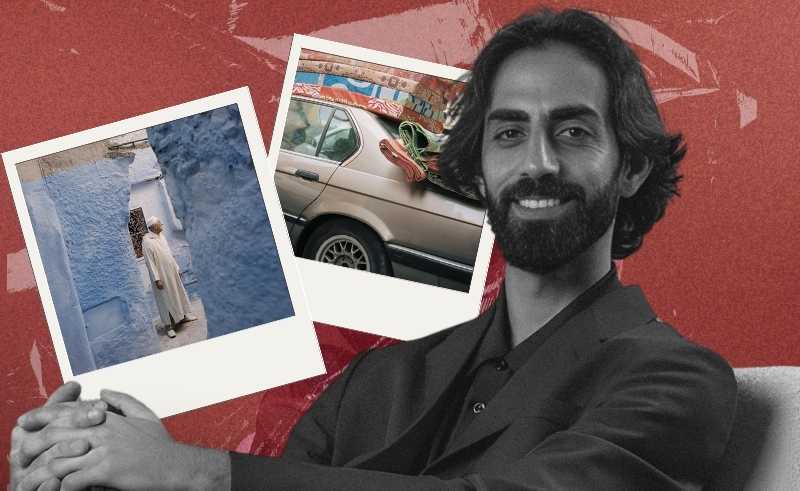
The fashion image machine is a hungry, self-cannibalising beast running on a relentless loop of campaign, editorial, cover, repeat. Its content calendar is a doom-scroll of sameness, its aesthetic a flattening algorithm of perfect lighting. You know the look, you’ve scrolled past it thousands of times. But Prod Antzoulis—a Cyprus-born and UAE-based photographer and creative director—has stepped outside this predictable circuit, becoming celebrated by the world’s biggest fashion houses for his very human form of visual rebellion.
While the industry is busy churning out pixels, Prod Antzoulis deals in the currency of chemical memory, wielding his tool of choice, a film camera, one that imposes limits and demands patience to produce a physical object: a negative. Rejecting the luxury of infinite takes, he offers 36 frames, no more. “It’s a considered process,” he shares with SceneNowUAE. “When I shoot analogue, I’m asking someone to trust me with a piece of history in my hands.”
Through the labour of finding texture in grain, he cultivates a presence with images grown in the dark, emerging in a lab days later. He has built a formidable career and portfolio—shooting for Gucci, Saint Laurent, Vogue—by feeding the machine a disparate visual world. He even steps in front of the camera himself for Gucci’s Valigeria campaign, reversing roles to become both observer and subject.
 With no immediate review and no delete button, the commitment becomes absolute. This dynamic forces a collaborative patience with a shared vulnerability, which digital photography often bypasses. His celebrated GQ Middle East Self-Isolation issue—shot remotely over Zoom during peak lockdown using his father’s vintage VHS camera—proved this trust could transcend physical distance. “It taught me that intimacy has no limits,” he reflects. The project was a masterclass in connection within constraint, the pixels tinged with the warmth of inherited memory.
This ethos of constraint mirrors a life lived across thresholds. “I’ve learned to accept that living in between is part of my identity,” he says. “It’s about gathering what I need from each place at different moments.” This duality is now his operative system: Cyprus for grounding, for a tactile connection to nature and history; the UAE for velocity and the friction of a perpetual future. His photography is the visual dialect of this negotiation.
With no immediate review and no delete button, the commitment becomes absolute. This dynamic forces a collaborative patience with a shared vulnerability, which digital photography often bypasses. His celebrated GQ Middle East Self-Isolation issue—shot remotely over Zoom during peak lockdown using his father’s vintage VHS camera—proved this trust could transcend physical distance. “It taught me that intimacy has no limits,” he reflects. The project was a masterclass in connection within constraint, the pixels tinged with the warmth of inherited memory.
This ethos of constraint mirrors a life lived across thresholds. “I’ve learned to accept that living in between is part of my identity,” he says. “It’s about gathering what I need from each place at different moments.” This duality is now his operative system: Cyprus for grounding, for a tactile connection to nature and history; the UAE for velocity and the friction of a perpetual future. His photography is the visual dialect of this negotiation.
 Fashion threads through this story; his grandmother was a pattern maker, his mother a collector. “Fashion was something I appreciated and valued from a young age, but more from a distance.” The fusion clicked in a UK high school darkroom, when the technical act of photography collided with the urge to build entire worlds. He began raiding his mother’s archive to style his subjects. “It became a way of tying together two forms of nostalgia, working with analog photography while using pieces from my parents’ past.”
From that moment onwards, his professional path unfolded through a series of falling dominoes. After nine years in the UK, a return to Dubai began to make inevitable sense. Connections made earlier began to pull taut. Inquiries turned into jobs. The return came from an urge to reconnect with his roots and develop identity within the region. The outcome, however, was entirely unforeseen. “Did I expect global campaigns or partnerships with major brands? No. I never imagined any of it was even a possibility.”
Fashion threads through this story; his grandmother was a pattern maker, his mother a collector. “Fashion was something I appreciated and valued from a young age, but more from a distance.” The fusion clicked in a UK high school darkroom, when the technical act of photography collided with the urge to build entire worlds. He began raiding his mother’s archive to style his subjects. “It became a way of tying together two forms of nostalgia, working with analog photography while using pieces from my parents’ past.”
From that moment onwards, his professional path unfolded through a series of falling dominoes. After nine years in the UK, a return to Dubai began to make inevitable sense. Connections made earlier began to pull taut. Inquiries turned into jobs. The return came from an urge to reconnect with his roots and develop identity within the region. The outcome, however, was entirely unforeseen. “Did I expect global campaigns or partnerships with major brands? No. I never imagined any of it was even a possibility.”
Through this journey, photography gave him a voice and a more crystallised intention: “to shine light on our region by focusing on the incredible talent around us.” This intent manifests with clarity in his portraits. One of his favourite projects was shooting Egyptian rapper Wegz in his hometown of Wardiyan; a document of return to a personal landscape. “It was a beautiful moment, showing the community around him and the world beyond it. Where he came from and where he is today, without shame.”
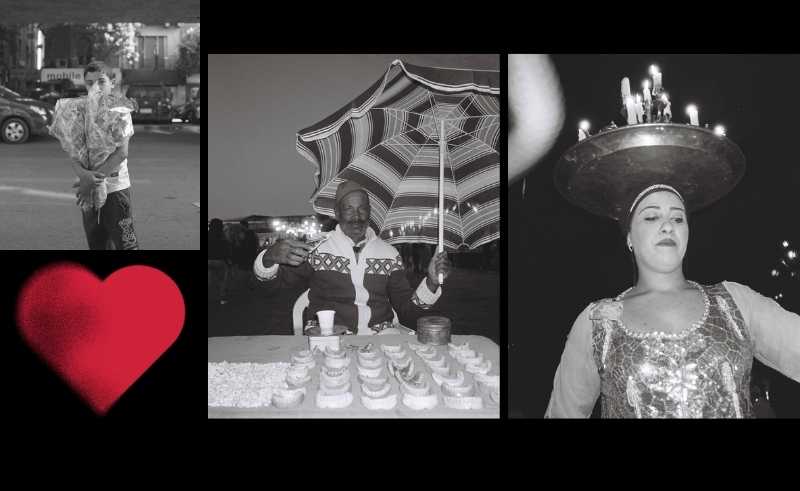
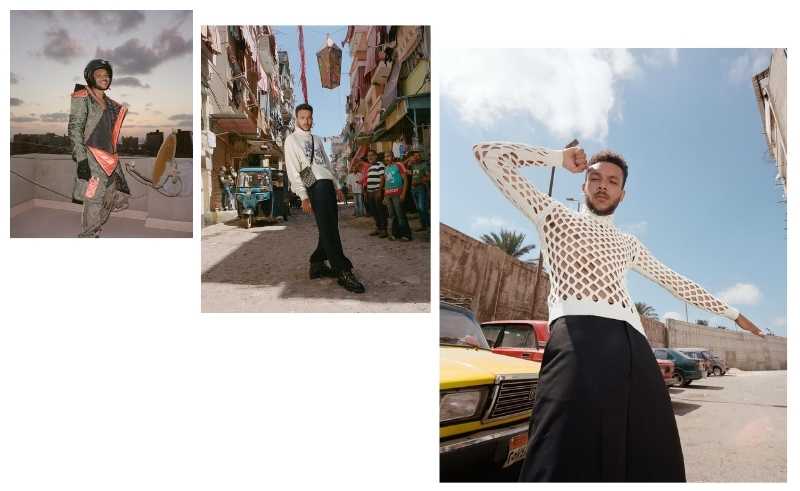 Away from the machinery of campaigns, Antzoulis maintains a rhythm of movement and stillness—running, camping, long walks at sunset and frequenting museums. His life outside the lens trains the eye behind it, teaching him to spot the moment where energy resolves into grace. This trained eye then performs a crucial cultural correction. “There’s so much beauty in imperfection,” he says, “the rawness, the juxtapositions, the culture of the souks.” His work seeks the pause, the glance away, the lived-in crease. By turning down the volume, he allows us to hear the subtler notes of a place and its people.
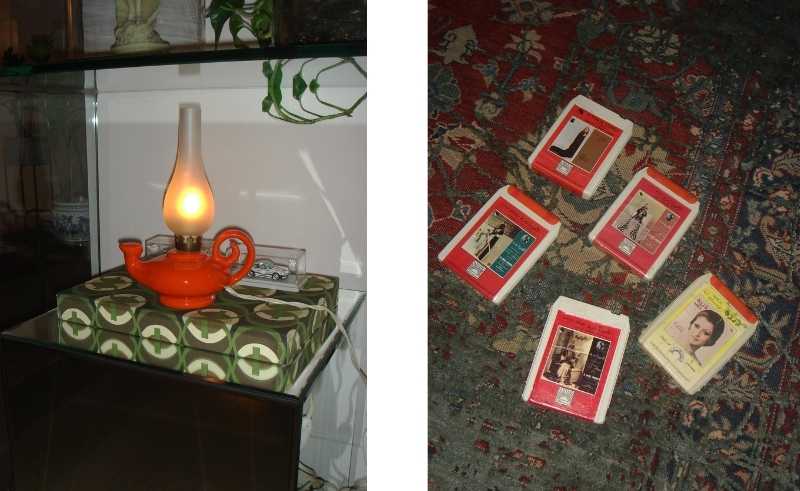
Yet, a photograph, however potent, can sometimes feel like a sealed memory. By 2024, Antzoulis felt the urge to make his archive tactile, to create a space where memory could be held. This impulse crystallised into Beit Prod, an esoteric, online wunderkammer where a 1960s Italian Genie Lamp sits beside collaborative 90s Era inspired sunglasses with PHILO eyewear, and analogue prints neighbour 1970s tech relics. “It’s an accumulation of items I’ve collected over the years through my travels, each with a story. Whether it’s the vendor I bought it from, the market I visited, where it’s been and who it’s been owned by. It's always a conversation starter.” he explains. With ‘Beit’ meaning house in Arabic, this is, in his words: “an extension of my house to the public.”
Away from the machinery of campaigns, Antzoulis maintains a rhythm of movement and stillness—running, camping, long walks at sunset and frequenting museums. His life outside the lens trains the eye behind it, teaching him to spot the moment where energy resolves into grace. This trained eye then performs a crucial cultural correction. “There’s so much beauty in imperfection,” he says, “the rawness, the juxtapositions, the culture of the souks.” His work seeks the pause, the glance away, the lived-in crease. By turning down the volume, he allows us to hear the subtler notes of a place and its people.
Yet, a photograph, however potent, can sometimes feel like a sealed memory. By 2024, Antzoulis felt the urge to make his archive tactile, to create a space where memory could be held. This impulse crystallised into Beit Prod, an esoteric, online wunderkammer where a 1960s Italian Genie Lamp sits beside collaborative 90s Era inspired sunglasses with PHILO eyewear, and analogue prints neighbour 1970s tech relics. “It’s an accumulation of items I’ve collected over the years through my travels, each with a story. Whether it’s the vendor I bought it from, the market I visited, where it’s been and who it’s been owned by. It's always a conversation starter.” he explains. With ‘Beit’ meaning house in Arabic, this is, in his words: “an extension of my house to the public.”
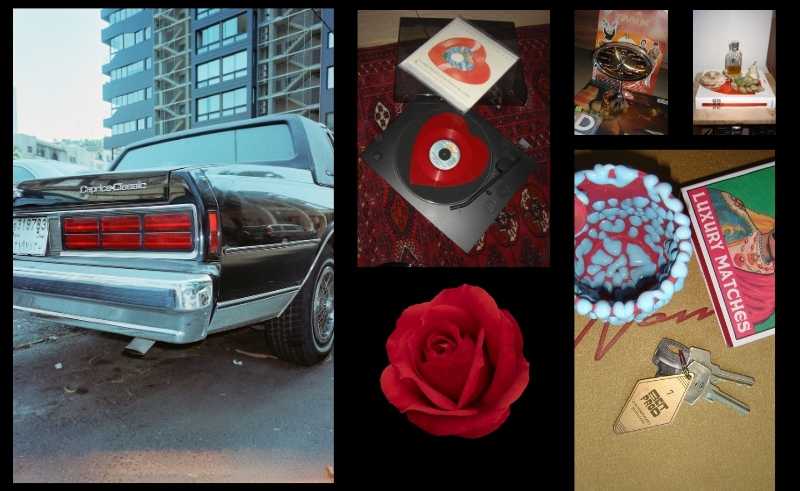 Curating the objects that soundtrack the memories his photographs are meant to preserve, with what he calls a “future nostalgia” aesthetic is a way of carrying a moment forward. And when the gloss of the campaigns fades, his fuel is always a return to a core instinct ”to create, to explore myself creatively, to collaborate, to communicate, and to keep learning.”
There remains a final, personal frontier in his archive: Cyprus. He sees it as the next necessary chapter—a photo book project to map the creatives and subcultures of the island that grounds him, completing the self-portrait his work has been composing for years. In pursuing this, he continues to resist the endless churn of images, capturing moments that endure—one negative against the infinite scroll, one sovereign moment saved from the algorithmic feed.
Curating the objects that soundtrack the memories his photographs are meant to preserve, with what he calls a “future nostalgia” aesthetic is a way of carrying a moment forward. And when the gloss of the campaigns fades, his fuel is always a return to a core instinct ”to create, to explore myself creatively, to collaborate, to communicate, and to keep learning.”
There remains a final, personal frontier in his archive: Cyprus. He sees it as the next necessary chapter—a photo book project to map the creatives and subcultures of the island that grounds him, completing the self-portrait his work has been composing for years. In pursuing this, he continues to resist the endless churn of images, capturing moments that endure—one negative against the infinite scroll, one sovereign moment saved from the algorithmic feed.
- Previous Article Mo Salah’s Record-Breaking Liverpool Legacy in Numbers
- Next Article Cairo & Alexandria Universities Will Open Branches in Asia