





The Devil Turns Preacher: Rediscovering Naguib Mahfouz’s Plays
Mahfouz’s one-act plays turn the shock of 1967 into stripped-down dramas about power, freedom and mortality, shaped by the Theatre of the Absurd.
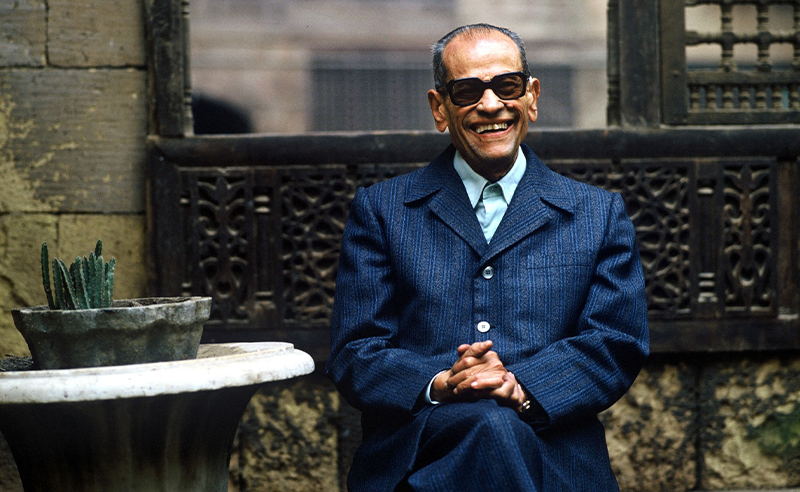
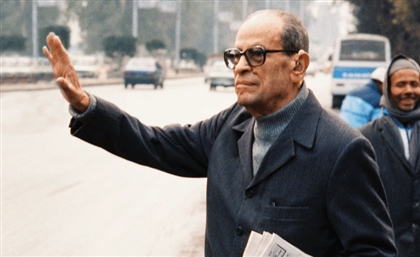
Few Arab writers are as widely recognised as Naguib Mahfouz. His fiction has been translated into more than 40 languages, and he remains the only Arab writer to have received the Nobel Prize for Literature. He also wrote eight one-act plays between 1967 and 1979.
The American University in Cairo Press published The Devil Turns Preacher: Eight One-Act Plays on August 18, 20 years after Mahfouz’s death, bringing all eight together in English for the first time.
In 1969, three of them, ‘Death and Resurrection’, ‘The Legacy’ and ‘The Rescue’, were staged in Cairo, directed by Ahmad Abd al-Halim with a strong cast including actors Sanaa Gamil, Galal al-Sharqawi and Aida Abd-al Aziz. But they never received the lasting attention of his fiction and have largely faded from public view with only rare returns to the stage: Ahmed Ismail’s 1989 production of ‘The Devil Turns Preacher’ and Mona Abu Sedira’s dramatic reading and performance of ‘The Legacy’ in 2010.
In an interview published in the November 1979 issue of the Egyptian magazine ‘Al-Masrah’, Mahfouz recalled his early experiences as a theatre-goer: “As a child, I attended some of Naguib al-Rihani’s and Ali al-Kassar’s plays with my father. Beginning in 1925, I found my way to Rod al-Farag, which was full of performers imitating al-Rihani and al-Kassar. I saw many of the plays they had presented in earlier periods, during and after the Great War of 1914. Later, in the 1930s, we found our way to Egyptian theatre.”
Mahfouz’s plays were written in the aftermath of Egypt’s defeat in the 1967 war with Israel. The shock was profound: for Egyptians, it was the collapse of a political dream. Gamal Abdel Nasser had come to represent national independence, Arab unity and social justice, and the defeat exposed the fragility of that vision. The country entered a period of profound disillusionment, searching for explanations for what had happened and for what might come next.
-a203f8ab-85f5-499e-9389-c8b1211b7107.png) ‘The Legacy’, ‘The Rescue’, ‘The Mission’, ‘Death and Resurrection’ and ‘A Draft Proposal’ were written in 1967 and published in a collection titled ‘Under the Umbrella’ in 1969. ‘Pursuit’ was published in the short-story collection ‘Crime’ in 1973, while ‘The Mountain’ and ‘The Devil Turns Preacher’ appeared in 1979 in a collection bearing the latter play’s title, ‘The Devil Turns Preacher’.
The European movement of Absurdism was already making its mark on Egyptian theatre during the time the plays were written, they draw on the work of Samuel Beckett and Eugène Ionesco, both central figures of the Theatre of the Absurd, as well as Albert Camus, whose writing shaped Absurdism’s philosophical concern with the human search for meaning.
They take place in strange and stripped-down worlds, where characters find themselves in houses, mountains, deserts and theatres, confronting mysterious pursuers, officials, monsters, giants and supernatural figures. Their struggles concern rebellion, freedom, duty, power and, repeatedly, death.
Sarah Enany, the literary translator who brought ‘The Mission’, ‘A Draft Proposal’, ‘Pursuit’ and ‘The Devil Turns Preacher’ into the new English-language collection, is a professor in the English Department at Cairo University and a recipient of the Banipal Prize for Literary Translation for ‘The Girl with Braided Hair’. She sees the publication as filling a longstanding gap in the recognition of Mahfouz’s work beyond the novel: “This is long overdue! Naguib Mahfouz is criminally underrated as a playwright.”
Her discovery of Mahfouz’s plays was itself a surprise. “Like many readers, I was completely unaware that Mahfouz had produced any dramatic works,” she says. She came to Mahfouz’s plays through her mother, the theatre critic and translator Nehad Selaiha, who found them while working her way through Mahfouz’s ‘Complete Works’ and translated ‘The Legacy’, ‘The Rescue’, ‘The Mountain’ and ‘Death and Resurrection’ in 1988. Selaiha passed away in 2017, and both her translations and introduction to them are included posthumously alongside Enany’s in the new collection, bringing together two perspectives on Mahfouz’s dramatic work.
Selaiha was writing in the 1980s, when the political meaning and psychological impact of 1967 were still deeply felt in Egypt. Enany, looking at the plays decades later, sees the same works opening more fully onto existential questions.
"It is interesting that Nehad Selaiha, in her introduction written in the Eighties, barely a decade and a half after the defeat, when it was still resonant in the national psyche, sees a great deal of political allegory in his choices, both of setting and character," Enany says.
"Now that some 50 years have passed since that historical moment, the more existential nature of the works shines through in a way that they could not have at a time when the national zeitgeist was preoccupied with politics."
-b17a4ac2-35f5-4ba0-ad6e-3bcd812bdb65.png) The two readings are not necessarily opposed. The political crisis of 1967 provides the historical circumstances from which the plays emerge, while Mahfouz’s abstract dramatic form allows him to move beyond a particular political moment and examine what that crisis reveals about power, freedom, fear and the human condition.
As Ahmed Ismail, an Egyptian theatre director who staged ‘The Devil Turns Preacher’ in 1989 as a one-hour show, and who discussed Mahfouz’s plays in ‘Al-Ahram’ in 2012, said: “His plays are as good as some of the international greats just like his novels, carrying universal human values within the text combined with a deep insight into Egyptian society. Uniting the general human condition with the specifics of a national identity.”
Absurdist drama was at its height during Mahfouz's most productive years, and its influence was particularly strong in Egypt during the 1960s, when Absurdist plays were regularly performed. Egyptian theatre at the time was largely concerned with political commentary or social critique. More abstract, symbolic drama was still closely associated with Western writers and encountered by Arab audiences mainly through translation.
In 2012, Ismail told 'Al Jazeera' that the artistic and dramatic nature of Mahfouz’s theatrical texts has no parallel in Egyptian or Arab theatre, except for certain characteristics of the theatre of Mikhail Romani in Egypt and the Algerian playwright Kateb Yacine.
He described Mahfouz’s plays as expressive and abstract, with a distinctive individuality, recognising again the influence of Western theatrical movements, including Epic theatre, German Expressionism and particularly the Theatre of the Absurd.
Mahfouz’s characters often have no specific identities, appearing simply as a Man, Woman, Officer, Architect, Playwright or Director. They are trapped in situations they cannot fully understand or escape, with dialogue circling back on itself and ordinary logic giving way to uncertainty.
In the ‘Al-Masrah’ interview, Mahfouz emphasised how he had followed the different currents of theatre as closely as he had followed the novel, short story and poetry, and for Enany this is evident. “Mahfouz would have both watched and read these plays and I think he would have been drawn to this stripped-down, allegorical mode of writing where, unlike novels, characters could be stripped of their idiosyncrasies and function more as tokens representing a mode of thought, a type of person, or indeed the entire human condition, he certainly uses it to great effect in his plays, where his love for the genre shines through.”
These themes are evident in ‘Death and Resurrection’, for example, where a blind beggar leaves an institution and encounters a new authority who is honest, just and kind, but also rigidly disciplined. Faced with a choice between security and freedom, he chooses freedom despite uncertainty. They also emerge in ‘Pursuit’, where Red and White consider seeking help from the police only to admit that they are afraid of them. Their fear reflects the political atmosphere of the period, while their mysterious pursuer becomes increasingly associated with death itself.
-3c463648-3421-4bbb-a9eb-68b8a510ddb7.png) For Ismail, by avoiding direct allegory or mechanical imitation of real events, Mahfouz was able to give himself greater intellectual freedom. He also pointed to the plays’ multiple meanings and implications, which bring them close to poetry and prevent them from being intellectually or emotionally narrow. As he said in 2012:
“Mahfouz’s philosophical vision, his Eastern sensibility, his concerns with the issues facing his country, and his own creative voice gave these texts a distinct character that bears his unmistakable signature. Philosophy, wisdom, and suspense coexist and merge with a tightly constructed structure in which these elements are harmoniously integrated.”
Mahfouz’s abstractions are also embedded in Qur’anic and Biblical religious ideas that become part of the larger search for meaning. In ‘A Draft Proposal’, a theatre rehearsal becomes an allegory of creation, with the Playwright taking on the role of the Creator and the actors becoming humanity. The argument over who created whom becomes a deeper confrontation over inherited beliefs and the limits of knowledge.
“If anything, they reinforce Mahfouz as an iconoclastic, abstract thinker with his own ideas about religion,” Enany says, “which he hid under a thin ideological veil, as with the play that deals with a theatrical rehearsal and actually deals with the story of creation and the human condition.”
By choosing to write in Modern Standard Arabic at a time where Egyptian colloquial Arabic had become an established language for literary drama, Mahfouz reinforces a sense of abstraction in his plays. Popular playwrights such as Yusuf Idris and Naguib Sorour had established Egyptian Arabic as a possible alternative for “highbrow” or “literary” drama, while pioneers such as Salama Higazi, Yusuf Wahbi and Naguib al-Rihani had been writing plays in Egyptian Arabic since the turn of the 20th century.
“I believe it is because Mahfouz was seeking a kind of stripped-down neutrality, a kind of timelessness, in his works, while Egyptian Arabic would situate the work in a specific time and place,” Enany says. “This neutrality and timelessness perfectly matches the abstract and existential themes and issues he brings up in these plays.”
-71f71c6a-62a4-4c62-b5d1-4ae62abe7a2e.png) This is perhaps where the historical and universal dimensions of the plays meet most clearly. Mahfouz was responding to a particular moment, but he chose a language and a dramatic form that resisted being confined to it. The political circumstances remain present in the plays, yet their characters, situations and existential questions allow them to speak beyond the period in which they were written.
“The fact is that these works were ahead of his time: people were seeking, as we mentioned above, something to explain the monumental shock of the 1967 defeat, a lot of the plays being produced were dealing, in one way or another, with political and social issues,” Enany says. “Literary critics were not ready to absorb the more overarching and existential view of humanity as a whole, this business of birth, living, and death, rather than focusing on a particular point in time.”
Their refusal to provide that immediate explanation left them vulnerable to being judged against the novels for which Mahfouz was already famous. A reputation can harden quickly, and as Enany explains, “this is a case of a rumour gaining strength and spreading. ‘Mahfouz is not much of a playwright,’ critics said, all the while comparing his dramatic works unfavourably to his novels.” In fact, she adds, “it is a shame Mahfouz did not produce more.”
“English-language readers need to know that the author so famous for his novels also has produced a collection of thought-provoking plays which, in addition to casting light on the themes of his novels, are rich avenues to explore in and of themselves,” Enany says. “It is my hope that this collection will finally introduce English-language readers to Mahfouz’s dramatic oeuvre and come to their own conclusions about the great novelist turned playwright.”
- Previous Article Hundreds of Ancient Coffins & Gold Artefacts Unearthed in Menoufia
- Next Article Cheesecake Meets Donut With Caribou’s New Sweet Treat