





Arab Literature Is Taking Nearly Half of Diwan's English Sales
Public-domain editions of Taha Hussein and Abbas El Akkad have reached Egyptian shelves at lower prices, bringing a classical canon back into Diwan's best-selling titles.

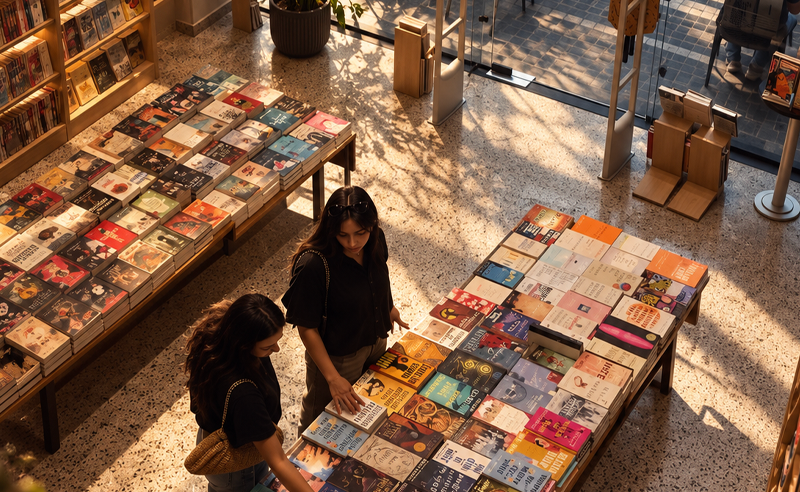
Egypt's reading habits in the first half of 2026 are proving difficult to fit into a single genre.
At Diwan, one of the country's largest booksellers with 24 years of business and a dozen stores around the country, sales from both its Arabic and English departments point to a readership simultaneously looking backwards towards literary and cultural heritage and outward towards global trends.
Social media, television and cinema all help determine what ends up on the bestseller shelves.
The clearest common thread is a renewed appetite for Egyptian and Arab literature and culture. In Diwan's English department, Egyptian and Arabic literature accounted for 44 per cent of copies sold among its 20 strongest-selling titles of the first half of 2026, according to Haguer Amin, the department's English Book Buyer.
Eight of those 20 titles are Egyptian or Arabic works.
The Arabic department is seeing a similar resurgence, particularly around classical literature.
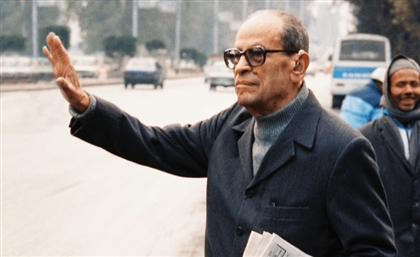
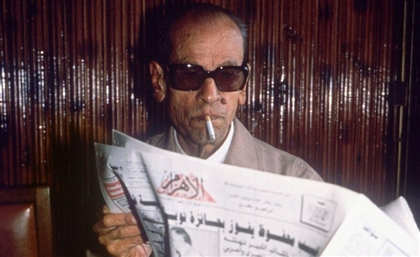
"There has been an increase in interest in certain books, particularly classical authors such as Naguib Mahfouz, Taha Hussein and Ihsan Abdel Quddous, as well as War and Peace by Tolstoy, Crime and Punishment by Dostoevsky, One Thousand and One Nights, and classical books in general," Ahmed Gamal, a representative from Diwan's Arabic department, tells CairoScene.
Gamal points to a practical reason behind some of that renewed interest: greater availability. With works entering the public domain, more editions can be produced and sold at more accessible prices.
He cites Taha Hussein, whose works entered the public domain in 2024, alongside writers including Abbas El Akkad and Al-Manfaluti.
The result, he says, is that books already embedded in the Egyptian cultural consciousness are suddenly easier to find in greater quantities.
But across both departments, Diwan is seeing evidence that what happens outside the bookstore can have a surprisingly direct effect on what gets sold inside it.
One of Gamal's most striking examples is Naguib Mahfouz's Hams Al-Gonoun. The 1938 short-story collection had never been among Mahfouz's biggest sellers, particularly when compared with novels such as Awlad Haretna or Al Harafish.
At the beginning of 2026, Gamal says, it could sell only three or four copies a month.
Then Ahmed Mourad's daughter, Fatima, appeared holding a copy of the book during the television programme Bet Mourad, sending attention towards the otherwise relatively dormant title.
"As soon as she held the book, the video went viral, and the book received a lot of attention, both in Egypt and abroad," Gamal tells CairoScene. "So a book like this, which is already well-known, suddenly became one of the best-selling Arabic books during the first half of this year."
The same principle is visible in the English department, albeit through a more international set of cultural triggers.
Haguer Amin remarks that books about Arab art have become one of the department's most notable areas of growth. Despite the typically high price of art books, customers are willing to buy them because material documenting Arab art remains comparatively scarce.
"Usually, the price tag for art books is quite high. But with these types of books, customers don't think twice before buying them because it's quite rare to find a book discussing Arab art," Amin tells CairoScene.
One of the department's notable recent sellers is Fatenn Mostafa-Kanafani's The Egyptian Avant-Garde: Artists, Poets, and Rebels 1936–1973. Amin says the 2026 release appears in Diwan's sales reports virtually every day.
Mostafa-Kanafani's earlier book on modern art in Egypt is also a bestseller.
For Amin, this appetite reflects a growing demand among Egyptian readers today: "There is a movement to revive Arab art and preserve heritage, and one way of preserving heritage is through this type of book."
The interest in Arab culture extends beyond Arabic-language books. Arab authors are performing particularly well across the English department.
Tunisian and Libyan writers are finding audiences alongside Egyptian authors, with Hisham Matar standing out for the consistency of his sales across both fiction and nonfiction. Amin describes Matar as having "been selling really well across all of his available titles."
The department's overall top 20 also illustrates how varied the English-language market has become.
The list includes If an Egyptian Cannot Speak English, Beer in the Snooker Club, Chronicles of a Cairo Bookseller, The Yacoubian Building, Cairo Circles, Taxi, As Long as the Lemon Trees Grow and Cairo, alongside international titles including The Let Them Theory, White Nights, Atomic Habits, Before the Coffee Gets Cold, The Housemaid, A Good Girl's Guide to Murder, Meditations, The Alchemist and Ikigai.
This mix suggests that buying an English-language book in Egypt is not necessarily synonymous with looking abroad. Arab identity remains a significant part of what readers are seeking, even when they are shopping in English.
At the same time, neither department suggests that readers have abandoned established literature for whatever happens to be trending online.
Amin says general and contemporary fiction remains one of the most dependable categories in the English department, pointing to A Gentleman in Moscow, East of Eden, Sally Rooney and Paulo Coelho as examples of titles and authors that continue to sell regardless of changing trends.
"The classics also sell really well, regardless of the edition," Amin tells CairoScene.
The Arabic department's sales tell a similar story, albeit with a stronger Egyptian and Arabic emphasis. Mahfouz, Taha Hussein, El Akkad and Al-Manfaluti are all part of a classical canon that continues to find readers, while international classics such as Tolstoy and Dostoevsky are also benefiting from renewed availability.
One striking fact is that there is a clear generational difference in the English department, particularly around the Cairo International Book Fair.
According to Amin, fantasy and romantasy are among the strongest performing genres there, driven largely by the Fair's younger audience, particularly readers aged 15 to 18. Mystery and thriller also account for much of the sales both during the fair and beyond.
Throughout the rest of the year, however, the English department's fiction sales tend to settle back into contemporary and general fiction rather than remaining dominated by fantasy or romance.
"TikTok, Instagram and Goodreads all have a significant influence on younger readers," Amin tells CairoScene. "They often arrive at Diwan looking for books they have encountered through online recommendations."
Goodreads' Choice Awards are particularly visible around the Cairo International Book Fair, when younger customers come into the store asking about the winning titles.
Dostoevsky's White Nights, which Diwan cites in its list of twenty best sellers for the first half of 2026, is reflected in Goodreads' own data for Egypt over the 12 months to September 2026, where the classic ranks among the platform's 10 most-read books in the country.
The Goodreads ranking also points to the strength of Arabic fiction, with Egyptian writer Mirna El Mahdy occupying all of the top six positions on the website's Egypt list.
But Amin says older readers tend to approach online hype more sceptically. They may discover a book through TikTok or Instagram, but read it partly to determine whether it actually deserves the attention.
"They're reading it and deciding for themselves whether it's worth the hype," says Amin. "Some books are worth the hype, and some aren't. It's very subjective."
Gamal points to Al-Daheeh, Al-Hadhara and Al-Mokhber Al-Eqtisadi as examples of programmes whose audiences increasingly encounter books through the consumption of other forms of media.
He also cites The Odyssey, whose arrival in Egyptian cinemas was reflected in demand for Stephen Fry's retellings of classical mythology.
Amin similarly notes that film releases can have an immediate impact on book sales. "When The Odyssey landed in theatres in Egypt, the sales of the book were very much reflected as well," she tells CairoScene.
- Previous Article Greece's Achilleas Plakidas Made a Bar So Good the Police Arrested Him
- Next Article Dubai's JLT Now Serves Coffee Made With a Raw Egg Yolk