






Naif Al Hidan Drew Almost Every Frame of a Saudi Platformer
Naif Al Hidan turns Saudi desert roads, night skies and familiar cars into pixelated worlds, square by square.
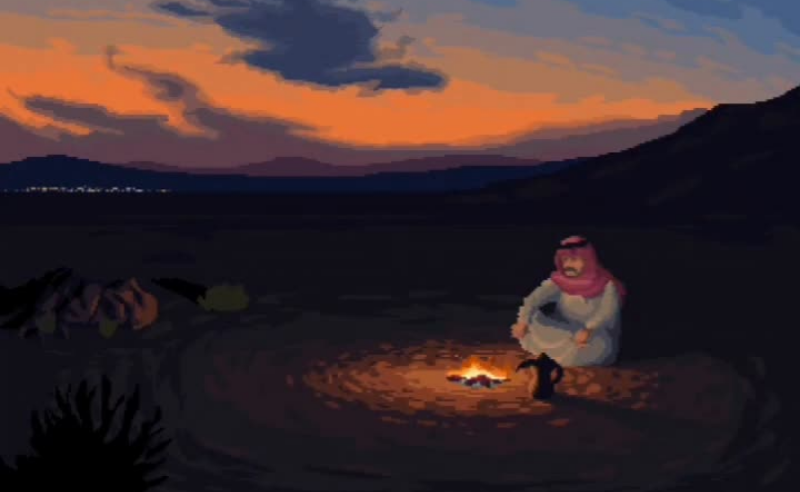
Saudi pixel artist Naif Al Hidan has spent the past few years digitally drawing desert roads, mountain ranges, old rooms, familiar cars and stretches of land.
On April 23rd, 2026, that visual language turned into a playable world with Jabal Dillah, a Saudi 2D platformer developed by a three-person team in roughly a week and a half. Al Hidan worked as one of the project's main pixel artists.
The game is out now as a free Windows download.
Al Hidan is a keen gamer himself and began drawing digitally in 2015, moving seriously into pixel art in 2020 during the pandemic.
His interest in landscapes goes much further back. As a child, the pixel artist drew on paper and leaned towards landscapes.
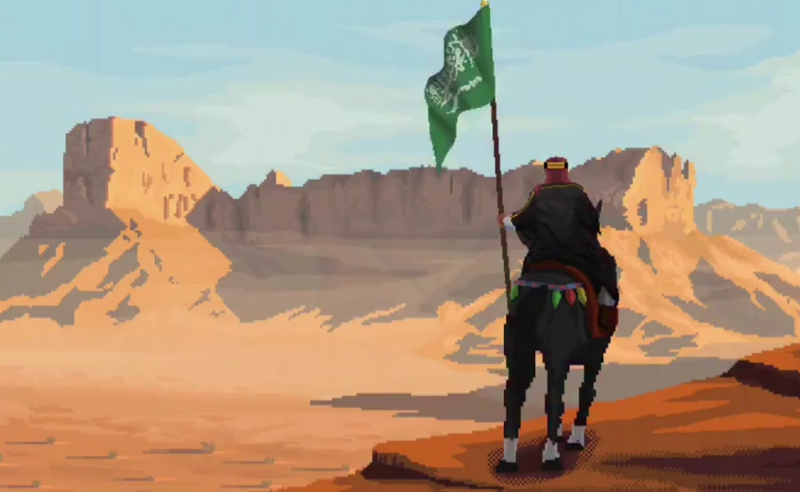
"I'm someone who likes contemplation. Landscapes draw me in, and I love the quiet atmosphere of the night," Al Hidan tells SceneNowSaudi. "Art is my way of documenting whatever catches my eye, and my own space where I can create a particular scene."
Pixel art was already familiar territory for him. He grew up playing retro games, followed pixel artists online and used their work as wallpapers on his phone and computer.
This type of art appealed to him because of its built-in restrictions.
"You have a limited number of colours and these tiny pixel squares, and you have to produce a clear drawing with beautiful details," he says. "That challenge gives me a sense of satisfaction when I see the final result."
In his renders, Al Hidan regularly returns to the Saudi desert, drawing camps, roads, mountains and cars caught somewhere between one destination and the next.
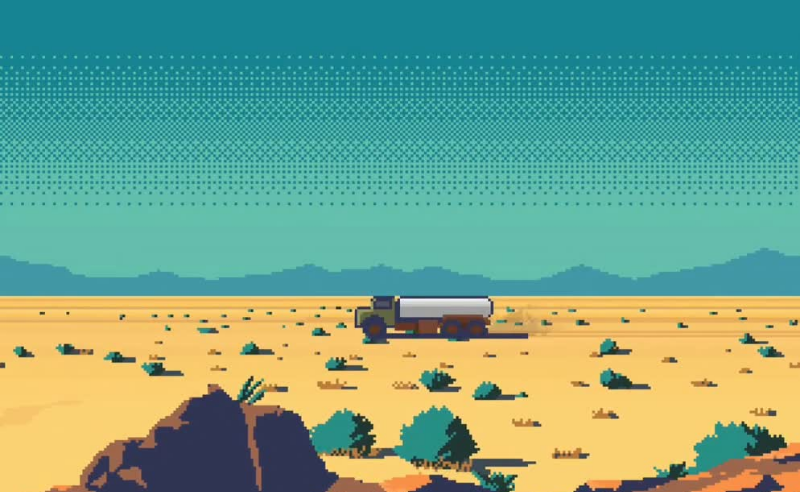 "I love going out to the desert and letting my eyes travel across these wide spaces away from the congestion of the city," he says.
"A scene deserves to become pixel art when it gives me a sense of calm, or when it contains familiar details that mean a lot to us as Saudis, like a familiar car on a road trip or a desert gathering under a night sky full of stars."
When drawing recognisable Saudi locations, such as the Tuwaiq escarpment or the eastern city of Al Khafji, he may consult photographs to get the geographical details right. The image itself always begins from memory.
"I start with the feeling first, supported by my memory of the place," he says. "The aim isn't photographic documentation but documenting the feeling that the place leaves inside us."
Much of the life in his work can be found in its smallest movements, light shifting across surfaces and insects gathering around lamps.
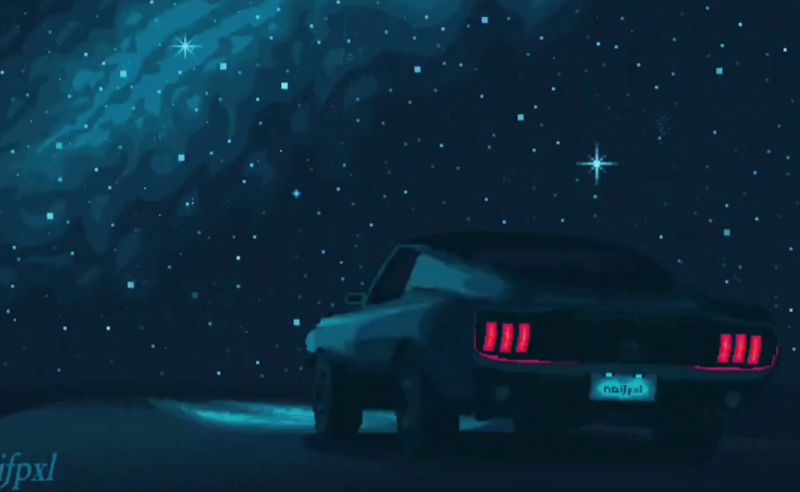 "The drawing might be beautiful in its overall structure," he says, "but what gives it life and makes someone stop to look is the movement of the air, the reflection of the light or those very small details."
In his practice, Al Hidan is interested in the atmospheres of liminal spaces, places such as corridors, travel roads and sections of desert that feel familiar despite being difficult to place.
"That emptiness gives a strange mixture of calm, isolation and nostalgia," he says.
His interest in nostalgia stretches into interiors, cars and everyday details associated with the 1980s and 1990s. Some belong to a period he experienced himself, while others come through photographs, stories, retro games and collective memory.
"These older things carry a warmth and simplicity that we sometimes miss in the rush of modern life," he says.
Al Hidan also experiments with animation. His portfolio includes short films such as Harami Magrood and other narrative pixel-art projects, work that eventually led him into sound design.
"While working on my animated films, I found it difficult to source sound effects that match my idea of what was happening on screen, so I began recording and designing much of the audio myself," he says.
In Jabal Dillah, he created all of the game's backgrounds, tilesets, characters and cutscenes. The exceptions are the final cutscene and the main character's animation, both by fellow pixel artist Mohammed Bali.
He also helped write the story with the game's director and programmer, Omar Al-Abdan. "With this project, I really wanted to try venturing into something completely new and see my drawings come to life," he says.
The team is now working on a larger game. For Al Hidan, it continues a practice that has always started with drawing a place, then finding ways to make the lights flicker and, now, giving gamers the controls.
- Previous Article Dana Awartani Brings Lost Histories to La Biennale di Venezia
Related Articles

Trending This Week
-
-
 Oct 15, 2026
-
-