


Hana El-Sagini Makes Bronze Vulnerable at Her Art Basel Solo Booth
Egyptian artist Hana El-Sagini reflects on breast cancer, resilience and togetherness at Art Basel 2026.
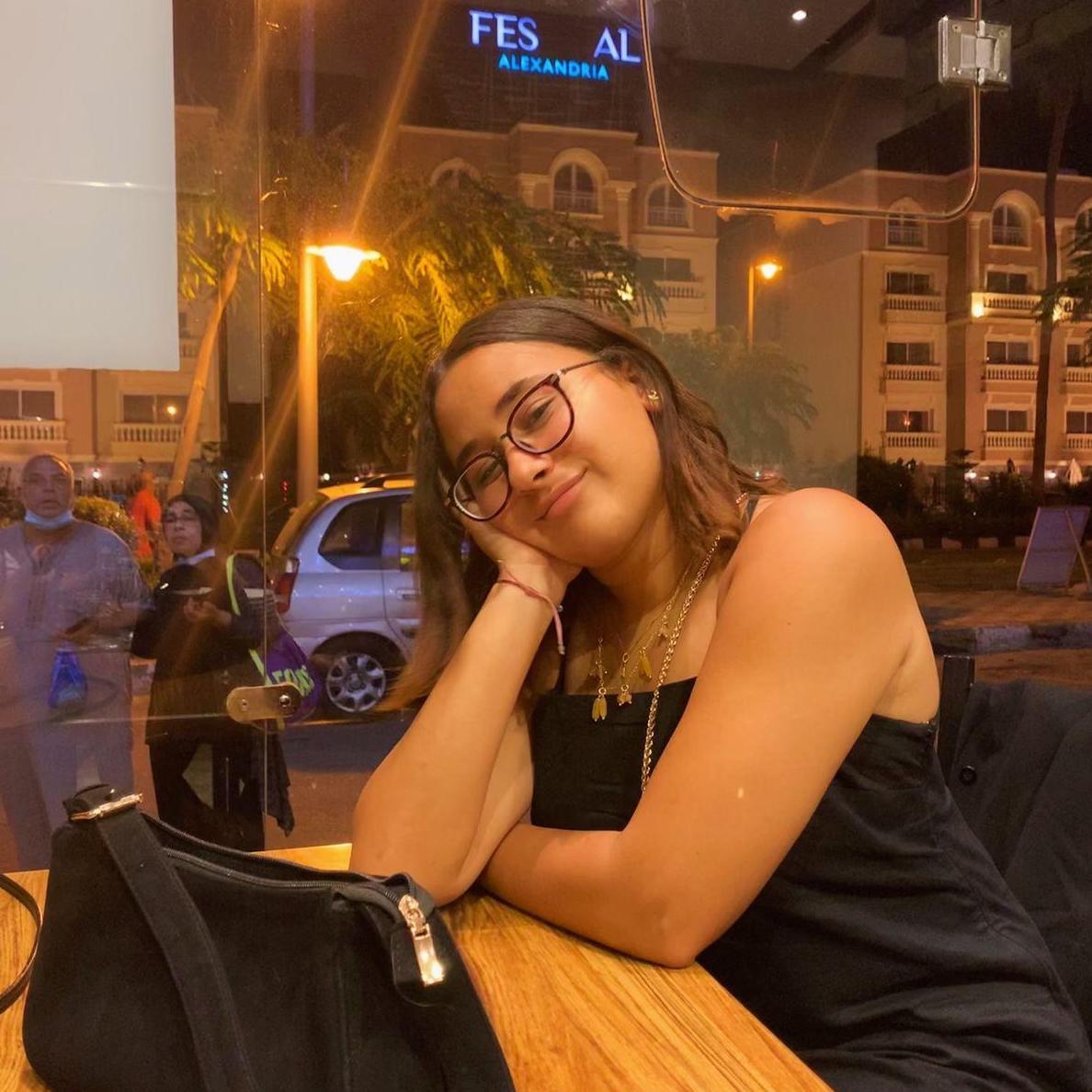
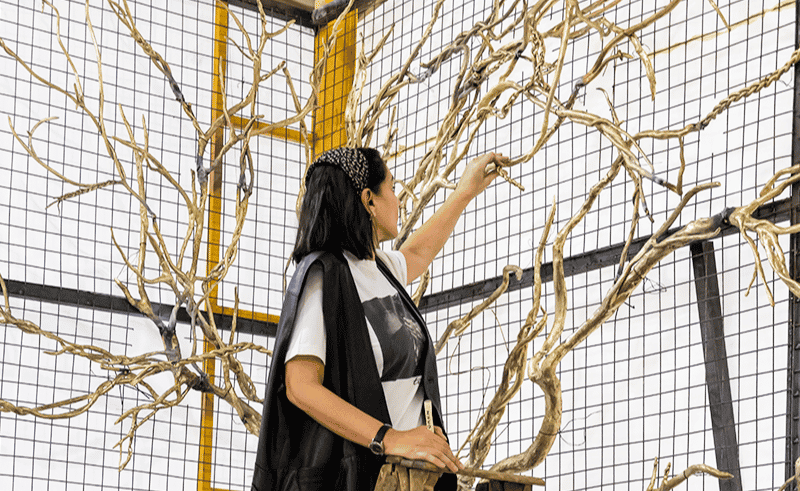
Hana El-Sagini is many things: an economics graduate with 12 years of experience in the industry, a breast cancer survivor, a university lecturer, a fourth-generation multidisciplinary artist - whose grandfather is the esteemed Gamal El-Sagini - and, now, an upcoming solo exhibitor at the flagship Art Basel 2026.
When the news about Hana’s showcase is announced within the context of her family of artists, and the shadow of the legacy of her grandfather, it sounds like something to be taken for granted - a natural occurrence. That is far from the truth. For most of her life, Hana resisted the artist path. She chose to study economics and only began her artist career when she felt stable enough to do so.
“My whole family are artists, and I didn’t know how to make sense of that bohemian artist's life,” El-Sagini tells CairoScene, “It frightened me a lot when I was young. Being a daughter of an artist makes for a difficult life. Sometimes we had money, sometimes we didn't. I wanted something more structured so I could know where I stood.”
At 35, El-Sagini made her switch into art, fuelled by a need to create more room for her creativity. She started by following in her father’s footsteps, working within the structure of an art school for children - except hers was freer and less academic than her father’s.
“Working with children helped me find my creative voice," El-Sagini shares. "They just want to do something, and they do it. Growing up in a family of artists, you’re surrounded by the technical skill that makes an artist, but it doesn’t form an artist in isolation. The kids taught me to just do things, in turn helping me discover what I wanted to do, and how to do it in my own way.”
Twelve years ago, Hana El-Sagini got her Master of Arts from the Academy of Art and Design FHNW, in Basel. This year, she returns to the city for a solo booth at the world’s biggest and most respected art fair - Art Basel. Powered by the Cairo-based Gypsum Gallery, El-Sagini will showcase her work as part of the fair’s ‘Statements’ section, a programme dedicated to standout global artists pushing the boundaries of medium and material. Essentially, artists with both skill and a slight neglect of the classical rules.
El-Sagini’s Basel showcase consists of a sculptural work titled ‘Plot Twist’. Made partly out of clay, partly out of bronze, the work is made out of metres and metres of winding braids that vaguely represent hair, nerves, muscle fibres, and roots. Made after years of El-Sagini’s struggle with breast cancer and treatment, the sculpture is centred on resilience.
“Real resilience is very anti-monumental,” El-Sagini tells us. “It is silent. A resilient person or family or society or population doesn’t really have the time to talk about the beauty of resilience.”
The work is vulnerable, rooted in strength, and collectivistic. Its extending filaments evoke a sense of creeping - they climb the walls of the booth containing them, surrounding the viewer in an all-consuming experience. “My hair was always long and braided. And then I lost it. The piece’s shape is a bit difficult to read. If you look at the lungs, they look like branches, like nerves, like trees, like hair. The piece didn't make its own difficult shape - its shape is trying to live, while also growing, while also meeting itself. It goes through stages of firing - one, two, three - until it reaches its final form.”
El-Sagini’s ‘Plot Twist’ starts with ceramic - a clay, because, in her words, “It’s very human. We are made of clay.” Then, the bronze. The artist threatens the metal’s sturdiness. Typically, bronze shields. It is accustomed to being strong, impenetrable, a centrepiece. In this work, it is made into filaments, braided, and sidelined, but only with its own permission.
Simultaneously, ‘Plot Twist’ reflects the sense of community required to exercise resilience. “It's very hard to braid your own hair; it's easier and it looks better if someone braids it for you. This piece carries a lot of care. And three very weak strands together make something strong. Resilience can come from the person themselves, or from their community.”
To put together the work, El-Sagini engaged with her community. She brought together her mum and family of friends to help with braiding. She completed the bronze work at the same foundry her grandfather, Gamal El-Sagini, made his sculptures. She spent weeks at that same foundry, engaging with the metal, learning its habits and its nooks, getting to know it to earn the permission to bend it outside its usual roles.
“When you spend time in the workshop, with the craft, you understand the limits of the medium and how far you can push it. I don’t want my work to be just the result of a customer with a request.”
When asked about what it means for El-Sagini to be able to exhibit at Art Basel, the artist tells us, “Art Basel is a platform, a huge one. It’s like Substack for writers, like London Fashion Week for designers. To be given that trust to exhibit, by Gypsum and the fair curators, is both thrilling and terrifying. It’s an enormous responsibility.”
- Previous Article SceneNoise x Amsterdam Dance Event Present CROSSFADE: Egypt
- Next Article London's Mahrajan Festival Announces Full Lineup August 1st