




Egyptian Visual Artist Amina Kadous Examines Visual Icons of Old Cairo
Why do Cairenes hold on to certain faces? Whose image ends up on a wall, and what does it mean that it has stayed there, gathering dust, for 30 or 40 years?
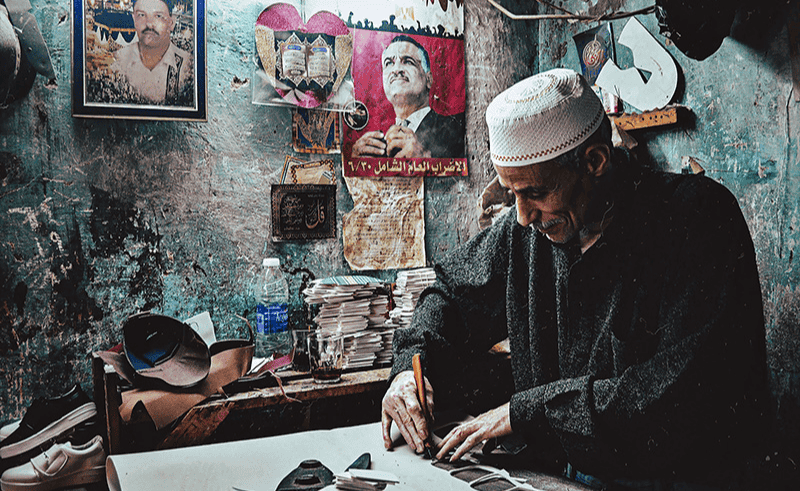
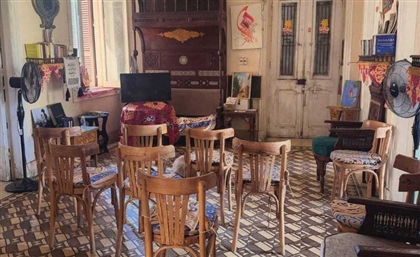
In the workshops and factories of Old Cairo, the walls speak in portraits of all sizes. Amid every pile of accumulated clutter, someone’s icon looks back at you. Gamal Abdel Nasser presides over welding stations and carpentry benches, the Virgin Mary watches over staircases in el-Sabteya, while Pope Shenouda and Sheikh Shaarawi appear repeatedly across landings.
And everywhere, in barbershops and shuttered houses of a city continuously inhabited for over a thousand years, the faces of the significant dead peer from behind dust and clouded glass, neither taken down nor cleaned. They remain in place by something that is neither solely reverence nor inertia, but something that exists in the space between the two.
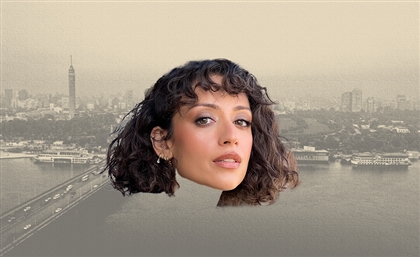
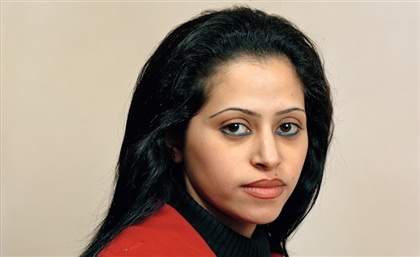
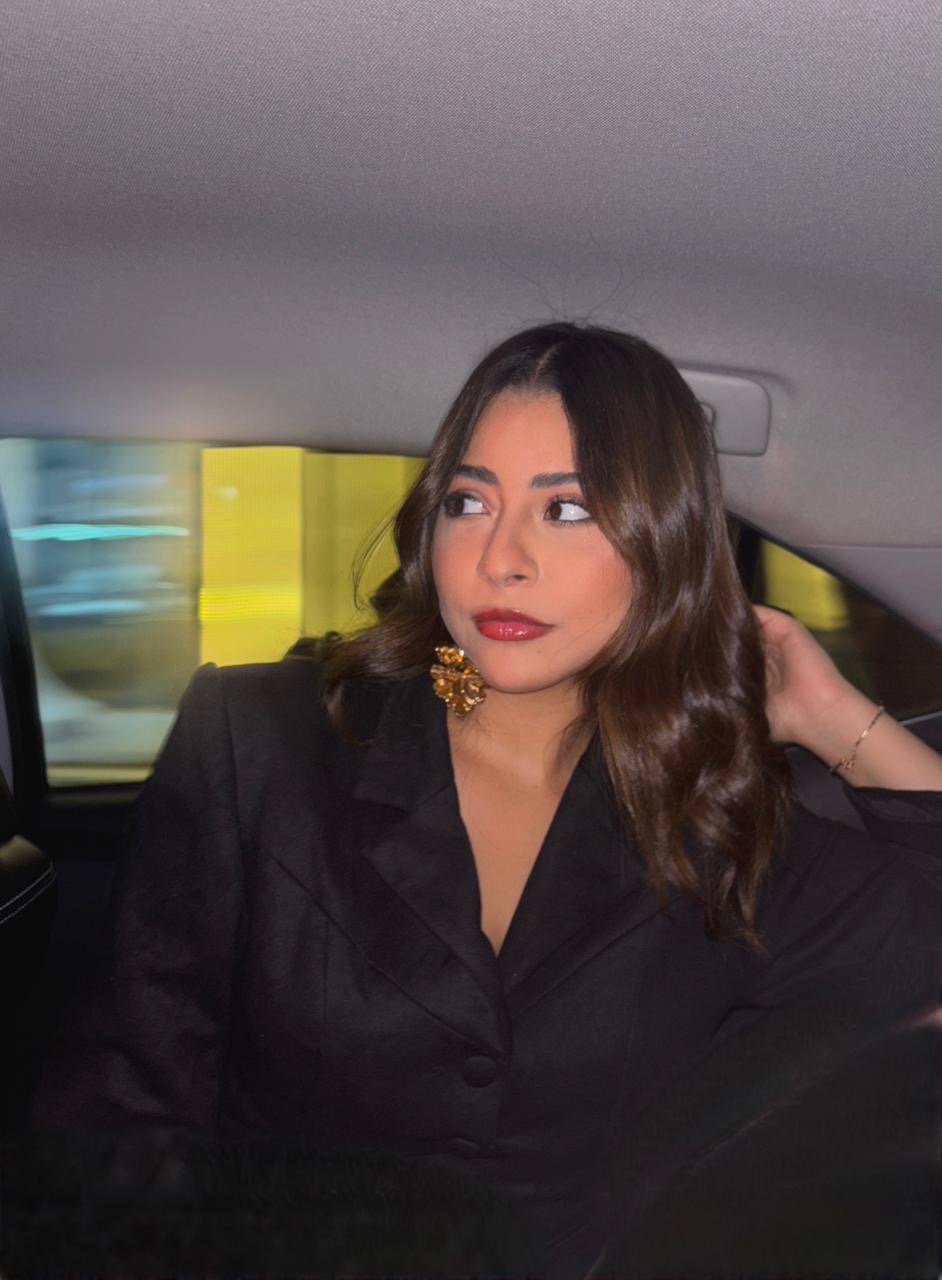
Egyptian visual artist Amina Kadous has spent nearly a decade exploring that space.
Since 2017, Kadous has been examining the gap between image and ideology, between the physical presence of a picture and the layered, sometimes furious, sometimes elegiac meaning it holds for the person who placed it there. “My practice started as a street photographer,” Kadous tells CairoScene. “Photography was my way into seeking a world that I could always look at. The camera was a social tool that granted me access to spaces I would otherwise have approached as a stranger.”
Her decade-long project 'City Entrapped' grew out of street photography walks through Old Cairo’s personal and confined spaces. The project revolves around one persistent question she carried through these excursions: why do people hold on to certain faces? Whose image ends up on a wall, and what does it mean that it has stayed there, gathering dust, for 30 or 40 years?
It could be that the most honest form of veneration is simply the failure to act. In this way, the past is held in place not through active preservation but through inertia—the refusal to make a decision that would constitute a loss. Perhaps this is how Cairenes exert control over an ever-changing city. This notion of being “entrapped” is what Kadous explores in her work.
“City Entrapped is built on three categories of icon: religious, political, and personal,” Kadous explains. “The project maps their distribution almost archaeologically, the excavation of what a community chooses to preserve and what it allows to fade.” In the workshops and factories of Old Cairo, where the working class has lived and laboured for generations, Kadous noticed how Abdel Nasser dominates the assemblage.
“Sadat was rarer, and his appearances were more conditional, more complicated. I only found him in an Alexandrian security office in Minet el-Basal, in a portrait that had hung there since the time of a former French employee appointed during Sadat’s era and who remained there.”
“The portraits of women are almost entirely absent,” she adds. “Cairenes are very protective of photographs of women; they would listen to Umm Kulthum day and night, but not really hang her photograph publicly.”
When it comes to religious iconography, Kadous notes a more unexpected absence. “Shaarawy is everywhere outside,” she says. “On the backs of microbuses, on storefronts, on building exteriors.” Inside the workshops and homes she photographed, however, he largely disappears.
“Shaarawy is a very spiritual character,” she explains. “He belongs to the street. You put him outside because outside is where you’re still speaking to someone. Inside your own four walls, in the workshop you’ve spent 30 years in, there’s no one left to convince.”-4b19cc55-36b3-486b-9242-2b60ed684216.png) Kadous is clear-eyed about the temptation she is working against. “Nostalgia, or nostalgia-work, plays a big part in my work,” she concedes, “but I’ve moved past that phase, because a very big part of nostalgia is romanticising, and I’m not so much romanticising as I am trying to dismantle this romanticisation.”
Kadous is clear-eyed about the temptation she is working against. “Nostalgia, or nostalgia-work, plays a big part in my work,” she concedes, “but I’ve moved past that phase, because a very big part of nostalgia is romanticising, and I’m not so much romanticising as I am trying to dismantle this romanticisation.”
“I’m not trying to make these places look beautiful,” she continues. “I believe places have souls, and those souls leave when the people who made them leave. Someone put their print in this place, and when that person left, the place felt it. The glass is sometimes so clouded that the face beneath is visible only through the photograph rather than to the naked eye.”
'City Entrapped' is an ongoing project. It has been shown as part of the group exhibit at Tintera, a Zamalek-based photography gallery, and the full body of work is viewable on Kadous’s website at aminakadous.com.
Her broader practice has been exhibited across Cairo, Paris, Mali, and the Netherlands, and she continues to be one of the most decorated photographers working in Egypt today, though 'City Entrapped', fittingly, remains unfinished, with Old Cairo still adding to it.