



Tiraz Centre Preserves Palestinian Village Histories Through Dress
Built over more than 50 years, Widad Kawar’s collection traces Palestinian village dress before the Nakba and the new styles that emerged after displacement.
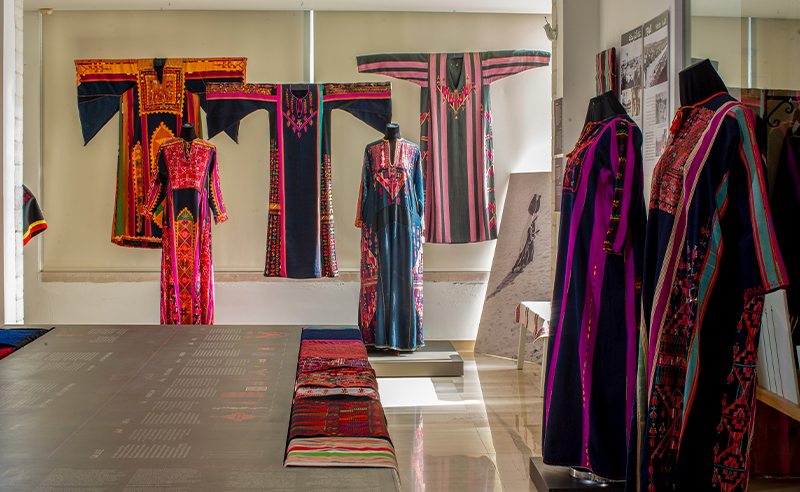
Palestinian women carried the tradition of tatreez with them through the mass displacement of the 1948 Nakba.
At Tiraz Centre in Amman, their dresses now preserve something displacement could not: the distinct visual language of villages many of their wearers could no longer return to.
Tatreez, the traditional Palestinian practice of embroidery, was once closely tied to place.
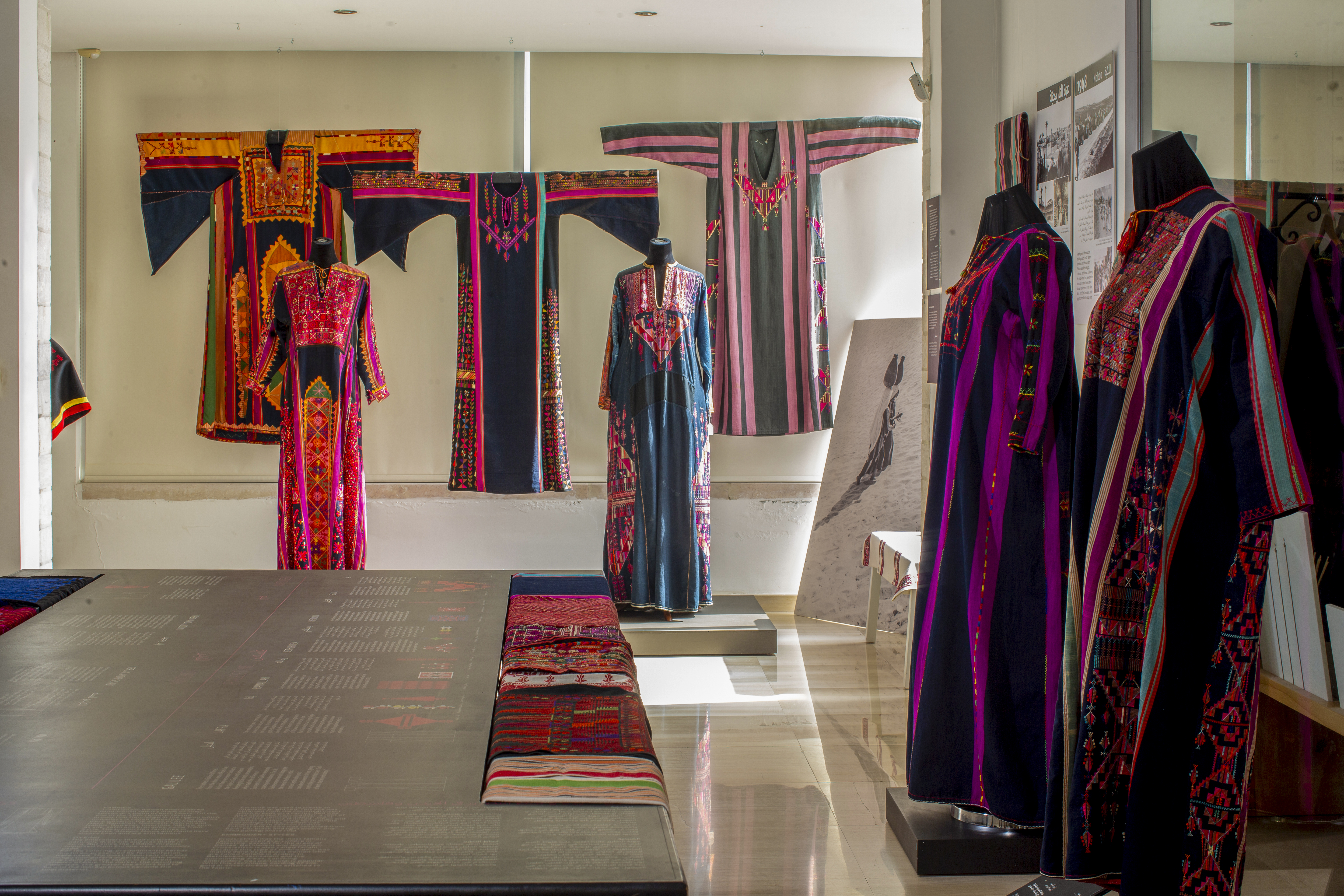 Different villages developed their own stitches, colours, patterns and dress designs, allowing clothing to say something about where a woman came from before she ever introduced herself.
"Each village had its own style of embroidery. You could tell where a woman came from based on her dress," says Laila Mushahwar, general manager of Tiraz Centre.
The collection carrying those histories began with Widad Kamel Kawar.
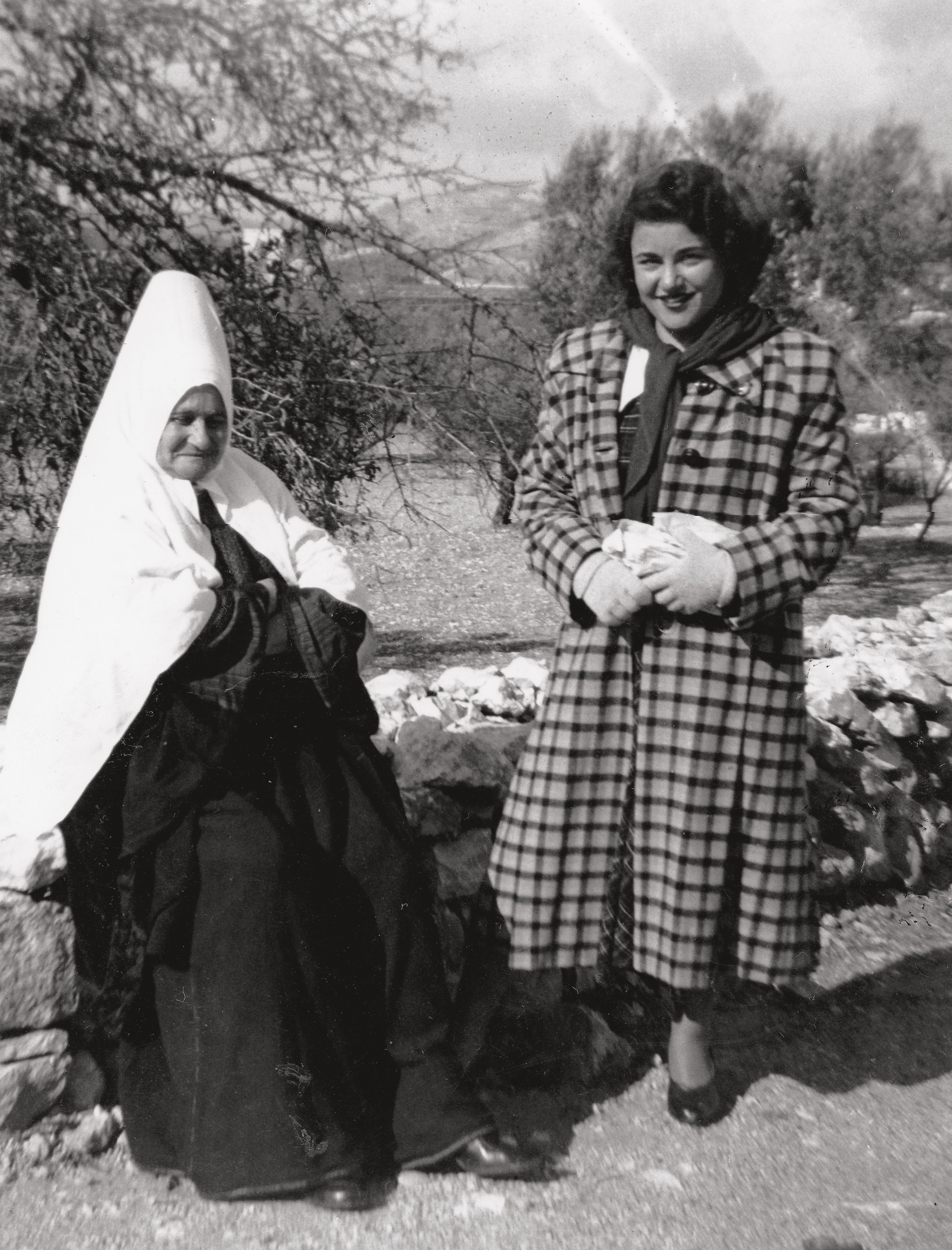
 Kawar was born in Tulkarem before her family moved to Bethlehem in 1941. Her mother came from Aboud, a village in the Ramallah area where Kawar spent time growing up and became familiar with Palestinian village life and embroidery.
A relative gave her two traditional dresses during one of those visits, including one dating to the 1800s.
Those dresses became the beginning of what is now the Widad Kawar Collection at Tiraz Centre, home to more than 2,000 costumes and weavings from Palestine, Jordan and across the Arab world.
The collection grew more urgently as Palestinian displacement continued.
 Kawar volunteered in refugee camps in Jordan, where she developed relationships with Palestinian women who had been forced from their homes. Some women displaced by the Nakba and later the 1967 Naksa sold dresses when they needed money, entrusting pieces to Kawar to preserve.
"Widad did a lot of volunteer work in the refugee camps here in Jordan. That’s where she learned more about these traditions and developed relationships with these women," Mushahwar says.
Many of the Palestinian dresses in the collection were made for celebrations, particularly weddings. Their details could place a wearer geographically.
Gazan dresses, for example, could feature a V-shaped chest panel distinct from the square panels more common in parts of southern and central Palestine.
"This shape is called Qilade, which actually means necklace in Arabic," Mushahwar says.
Mushahwar says girls traditionally began learning embroidery around 13 or 14, often under the close supervision of older women.
"The elders would be very strict. She would have to do the knots and the stitches really well," Mushahwar says. "She also made her own trousseau, the dresses that she wore at wedding celebrations."
 Clothing could also carry a woman’s financial security.
Coins were sometimes sewn directly onto wedding dresses or veils and formed part of the bride’s dowry.
"Nobody is allowed to sell or use it except for her. It's kind of like a bank account," Mushawar says.
Palestinian village dress continued changing even before 1948. Raw materials shifted during the 1940s, with imported cotton thread increasingly replacing silk.
"The material of the dress itself was not as fine anymore," Mushawar says.
The Nakba brought a far more profound break. Women who had embroidered within distinct village traditions were suddenly living alongside women from other parts of Palestine in refugee camps across the West Bank, Jordan, Lebanon and Syria.
The embroidery changed with them.
"When women from various villages become refugees in the West Bank, Jordan, Lebanon and Syria, living all together in the same camps, they learned different motifs from other villages. A new stule of dress emerged during that period," Mushawar says.
 Old motifs survived, but began appearing beside designs from elsewhere. Mushahwar describes the resulting dresses as hybrid, carrying traces of several village traditions at once.
Kawar's collection preserves examples from before and after that rupture, allowing the dresses themselves to show how Palestinian life changed through displacement.
Some pieces also preserve individual lives. One belongs to Helweh Bendak, an acquaintance of Kawar's family in Bethlehem whose husband disappeared after being conscripted into the Ottoman army.
Bendak raised her children alone and used embroidery to support her family. She became known for her intricate Bethlehem dressmaking, leaving behind work that records embroidery as livelihood as much as cultural practice.
Her dresses survive within the wider Bethlehem collection alongside those made by other women whose names may be less familiar than the traditions they helped shape.
 Tatreez today continues in different forms. Mushahwar says women in Jordan reproduce older designs for wedding celebrations, while younger Arabs and people outside the region are increasingly learning embroidery as a way of engaging with Palestinian culture and expressing solidarity.
"It's a way for people to show that they stand in solidarity with people from Gaza and to learn about the history of the Nakba and how the lives of Palestinian women have changed," she says.
 Tiraz also sends pieces from the collection to exhibitions abroad, bringing Palestinian and wider Arab dress traditions to audiences outside Jordan.
The centre itself treats the collection as a living archive, preserving the garments alongside the places, people and circumstances that shaped them.
"It's a reminder that this tradition was disrupted, that Palestinian society existed before the Nakba," Mushawar says.