





What It Takes to Keep a World-Class Squash Player on Court
Dr Khaled Elshinnawy, official physiotherapist of the Egyptian Squash Federation, takes us inside the injuries, recovery and physical demands behind Egypt’s elite squash players.

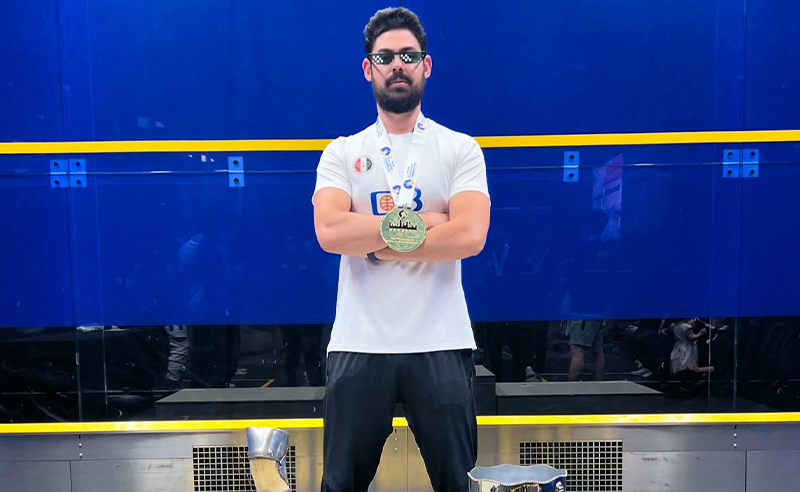
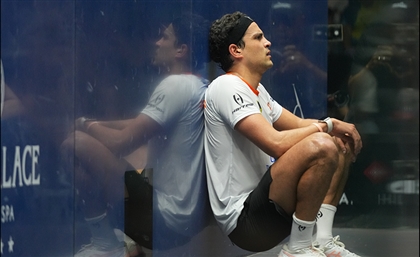
Egypt has produced squash champions with such regularity that the rest of the world has more or less stopped being surprised, and the sport itself offers its players nowhere to hide. There is no half-time, no bench, no teammate to cover while you catch your breath, only a ball, a wall and an opponent who wants the exact patch of floor you are standing on.
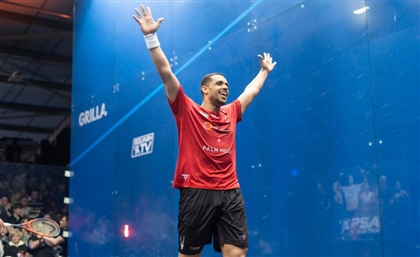
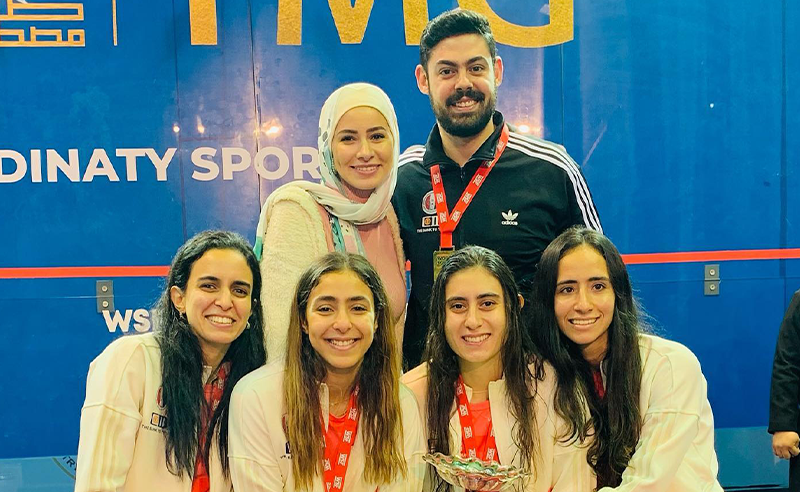
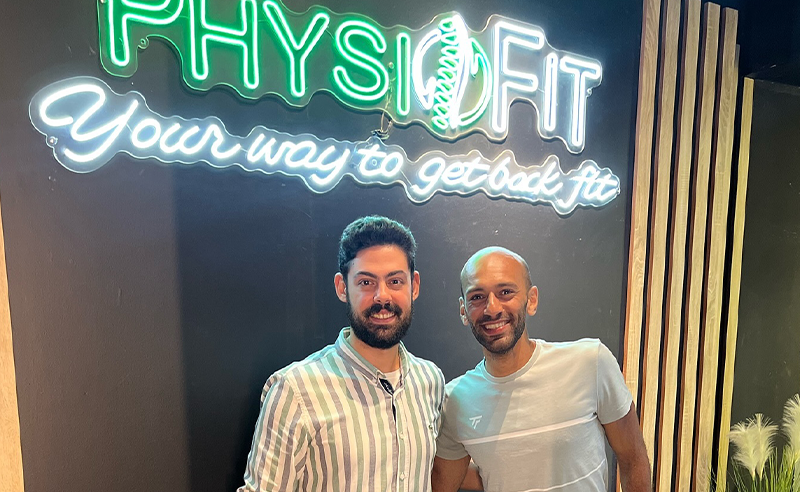
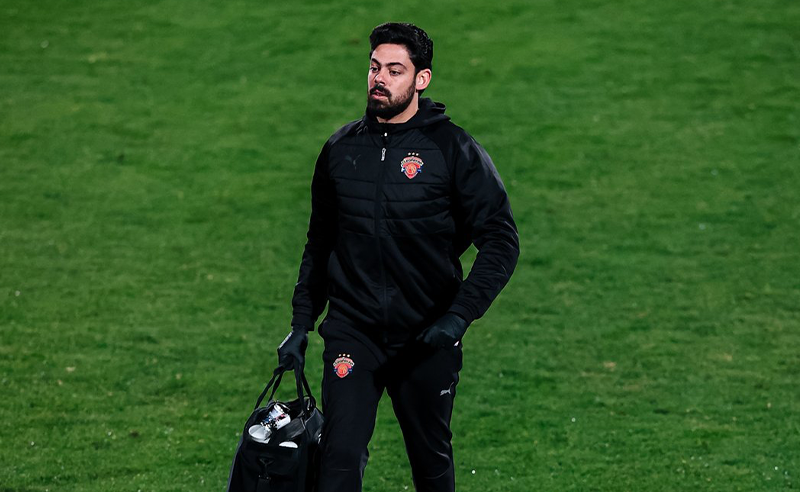
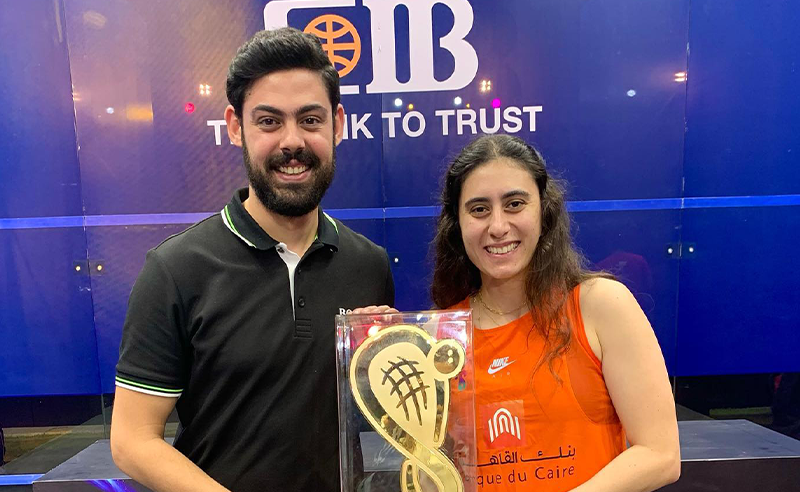
What the trophies and the highlight reels rarely show is the person responsible for making sure those bodies survive the week. In Egypt’s case, that person is Dr Khaled Elshinnawy, physiotherapist to the Egyptian Squash Federation and personal rehabilitation specialist to Mostafa Asal, the current World No. 1.
He has also worked closely with Mohamed ElShorbagy, a former holder of the top spot, and Nour El Sherbini, currently ranked World No. 3. He is the physio at Cleopatra Football Club as well, which means his days are split between two sports that ask very different things of the human body.
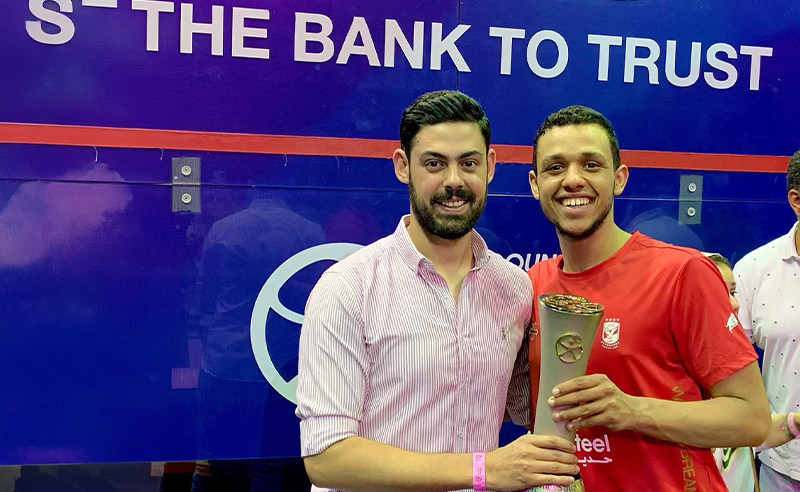 His working life, as he describes it, is one long exercise in immediate response. “On a daily basis, if there is a player in the local tournaments or even in the PSA tournaments who has an injury or a problem, we deal with him immediately,” he says. “I make an assessment, put together a protocol for him, and set a deadline for when he can leave the stadium and, God willing, when he will be back.”
In tournament weeks the machinery grows to match the stakes. “There is a full medical team, including a natural treatment specialist, covering the tournaments. If anyone has an injury or a problem, we provide first aid. We also determine whether they can continue or not. So our presence at the tournaments is always there.”
It is a remarkable amount of authority to hold over a group of people whose entire identity is built around refusing to stop, and he wields it daily, usually against the wishes of the person on the table.
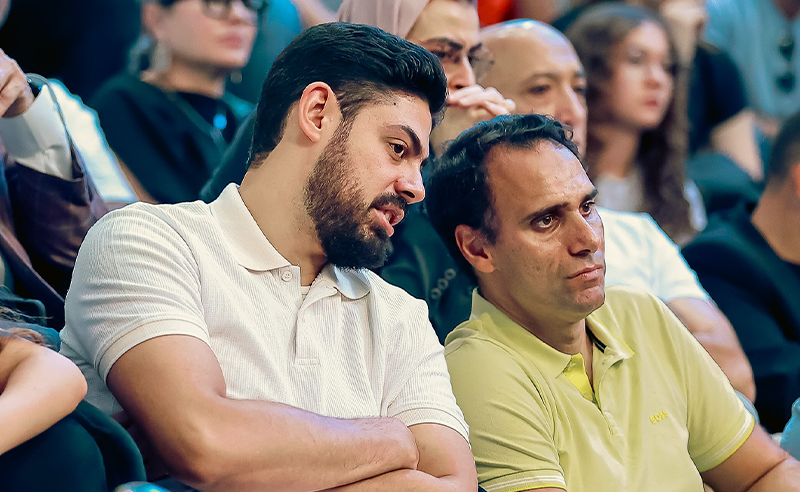 The reason that authority is needed becomes obvious the moment he explains what the game demands. “Of course, squash is one of the sports that places a very big physical load on the body,” he says. “We always say that a squash player, in his top form, is the fittest athlete in the world.”
He is quick to explain why, and the comparison he reaches for is football, a sport he knows intimately. “It is very similar to individual sports because the athlete moves throughout the game and does not stop at all. Unlike team sports, like football, if the ball is with the striker, the defender is relaxed. If the ball is with the midfielder, the striker is relaxed. Squash involves continuous movement throughout the game. There is no rest at all. This requires a very high level of fitness, so the physical load is high.”
That relentlessness leaves a predictable trail of damage. “For squash players, the parts of the body that have the most problems are, of course, the knee and hip joints. As for the muscles, it is mainly the back muscles and the quadriceps muscles, the front muscles.” Knees come first, followed by the hip and the quadriceps, “because the game relies more on footwork and the strain on the knee joint, as well as forward flexion and bending in the hip and back.”
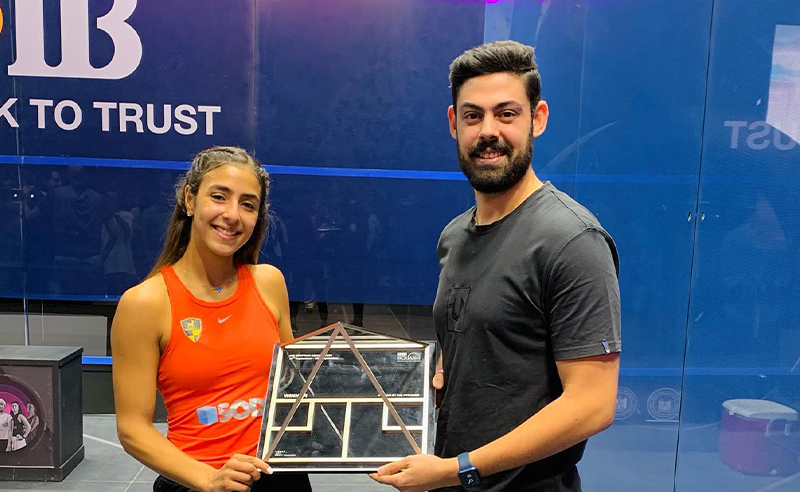 The back, he adds, tends to give way when a sudden shoulder movement meets a ball that was never meant to be caught, or when recovery and rehabilitation have been skipped, resulting in strained back muscles or inflammation of the sacroiliac joint.
Keeping those joints and muscles in working order involves a recovery routine that sounds, at first, like a luxury spa menu. “Recovery sessions between tournaments include deep massages, a hot pass, an ice pass, cryotherapy, and compression boots. We use all these things for recovery. This happens before the tournament, sometimes during the tournament if there are days between matches, and also after the tournament.”
Squash players, he says, need considerably more of it than footballers, and the arithmetic of the tournament draw explains why. “They may have a long period between the first round and the final. They can play six or seven matches. Each match can last at least half an hour to an hour or more, and they can play daily. So the load is very high, and they always need more care for their bodies, muscles, and joints.”
 A footballer’s week, by contrast, has a shape to it. “The load before matches is lower than the load in the middle of the training week. The highest load a football player takes is on match day, followed by, of course, one or two days off. So the load is distributed throughout the week. But in squash, the load can remain high for a whole week without stopping.” Closer to tennis and table tennis in its tournament structure, squash gives the body no such mercy.
Working across both worlds has taught him things that neither would have taught him alone. From football, he brought over patience, and specifically patience with injury. “When a football player is injured, his main concern is not missing a match. So, when we talk about an injury that needs four weeks of treatment and rehabilitation to return to the field, a football player only misses four matches. But in a sport like tennis or squash, he can miss a lot of matches because he may only play two or three matches in a month. So there is a lot of psychological pressure on the player. There is also pressure to return as soon as possible, which can disrupt recovery.”
A team sport can absorb an absence, he explains, because another player steps into the gap, whereas squash cannot. “If a player misses a match, he does not play at all because it is an individual game, so the stress level is higher.” Rankings have to be defended and Egypt has to be represented in major tournaments, which is why he tries to keep the pressure off his players wherever he can.
 In return, squash taught him something football never could, which is how to build a protocol that lets a player recover and compete at the same time. “This is something we cannot do in other sports because squash players are among the most professional and committed athletes,” he says. “They have a lot of passion for the game, they understand their bodies, and they understand the role of the medical team. They are not lazy; they always need to be in shape and fit. So any instructions we give the player make a huge difference.”
Even so, he admits there are times when a player’s desire to play is something nobody can control, and the job becomes finding a way for them to compete through a tolerable level of pain and treating the damage afterwards. “This has happened a lot.”
Few cases illustrate that better than the one he returns to most readily, which involved Nour El Sherbini at the PSA World Tour Finals, held at The Arab Mall in 2022. She had come through the semi-final with a badly swollen ankle, and an MRI revealed a dislocation. “Of course, this is an injury that needs to be treated for four weeks,” he says, which was precisely the amount of time she did not have.
“But we were able to work with her intensively. We worked on her three times a day before the game, and I also worked on things to help reduce the pain, as well as some therapeutic exercises to help her move and understand which movements were affected by the injury, which movements were not allowed during the game, and which movements were allowed.”
She dropped the second game, he recalls, and from the outside it looked very much like the championship was slipping away. “She was 100% injured, but her commitment to medical guidance and her strong desire to play and win played a very big role in allowing her to play, keeping the pain level low, and winning the championship.” A dislocated ankle, a final, and a title anyway.
 It is, in a sense, the extreme end of a principle that governs how he treats everyone at the top of the rankings. “We treat a regular patient with a regular protocol. If we are doing physiotherapy or rehabilitation, we work every 48 hours, and sometimes every 24 hours. But with a player in the top four or top five, or a player who is number one, we have to work very intensively to reduce the time needed to recover from the injury and give him the best possible benefit.”
In practice, that means working on the injured area three times a day, every six hours, combining medical equipment with manual treatment, while also training the surrounding areas so the player’s fitness does not slip. “This means that as soon as he recovers from the injury, he is ready to go straight back onto the field and does not need further rehabilitation.”
That kind of intensity is possible, he says, because elite professionals understand what their bodies need, a mindset he saw first-hand as head of the medical team for the national team in Houston. “They know what their bodies need, when to listen to their bodies, and when to take care of themselves. They understand how recovery and physiotherapy play a very important role in maintaining their form and playing professionally.”
 Beginners come in without that knowledge and acquire it slowly, usually at tournaments, so a good part of his work has been teaching the youngest players why recovery matters long before they turn professional. “This has taken a lot of time, but it is very different with the players now, thank God. We achieved all the titles in the tournament, whether in individual or team competitions, for the national team.” The lessons stuck, he says, because the players tried them, saw the results and never gave them up.
The biggest mistake he sees in young players has less to do with the players than with the people who love them most. “The first person they have is their guardian. He is the one who takes care of them, keeps them exercising, looks after their bodies, and gives them mental and psychological support. He wants them to be number one in the world tomorrow morning, so, of course, he puts them through a lot of unnatural exercises and excessive fitness training.”
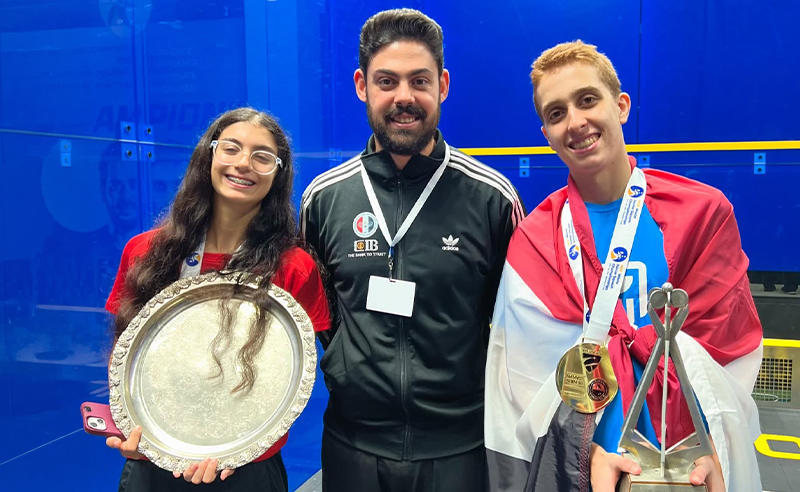 Young bodies simply cannot absorb that load, and the result is injury or a struggle to stay in shape. Compounding it is a persistent belief that recovery is something for older players, when in his view it is essential from the age of eleven or twelve.
He is trying to change that, one parent and one coach at a time, and his hope is as generous as it is ambitious. “God willing, this will improve and help protect us, so that Egypt will always produce champions and all the world champions will come out of Egypt.”
- Previous Article Sibil to Headline PLAYHAUS by Human Figures Showcase in Cairo Dec 4th
- Next Article The Accidental Alchemy of Kiss Facility