



Meet the Analyst Behind Pyramids FC's Game Plan
Saeed El Nahhas built a career studying the teams his clubs are about to face, turning match footage and data into information coaches and players can use.

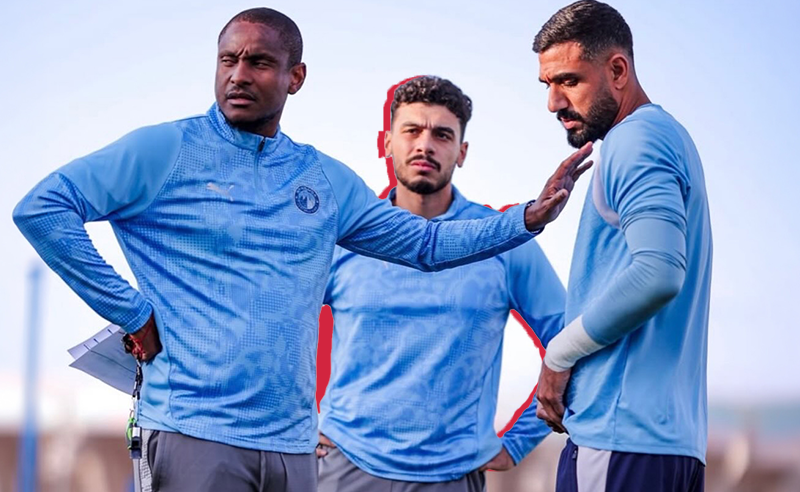
Saeed El Nahhas started looking at football differently when he was 19.
The matches were still the same, but his attention had shifted. He became interested in why teams moved the way they did, where space opened, what changed when possession was lost and how a coach could turn those details into an advantage.
Argentine coach Marcelo Bielsa became an early reference point. El Nahhas followed his work at Olympique de Marseille closely, studying the ideas behind the football rather than stopping at the result.
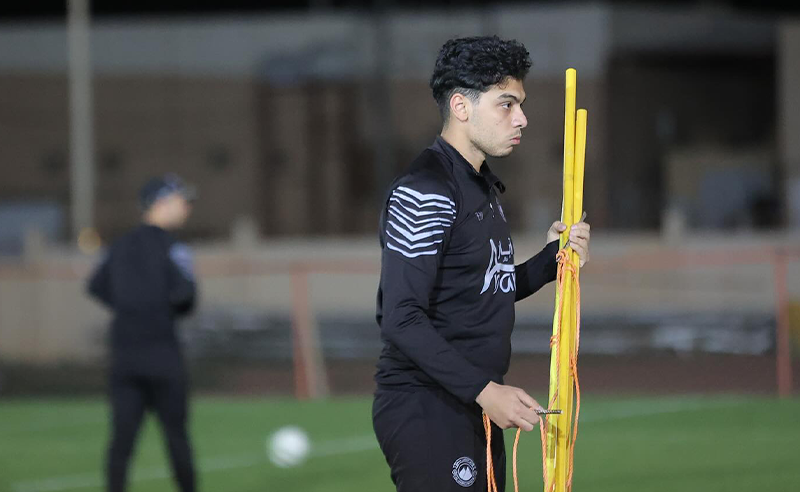 That curiosity pushed him into years of self-directed learning. He later added online study through Spain’s MBP School of Coaches, Levels 1 and 2 in Performance Analysis through BFSA and specialist courses at EBFC Academy focused on individual players.
YouTube became the first place where all of that learning had to become clear enough to explain.
El Nahhas began creating football content in 2020, breaking down matches, tactical concepts and coaching methods for viewers who wanted to understand more of what was happening on the pitch.
Explaining football to an audience taught him one part of the job. Professional football demanded another.
 A performance analyst can spend hours watching an opponent before his own team faces them. He looks at where attacks begin, how defenders react under pressure, which players move into certain spaces and what changes when the team loses the ball.
The useful part comes afterwards. Those observations have to be reduced into something a coach can actually work with.
El Nahhas began doing that professionally with Morocco’s KAC Kénitra in 2021, providing tactical analysis to the coaching staff during domestic competitions.
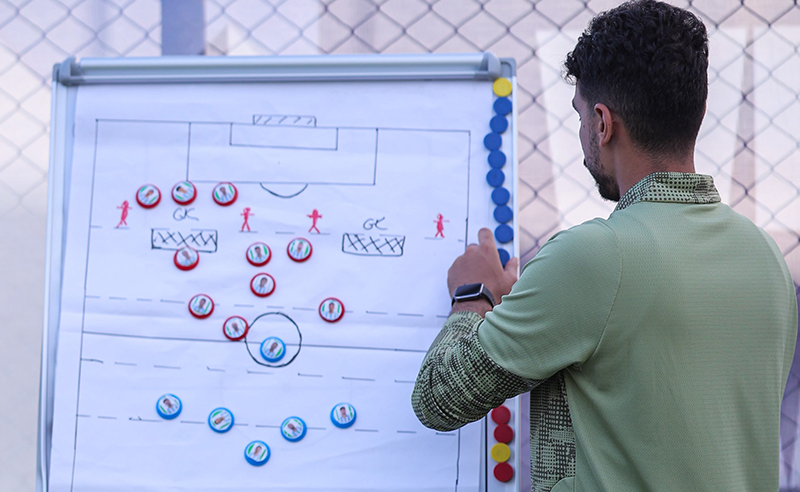 His interest in the game also took him into research at the University of Cologne, where he worked as an assistant researcher on a project examining tactical classification and the relationship between football analysis and digital data.
The two experiences were closely connected. One asked how tactical behaviour could be studied and organised. The other asked what any of that information could actually do for a team preparing to play.
That question followed him into international football. El Nahhas worked with Angola’s senior national team during continental qualifiers, preparing video analysis and statistical reports on opponents and individual player movements.
 National-team football brought its own demands. Coaches have less time with their players, preparation windows are shorter and the information presented to them has to earn its place quickly.
Saudi Arabia then brought El Nahhas closer to the coaching side of the work.
He joined Bisha FC in 2022 as both a performance analyst and assistant coach. The distance between what he saw on a screen and what happened on the training pitch became much smaller.
His move to Al-Jabalain later that year deepened that experience. Over roughly a season and a half, he worked on pre-match and post-match analysis, studying attacking and defensive positioning and helping the technical staff understand what was happening around their team.
Different coaches also changed the way the information was used.
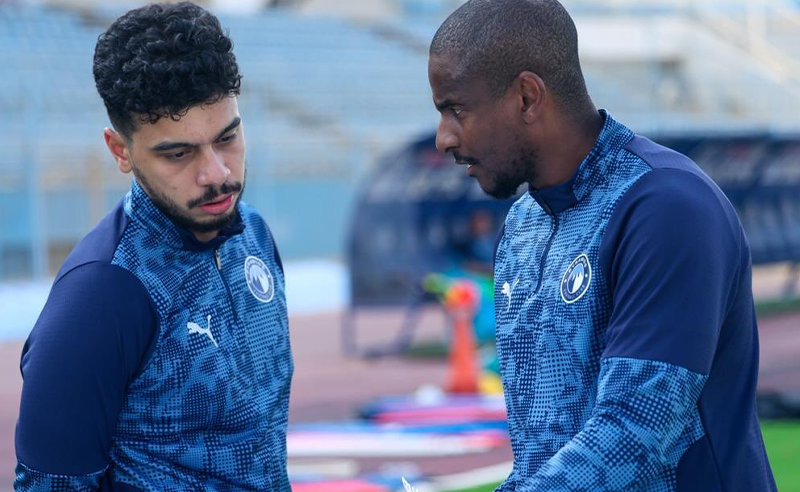 El Nahhas has worked alongside figures including Denis Lavagne, João Mota, Carlos Hernández, Marcel Koller and Rulani Mokwena. Each came with his own football ideas and his own expectations of what an analyst should provide.
That meant learning that good analysis cannot exist separately from the team receiving it.
An opponent may repeatedly leave one side of the pitch exposed. That information only becomes useful once El Nahhas understands whether his own team has the players, shape and approach to exploit it.
His work is therefore as much about his own team as the opposition.
That became especially clear when El Nahhas joined Al Ahly in 2024.
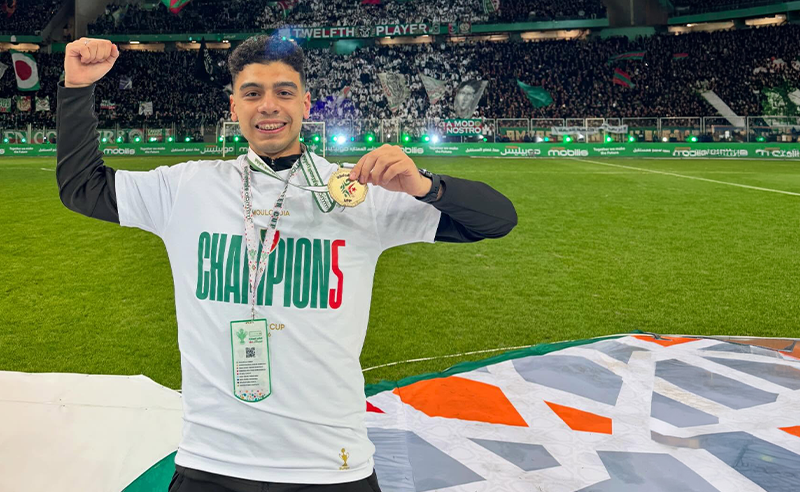 At one of the region’s biggest clubs, he prepared detailed tactical profiles of opponents for the first-team staff. The scale was different, and so was the scrutiny, but the work still depended on reducing a match into the details that could help a coach prepare for the next one.
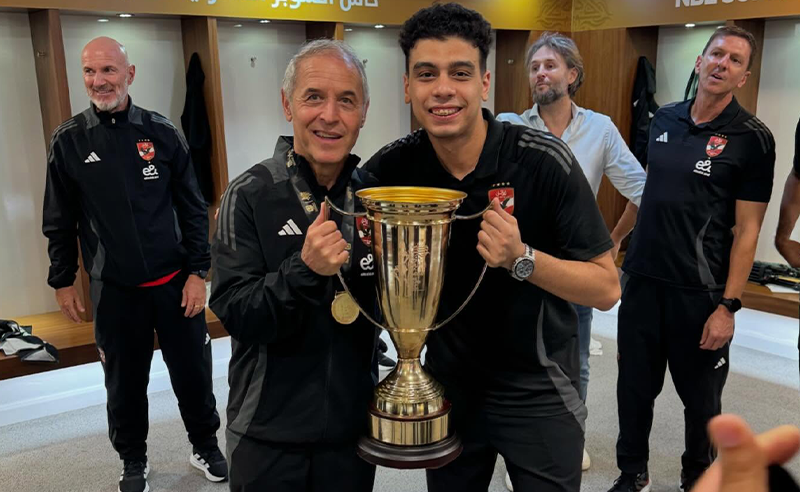
He worked under Marcel Koller and remained during Emad El Nahhas’s time with the first team before his career took him back outside Egypt.
MC Alger brought him into Rulani Mokwena’s technical staff in 2025.
His work there included data collection and tactical analysis around attacking strategies and build-up play, giving him another way of thinking about how analysis could support a coach’s wider football model.
El Nahhas later joined Al-Ittihad Tripoli in Libya, where his work expanded further into individual player analysis alongside the study of opponents.
The professional relationship with Mokwena eventually brought him back to Egypt.
Pyramids FC appointed the South African coach in July 2026, and El Nahhas joined the first-team staff as a performance analyst.
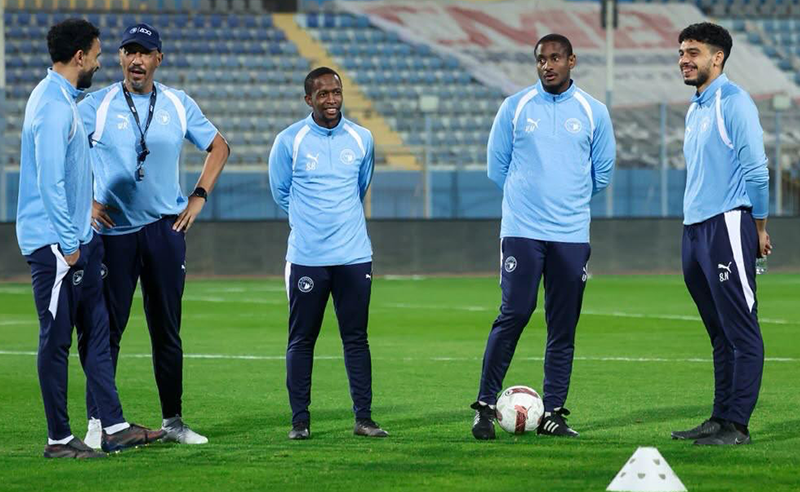 His job now sits at the point where all of those earlier experiences meet.
Research taught him to organise information. YouTube taught him to explain it. Assistant coaching showed him what information looks like once players have to act on it. Years of opposition analysis taught him which details deserve attention and which can be left on the screen.
Pyramids competes across domestic and continental football, which means the opponent keeps changing.
El Nahhas’s task is to understand each one quickly enough, clearly enough and deeply enough to give the coaching staff something useful before the whistle blows.
The work can begin with hours of footage. By matchday, the important part may come down to a handful of details.
- Previous Article UAE Fintech Wafr Launches Blockchain Platform
- Next Article Kahhal Looms Turns the Spotlight on Egypt’s Weavers
Related Articles


Trending This Week
-
-
-
 Nov 08, 2026
-
 Nov 09, 2026