



Inside Football’s Role in Egypt’s 1973 War Strategy
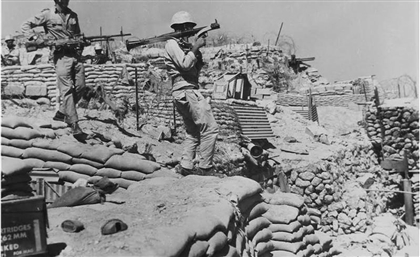
During the October 1973 War, Egypt used a football match as part of a plan to conceal its coming military operation.

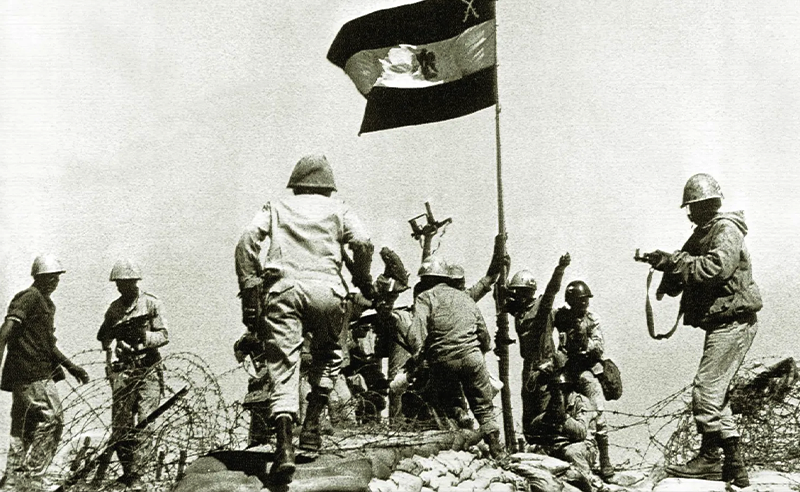
During wartime, keeping things looking normal can be just as important as keeping military plans secret. In October 1973, even football was folded into Egypt’s wider plan to keep Israel from knowing what was coming.
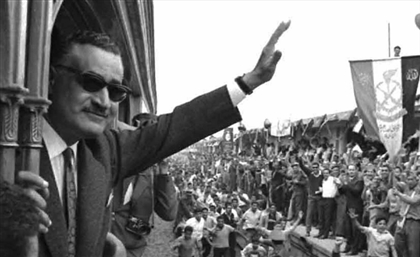
President Anwar Sadat ordered the fourth-round league match between reigning champions Ghazl El Mahalla and Al Tayaran to be played at Arsenal Stadium in Mit Okba at exactly 2 PM, the same time as zero hour on October 6th.
-bdb9e3c1-6195-4597-8eac-1184713b55e8.png) The day before the match, on October 5th, newspaper editors-in-chief received secret instructions to give football news and reports more space in their papers, helping maintain the appearance of an ordinary day.
The day before the match, on October 5th, newspaper editors-in-chief received secret instructions to give football news and reports more space in their papers, helping maintain the appearance of an ordinary day.
The following afternoon, the match kicked off as planned. Around 30 minutes into the game, between 1,000 and 2,000 Mahalla supporters in the stands suddenly began chanting for Al Tayaran, leaving the Mahalla players confused.
-6477593c-16b1-4003-89cc-98cfe3b2eaea.png) When referee Captain Ibrahim El-Gouwaini blew the whistle to end the first half, the reason became clear. The fans had picked up the Armed Forces’ first communiqué on a transistor radio, announcing that Egyptian troops had begun crossing into Sinai. Their cheers for Al Tayaran were, in fact, cheers for the Air Force.
When referee Captain Ibrahim El-Gouwaini blew the whistle to end the first half, the reason became clear. The fans had picked up the Armed Forces’ first communiqué on a transistor radio, announcing that Egyptian troops had begun crossing into Sinai. Their cheers for Al Tayaran were, in fact, cheers for the Air Force.
Hanafy Helal, who was playing for Ghazl El Mahalla at the time, later recalled the moment: “Suddenly, while we were playing, just before the end of the first half, we saw the crowd, most of them Mahalla supporters, cheering Al Tayaran with extraordinary enthusiasm. We were baffled and said, ‘What’s going on? We’re not that bad!’”
-9d0da0b9-21d3-4890-8860-10f0a23a8c24.png) The players only understood what was happening once they entered the dressing room at half-time and heard the news of the war and the Crossing. “It was a joy beyond words,” Helal said.
The players only understood what was happening once they entered the dressing room at half-time and heard the news of the war and the Crossing. “It was a joy beyond words,” Helal said.
The referee did not resume the match. According to Helal, the game had served its purpose as part of the deception arranged by Sadat. On the bus back, the players turned on the radio to follow the latest news and spent the journey chanting 'Allahu Akbar.'
-bbb4f072-de6f-49a7-af85-74dfe217cce0.png) The match, which lasted just one half, ended 0-0. Engineer Hassan Helmy, then president of the Egyptian Football Association, announced the suspension of the league season, which was eventually cancelled altogether.
The match, which lasted just one half, ended 0-0. Engineer Hassan Helmy, then president of the Egyptian Football Association, announced the suspension of the league season, which was eventually cancelled altogether.
The final remaining fixture of that round was also called off after the war began. It was supposed to see Ismaily face Port Said’s Masry, two clubs representing what were then known as the Canal cities and front-line areas.
-606e2d91-c0ea-4981-9b39-63681cd8281f.png) In total, only 37 matches of the 1973-74 season were played, producing 104 goals and seven goalless draws. Al Ahly were top of the table when the season was cancelled, one point ahead of Zamalek, Al Tayaran, Arsenal, Ghazl El Mahalla and Ittihad. Zamalek had the strongest attack, while Al Ahly and Plastic shared the best defensive record. Zamalek star Ali Khalil was the league’s top scorer.
In total, only 37 matches of the 1973-74 season were played, producing 104 goals and seven goalless draws. Al Ahly were top of the table when the season was cancelled, one point ahead of Zamalek, Al Tayaran, Arsenal, Ghazl El Mahalla and Ittihad. Zamalek had the strongest attack, while Al Ahly and Plastic shared the best defensive record. Zamalek star Ali Khalil was the league’s top scorer.
Egyptian football did not stay off the pitch for long. Matches returned in December 1973 as the country prepared to host the Africa Cup of Nations in March 1974.
The war also claimed a player from the Egyptian football community. Abdou Abu Hussein, who played for Port Said’s Masry club, was killed in action on the front line while defending his country.