






Tell Abu Saifi Finds Shed Light on Ancient Horus Military Road
Excavations in Ismailia uncovered roads, temple structures and a Ramesses II inscription strengthening links between Tell Abu Saifi and ancient Mesen.

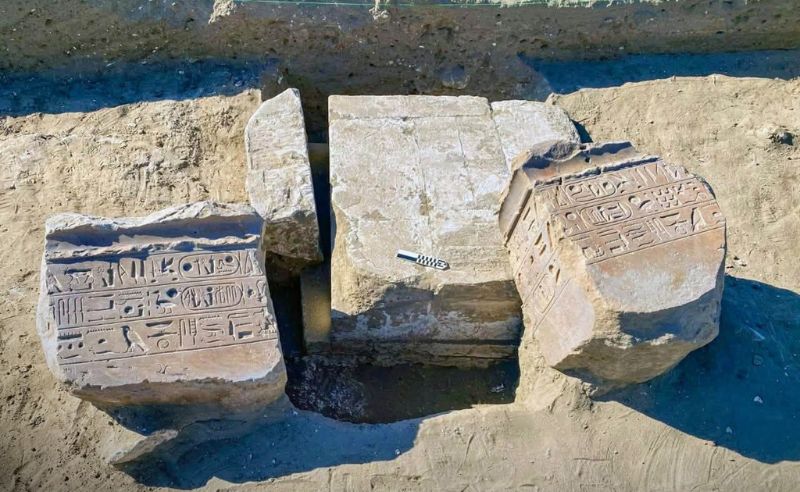
New archaeological discoveries at Tell Abu Saifi in Qantara East, Ismailia, are providing further evidence about the route and stations of the ancient Horus Military Road while strengthening a hypothesis that the site may correspond to the ancient city of Mesen.
The Egyptian archaeological mission uncovered a series of architectural remains and artefacts during the current excavation season, allowing researchers to refine their understanding of the site’s religious, military and architectural development across successive periods.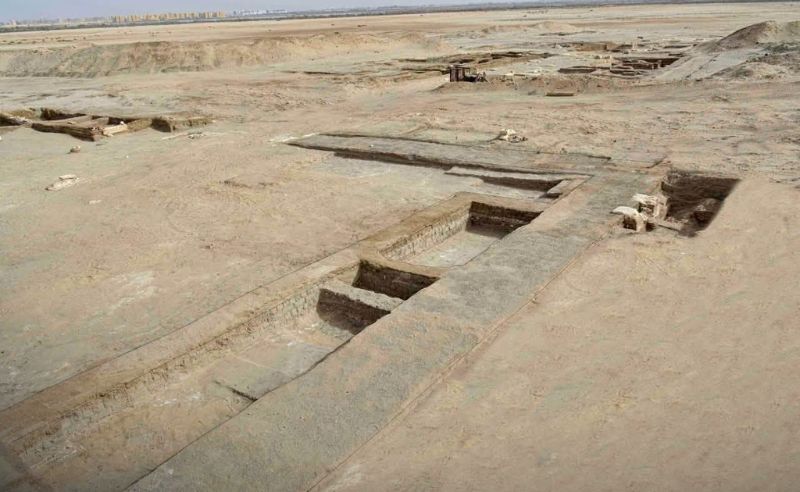 Among the findings is a massive mudbrick enclosure wall with gateways, interior rooms and multiple construction layers. Studies indicate that the structure formed the outer enclosure around a temple, correcting earlier interpretations that had identified parts of the complex differently.
Archaeologists also identified two successive stone roads leading from outside the fortified area towards the temple. The earlier route dates to the Ptolemaic period, while a narrower Roman-era road was later constructed above it. Additional remains include storage rooms along the northern side of the temple and larger service rooms to the south leading towards the sanctuary.
One of the most significant finds was half of a large sandstone lintel, broken into two pieces and inscribed on three sides with the titles of King Ramesses II. The inscription also refers to restoration work carried out on a statue of ‘Horus, Lord of Mesen’, providing further evidence for the proposed identification of Tell Abu Saifi with the ancient city. Archaeologists have cautioned that further excavation and scientific analysis are still required before the connection can be established conclusively.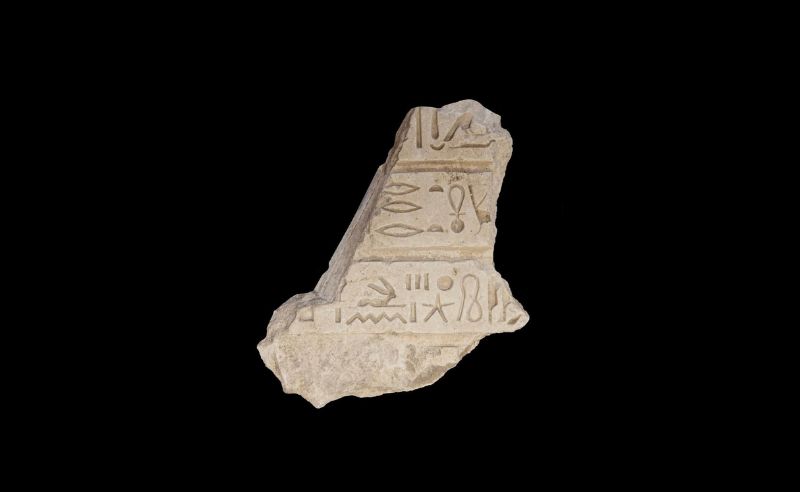 Other discoveries include part of a 26th Dynasty schist statue depicting an army scribe carrying a broken naos, a Late Period statue missing its head and feet, a royal basalt torso and fragments of falcon statues made from basalt and limestone.
Evidence from the site indicates several phases of use. The temple reached its architectural peak during the Ptolemaic period before parts of the complex were converted into a Roman military barracks during the third century AD. By the late Roman period, the sanctuary area had been reused as a lime quarry, with two large circular kilns constructed over its corners.
Related Articles
Trending This Week
-

-

-
 Sep 28, 2026
 -