



Rare Marble Head of Aphrodite Was Discovered in Beni Suef
The discoveries span Pharaonic, Greek and Roman layers at Herakleopolis Magna with reused sixth-century foundations and ongoing analysis by researchers.

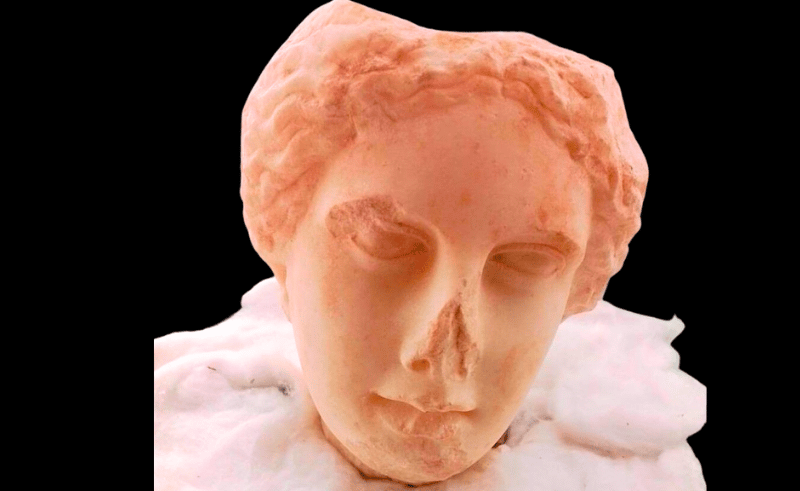
Archaeologists have uncovered Ancient Egyptian, Greek and Roman finds at Ehnasiya Al-Medina in Beni Suef, including a reused stone block inscribed with the names of King Senusret III, extensions of a Roman-era basilica, and a marble head of the Greek goddess Aphrodite.
The work was conducted by an Egyptian archaeological mission from the Supreme Council of Antiquities at the ancient city, known in the Greco-Roman period as Herakleopolis Magna. The Senusret III piece bears a raised-relief inscription showing the king’s throne and birth names.
It also features a cartouche with the name of the deity Osir-Naref. The Supreme Council of Antiquities said the inscription reinforces evidence of the Middle Kingdom ruler’s connection to monuments at Ehnasiya and indicates the city’s religious importance across Pharaonic and Ptolemaic periods.
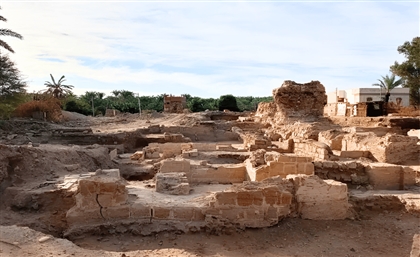
Excavations also revealed new sections of a Roman-era basilica and remains of an earlier Doric temple. Preliminary analysis suggests that architectural elements from the temple were reused in the sixth century AD as foundations for the basilica. Large stone blocks were rearranged to support columns weighing up to 45 tonnes, three of which remain standing in their original positions.
Officials added that basilicas served administrative, commercial and social functions during the Greek period before later adaptation for Christian worship. Among the artefacts, archaeologists found a marble head of Aphrodite measuring about 24 by 25 centimetres.
The Supreme Council of Antiquities noted its craftsmanship, citing the detailed facial features and wavy hair in classical style. Fragments of wall statues and terracotta moulds believed to have been used for coin production were also recovered, indicating economic and cultural activity at the site during the Roman era.
Researchers are continuing scientific analysis and dating of the newly discovered material. Ehnasiya Al-Medina was the capital of Egypt during the Ninth and Tenth Dynasties and remained a major religious and administrative centre through the Middle Kingdom, New Kingdom and Third Intermediate Period, later prospering under Greek and Roman rule as Herakleopolis Magna.
- Previous Article SceneNoise x Amsterdam Dance Event Present CROSSFADE: Egypt
- Next Article New HR Guide to Support UAE Employees With Multiple Sclerosis
Related Articles
Trending This Week
-
-
 Sep 10, 2026
 -
 Sep 10, 2026
 -