





The Rooms We Build for Books: Modern Libraries of the Middle East
From Bahrain to Saudi Arabia, these libraries show how reading spaces are being reimagined across the region.

Libraries across the Middle East are being designed as places people spend time in, not just places to borrow books. Some sit inside old neighbourhoods shaped by restoration projects, while others are part of new cultural districts and university campuses. Alongside shelves and archives, many of these buildings include gardens, cafés, exhibition spaces, study areas, and public courtyards.
What ties them together is the way architecture shapes the experience of reading and gathering. Sunlight is filtered through screens and skylights, reading rooms open onto landscapes, and large public spaces make libraries feel connected to everyday life. From Bahrain to Saudi Arabia, these projects show how libraries continue to evolve across the region.
Khalifeyah Library by SeARCH
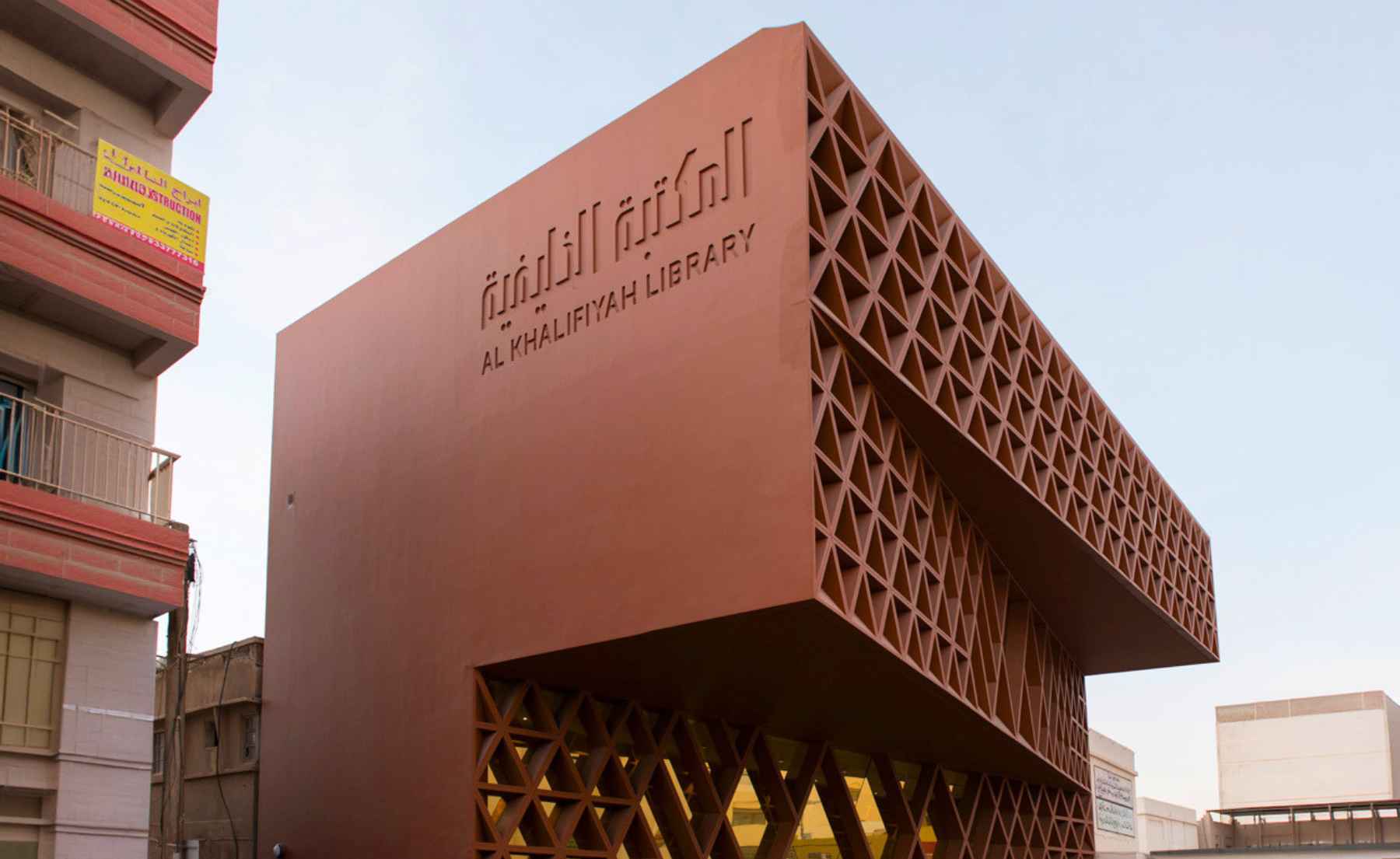
Built in the historic centre of Muharraq, Bahrain, the Khalifeyah Library was designed as part of a wider effort to restore the area’s original character after years of redevelopment. The building follows the shape of nearby structures while its upper floors extend outward to create a shaded entrance below. Its façade uses angled screens that help block direct sunlight and change appearance depending on where you stand. Inside are reading rooms, a research centre, and public spaces mainly aimed at younger people in the neighbourhood.
Bibliotheca Alexandrina by Snøhetta
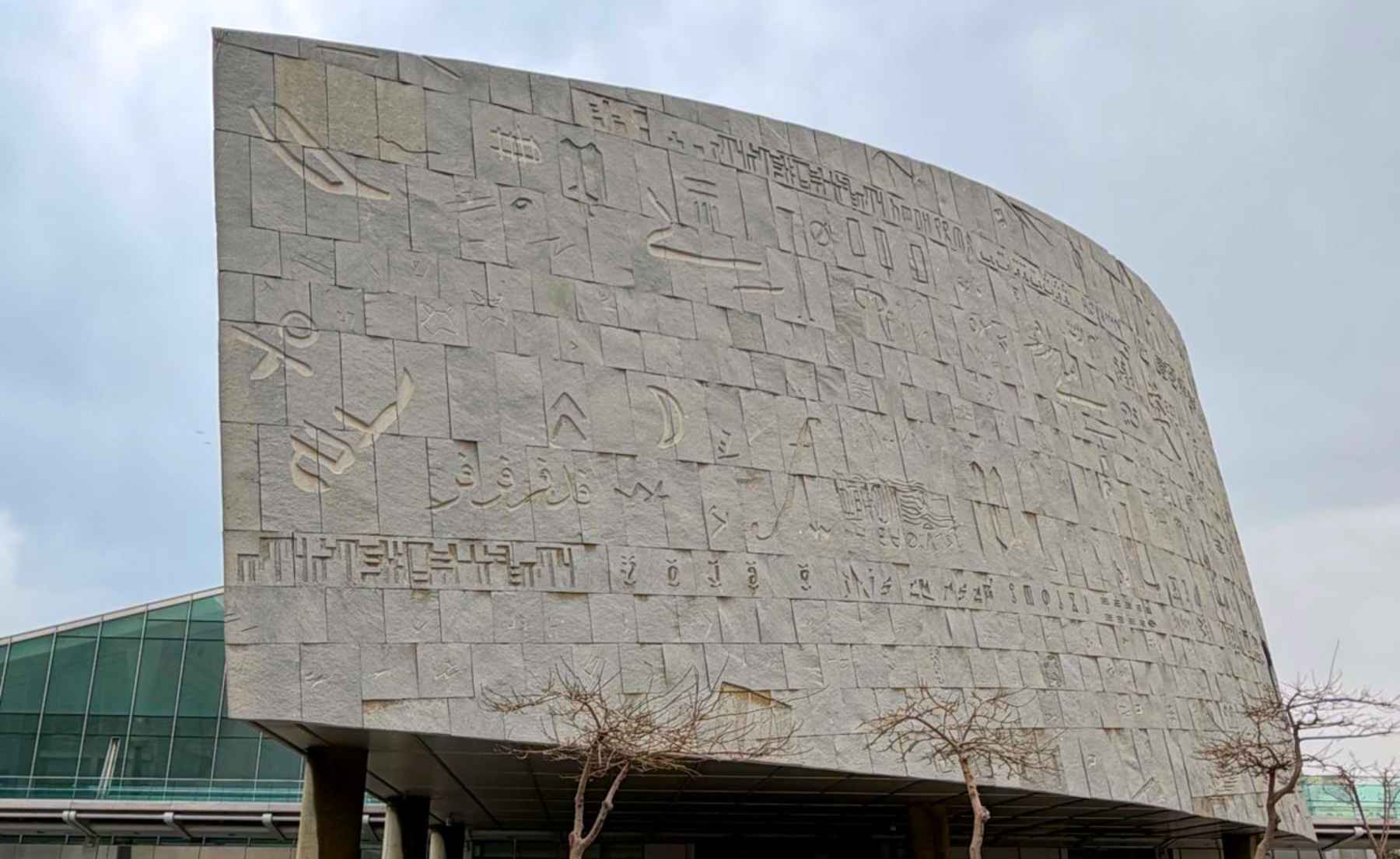
Facing the Mediterranean Sea, the Bibliotheca Alexandrina was designed as a modern library connected to Alexandria’s long history of learning and scholarship in Egypt. The building has a large tilted circular form that appears to rise out of the ground near the shoreline. Inside, the main reading room is spread across stepped levels beneath a roof filled with skylights that bring in soft natural light. Alongside its book collections, the library also includes museums, galleries, exhibition spaces, and educational facilities.
J. G. Jabbra Library and R. Nassar Central Administration Building by Atelier Pagnamenta Torriani
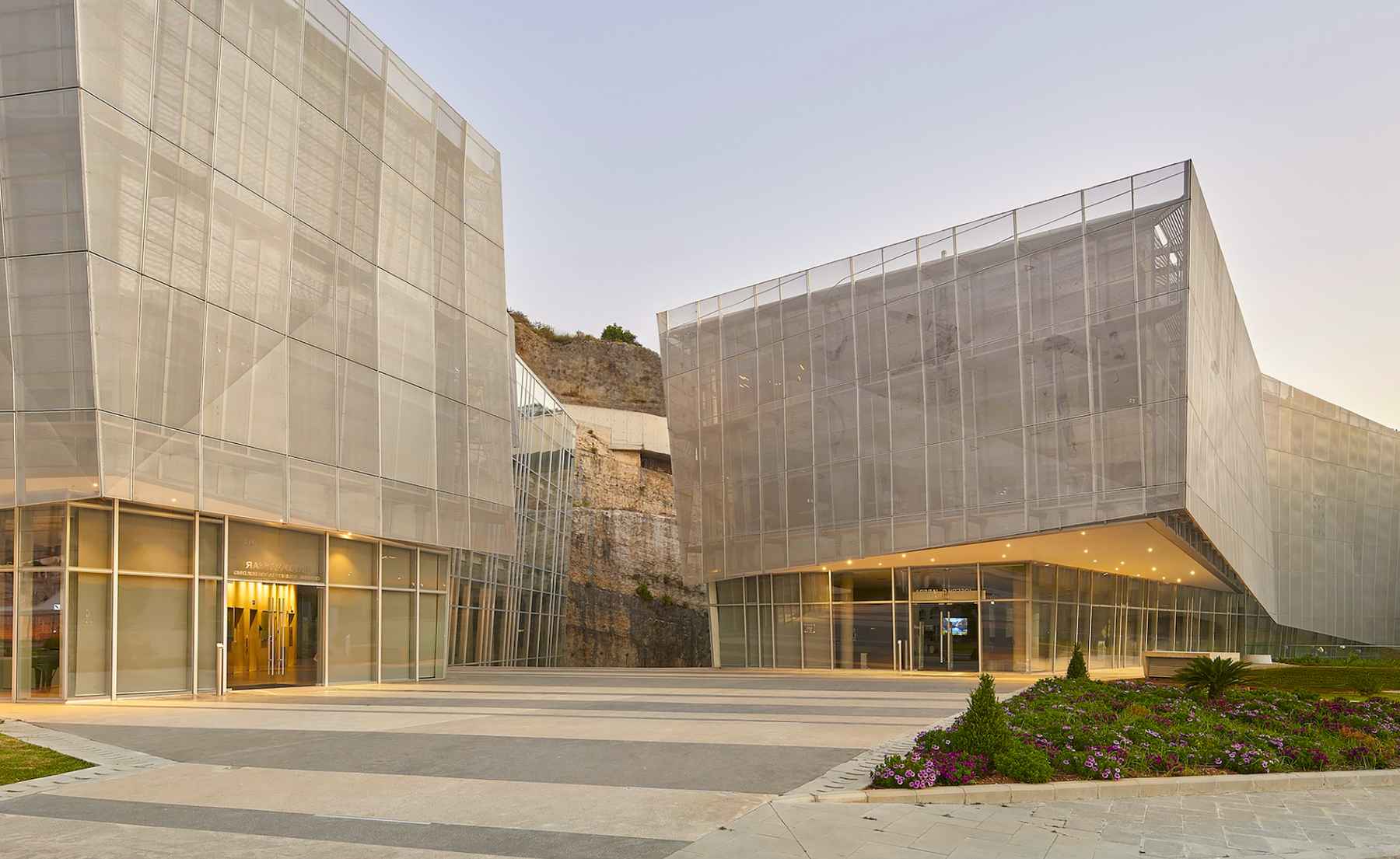
Located on the Lebanese American University campus, this library overlooks Byblos in Lebanon and was inspired by the rocky landscape around it. The building sits beside excavated stone, creating an open amphitheatre between the architecture and the mountain. At the centre is a large atrium that brings daylight and airflow into the interior spaces. The outer skin of the building filters strong sunlight while helping keep the library cool.
Qatar National Library by OMA
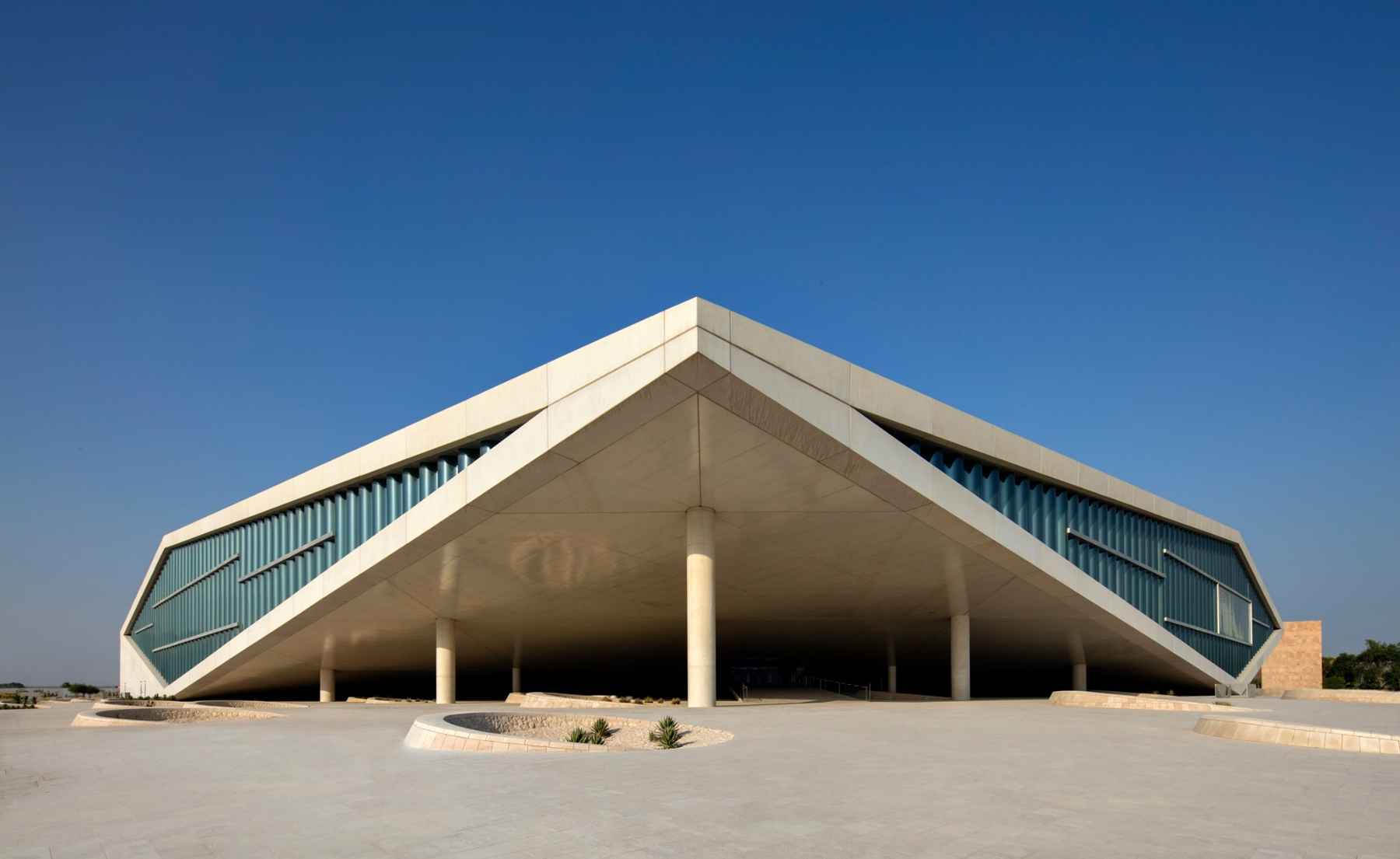
Designed by Rem Koolhaas and OMA, the Qatar National Library was planned as one large open room where books, reading areas, and public spaces all exist together. Built in Doha, the shelves are integrated directly into the architecture, forming stepped levels around the edges of the building. At the centre is the heritage collection, displayed in a lower sunken space lined with stone. A glass façade filters the strong daylight outside, creating a quieter atmosphere inside for reading and study.
House of Wisdom Library and Cultural Center by Foster + Partners
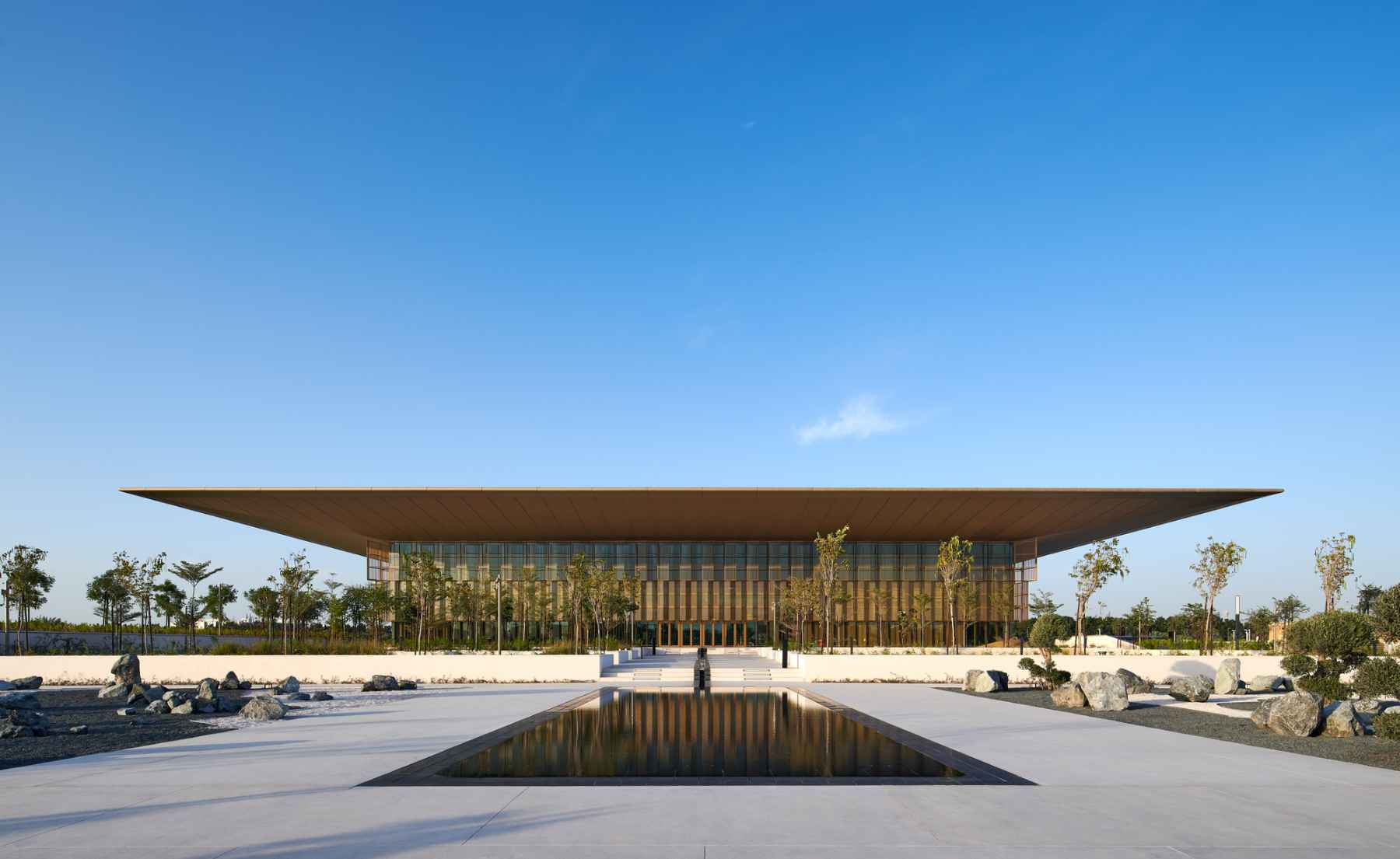
The House of Wisdom is covered by a large floating roof that shades the building from the sun. Located in Sharjah in the United Arab Emirates, the library uses glass walls to connect the interior to gardens outside, while screens help reduce glare during the day. At the centre of the building is an open planted courtyard used for events, reading, and quiet sitting areas. The library also includes exhibition spaces, children’s areas, cafés, and small study pods suspended above the courtyard.
King Fahad National Library by Gerber Architekten
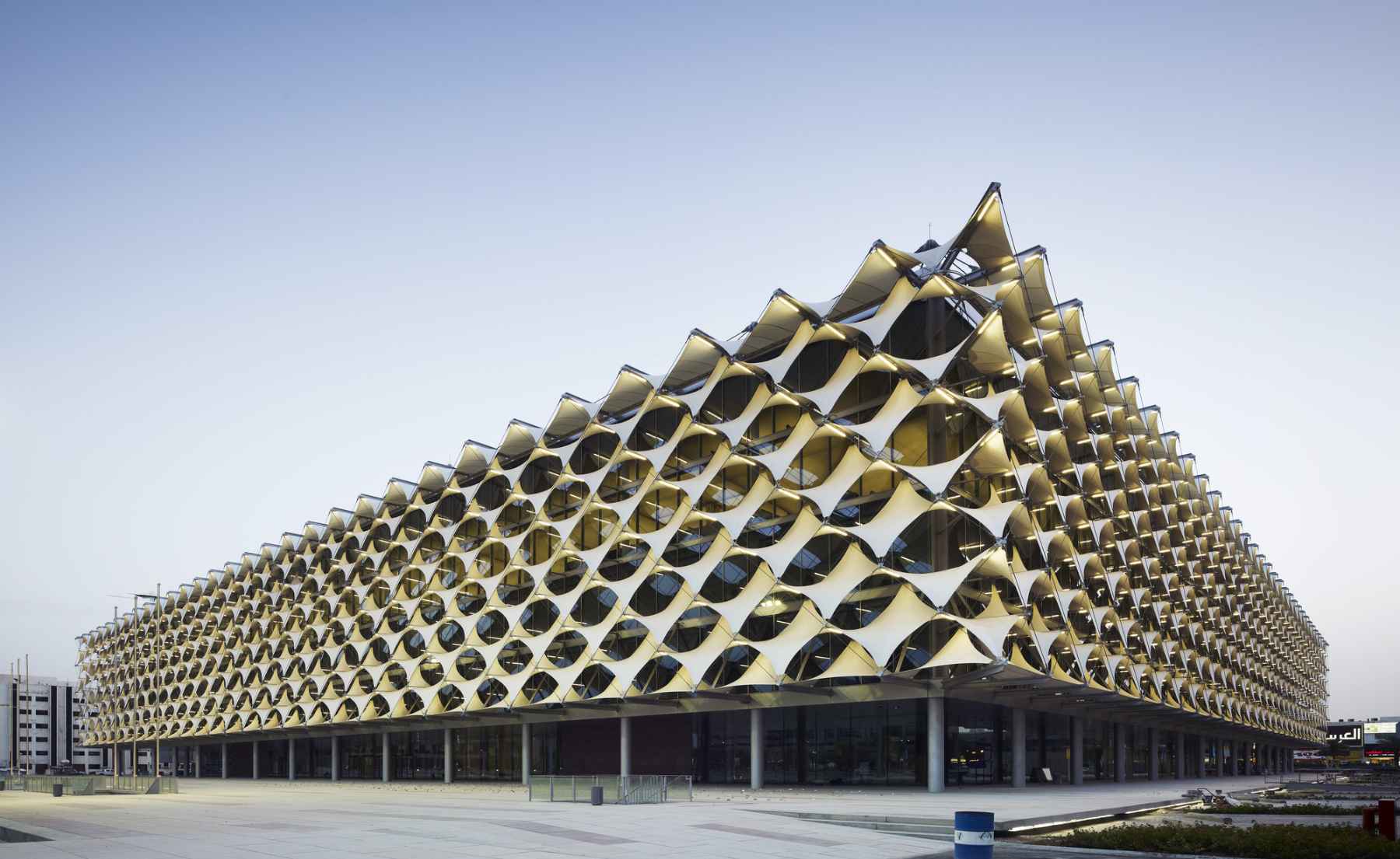
The King Fahad National Library was built by wrapping a new structure around the site’s original library building. In Riyadh, Saudi Arabia, the exterior is covered with a textile-like façade made from white geometric panels inspired by traditional regional patterns. These panels help filter sunlight and reduce heat while still allowing daylight into the interior. Inside, reading areas sit above the preserved archive spaces of the older building.
King Abdulaziz Center for World Culture by Snøhetta
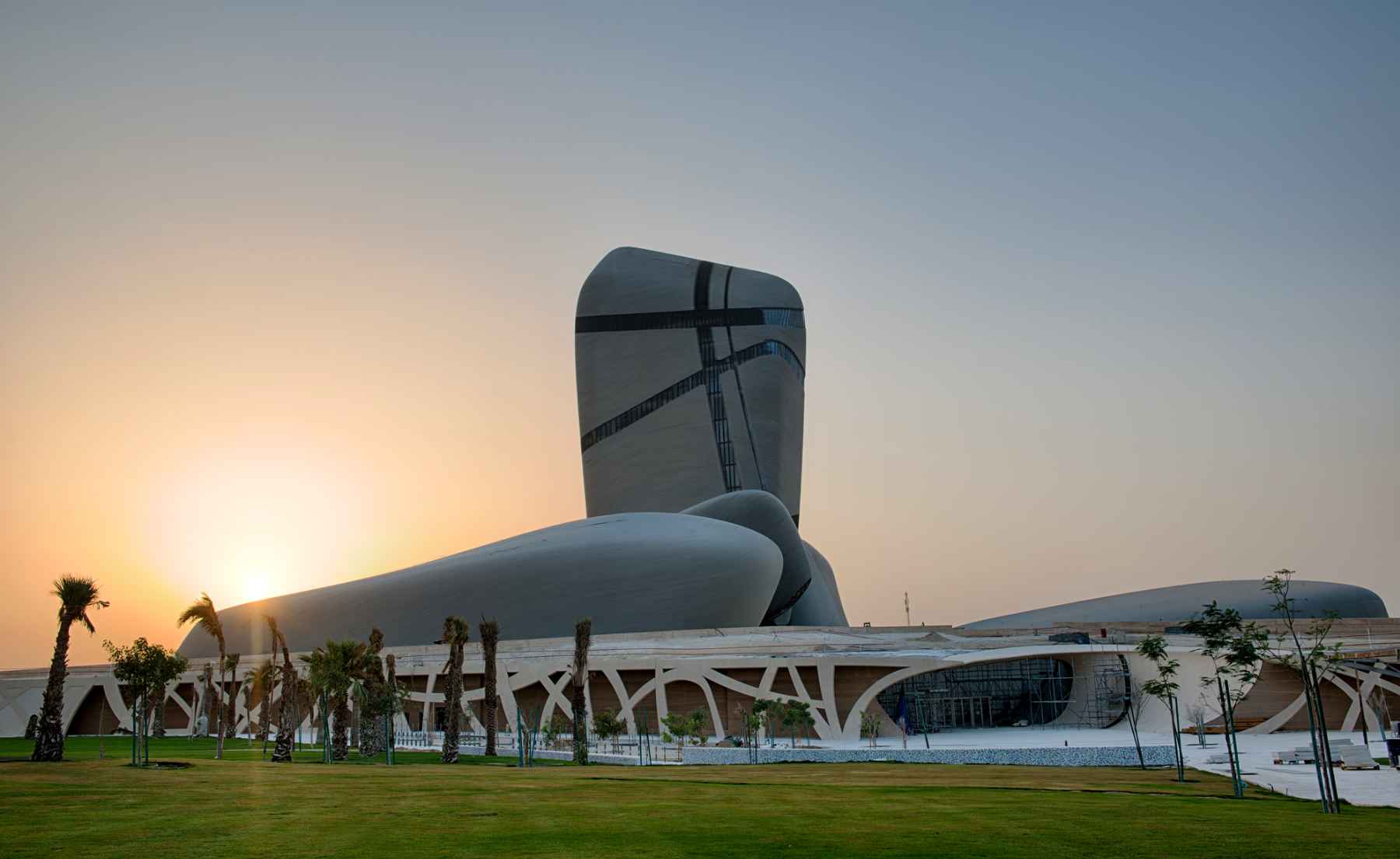
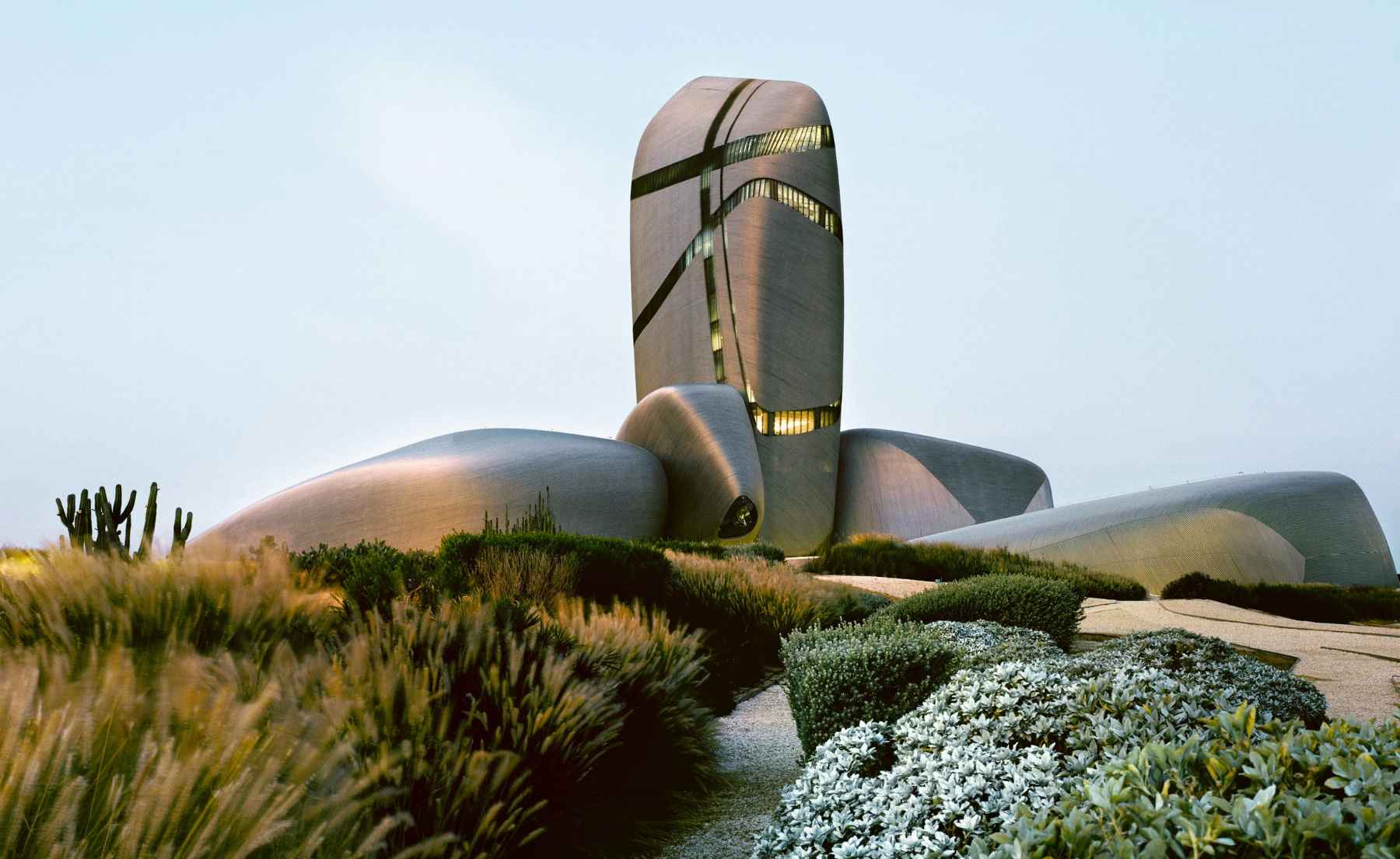
Also known as Ithra, the King Abdulaziz Center for World Culture was built in Dhahran, Saudi Arabia, as a group of rounded volumes that rise from the desert landscape like large pebbles. The tallest tower reaches 110 metres high, while the library, auditorium, and Great Hall sit lower to the ground. Inside, the library holds more than 315,000 books in both Arabic and English, making it one of the region’s largest public libraries. Alongside reading spaces, the library also hosts workshops, book clubs, and learning programmes for children and young people.
Mohammed bin Rashid Library by asp Architekten
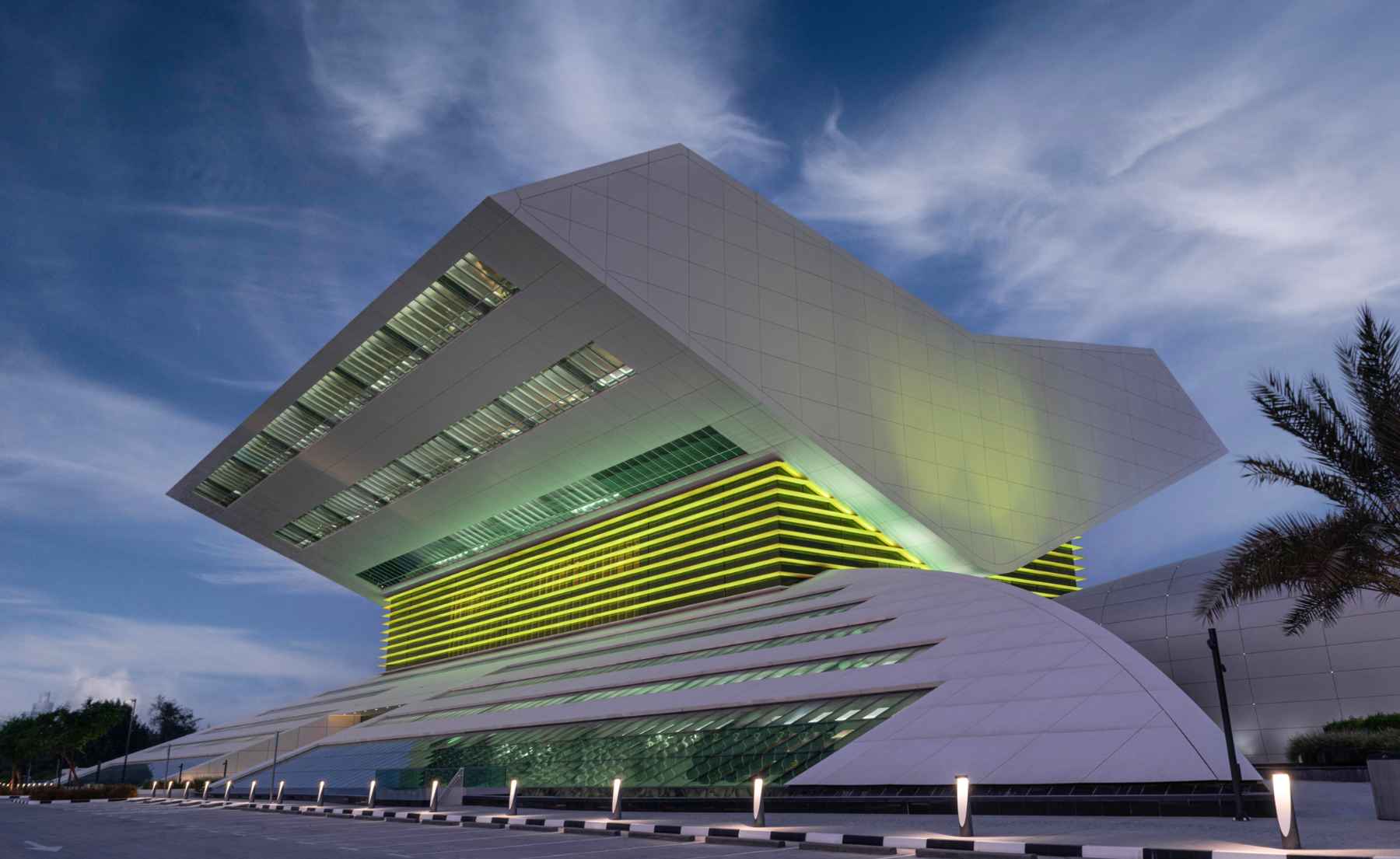
The Mohammed bin Rashid Library takes inspiration from the rahle, the traditional wooden stand used to hold the Quran. Built in Dubai, the library is split into two sloping wings connected by bridges across a central open space. One wing is dedicated to Eastern literature and the other to Western literature. Large overhangs and a light stone façade help reduce heat from the sun, while gardens and public spaces around the building make it part of everyday life in the United Arab Emirates.
- Previous Article SceneNoise x Amsterdam Dance Event Present CROSSFADE: Egypt
- Next Article The Intricate Beauty of Ben Youssef Madrasa
Related Articles


Trending This Week
-

-

-
 Sep 04, 2026
 -