Long before "sustainable design" became a line on conference lanyards, the Amazigh had already solved for climate, defence, storage and community, using nothing but mud, salt, palm wood and patience.
There is a version of North African history told largely through empires: Phoenician, Roman, Ottoman and French, each arriving with its own vision of what the land should become. Yet across five countries, in mountain ranges and oases that those empires rarely managed to fully control, the Amazigh—the indigenous people of North Africa, often still referred to as Berbers, a term many now reject—were building something else entirely. Their granaries doubled as banks, their fortresses served as places of worship, and entire villages were designed so precisely around their surroundings that mountain ridges and salt lakes became integral parts of the architecture.
None of it was decorative. Every wall answered a specific and fairly urgent question: how do you store a year's grain against raiders and drought, to say nothing of each other's bad intentions, in a landscape that offers no forgiveness for getting it wrong? The answers still stand, in various states of dignified collapse, from the Atlas Mountains to the edge of the Sahara. Here are 10 of the best places to go and stand underneath one.
Aït Benhaddou, Morocco
The one Hollywood already found for you, and rather liked
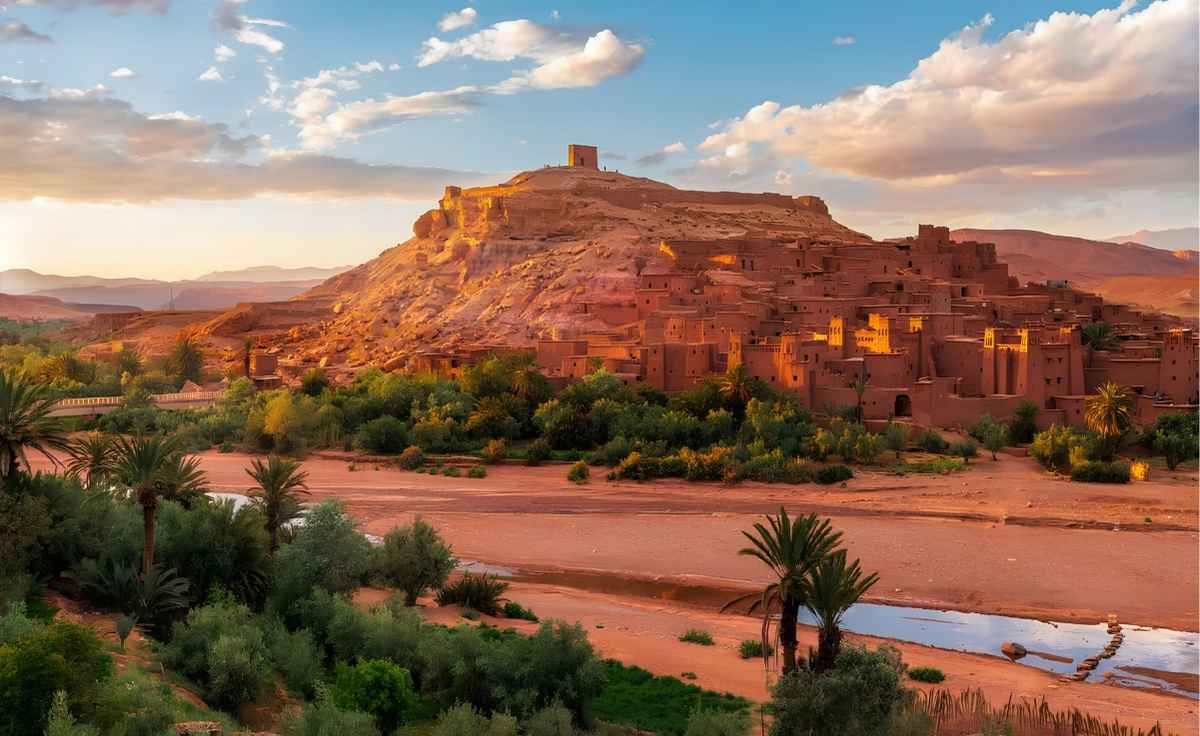
Start in the west, where the Amazigh word for "people of" (aït) meets the name of the legendary chieftain who is said to have founded this hillside above the Ounila River. Aït Benhaddou has been climbing its own hill since at least the 11th century, its earthen towers and corner-turreted kasbahs stacked up towards an agadir, a fortified communal granary, at the summit, which functioned as both the last refuge in an attack and the safest place in town to keep your grain. Merchants heading from the Sahara to Marrakech once paid tolls here, which is a polite way of saying the whole settlement was built, brick by red-ochre brick, on the very reasonable premise that trade routes need protecting and protection is rarely free.
It's now UNESCO-listed and thoroughly famous, having played a supporting role in more films and prestige television than most working actors (you have almost certainly watched a battle scene here without knowing it). The trick is not to hold that against it. Climb past the mosque and the old caravanserai, past the two cemeteries, Muslim and Jewish, still standing within the walls, and the agadir at the top offers the same view it always did: the valley, the newer village across the river, and a very long way to fall if you'd been an 11th-century raider with bad timing.
Ksar Taghit, Algeria
A fortress with a sense of humour about heat.
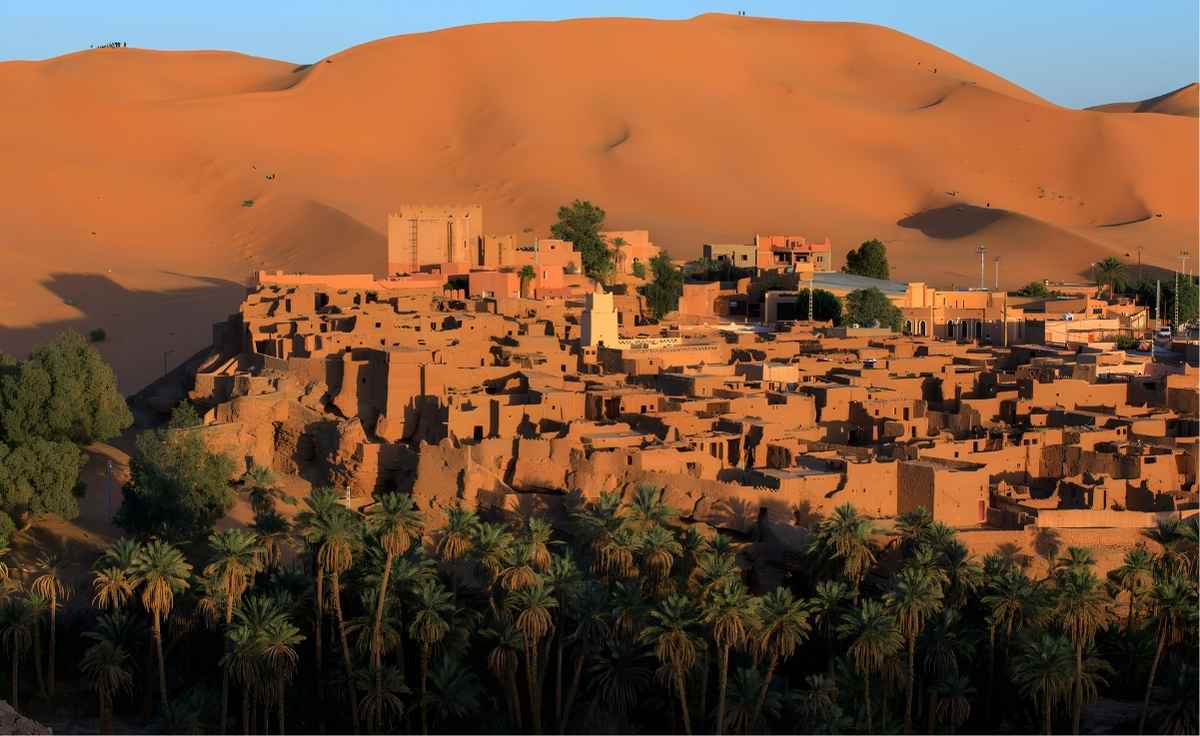
Taghit sits where the mountains of the Djebel Baroun meet the beginning of the Grand Erg Occidental, one of the Sahara's great dune seas, which makes it either the last stop before real desert or the first sign you've survived it, depending on which direction you're travelling. The old ksar climbs its hilltop in tightly packed ochre houses around a mosque and a well, built for a town that once made its living, and its enemies, from the caravan and trade routes running through it. Of the roughly three dozen ksour that once dotted this stretch of Saharan Algeria, only a handful remain; Taghit's has been under official protection since 1999, which sounds impressively bureaucratic for a building whose original security system was, essentially, a single archway and a very determined population.
Wander the maze of alleys and carved wooden doors today and you'll understand why the Amazigh who built it prioritised shade over straight lines: the town is one of the hottest pockets of the entire Sahara, and the ksar's narrow, shadowed passages were doing passive cooling long before anyone put "passive cooling" on an architecture school syllabus.
The M'Zab Valley, Ghardaïa, Algeria
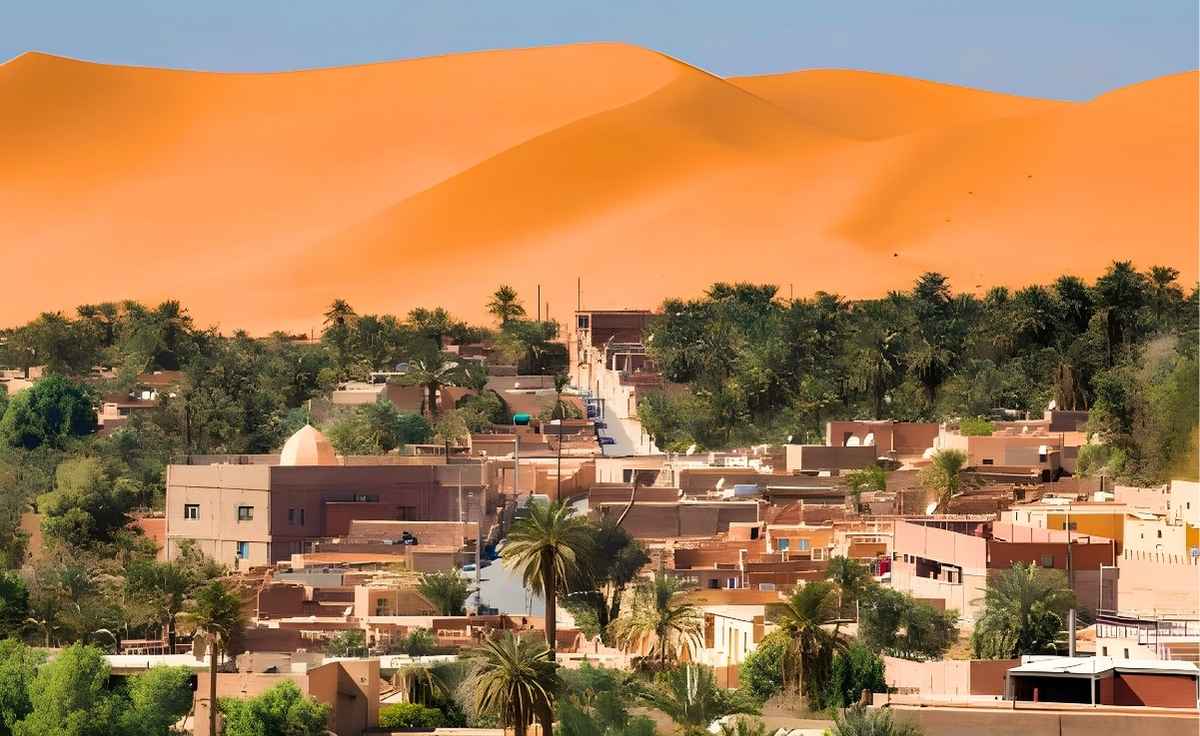
Five cities, one very good excuse.
If Taghit is a single fortress, the M'Zab Valley is what happens when an entire besieged community decides one ksar simply won't cover it. Founded between 1011 and 1350 by the Mozabites, an Amazigh people who arrived here after a rather pointed disagreement with the wider Muslim world over Ibadi theology, the valley holds five walled towns (El-Atteuf, Bou Noura, Ghardaïa, Beni Isguen and Melika), each perched on its own rocky outcrop, each crowned by a mosque whose minaret does double duty as a watchtower. Call it the region's first gated community, if gated communities came with a foggara water system engineer clever enough to irrigate a desert and a communal ethos strict enough to make HOA boards look positively anarchic.
UNESCO listed the whole pentapolis in 1982, and the reasoning holds up on arrival: nowhere else does five centuries of Ibadi doctrine, Saharan engineering and sheer collective stubbornness resolve quite this elegantly into limestone and palm wood. Come for Ghardaïa, the largest and liveliest of the five; stay for Beni Isguen, founded in 1051 and still, by long tradition, closed to outsiders after dark and overnight, a rule that predates most of the world's nation-states and shows no sign of lapsing.
The Ksour of Tataouine, Tunisia
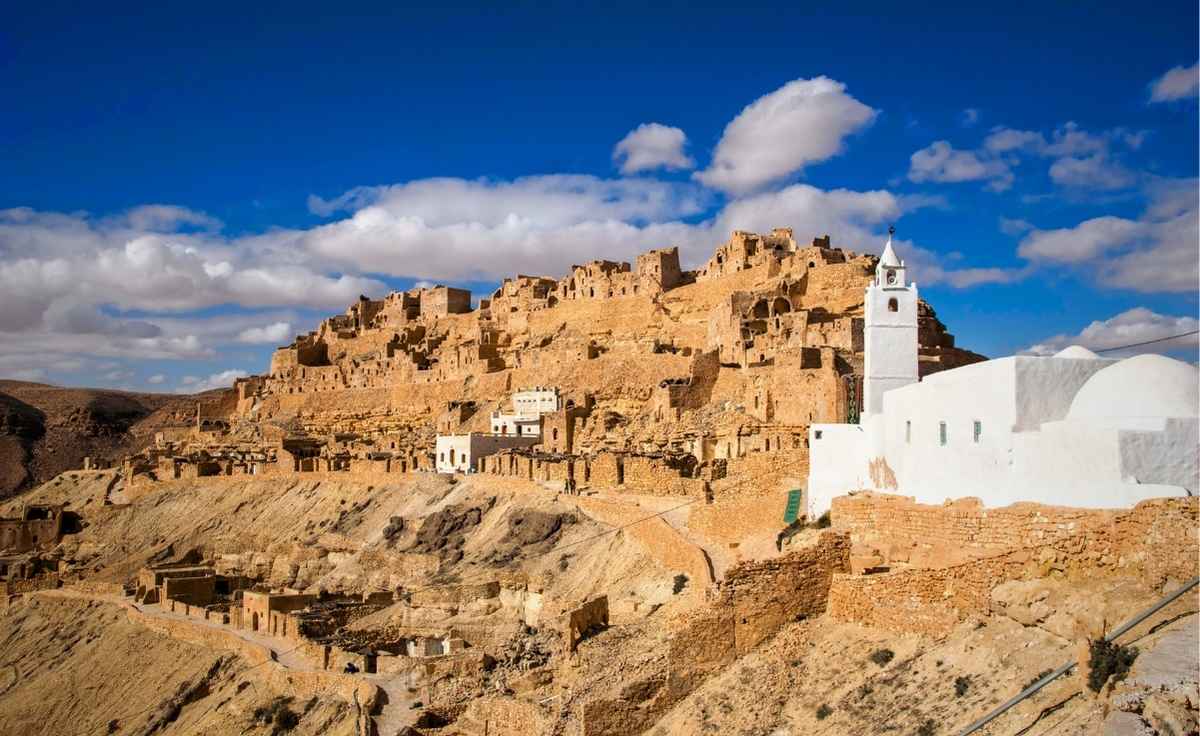
The desert town that accidentally named a planet
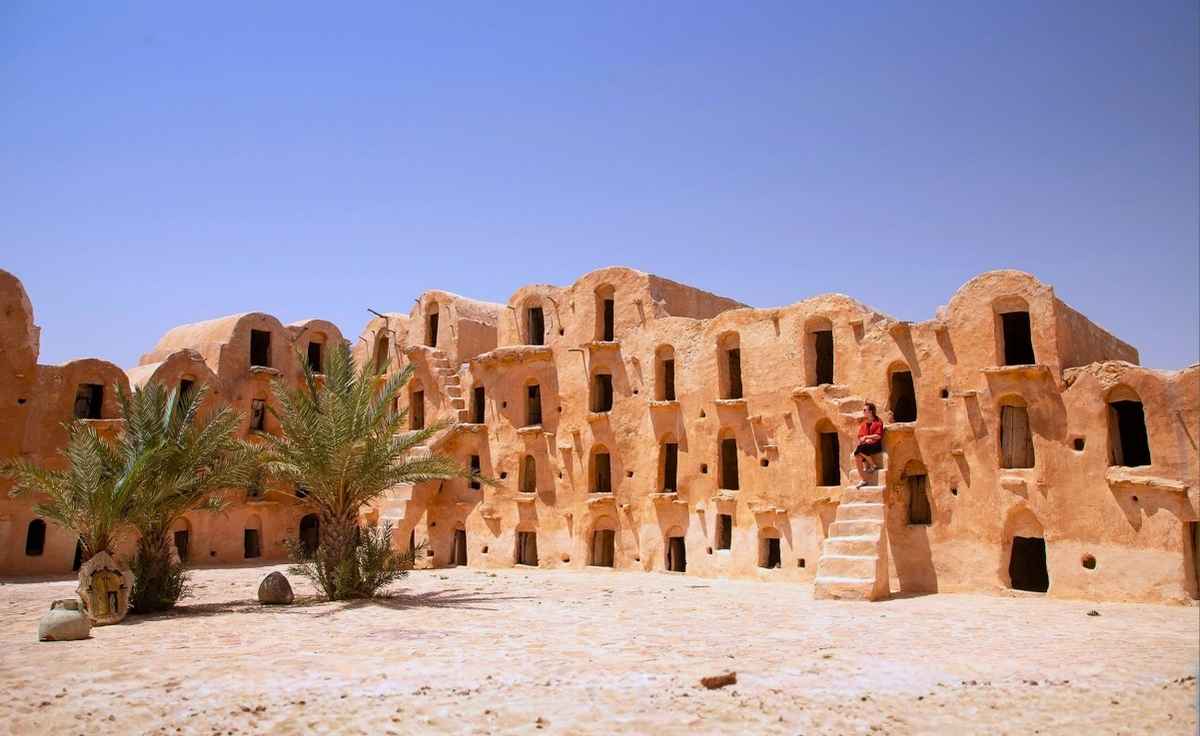
Southern Tunisia's Tataouine governorate holds close to ninety ksour, a density of fortified granaries so remarkable that a French and Tunisian academic team spent years simply cataloguing them. Built between the eleventh and nineteenth centuries by semi-nomadic Amazigh tribes, each is a variation on the same disciplined idea: a courtyard ringed by tiers of vaulted storage cells, or ghorfas, walled in against raiders and drought alike, exterior walls climbing as high as ten metres and giving away absolutely nothing to a stranger passing by.
One of those names, in the 1970s, caught the eye of a young American director working on a space opera. George Lucas never actually set foot in Tataouine while scouting—he chose the name from a map during pre-production in England, liking its exotic, alien ring. (The planet Utapau, which he had considered for another world, would later appear in a different film entirely). He borrowed the town's name for his desert planet, and the region's ksour - Ksar Hadada and Ksar Ouled Soltane among them - would later stand in for Mos Espa's slave quarters a generation later, which means this stretch of southern Tunisia has now stood in for both eleventh-century Berber life and a galaxy far, far away, and somehow looks equally convincing as either.
Ksar Ouled Soltane, Tunisia
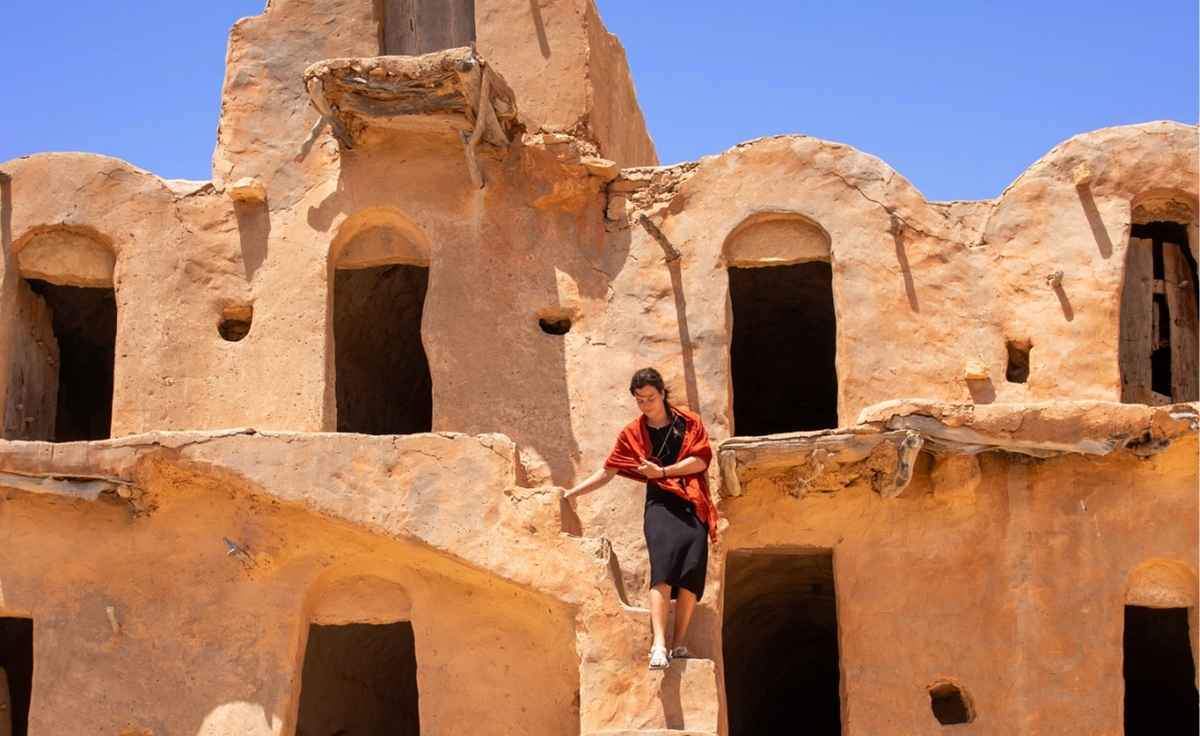
Four storeys of very literal savings accounts
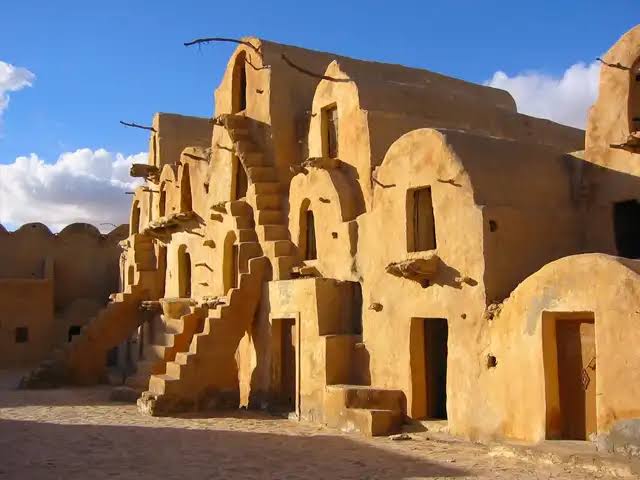
Of Tataouine's ksour, Ouled Soltane makes the strongest case for itself on scale alone: a first courtyard raised in the late 17th century, a second bolted on in the 19th century once the tribe presumably ran out of room, and something in the region of four hundred ghorfas stacked four and five storeys high around them. Each vaulted cell belonged to a family and held a season's grain and oil, sometimes wool besides, the whole structure functioning as a kind of communal vault long before anyone had heard the phrase "interest rate."
It's also, not incidentally, one of the more recognisable pieces of Tatooine real estate, having stood in for the slave quarters of Mos Espa in 'Star Wars: The Phantom Menace' (Anakin's childhood home, should the ghorfas look oddly familiar). The Star Wars connection tends to get the headline, but the more interesting fact is the one underneath it: a 15th-century storage system so sound that a special-effects crew, five hundred years and one entire galaxy later, took one look and decided not to change a thing.
Ksar Hadada, Tunisia
The quiet one, doing most of the same work
Hadada rarely gets top billing over its more photogenic Tataouine neighbours, which is precisely what makes it worth the detour. The same architectural logic applies here as everywhere else on the ksour trail: tiers of arched ghorfas wrapped around a courtyard, built by and for a tribe that needed somewhere to keep a harvest safe from both weather and each other's rivals. It, too, appears in The Phantom Menace's Tatooine sequences, standing alongside Ouled Soltane as part of the same fictional slave quarters, an odd kind of stardom for a granary.
What Hadada offers that its more famous neighbours don't is a sense of scale without spectacle: fewer tour buses, more room to notice how deliberately the whole thing was engineered, the exact pitch of each vault, the placement of each door, the total absence of a single wasted metre.
Djerba, Tunisia
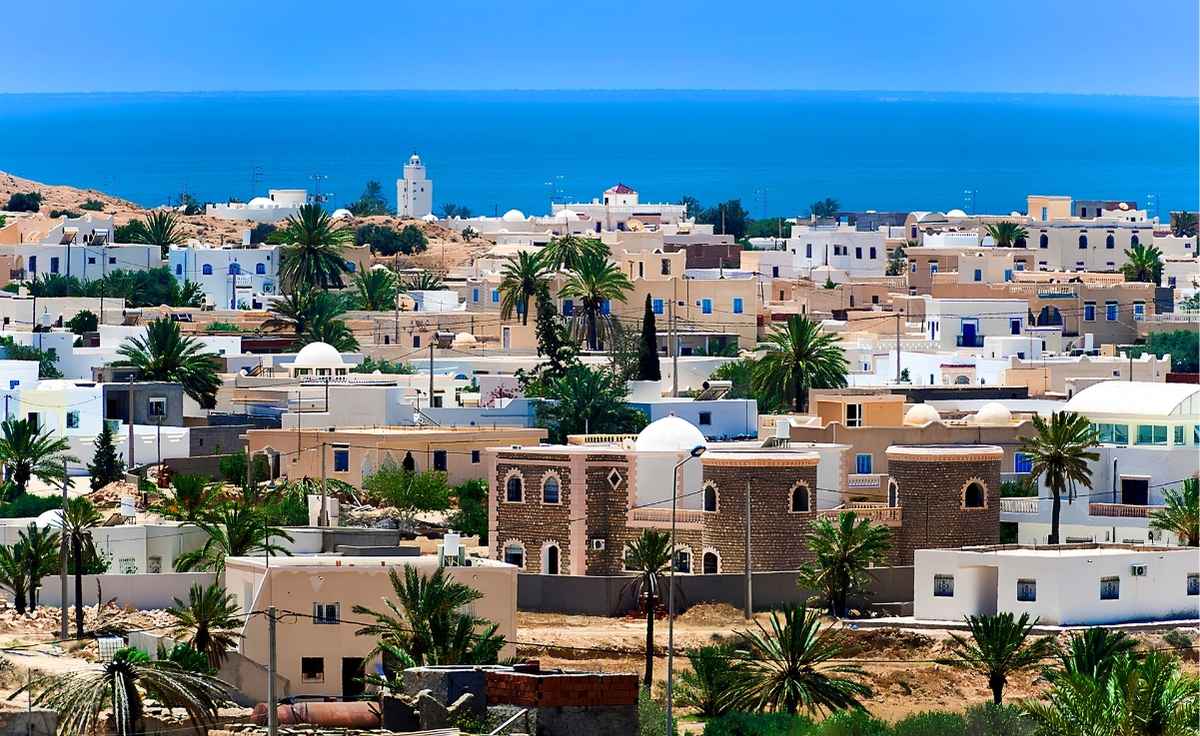
The island that decided a mosque could also be a fort
Head north to the coast and the ksar logic gives way to something stranger and, frankly, better armed. Djerba's Ibadi community, descendants of Amazigh converts who settled the island from the ninth century, built their religious architecture with the same defensive instincts as their mainland cousins built granaries: squat, whitewashed mosques doubling as coastal watchtowers, arranged in a chain along the shoreline specifically so the island could see trouble coming before it arrived. The Tajdit Mosque, founded in the late ninth century, is the elder statesman of the group; UNESCO recognised the island's full settlement pattern only recently, in 2023.
There's also, near the village of Sedouikech, an entire mosque built underground, accessible via a narrow staircase and lit by little more than conviction, a reminder that when the Ibadis of Djerba wanted privacy for their faith, they simply went ahead and buried the problem.
Qasr al-Haj, Libya
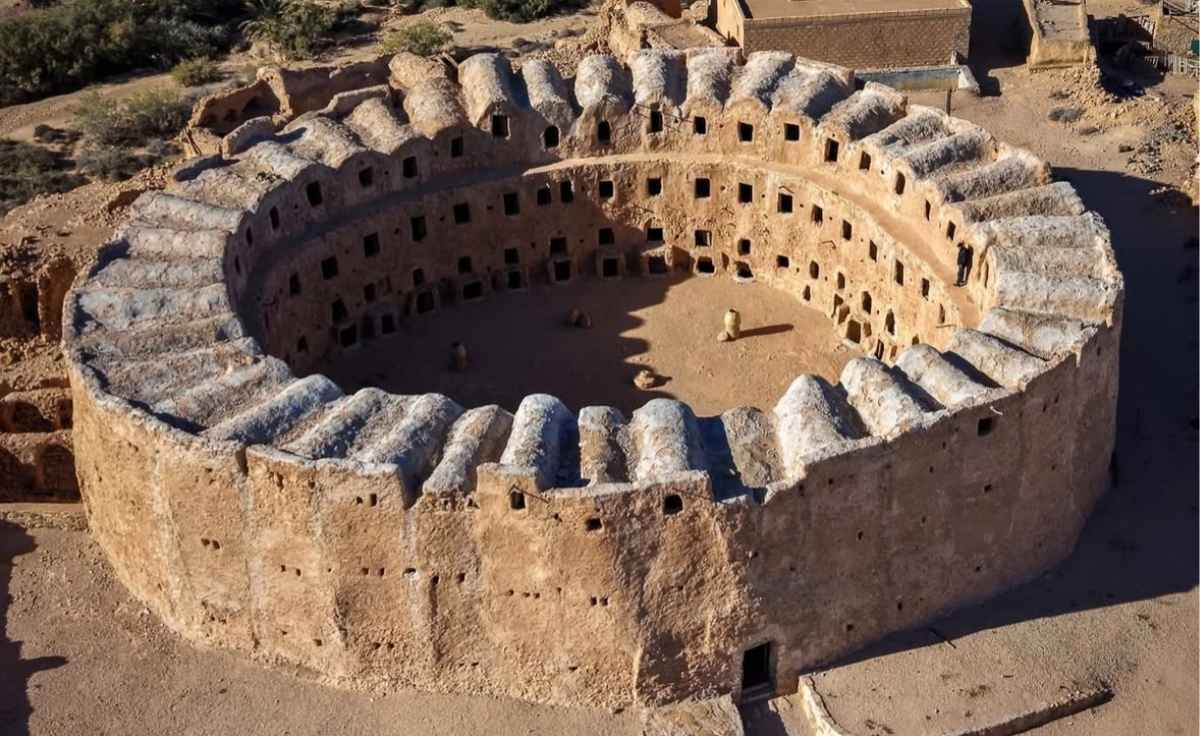
Possibly the world's oldest, and most photogenic, bank
Ninety minutes south of Tripoli, in the Nafusa Mountains, sits a building so perfectly circular it looks less like vernacular Amazigh architecture and more like something a very precise compass drew by accident. Qasr al-Haj was raised in the thirteenth century by a local sheikh named Abdallah Abu Jatla, who arranged 114 vaulted storage cells over three storeys around a single courtyard, each cell belonging to a family in exchange for a quarter of their harvest, a cut the sheikh reportedly redirected towards teaching the Qur'an locally. It is, essentially, a medieval building society with excellent security and no ATM.
Locals will tell you the number of cells was no accident, chosen to echo the 114 surahs of the Qur'an, which may or may not be true and is exactly the sort of detail worth repeating regardless. Either way, the design holds up as pure engineering: featureless and forbidding from outside, then opening into a courtyard of stacked, shadowed cells that has led more than one visitor to call it an ancient safety-deposit box, which is, if you think about it, precisely what it was.
Nalut, Libya
A vineyard's name attached to a fortress's job
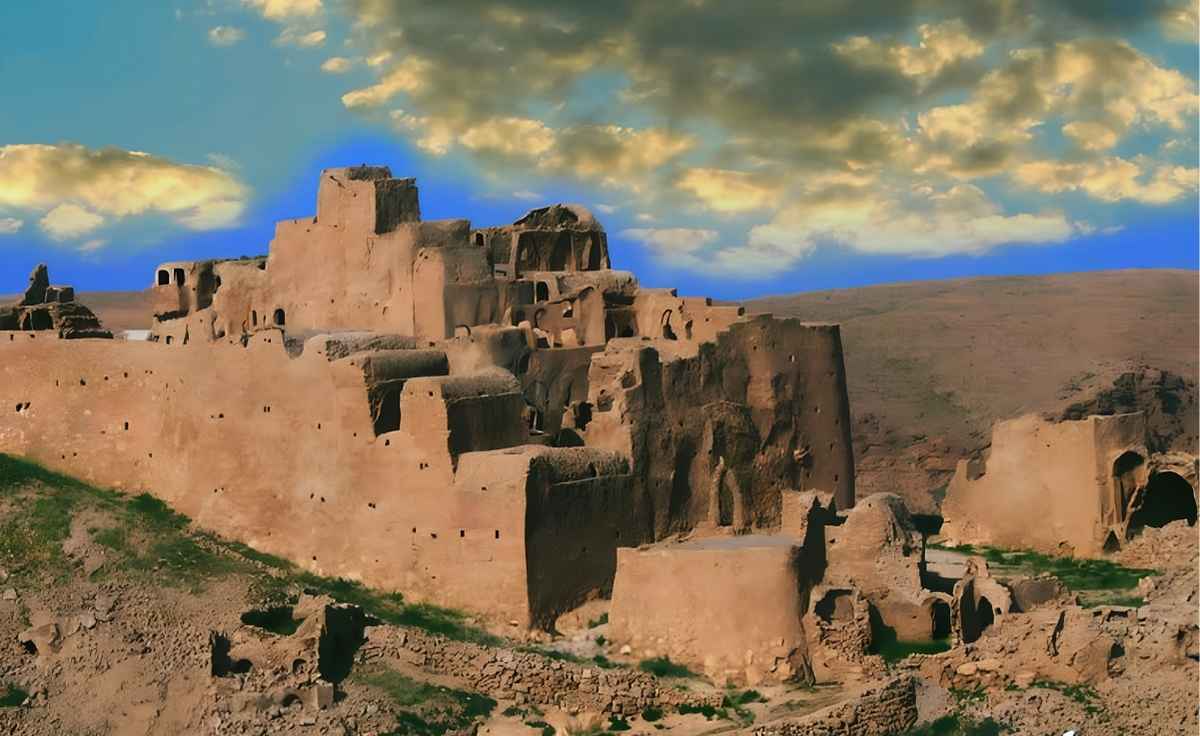
Further west along the Nafusa range, Nalut takes its name from the Tamazight word for "vineyard," a soft, agricultural origin story for a town whose defining structure is anything but soft. The hilltop ksar here dates to the eleventh century, its granary cells cut into a citadel that once held the town's entire food security in one defensible position, a habit shared across the Nafusa Mountains by Amazigh communities who had learned, the hard way, that raiders came for the harvest before they came for anything else.
The Alala Mosque nearby, rebuilt according to its own inscriptions in 1312, is the oldest still standing in town, though only barely still in use. The ksar itself has been empty since the 1960s, its population having decamped for more comfortable, less climbable accommodation, leaving behind a fortress that spent nine centuries protecting grapes and grain, and now protects, mostly, a very good view.
Shali Fortress, Siwa, Egypt
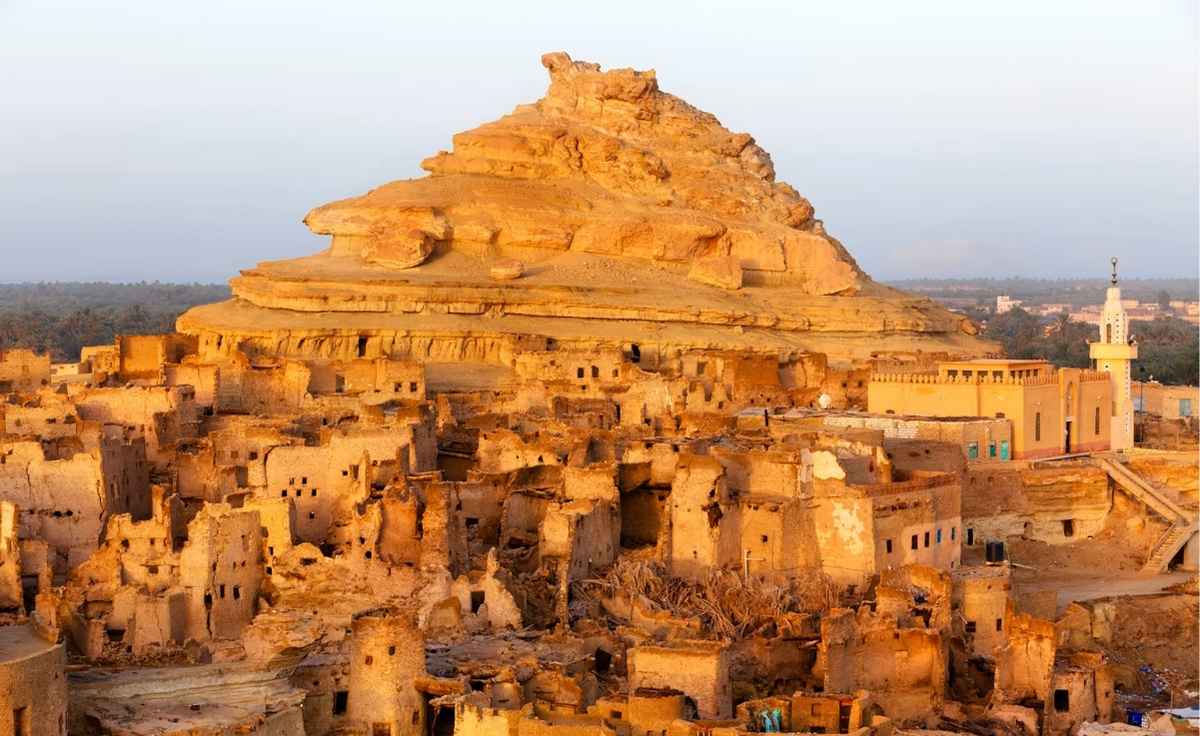
The city that was, briefly, taller than sense allowed, and paid for it
End in the east, at the edge of Egypt's Western Desert, where the Siwan Amazigh built their fortress not from mud alone but from kershef, a local mortar of rock salt bound with clay, hardened into something strong enough to hold up four or five storeys of housing, yet vulnerable to precisely one thing: rain. Founded around 1203 and named, straightforwardly, "the city" in the Siwi tongue, Shali spent seven centuries as the beating, defensible heart of the oasis, its winding interior streets deliberately confusing enough to slow down anyone who made it past the outer wall.
Then, in 1926, it rained for three days straight, an event so unremarkable anywhere else on Earth and so catastrophic here that the salt in the walls simply began to dissolve. Staircases liquefied. Upper floors slid into lower ones. A fortress that had outlasted invaders and several centuries of general Saharan unpleasantness was undone, in the end, by weather it hadn't been designed to survive, because why would it have been. Restoration work using the original kershef technique began in earnest in the early 2000s and has continued in phases since, which means Shali is, in its own patient way, still being built.