





Muhammad Elgaiar Turns Cardboard Into Furniture & Sculptures
Cairo-based Elgaiar Studio works through a slow process of building with cardboard, shaping new forms by hand.
There is a growing attention within architecture and design towards materials that already exist around us, especially those that are often overlooked or discarded. For Cairo-based architect and artist Muhammad Elgaiar, this way of thinking is not abstract, but something that has shaped the way he builds from the very beginning of his practice.
When Elgaiar first started studying architecture, he became interested in one simple idea: building with materials that already belong to a place. "If I'm in the desert, I want to build from the sand. If I'm next to the Nile, I want to build from the Nile," Elgaiar tells SceneHome. "The best material for the environment is usually the one that's already there."
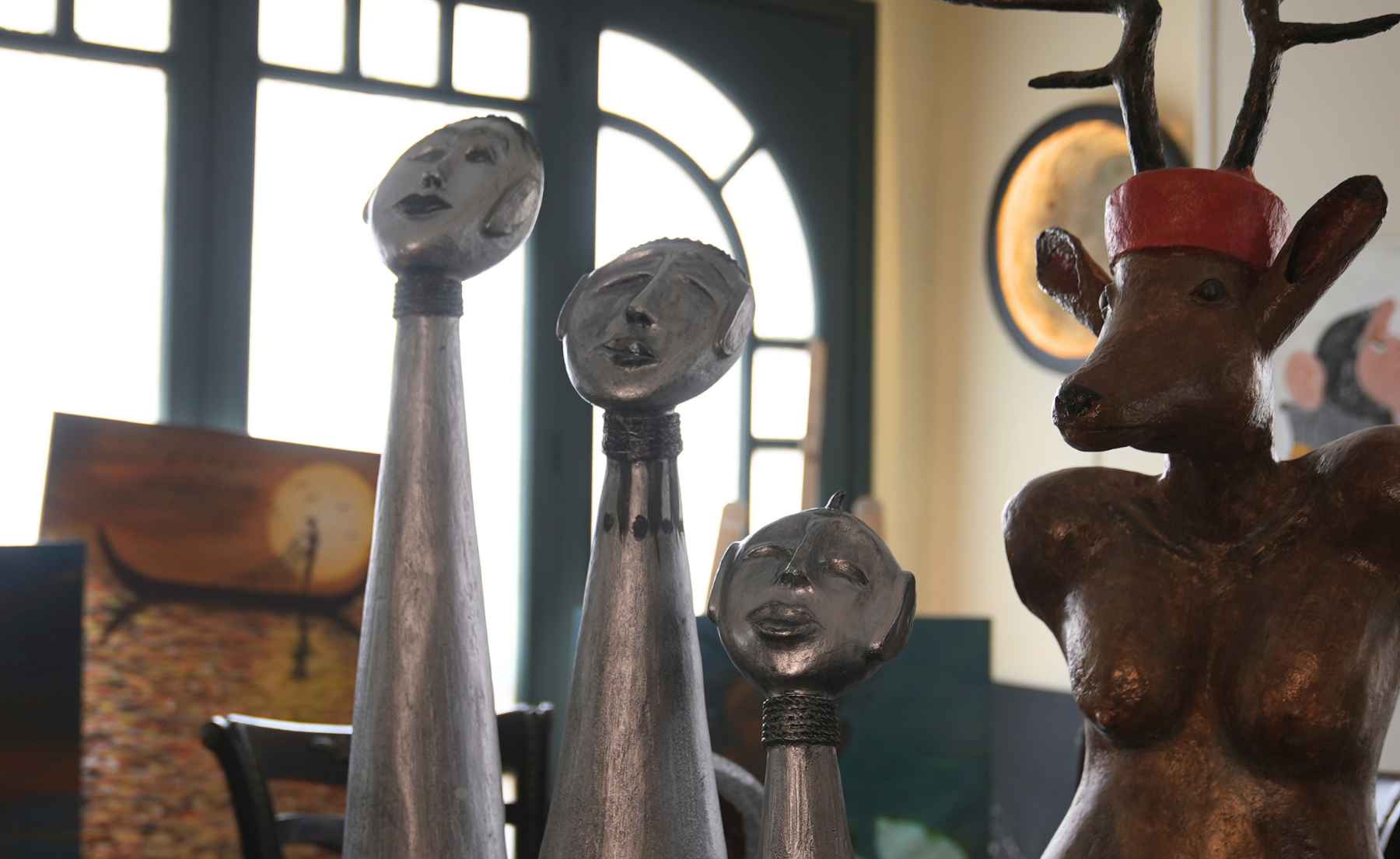
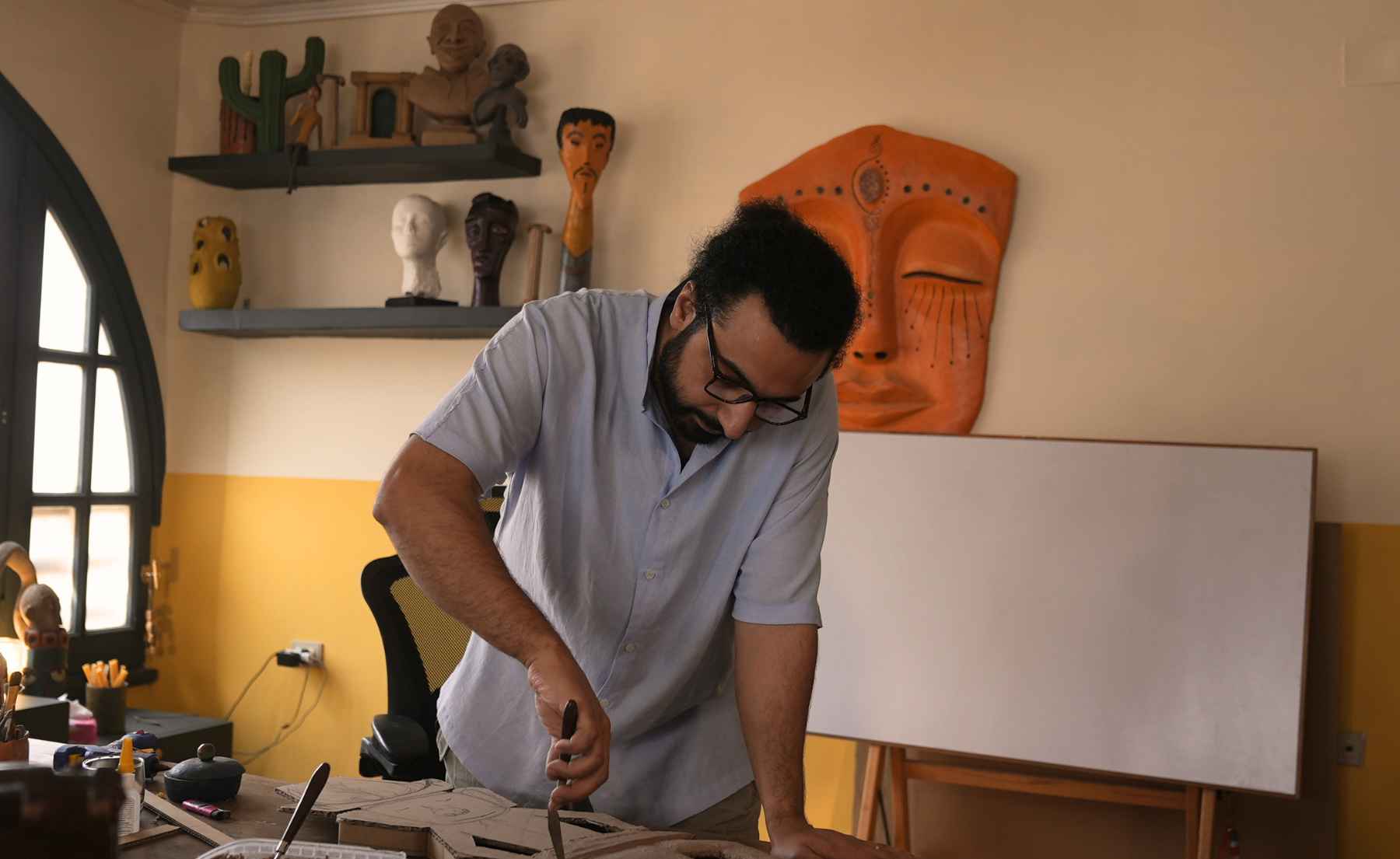
That way of thinking eventually led him to paper and cardboard, materials that most people throw away without a second thought. Today, through Elgaiar Studio, he creates furniture, sculptures, decorative objects, and artworks from cardboard and paper-based materials. What started as an experiment has grown into years of testing, building, and refining techniques that allow him to turn a light, fragile-looking material into something more structured and durable.
Paper was not where the journey began. Elgaiar first worked with wood, drawn to the craft of woodworking and making things by hand. Over time, he started looking for a material that was easier to shape and build with, and that search led him to cardboard.'
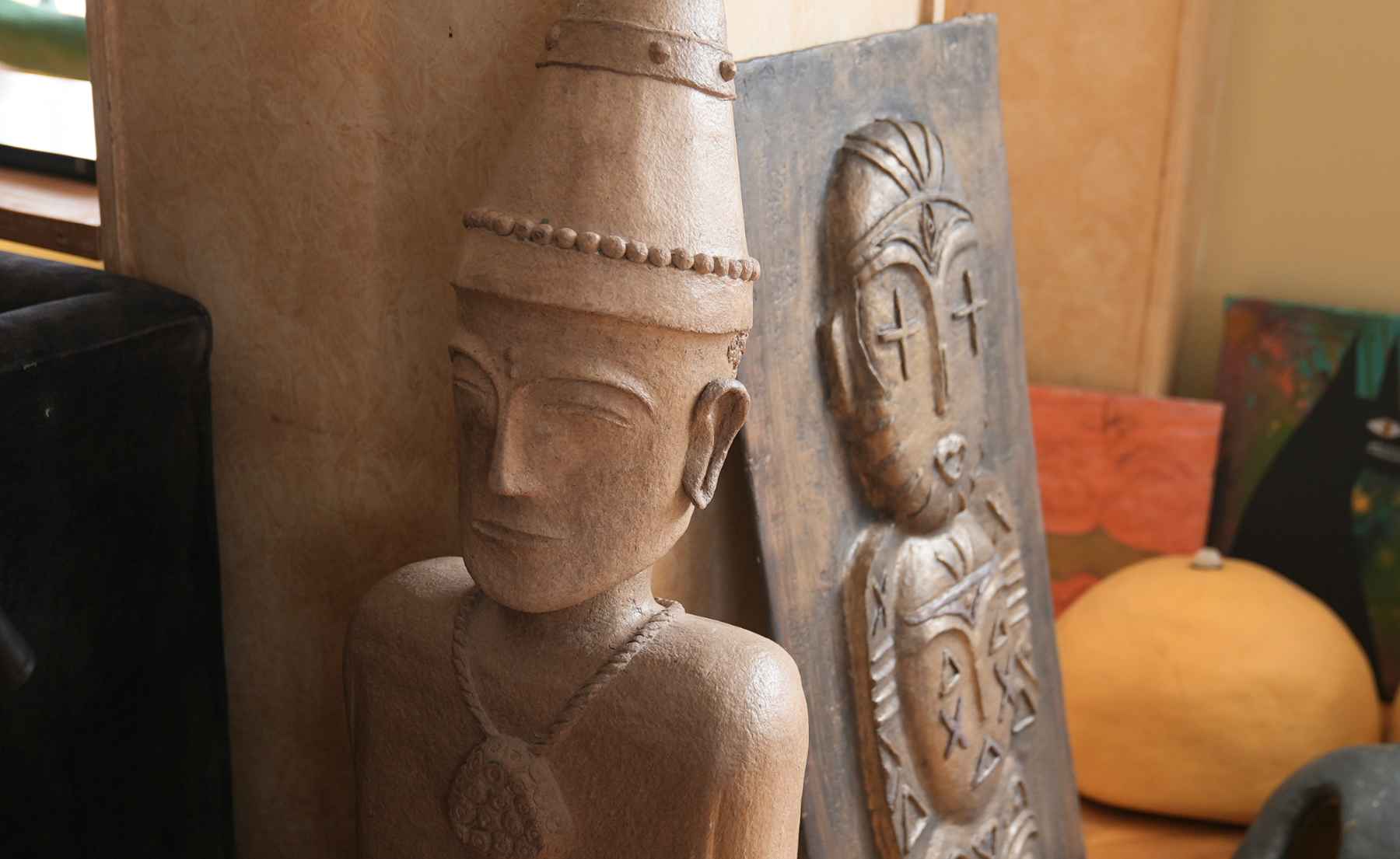
"With a few calculations, cardboard can become very strong," he explains. "The material itself is weak, but when the weight is distributed correctly, it can hold much more than people expect." Every piece starts with a cardboard structure. He cuts and builds the base shape first. Once the form is ready, he covers it with layers of papier-mâché pulp. These layers slowly build thickness, strength, and texture. After that, colour is added. He often uses natural materials such as mica-based pigments to finish the surface without losing the handmade quality of the work.
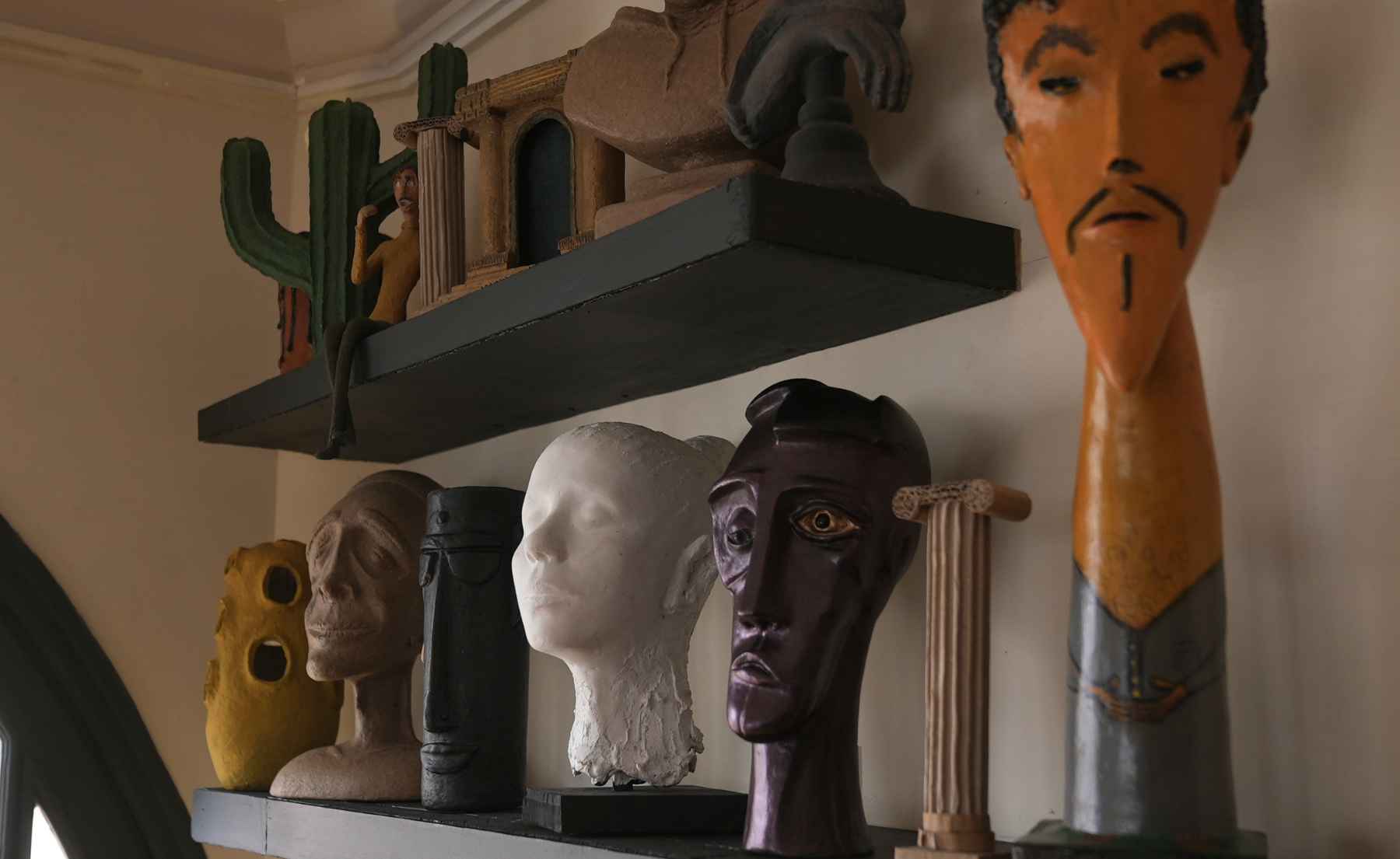
The process is not always easy, and working with cardboard means dealing with many small problems. If too much water is used, the material becomes weak. If the structure is not protected properly, it can collapse. Sometimes a piece takes a long time to build, and a mistake appears too late, meaning the work has to start again.
"One of the biggest challenges is learning how to deal with the material, over time, I learned how to isolate the cardboard properly so it doesn't absorb too much water and become unstable," he says. With time, he developed a better understanding of how the material behaves, but he still treats each project as a learning process.
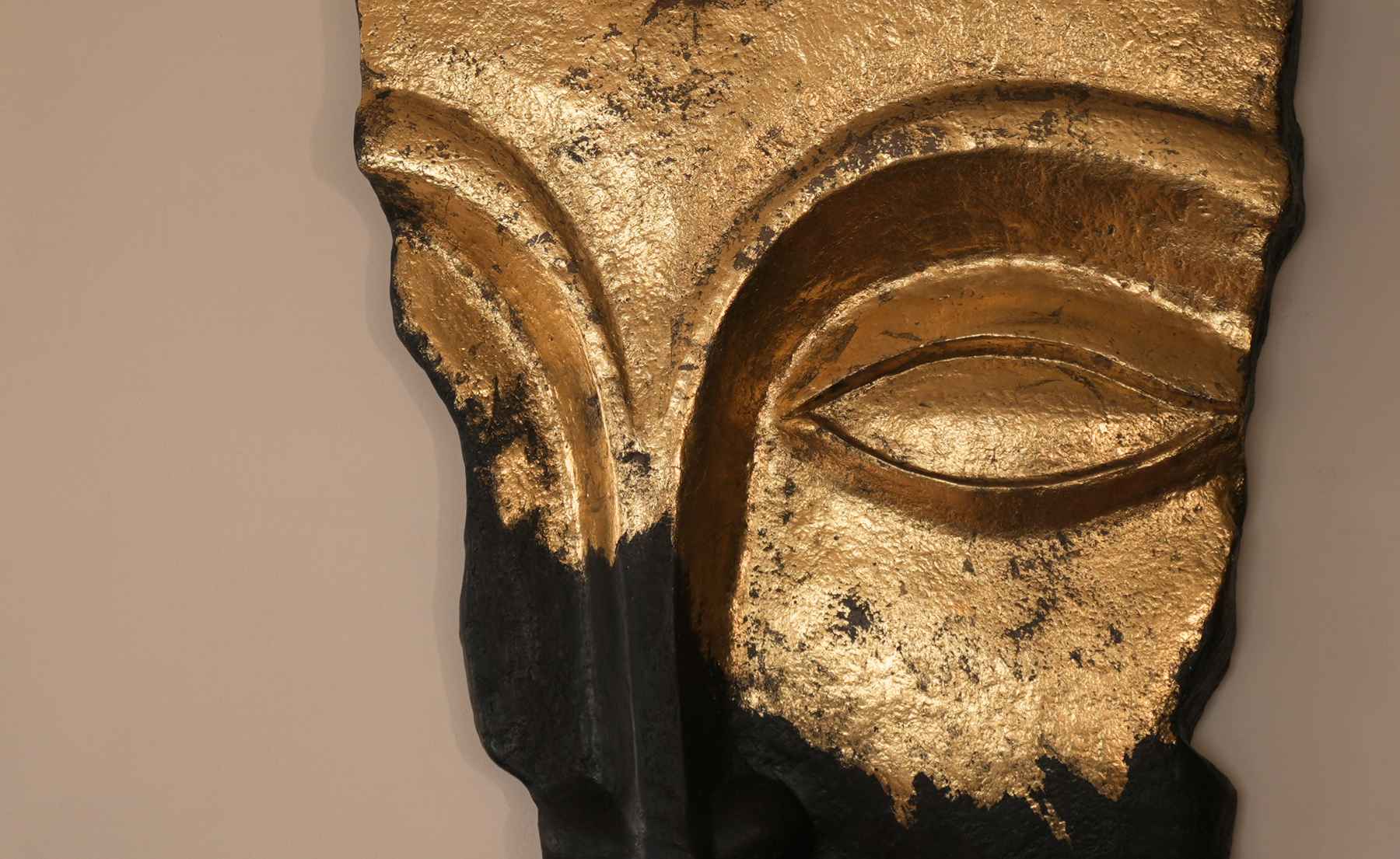
Among his works, one piece - called 'Elithia' - stands out. It was the first work where he fully used this technique. The sculpture shows a face in dark tones with touches of gold. Part of the face is missing, but the work still feels complete. "It was my first piece using this technique, half the face isn't there, but when people look at it, they don't feel like anything is missing," Elgaiar says. This idea of changing and reworking materials sits at the centre of his practice. Cardboard, paper, and simple pigments become tools for building new forms through a slow, hands-on process.