





Molteni&C Brings Italian 'Ponti Style' to Cairo’s Villa Magenta
Molteni&C brings Gio Ponti’s iconic design to life at Cairo’s Villa Magenta during Cairo Design Week 2025.


Great design often reveals itself quietly. It settles into a room, shapes how one moves, and influences atmosphere through proportion and use. During Cairo Design Week 2025, this idea took form as Molteni&C introduced the Gio Ponti Collection at Villa Magenta, allowing the work of one of Italy’s most influential architects to be experienced inside a restored Cairo residence.
Gio Ponti was born in Milan in 1891. His career spanned architecture, design, writing and teaching, and he played a defining role in shaping Italian modernism across the twentieth century. After graduating from the Polytechnic of Milan following his service in the First World War, he founded the magazine Domus in 1928 and later directed Richard Ginori and Fontana Arte. Ponti treated the interior as a unified environment, and the homes he designed for his family in via Randaccio, via Brin and via Dezza stand today as clear expressions of what has come to be known as the 'Ponti Style'.

Ponti’s approach to design, where architecture, interiors and furniture formed a cohesive vision, found a natural partner in Molteni&C. Founded in 1934 by Angelo and Giuseppina Molteni as a small carpentry workshop near Milan. Over the decades, the company has remained family-run and has become a major Italian design house, known for collaborations with leading architects and designers. Its work has played a key role in modernising furniture production, balancing craftsmanship with industrial processes while maintaining attention to detail and quality.
Molteni&C’s reissue of Ponti’s furniture began with a single find in the company’s archive. “When opening one of our cabinets, my father saw a fantastic bookcase,” Francesca Molteni, filmmaker, curator, writer and founder of Muse Factory of Objects, tells SceneHome. “We did not know it was by Gio Ponti. It was private furniture for his home, and we began to dig into the archive to find other pieces to bring back to life. That is how it all started.” This discovery initiated a long research process with the Ponti heirs, guided by curator Salvatore Licitra, and resulted in the collection’s first presentation in 2012. Since then, Molteni&C has continued to expand its Ponti archive, combining careful study with contemporary production methods to make the pieces accessible to today’s interiors while remaining faithful to the original designs.
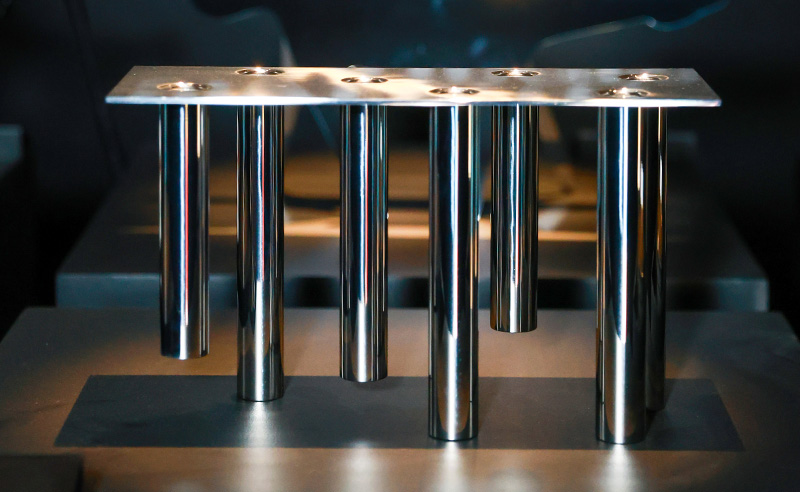
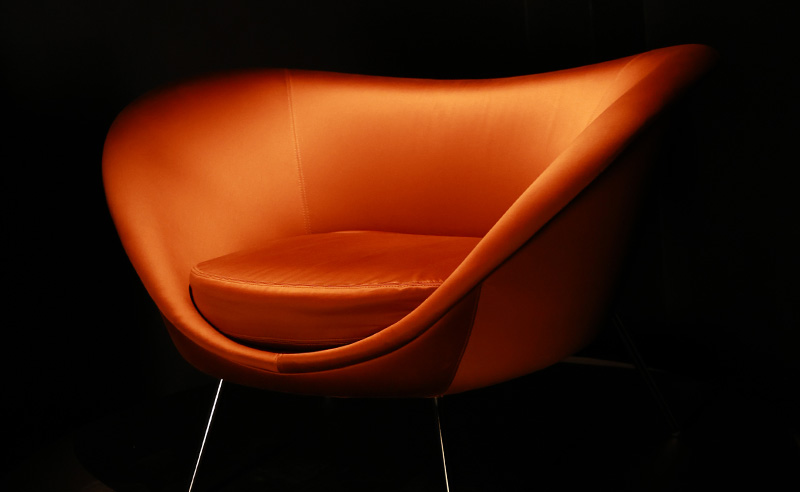
The Cairo presentation included the D.151.4 armchair, originally designed for post-war ocean liners, the 7Tubi structure formed from a series of aligned metal tubes, and the Due Foglie sofa, adapted from Ponti’s work for Villa Planchart in Caracas. “This collection of objects is meant to show Ponti’s position, his lifestyle, and also to offer a proposal for the lifestyle of all people,” Licitra explains.
“These objects are industrial, of course," Francesca Molteni adds. "They are not limited. He was able to combine exclusivity with democratic design, and we will do the same.”
A film created by Francesca Molteni accompanied the exhibition, providing an intimate layer of context. In it, Ponti’s daughters reflect on their childhood home in via Dezza. Lisa recalls a layout shaped by open movement and informal gathering. “In the main space there was a table you could sit and eat at, but it was low, surrounded by armchairs where you could sit and continue talking.”
“All this created a space that seemed infinite. The colours brought the light inside,” Letizia Ponti says, reflecting on the effect of her father’s palette.
These recollections show how Ponti approached design as part of daily life, integrated into movement, conversation and the handling of light. Licitra captures this sensibility simply: “Look at how he thinks about the world and his style of life.”
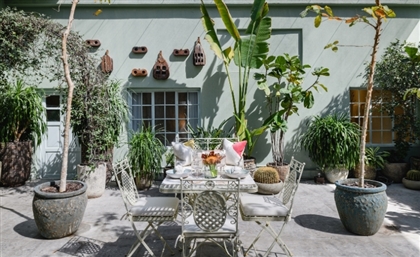
Villa Magenta supported this reading of the collection. Restored by architect Mohamed Fares, the early twentieth-century residence maintains its original character while accommodating contemporary design. Its domestic scale allowed Ponti’s work to be experienced in relation to movement, furniture placement and natural light. “We are very happy to present this collection in this villa, which is a very domestic landscape,” says Francesca Molteni. “Everything Ponti was designing was intended to make living better.”
- Previous Article Halfpipes Under Siege: The Skateboarding Scene in Gaza & the West Bank
- Next Article ‘The Voice of Hind Rajab’ A Whisper That Became a Roar