






Ancient Cheetah Mummies Found in Caves in Northern Saudi Arabia
Genetic analysis links the youngest mummy to the Asiatic cheetah while older remains align with the Northwest African subspecies, indicating multiple lineages in the Arabian Peninsula.

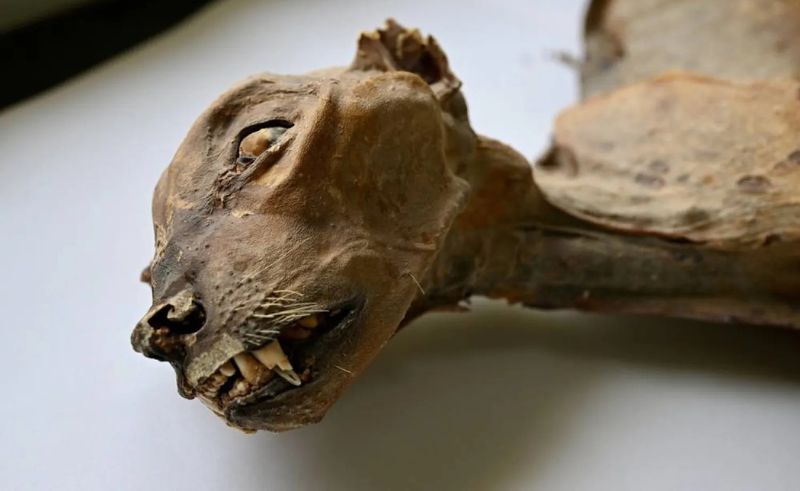
Researchers reported the discovery of naturally mummified cheetahs in limestone caves near Arar in northern Saudi Arabia, identifying seven mummified individuals and skeletal remains from at least 54 more. The study, described in the journal Communications Earth & Environment, shows the animals may have lived from around 130 years ago to more than 4,000 years before present, according to findings from radiocarbon dating.
The remains were preserved by the caves’ dry, stable, low humidity conditions, which slowed decomposition and protected soft tissues. The mummified bodies retain desiccated skin and clouded eyes, with limbs reduced to dried casings. Radiographic assessment shows cubs, subadults and adults. The density of cheetah remains compared with prey suggests long-term den use rather than simple kill sites.
The study reports the first successful extraction and genomic sequencing of DNA from naturally mummified big cats. Results indicate the youngest cheetah mummy is genetically closest to the Asiatic cheetah Acinonyx jubatus venaticus, while older remains align more closely with the Northwest African cheetah Acinonyx jubatus hecki, pointing to multiple lineages in the Arabian Peninsula over time. These findings challenge the view that only Asiatic cheetahs once inhabited the region.
Cheetahs historically ranged across Africa, the Middle East and much of Asia but now occupy about 9% of that range, having disappeared from Saudi Arabia decades ago. Researchers attribute regional loss to habitat change, unregulated hunting, declines in prey and conflict with people. The study notes Saudi programmes restoring habitats and reintroducing prey species including Arabian oryx, gazelles and Nubian ibex, and says conservationists are considering whether cheetahs could be reintroduced as apex predators. Ancient DNA from the cave population is presented as a reference point to guide any future decisions on suitable source populations.
- Previous Article What We Were Listening to in 2016
- Next Article The Middle Eastern Pulse of Leighton House
Related Articles
Trending This Week
-
 Mar 13, 2026
 -
 Mar 11, 2026
 -

-
 Mar 14, 2026