





‘The Voice of Hind Rajab’ A Whisper That Became a Roar
Even though we know the inevitability of what will unfold, we cling to the irrational hope that the ending might change.

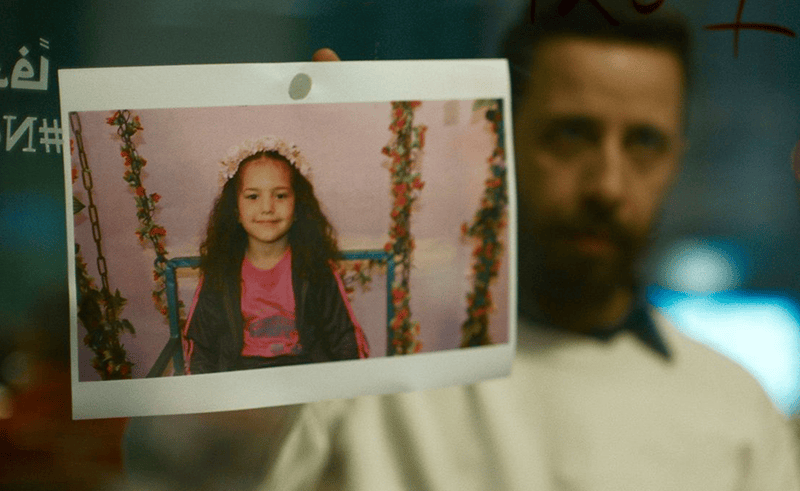
The actual audio recordings of Hind Rajab’s conversations with Red Crescent volunteers form the foundation of “The Voice of Hind Rajab”. Academy Award-nominated Tunisian director Kaouther Ben Hania layers these real recordings with staged re-enactments and real-life footage. This hybrid framework has become a signature of her filmmaking. It was utilised in her Cannes-winning film, “Four Daughters”, where documentary fact and crafted fiction intertwined to project emotional truths that neither could reach alone.
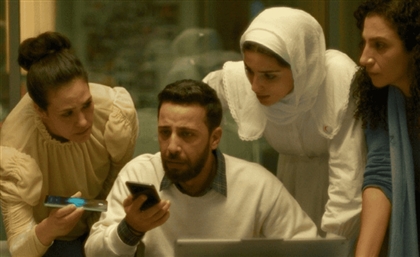
There is one moment in “The Voice of Hind Rajab” that perfectly exemplifies her method. Kaouther Ben Hania cleverly integrates real footage on a mobile phone screen with actual audio and re-enacted performances. The seamlessness of that integration caught me completely off guard; it allowed the barrier between representation and reality to collapse entirely. In a lot of ways, the film refuses to offer the viewer the distancing comfort of mere reconstruction. Instead, it confronts us with testimony, with evidence, with the raw imprint of the worst kind of human cruelty.
Everything unfolds in real time within a single room. Minutes stretch into what feels like an unbearable eternity. In fact, the pacing resembles that of a ticking time bomb. Even though we know the inevitability of what will unfold, we cling to the irrational hope that the ending might somehow change. The experience is profoundly anxiety-inducing, and this is just me watching the events from a distance. It is impossible to fathom what the Red Crescent workers felt inside that room, let alone what Hind Rajab herself endured in that car on that fateful night.
By now, most of us know how that night unfolded, but for those who don’t, here is what happened. On January 29, 2024, in Gaza City’s Tal al-Hawa neighbourhood, five-year-old Palestinian child Hind Rajab was fleeing with her uncle, aunt, and three cousins. During their desperate escape, their car came under fire from an Israeli tank. Immediately, her cousin picked up the phone to call the Palestinian Red Crescent. She was pleading for help, but was ultimately killed while still on the phone.
Five-year-old Hind Rajab became the sole survivor in the bullet-riddled vehicle. She hid in that car, paralysed with fear and surrounded by her family’s bloodied bodies. For hours, Hind communicated with emergency workers and begged for rescue. Although an ambulance was only eight minutes away, it took the Red Crescent three hours to secure authorisation from Israeli authorities to proceed. There’s a pivotal moment in the film when one of the workers uses a marker to explain the bureaucratic process of how rescue workers receive approval. It becomes quite clear that the process was designed to delay, obstruct, and ultimately neutralise the very possibility of saving civilians in danger. The diagram the character draws on glass is not just a procedural flowchart; it represents an anatomy of systemic paralysis. In that moment, the film reveals that Hind’s suffering was not the product of chaos, but of deliberate structure.
When the ambulance finally gets dispatched, it too gets attacked, and everyone on board is killed. Twelve days later, after Israeli forces withdrew from the area, the destroyed ambulance and the family’s car were found. The bodies of Hind and her six family members were recovered on February 10. Her small body bore 355 bullets. With material this harrowing, the two leading performances of Saja Kilani and Motaz Malhees are quite remarkable. What they convey on screen does not feel performed so much as lived through. There is an unflinching rawness in their facial expressions. Ben Hania gives them a framework, but the emotional reality comes from something much deeper. It’s probably the unbearable knowledge that the horror they are re-enacting is not fiction. Kilani and Malhees are not simply interpreting trauma; they are inhabiting it on screen. The camera captures this suffering with devastating clarity.
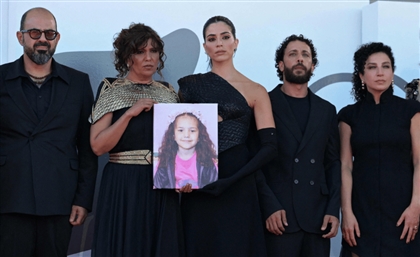
Here’s a film whose urgency, purpose, and moral weight extend far beyond cinema. Ben Hania repositions cinema as a site of ethical obligation. The film becomes both an archive of our collective memory of atrocity and genocide, and a present-tense act of bearing witness. Hind’s voice could barely reach the emergency workers that night, but through the work of these filmmakers, that same voice is now reverberating across the world. The film took the Venice Film Festival by storm, has just received a Golden Globe nomination, and this is only the start. What was once a child’s desperate whisper in the night is now a roaring voice shaking the corridors of global cinema, demanding to be heard.
- Previous Article Halfpipes Under Siege: The Skateboarding Scene in Gaza & the West Bank
- Next Article Cairo Allocates Land for Stray Dog Shelter in Tebin