





Review: ‘Faux Bijoux’, When Bodies Become Currency
Jessy Moussallem emerges as a very confident and promising filmmaker.

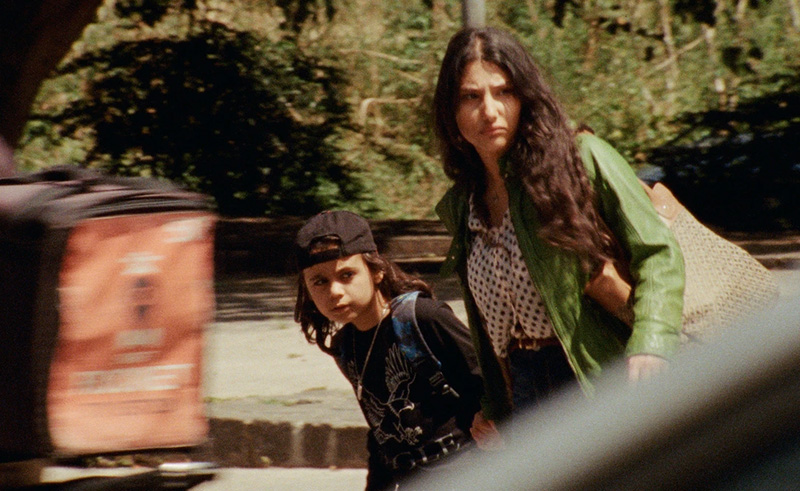
Over ten thousand short films were submitted for consideration at the Sundance Film Festival. After screening every single one, the selection committee chose just over fifty to screen at the festival. That alone speaks to the achievement of Lebanese filmmaker Jessy Moussallem and her powerful short, ‘Faux Bijoux’.
The film follows a young woman, Mireille, who takes her son Johnny to what she presents as an audition. She promised him a breakthrough chance at the big screen, but of course, the audition is not what it seems. Mireille is, in fact, negotiating with a foreign couple unable to have children. For a substantial fee, they ask her to carry their child. For twins, they will pay even more. At the same time, Mireille tells her family that she will be away for an extended period. She claims to have secured work on a film shoot.
What makes ‘Faux Bijoux’ so effective is its refusal to reduce complex social realities to long monologues or in-your-face plot developments. Instead, the film allows large structural issues to surface organically through seemingly minor details, gestures, and exchanges. These elements invite the viewer to recognise the social aspects at play without being instructed on how to read them.
For instance, racism is never announced as a central theme, yet it is unmistakably present. It appears fleetingly in a phone call from the foreign woman’s mother as she inquires about the lightness of Mireille’s skin tone. The question is casual, almost bureaucratic, but its implications are deeply unsettling. In that moment, the film exposes how racial hierarchies persist beneath the veneer of liberal transactional arrangements. It reduces Mireille’s body to a set of measurable traits that determine her value. The banality of the inquiry underscores how normalised such forms of discrimination have become.
Economic hardship is another crucial undercurrent present in the film. Mireille’s decision to carry a child for money is never framed as a material necessity. The film hints toward Lebanon’s ongoing economic crisis without explicitly naming it. Financial hardship is suggested through motive rather than exposition. Again, Mireille’s body becomes a site of labour. She uses her body as currency for monetary negotiations because alternatives are scarce. In this way, ‘Faux Bijoux’ highlights how economic collapse reshapes personal choices.
Equally significant is the role played by the Lebanese intermediary who orchestrates the arrangement. His presence reveals a layer of internal exploitation. Driven solely by profit, he treats the transaction as a business opportunity. He displays a form of instrumental masculinity that prioritises control, gain, and self-interest over ethical responsibility. The film subtly critiques this dynamic. The film clearly implies that toxic masculinity operates through emotional detachment. Together, these themes demonstrate the film’s ability to address racism, economic injustice, and gendered power relations without forcing an allegory down our throat. ‘Faux Bijoux’ trusts the audience to connect these threads.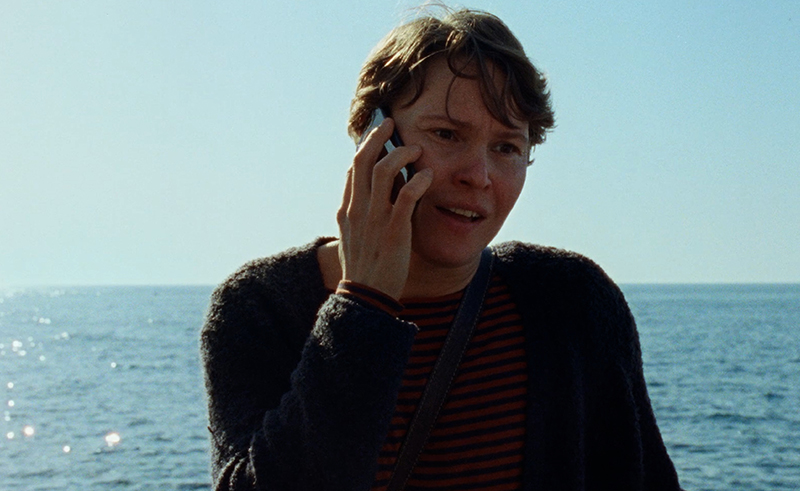 It presents a social landscape in which bodies are instrumentalised through interpersonal transactions. Jessy Moussallem draws remarkably controlled and affecting performances from her cast. You can see desperation exposed through restraint. The actress playing Mireille has so much presence on screen. Equally striking is the performance of the child actor. He adds another layer to the film’s exploration of exchange. Johnny’s desire for fame is innocent on the surface, yet it mirrors the transactional logic governing the adults around him. His longing to be seen, to be chosen, becomes part of the same economy of need that drives the surrogate arrangement. The film thus implicates aspiration itself. It shows how even childhood dreams can be shaped by systems that reward visibility.
Seidi Haarla’s portrayal of the foreigner is also very complex. Her desperation for a child traps her within the same economy of desire. Emotional need collides with Mireille’s financial necessity. These competing forms of desperation are distributed evenly across bodies and borders. The film’s strength lies in its refusal to rank these desires. Instead, it observes how individuals move within systems that compel them to negotiate, exchange, and ultimately trade parts of themselves.
The film’s greatest accomplishment may be how fluently it addresses these societal issues within such a short runtime without once feeling cramped with ideas. Jessy Moussallem emerges as a very confident and promising filmmaker. In fact, I left ‘Faux Bijoux’ with a strong sense that her most compelling films are still ahead of her.