





Emirati Artist Yoshi Keeps Climbing Out of Boxes She Built Herself
Yoshi moves between painting, sculpture, ceramics, performance, and self-published books; making art the way chance works: structured, surprising, and always one rule-break away from something better.
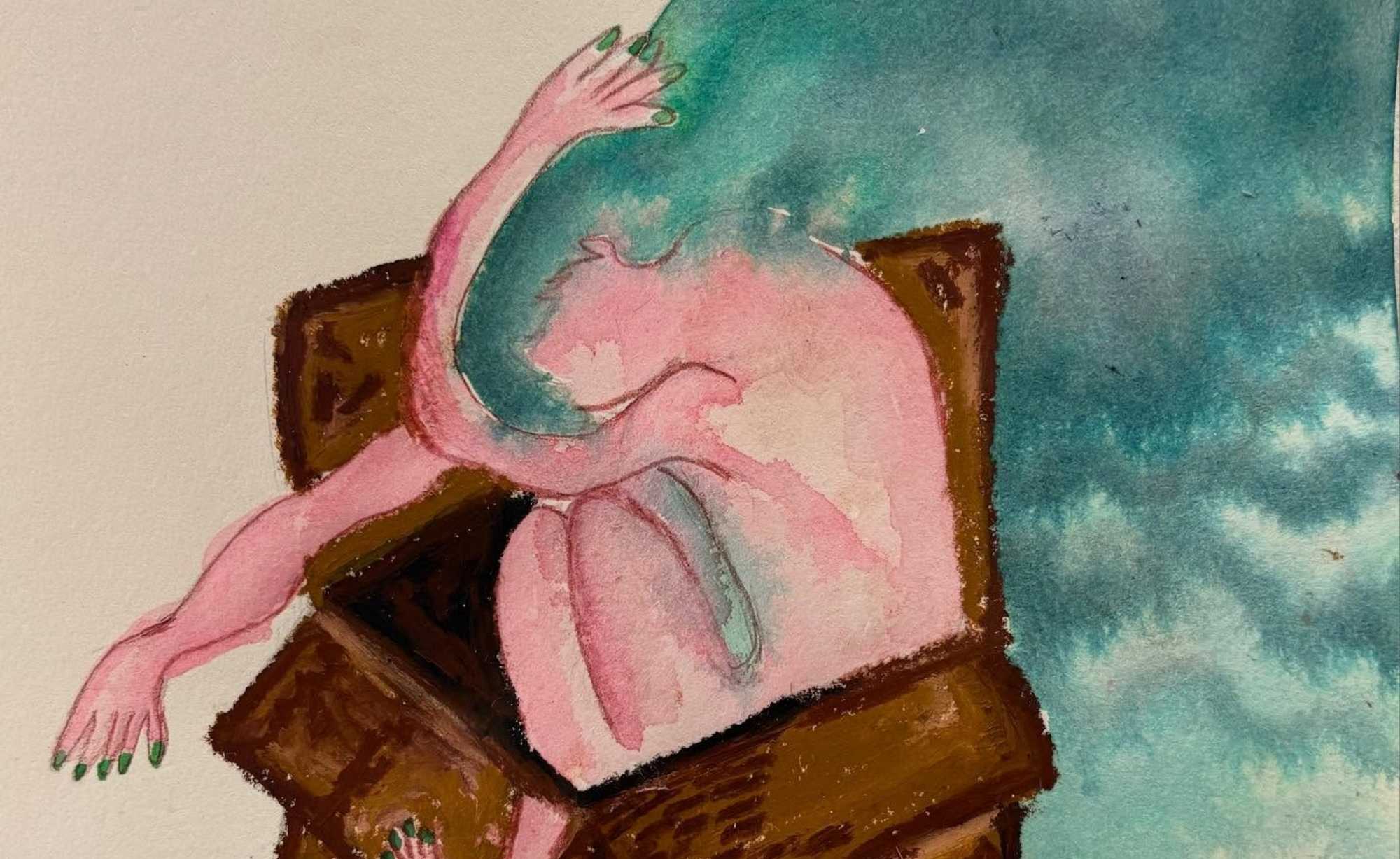
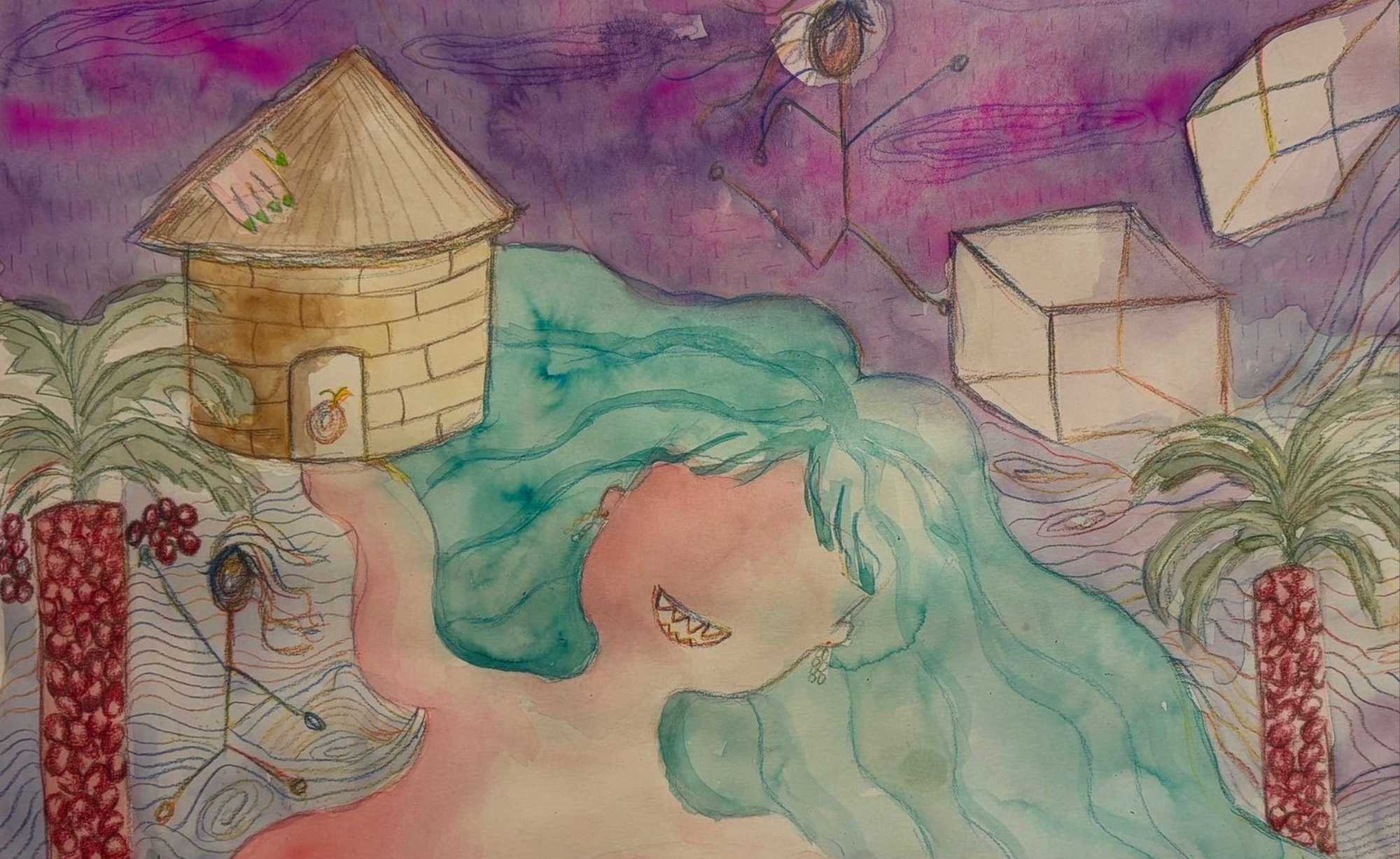
She is pink-skinned, blue-haired, green-nailed, pointy-toothed, and she keeps climbing out of boxes. She showed up in Emirati artist Yoshi's work at the start of 2025 and has been multiplying ever since—across watercolour, ink, archival paper. “She has so many deficiencies,” Yoshi shares with SceneNowUAE. “This imagery reflects feelings and experiences that words alone cannot capture.”
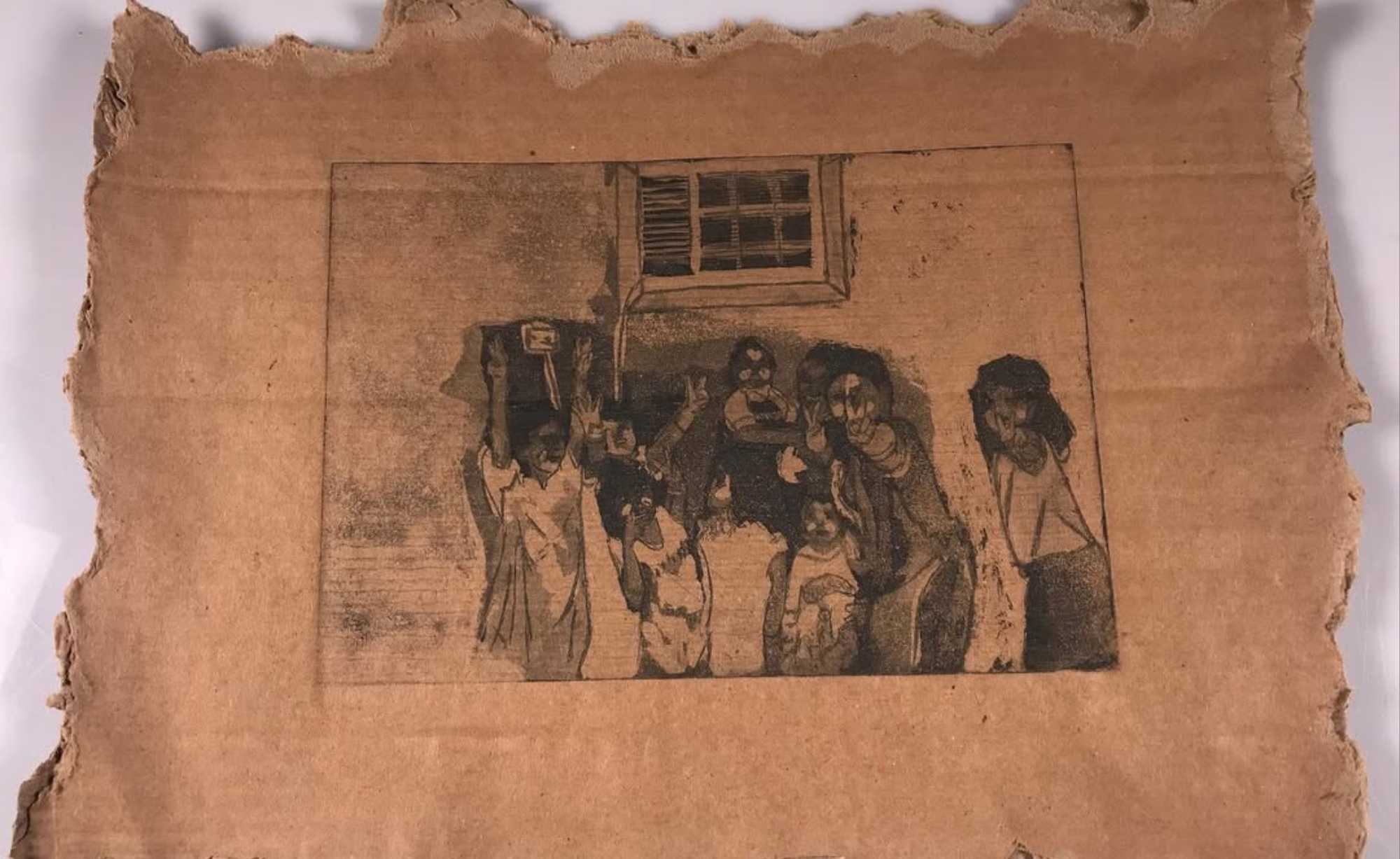
In ‘Consuming Thoughts,’ seeds spill from her mouth, a teal flood pours from her head. In ‘Escape,’ she is half-out of a cardboard box, hair trailing behind her like a wake; the painting itself made directly onto cardboard, as if waiting for proper paper was beside the point. In ‘Floodmind,’ it’s just her hands: four pairs of green-nailed fingers pressing at each other, the body implied by its extremities, pink and teal washing into each other.
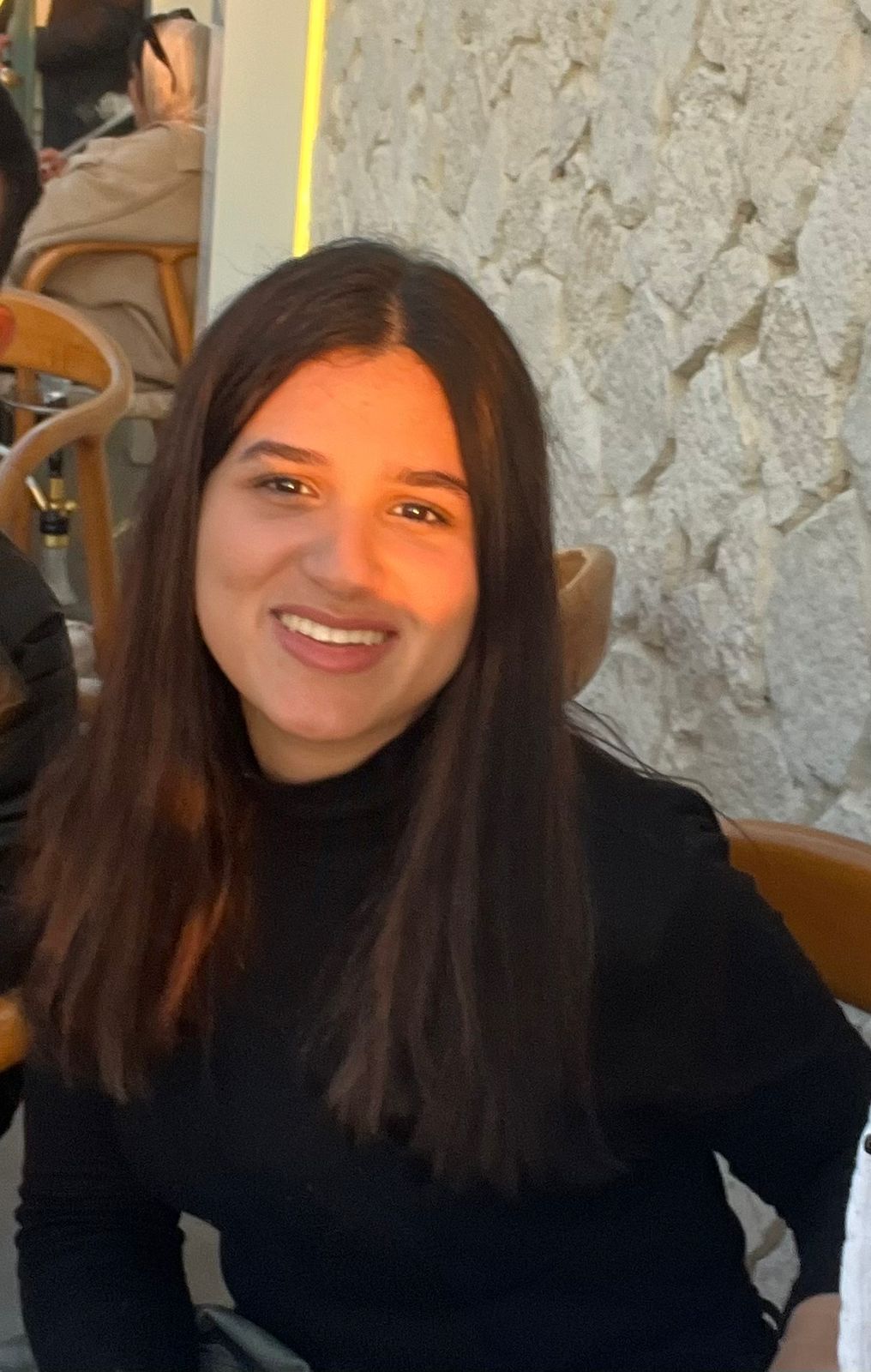
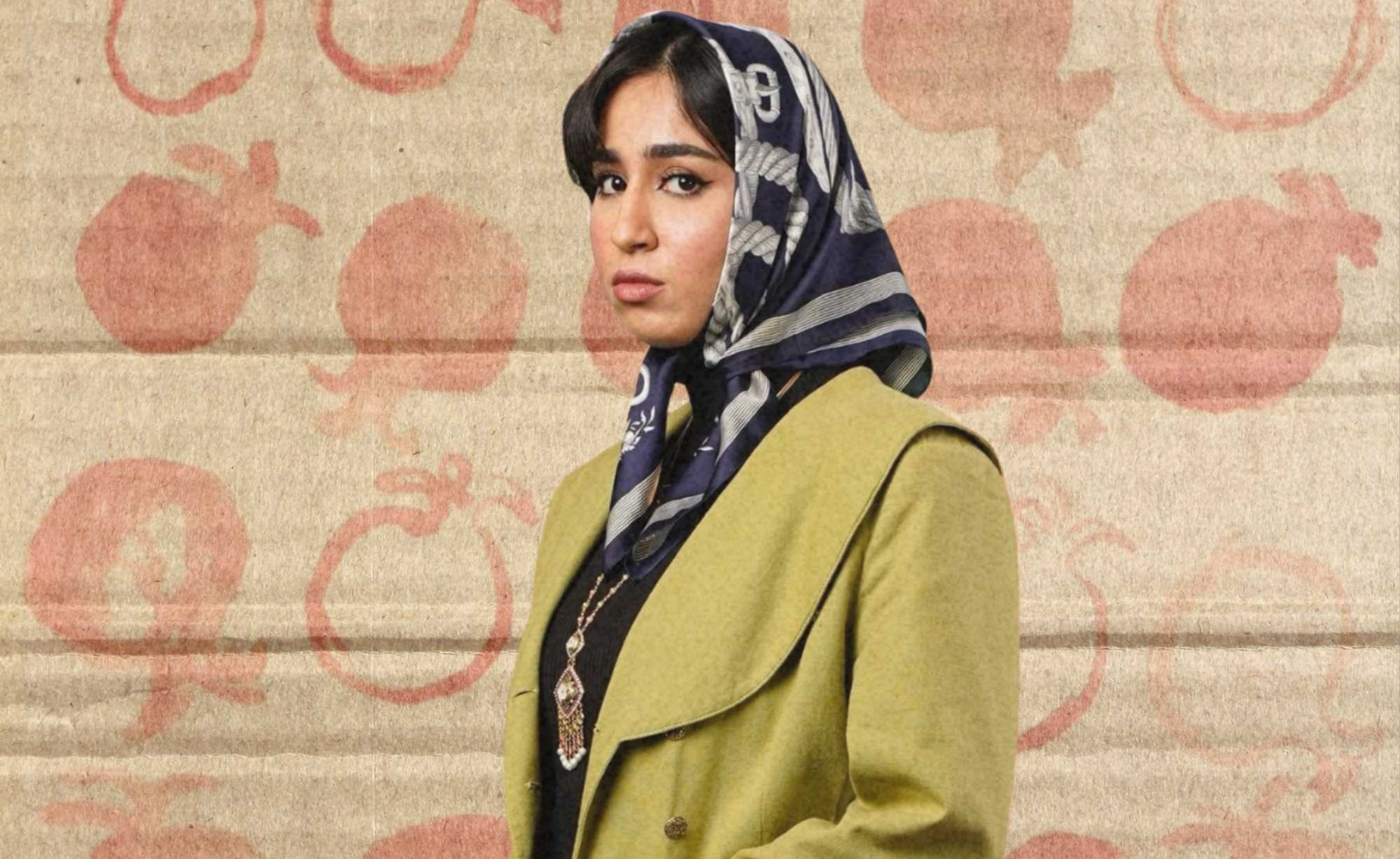
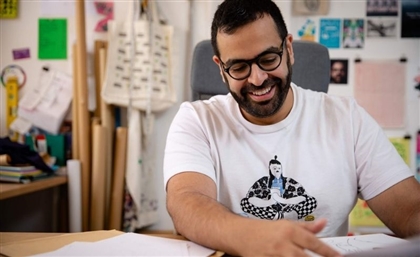
 Yoshi—Aisha Al Ali to her passport, to the government, to the aunties who still call her by her real name—is not just a multidisciplinary artist but also an educator based in Abu Dhabi. She goes by Yoshi because, she explains cheerfully, there are too many Aishas. In Japanese, “Yoshi” means something good. Her artistic persona, scattered across drawings, paintings, sculptures, performances, installations, publishing, and teaching, resists easy containment.
Currently, she is mid-fellowship at the Salama bint Hamdan Foundation. “I wanted to feel like a student again. I've been running a studio for four years plus teaching, and I just didn’t want to feel responsible any more. I just wanted to make art.” The work she is creating there is the most rigorous, the most physically committed, the most alive of her career. A ceramic box, dark and heavily glazed, tips its entire population of handmade dice onto the floor around it. Ninety-two ceramic dice, one real red one among them, the word love encoded in Braille somewhere in the piece—unseen unless you already know the language. She called it ‘The Roll We Didn't Choose.’ The box cannot contain what she keeps putting inside it. One suspects this is the point.
Yoshi—Aisha Al Ali to her passport, to the government, to the aunties who still call her by her real name—is not just a multidisciplinary artist but also an educator based in Abu Dhabi. She goes by Yoshi because, she explains cheerfully, there are too many Aishas. In Japanese, “Yoshi” means something good. Her artistic persona, scattered across drawings, paintings, sculptures, performances, installations, publishing, and teaching, resists easy containment.
Currently, she is mid-fellowship at the Salama bint Hamdan Foundation. “I wanted to feel like a student again. I've been running a studio for four years plus teaching, and I just didn’t want to feel responsible any more. I just wanted to make art.” The work she is creating there is the most rigorous, the most physically committed, the most alive of her career. A ceramic box, dark and heavily glazed, tips its entire population of handmade dice onto the floor around it. Ninety-two ceramic dice, one real red one among them, the word love encoded in Braille somewhere in the piece—unseen unless you already know the language. She called it ‘The Roll We Didn't Choose.’ The box cannot contain what she keeps putting inside it. One suspects this is the point.
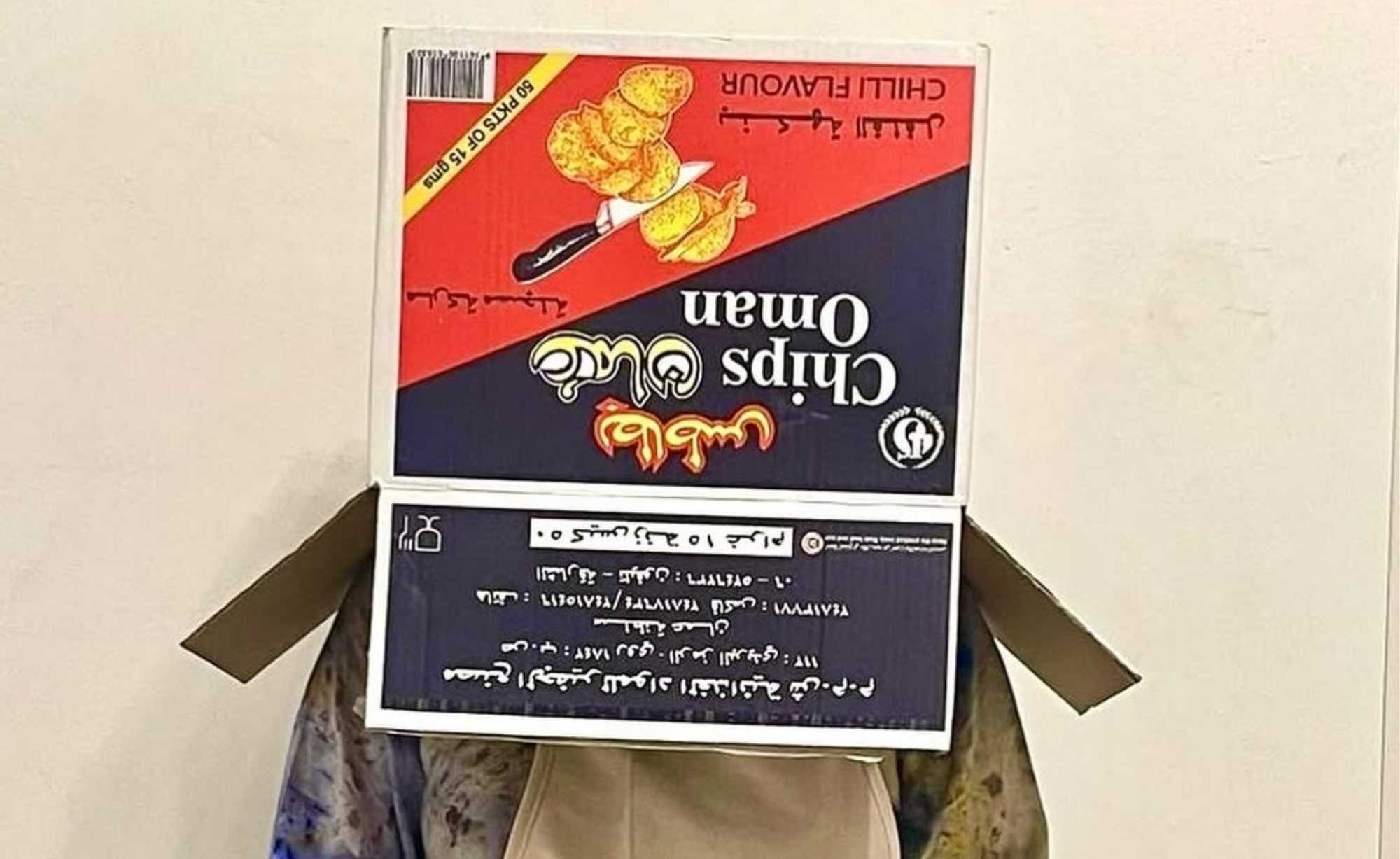
 Somewhere in Yoshi's memory, there is another box, one filled with chips, that carries the weight of a revelation. She climbed inside it, literally. She sat in the box, wore it, moved with it, laid inside it on the floor and let it dictate everything. Sixteen minutes. Thirty. She was trying to feel what it felt like to be a bag of chips inside the box, because her mentor because her mentor—curator Nasser Abdullah—had asked her what object she'd be and she said a bag of chips, and he said: act like one. She did. And what she found, curled inside a carton of processed snack packaging, was the entire thesis of her practice: we are all, always, in a box. "I realised I'm stuck in this box or stuck in a loop of boxes. We live in a room. That's a box. We live in a house. That's a box. We drive a car that's a box."
That was 2020. Five years later, the fellowship gave her an object to work with. She chose the die. She had been circling it already. Dice were always going to arrive, given the boxes, given the Braille, given the years she spent building systems and watching people strain against them. But the fellowship crystallised it. They asked for twenty-five drawings of a single die. She had previously made over a thousand pomegranate drawings, so the number was not the challenge. The question was how.
Somewhere in Yoshi's memory, there is another box, one filled with chips, that carries the weight of a revelation. She climbed inside it, literally. She sat in the box, wore it, moved with it, laid inside it on the floor and let it dictate everything. Sixteen minutes. Thirty. She was trying to feel what it felt like to be a bag of chips inside the box, because her mentor because her mentor—curator Nasser Abdullah—had asked her what object she'd be and she said a bag of chips, and he said: act like one. She did. And what she found, curled inside a carton of processed snack packaging, was the entire thesis of her practice: we are all, always, in a box. "I realised I'm stuck in this box or stuck in a loop of boxes. We live in a room. That's a box. We live in a house. That's a box. We drive a car that's a box."
That was 2020. Five years later, the fellowship gave her an object to work with. She chose the die. She had been circling it already. Dice were always going to arrive, given the boxes, given the Braille, given the years she spent building systems and watching people strain against them. But the fellowship crystallised it. They asked for twenty-five drawings of a single die. She had previously made over a thousand pomegranate drawings, so the number was not the challenge. The question was how.
 She started close: drawing the die with a thread, pulling lines from its geometry. Then with her hands. Then with her feet. "When I started drawing with my feet, I became interested in movement, how the dice move as I move. Roll a two, move to the right. Roll a six, move that way. I set rules for myself in order to make the drawing." One drawing ran ten metres. She did another with her nose. She set rules for herself, wrote them out, then followed them—until a cast she made of the die cracked in the firing and she kept the broken pieces and called the work ‘Chance, Chance and Chance.’ Around the same time, working in response to the artist Bruce Nauman, she filmed herself cutting boxes after rolling die that landed on either a five or a six. Those were the rules set by her. Then, suddenly, she cut the box on a three. "I follow rules," she says, "but sometimes I break them. We're not machines." She called the work ‘Chance Breaks the Box.’
The games followed as a natural extension of this—or perhaps they were always there, since she had spent three years teaching teenagers and building systems specifically designed to make a room function, which is its own kind of game design. Now she builds them for gallery spaces and public corners: a secret box installed in the fellowship grounds, filled with cards and rules inside, strangers encountering it without her there to explain. Some played, some walked away. Both responses interested her equally. "If you look at an artwork and you get something just from looking at it, that means a lot. That's successful." The artist removes herself. The system runs.
She started close: drawing the die with a thread, pulling lines from its geometry. Then with her hands. Then with her feet. "When I started drawing with my feet, I became interested in movement, how the dice move as I move. Roll a two, move to the right. Roll a six, move that way. I set rules for myself in order to make the drawing." One drawing ran ten metres. She did another with her nose. She set rules for herself, wrote them out, then followed them—until a cast she made of the die cracked in the firing and she kept the broken pieces and called the work ‘Chance, Chance and Chance.’ Around the same time, working in response to the artist Bruce Nauman, she filmed herself cutting boxes after rolling die that landed on either a five or a six. Those were the rules set by her. Then, suddenly, she cut the box on a three. "I follow rules," she says, "but sometimes I break them. We're not machines." She called the work ‘Chance Breaks the Box.’
The games followed as a natural extension of this—or perhaps they were always there, since she had spent three years teaching teenagers and building systems specifically designed to make a room function, which is its own kind of game design. Now she builds them for gallery spaces and public corners: a secret box installed in the fellowship grounds, filled with cards and rules inside, strangers encountering it without her there to explain. Some played, some walked away. Both responses interested her equally. "If you look at an artwork and you get something just from looking at it, that means a lot. That's successful." The artist removes herself. The system runs.
 The same logic governs the Braille. She arrived at it sideways, the way she tends to arrive at things: through fascination with a system. "I'm very interested in language. Any language that is not read through, you read it like more dots or these things." The logic of it transfixed her—six dots, arranged and rearranged, a whole language compressed into a grid. She did a commission for Bvlgari in which she embedded Braille into the decorative surface of the work: hidden messages in a pattern the audience reads as ornament.
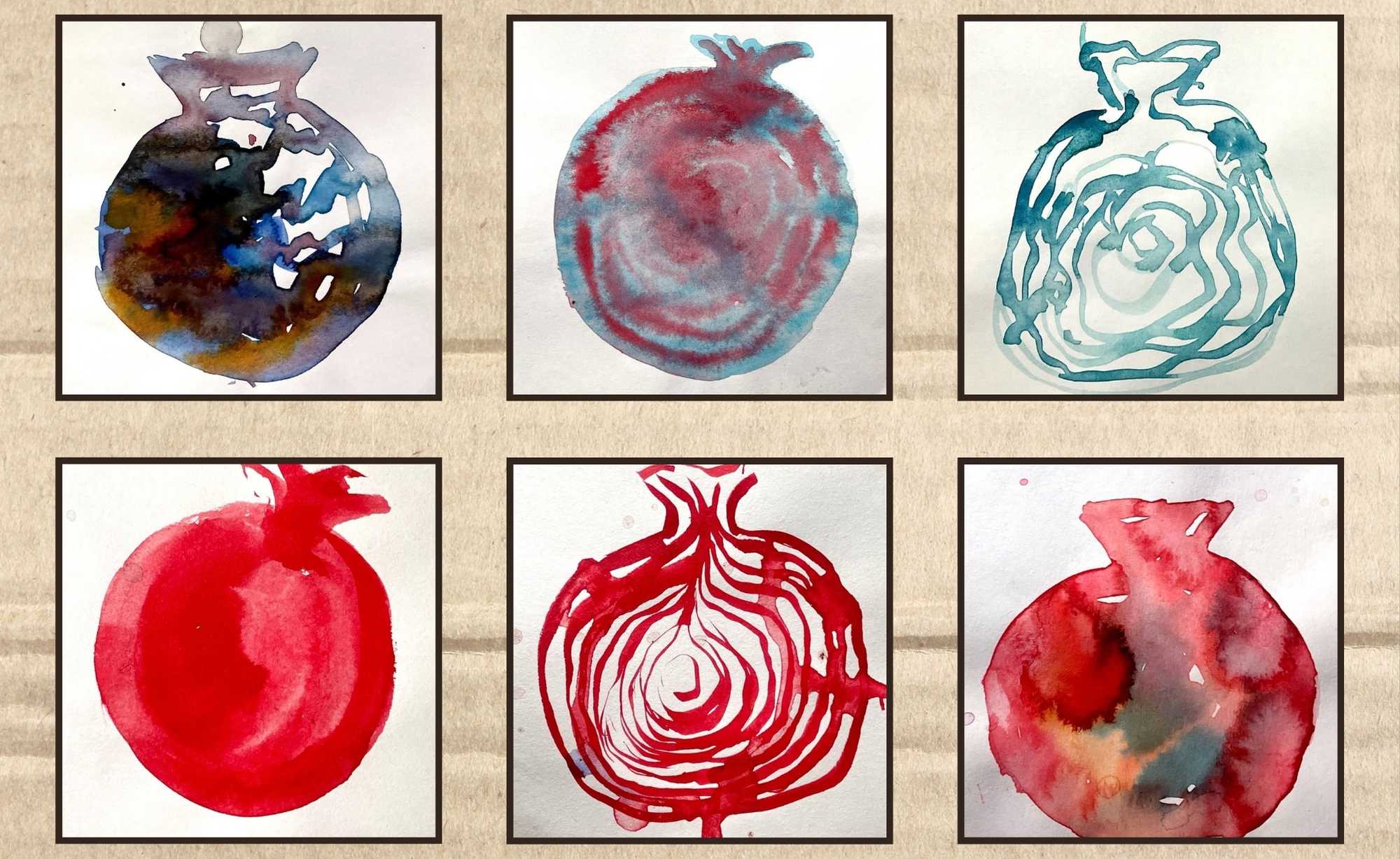
The Braille, with its dense surface and concealed interior, is what led her to pomegranates. Both reward looking closer than most people bother. She started drawing them in 2022 and did not stop until she had over a thousand—watercolour, ink, every kind of approach, the repetition functioning as excavation. "The more I did it, the more I realised I want to come out with a language, have my own dictionary." She has not finished it yet. She selected 285 for ‘Unprocessed,’ her self-published book from 2024. A recent series from it renders pomegranates as clocks—six of them, each watercoloured differently, black and rose and blue and red and green. She kept asking while drawing: why does time pass so fast? The pomegranates became vessels for the question the way they always become vessels: by holding it inside the skin, invisible until you look.
The same logic governs the Braille. She arrived at it sideways, the way she tends to arrive at things: through fascination with a system. "I'm very interested in language. Any language that is not read through, you read it like more dots or these things." The logic of it transfixed her—six dots, arranged and rearranged, a whole language compressed into a grid. She did a commission for Bvlgari in which she embedded Braille into the decorative surface of the work: hidden messages in a pattern the audience reads as ornament.
The Braille, with its dense surface and concealed interior, is what led her to pomegranates. Both reward looking closer than most people bother. She started drawing them in 2022 and did not stop until she had over a thousand—watercolour, ink, every kind of approach, the repetition functioning as excavation. "The more I did it, the more I realised I want to come out with a language, have my own dictionary." She has not finished it yet. She selected 285 for ‘Unprocessed,’ her self-published book from 2024. A recent series from it renders pomegranates as clocks—six of them, each watercoloured differently, black and rose and blue and red and green. She kept asking while drawing: why does time pass so fast? The pomegranates became vessels for the question the way they always become vessels: by holding it inside the skin, invisible until you look.
 At the core of Yoshi’s practice is a constant dedication to the craft: working every day, creating with discipline, finding footing in an ecosystem where artists are still carving out space. "I make or create every single day," she says, "because consistency is what brought me here." Discipline in something she is passionate about, despite the rejections, despite the studio moves, despite the flood she fixed alone. "Behind this practice is a constant negotiation with instability. I have moved my studio six times, and finding and keeping a space is still an ongoing struggle—not just for me, but for many artists in the UAE." This part of the practice is often invisible. People do not always see how much effort it takes just to keep going. The constant rejections of applications, opportunities, visibility—they become the rhythm of everyday making. "I don't say this as a complaint, but as a reality of what it actually takes to sustain a practice. So when people say I'm 'lucky,' it doesn't sit right with me. It flattens everything: the persistence, the moving around, the uncertainty, the rejections, the daily work it takes just to continue making."
The fellowship ends in a few months. What it has produced—the dice performances, the ceramic spills, the broken casts kept and named, the games placed in corners for strangers to find—is the fullest articulation of her practice to date. The Braille led to the pomegranates. The pomegranates led back to the Braille, which led to the die—thrown, governed, broken, and eventually leading to ‘Chance.’ And underneath everything, the boxes were always there, tipping their contents onto the floor.
“I look at people as if they’re boxes,” she says. “Some are transparent. Some you have to figure out. And some don’t open up at all.”
At the core of Yoshi’s practice is a constant dedication to the craft: working every day, creating with discipline, finding footing in an ecosystem where artists are still carving out space. "I make or create every single day," she says, "because consistency is what brought me here." Discipline in something she is passionate about, despite the rejections, despite the studio moves, despite the flood she fixed alone. "Behind this practice is a constant negotiation with instability. I have moved my studio six times, and finding and keeping a space is still an ongoing struggle—not just for me, but for many artists in the UAE." This part of the practice is often invisible. People do not always see how much effort it takes just to keep going. The constant rejections of applications, opportunities, visibility—they become the rhythm of everyday making. "I don't say this as a complaint, but as a reality of what it actually takes to sustain a practice. So when people say I'm 'lucky,' it doesn't sit right with me. It flattens everything: the persistence, the moving around, the uncertainty, the rejections, the daily work it takes just to continue making."
The fellowship ends in a few months. What it has produced—the dice performances, the ceramic spills, the broken casts kept and named, the games placed in corners for strangers to find—is the fullest articulation of her practice to date. The Braille led to the pomegranates. The pomegranates led back to the Braille, which led to the die—thrown, governed, broken, and eventually leading to ‘Chance.’ And underneath everything, the boxes were always there, tipping their contents onto the floor.
“I look at people as if they’re boxes,” she says. “Some are transparent. Some you have to figure out. And some don’t open up at all.”
- Previous Article Title 2026
- Next Article UAE Employers Expand Benefits Beyond Traditional Packages
Related Articles

Trending This Week
-

-
-

-
 Jul 23, 2026