





Bahia Shehab on How Egypt's Old Ads Tell Their Own Version of History
Bahia Shehab's 'A Trade in Dreams' reads a century of Egyptian print advertising for what it says about power, money and women. The exhibition is at AUC until September 30.
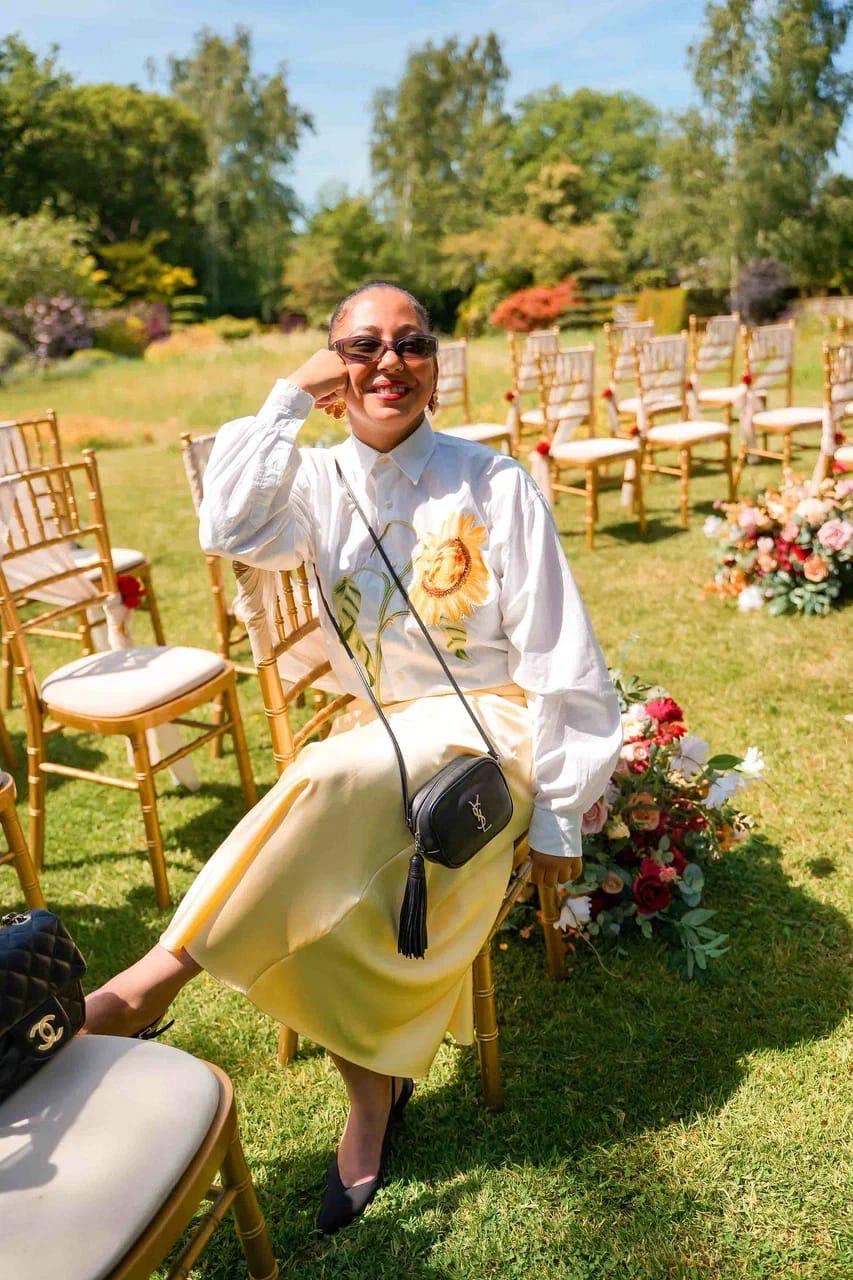
Bahia Shehab's Cairo book launch for 'A Trade in Dreams: A Century of Egyptian Print Advertising' was held at the American University in Cairo in early September. The exhibition that opened alongside it runs at AUC until September 30.
The book introduces the five characters Shehab has used to tour it across Europe: El Hanem, El Basha, El Nunu, El Nurse and El Dealer. A Cairo version of that tour follows in January, with Diwan Bookstore and the Netherlands-Flemish Institute confirmed and further venues and dates to come.
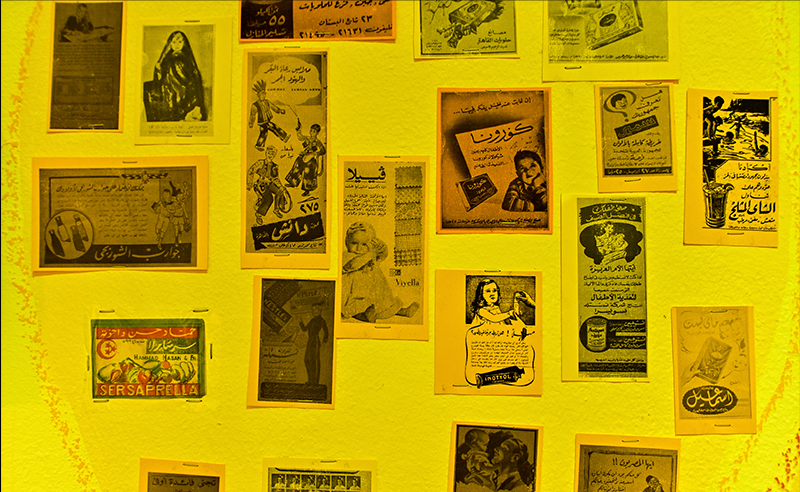
Published by AUC Press, the book follows Egypt from 1880 to 1980 through more than 350 magazine and newspaper advertisements. It traces how advertising shaped ideas of aspiration, identity and modernity, with particular attention to the changing representation of women.
Shehab is an artist, author and Professor of Practice in Design at AUC, and has taught more than 16 courses on visual culture.
She lectures internationally on her art practice, Arab visual culture and design, design education and curriculum development and Islamic cultural heritage, and is the first Arab woman to receive the UNESCO-Sharjah Prize for Arab Culture.
Although 'A Trade in Dreams' focuses on 1880 to 1980, Shehab looks further back at how the human voice was the first form of advertising.
Street vendors have long used distinctive cries to draw attention to their goods, and hawkers still use recognisable chants to announce robabekya, gas canisters, fruit and vegetables.
"The adhan even, the call to prayer, is another example," she says. "The voice is the first form of advertising, a human voice and sound, long before advertising found its way onto the printed page."
Her history of print begins with Napoleon Bonaparte's proclamation to the Egyptian population, distributed in the summer of 1798. Before printing, rulers' decrees were largely communicated through oral announcements or notices posted on public walls.
"I present the letter presented by Napoleon to the people in Egypt as a form of political propaganda and advertising for a country coming to colonise another," Shehab says. "And with the introduction of the printing press, more and more publications started appearing."
After the French departure, Muhammad Ali took power in 1805 and modernised Egypt's printing infrastructure. He established the Bulaq Press in 1820 and al Waqa'i' al Misriya in 1828, initially published in Turkish alongside Arabic translations.
Under Rifa'a al Tahtawi it later shifted towards Arabic, placing the language at the centre of Egypt's growing print culture.
By 1877, Egypt had 27 daily and biweekly newspapers in Arabic, French, Italian and Greek, with a combined circulation of more than 10,000 copies a day. From there the industry expanded, with papers reflecting different political positions and specialised titles covering everything from medicine and engineering to women's issues, sport and entertainment.
Publications needed money to survive, which made advertising an important source of income. Industrialisation, urbanisation, transport, literacy and consumer culture all increased the pressure on businesses to reach more people.
That growth coincided with rising European political and economic influence. After the British occupation in 1882, foreign influence created tension between imported products and emerging local industries.
Tobacco offers one example. By 1892, cigarette advertisements were common in Egyptian newspapers, and Egypt was becoming a major centre of production. Kyriazi Frères and Nestor Gianaclis were among the leading manufacturers, and in 1901 Egypt produced more than 347 million cigarettes.
Tobacco advertisements combined European packaging, typography and artwork with Egyptian imagery, from the Nile and ancient Egypt to Islamic art. As Egyptian cigarettes became associated with quality, Western brands began borrowing the same imagery to evoke that prestige.
"You'd go to Paris, Berlin, or New York. You would walk into a really fancy salon and you can try a different tobacco or cigarette that is Egyptian," Shehab says. "So much so that the Western brands started affiliating with ancient Egypt and Egyptians because of the quality of Egyptian tobacco."
The tension between foreign influence and local identity sharpened at moments of political change.
"Repeatedly, before every war, before every major political event, we see nationalist brands or brands that are about to disappear," she says.
Local businesses pushed consumers towards Egyptian products. She gives the example of the tarboush, which fell out of fashion after the collapse of the Ottoman Empire, "so you see ads for the Masnaa Tarboush, the tarboush factory telling people, 'Buy us, we are a local product to support your national goods, support your economy.'"
Egyptian textile and fashion retailers made similar appeals. One advertisement for men's shoes carried the line, "They used to say made in Paris, now they say made by 'Abbas Abu-l-'Ila."
The 1940s were a particularly vibrant period. Cairo remained cosmopolitan and culturally active, with luxury brands and major Egyptian businesses competing for consumers.
"The 1940s for me was the golden era of advertising in Egypt," Shehab says. "It was really beautiful what was going on, a lot of things were happening, and a lot of luxury brands were being sold, so you found jewellery advertising, Banque Misr, Studio Misr, big industrial projects, department stores, Coca-Cola, a lot of Coca-Cola."
One striking example is Aspro, a medication that promised a remedy for almost anything. Its advertisements suggested the pill could relieve rheumatism, protect against influenza, restore energy and improve your mood.
"Aspro was the magic pill, Aspro was for everything," Shehab recalls. "If you're angry, if you're sad, if you're happy, you take Aspro. Use the pill. That's it, you don't need anything else."
For Shehab, Aspro captures advertising's ability to turn a product into a promise. The mechanism, she argues, is psychological.
"It's all psychology because you have to understand your consumer to design something that makes them buy. So the amount of research that is spent, the amount of money that's spent on research for you to actually buy is unbelievable," she says.
"So this is a science. You don't buy this because you like it. You buy this because you were conditioned and repeatedly targeted and subliminally targeted to buy it." Ultimately, she says, "you have to sell a dream."
The politics of the 1950s and 1960s changed all of it. Under Gamal Abdel Nasser, Egypt moved towards nationalism and socialism, altering both what was advertised and how Egyptians appeared in the advertisements.
"Under the monarchy and the British mandate and the colonial powers' presence, we see a lot of European goods," Shehab says. "Nasser comes in, all that stops overnight."
Foreign brands such as Amstel and Coca-Cola had become increasingly visible in the 1930s and 1940s, often through advertisements that reproduced colonial hierarchies, showing people of colour as servants, waiters and cleaners, or using blackface.
That stopped under Nasser, and so did the older image of the Egyptian consumer.
"We start seeing more women who are farmers and men who are workers who look Egyptian being represented in advertising," Shehab says.
After the nationalisation of the press in 1961, newspapers came under state control and advertising for luxury goods, jewellery, entertainment and foreign products declined. Local brands became more prominent, with Misr Cola, Kawsar and Sico emerging alongside Qaha and Groppi.
The 1970s brought another shift. Following Nasser's death in 1970, Anwar Sadat moved away from socialist policies and closer to the West.
After the 1973 October War, his Open Door policy encouraged foreign and domestic private investment and allowed more foreign products into the market. Advertising became more consumer-focused and more Western in style.
Television and radio were meanwhile taking over as advertising platforms. The 1970s marked the beginning of the decline of press advertising, as the medium that had documented a century of Egyptian change began to lose its dominance.
Across the book, the representation of women tracks shifting ideas about femininity, beauty, modernity and women's place in society.
This is clearest in advertisements from the 1920s and 1930s, where the female body was presented in increasingly revealing ways, with exposed legs, shoulders, hair and breasts.
Shehab points to how these images were built around the male gaze.
"So you see naked women, you see women posing in a very sexy manner, focusing on the male gaze. So it's very interesting to see how that was engineered through advertising," she says. "Also how women should behave. A lot of the ads would have a headline that read 'Smile.' If you want to be attractive to a man, you have to look a certain way."
Women appeared in contrasting registers at the same time, from the traditional clothing worn by actress Thuraya Hilmi in an advertisement for Ward al-Nil soap to the European fashions worn by singer Fathiya Ahmad in an Odeon advertisement.
They were also highly visible in entertainment and cultural life, with advertisements promoting performers such as Badi'a Masabni, Mary 'Izz al-Din, Ratiba and Ansaf Rushdi.
"Women were not only performers, but they were also doing so many things and present in the public eye," Shehab says.
That visibility continued into the 1940s. Durriya Shafiq, a prominent feminist and advocate for women's rights, became editor-in-chief of 'La Femme nouvelle' in 1944 before founding 'Bint al Nil' in 1945.
Both magazines relied heavily on advertising. At the beginning, Bint al-Nil attracted more local brands and promoted a nationalist spirit, while La Femme nouvelle carried more international and high-end products.
Then came Nasser's brief to newspaper boards and editors-in-chief, which called for journalism to align with the new socialist order by focusing on the provinces, villages and the people who lived in them.
Advertising for entertainment, casinos and cabarets declined, and the women entrepreneurs and cultural figures who had dominated the 1940s disappeared from view. Folkloric groups such as the Reda Troupe gained prominence instead.
"To me it's always interesting to see how that was and then how it completely shifted, and we started losing more and more women who are powerful symbols in the public eye," Shehab says.
The question of who stays visible in the historical record is what led her to the Unobjective History Tour. "The point of the tour was to tell people that history is not objective," she says. "Because my question to you is: if history were objective, then where are all the women?"
She built five characters to represent different positions in Egyptian society: El Hanem, a high-society woman who consumes European advertisements; El Basha, a nationalist businessman preoccupied with the country and its agriculture; El Nunu, a baby; El Nurse, a working mother with local and European medical knowledge; and El Dealer, who moves through the black market and what it sells and hides.
Each character reads the same century differently. Even the book's cover carries the split, divided horizontally between green and red, with Egyptian brands in green and foreign brands in red.
In January, Shehab plans to walk those five characters through Cairo, taking the project back into the city where the advertisements first circulated.
- Previous Article Mona Zaki Will Recieve GFF’s 2026 Career Achievement Award
- Next Article Private Operators to Manage 11 Airports Under 30-Year Contracts