





The Camel Diplomat: A Yemeni Man's Walk for Peace
From a hyena attack in Djibouti to a war-shut border in Kuwait, Muneer Aldahmi has spent 13 years walking across Africa and the Gulf on camelback, carrying one message: peace.

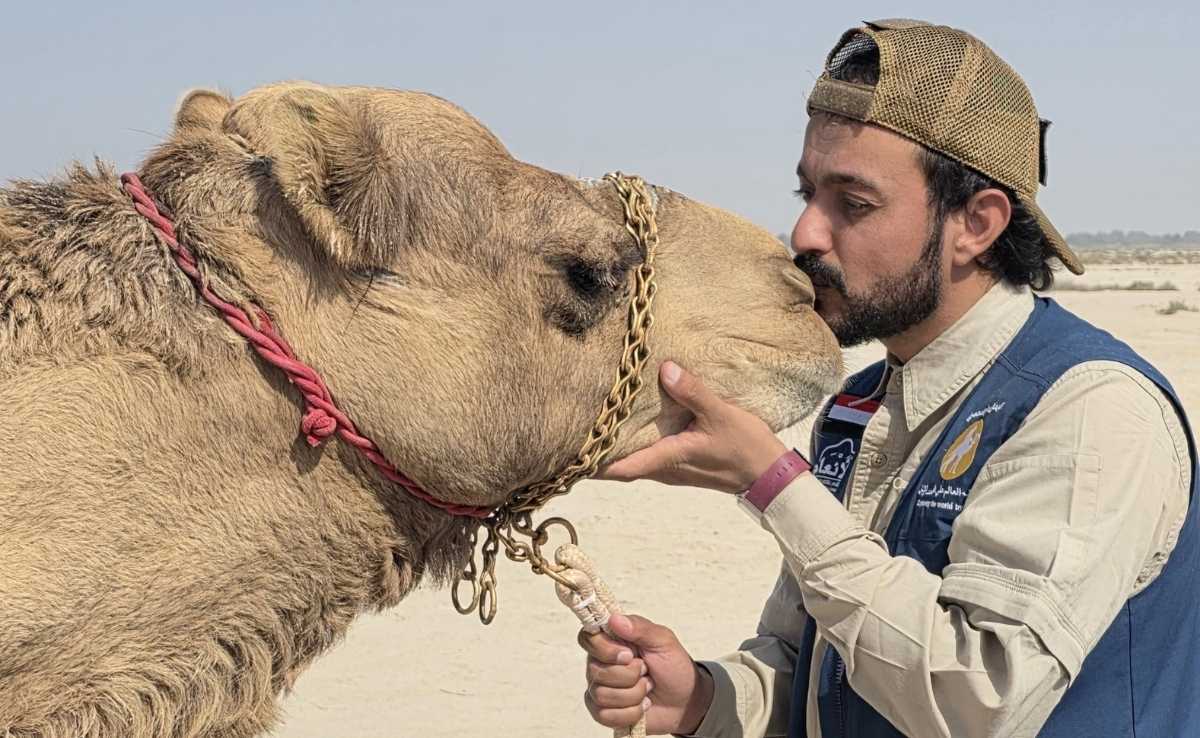
Deep through cracked earth and thorny acacia scrub, Muneer Aldahmi commands a camel he's long befriended for 50 km through Djibouti, finally covering enough distance to stop for the day.
"I rest by 6 pm," he shares with SceneTraveller. Only to be awakened a few hours into the night by the sound of his camels resisting what he was frightened to realise, through tired eyes, were hyenas circling; hungry and bold.
Thankfully, this 36-year-old Yemeni traveller didn't face the ordeal alone. His friend Ahmed Alqasmi, a fellow voyager from his village of Ibb who has covered more than 40,000 km by camel since 1994, and who first inspired Aldahmi's journey, was right beside him as they reached for fireworks.
The pyrotechnics were packed as a clever substitute for conventional means of self-defence, and proved necessary to ward the launching hyenas off. "We weren't authorised to travel with weapons," he explains the choice.
As the display lit up the darkness and drove the hyenas back, it also alarmed a French base barely two kilometres away.
Within moments, the two Yemeni camel-back travellers found themselves held at gunpoint, suspected of terrorism, which is quite ironic given the peaceful drive behind the adventure. "We're travelling for love and peace," he says, still faintly incredulous at the memory.
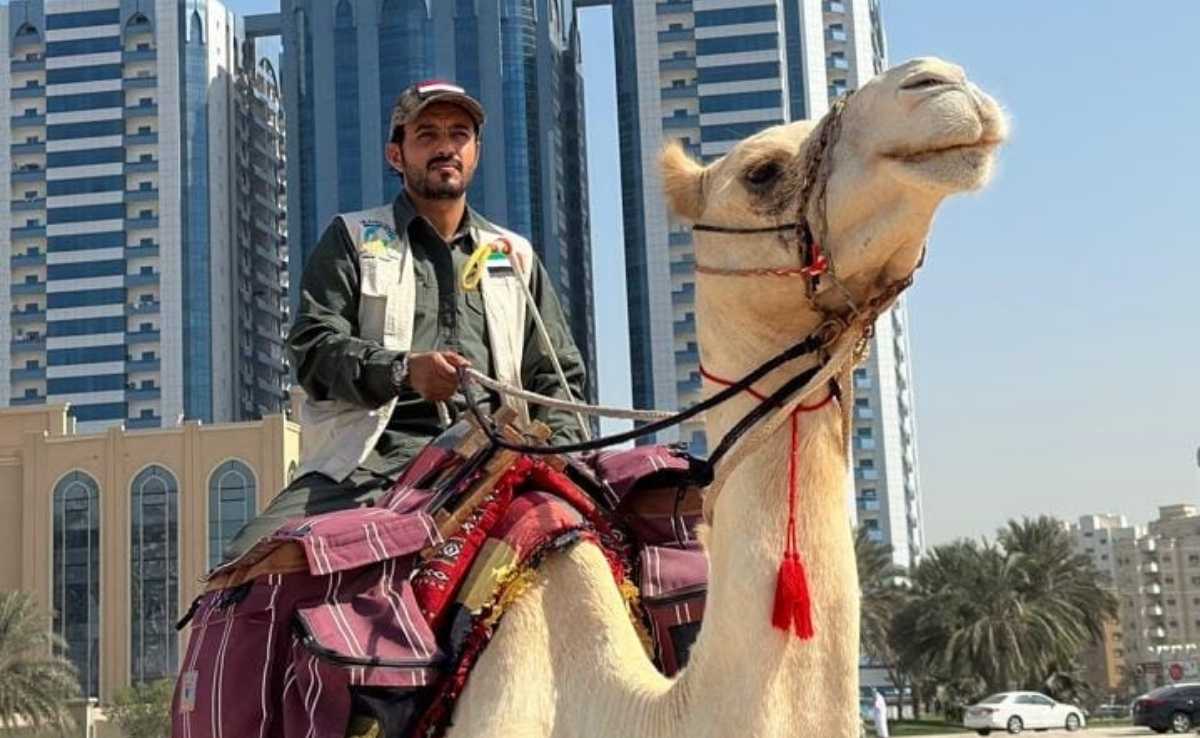 The pair managed to prove their innocence with their passports and newspaper clippings of articles about them; documents they found necessary to pack alongside water, dates, canned food, and garlic.
The latter does double duty as both nourishment and defence. "It gives you immunity when you're sick," he says, before describing a trick passed down through necessity rather than any manual; scattering the cloves of garlic around his campsite to keep scorpions and other night-crawling insects at bay.
It's the kind of detail that says more about the texture of his life than any grand statement could: a man managing, with what fits in a single bag, threats that range from illness to venomous stings to the occasional wild animal.
"It was the very first day of our journey," he says. "And yet, despite the fear, my persistence in carrying the Arab heritage through our very early traditions is what kept me going."
Aldahmi's camelback adventures began in 2013, through Africa's jungles and deserts, to see the world and spread the culture he takes much pride in with the help of his camel, a withstanding symbol of Arabs that has since become his most honest companion.
"We built a very special connection; my camel trusts and protects me," he says.
And the rhythm it provides, that slow passing through cities, between tribes, and across the empty stretches in between, has become its own kind of instruction, a way of learning the world at the pace it was meant to be learned.
"It also gives me the chance to journal and write down my memories of every place I visit," he says.
The scale of what Aldahmi has attempted is difficult to hold in the mind all at once. His African leg alone traced a vast, looping route of over 9,500 km: from Djibouti into Ethiopia, down through Kenya, Tanzania, Mozambique and South Africa, then back up all the way through Uganda into South Sudan and Sudan.
He was backed throughout by the Hamdan bin Mohammad Heritage Center, which sponsored the leg and would prove to be far more than a name attached to the expedition. When one of Aldahmi's camels fell ill along the way, Sheikh Hamdan gifted him five more, a gesture of generosity Aldahmi still speaks about with visible gratitude.
But the dream to travel further into Africa was met with the reality of borders and crossings; the arithmetic of visas and clearances that decided, long before Aldahmi ever reached a border post, which countries would open to him and which wouldn't.
Chad, Niger, and Mali refused him entry outright, the trip cut short by paperwork and a passport that carried less weight in some capitals than others. It was a reminder, one he doesn't dwell on but sits beneath the whole journey, that where a person is born can decide how far they're allowed to go; regardless of how far they're willing to walk.
Instead, his journey led him into Egypt momentarily where he crossed into his native Yemen for the second leg of his trip, into Saudi Arabia, Qatar, Bahrain, and Kuwait, a procession through the Gulf that, as he describes it, felt like an entirely different kind of journey to the one he'd known in Africa.
"But it was good to start there because coming out of the African hurdles safely means you've already tackled the hardest part, and sets you up for the rest of the challenge," he continues.
The African crossing had been improvised and frequently dangerous. The journey through the Arabian Gulf came with government escorts, tribal welcoming parties, and a level of institutional support that Aldahmi describes almost with relief. "Vehicles and tribes always followed and supported," he says. "There's a level of security."
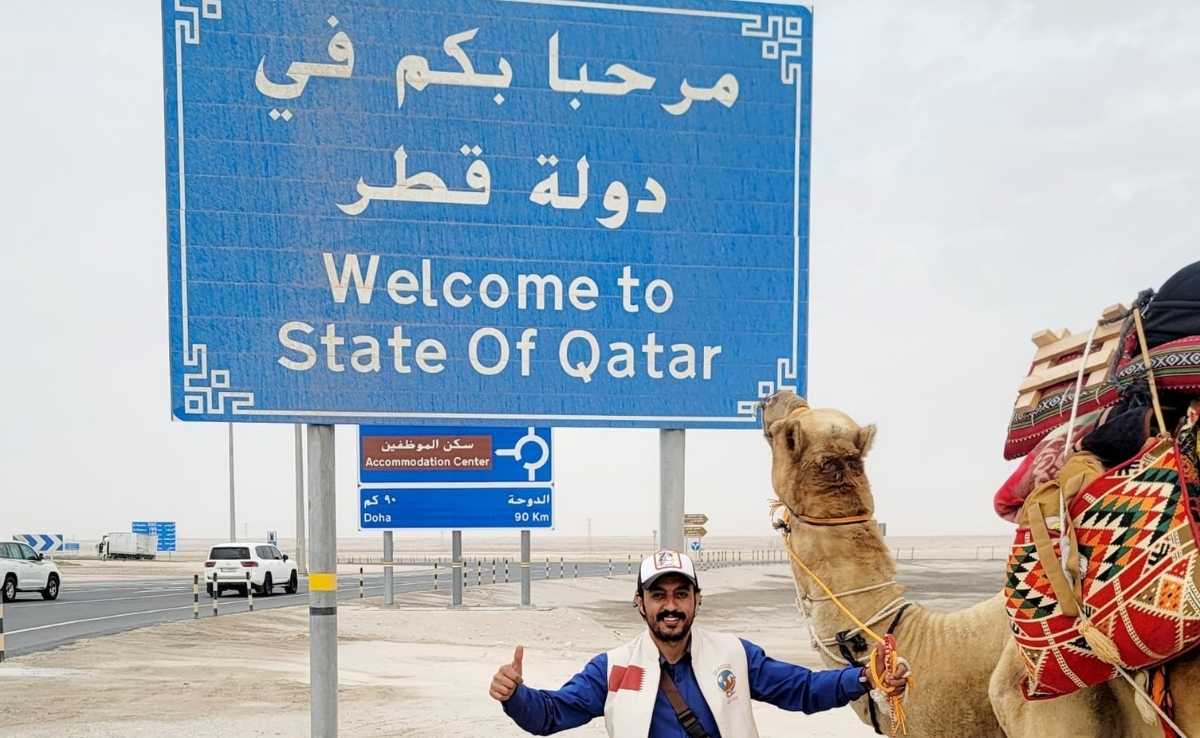 Much of that Gulf leg was backed by Al-Anaam Livestock Production Factory in Qatar, whose support carried the journey across several borders and became one of several instances where the trip's momentum depended as much on this kind of backing as it did on Aldahmi's own endurance.
Every border tests the idea he set out with. In the Gulf, it held.
Yet even that measure of security couldn't shield the journey from forces far beyond passport politics or tribal goodwill. What had been a steady procession through the Gulf came to a halt, this time not at a checkpoint but at the edge of the regional tensions that closed the routes ahead of him.
Aldahmi was forced to leave his camel behind at the Kuwait-Iraq border, seeking refuge in Riyadh since Ramadan, waiting, as he so often has, for the political weather to clear.
He had been due to press on, papers arranged and the road ahead mapped out, until the situation escalated again. "Life was quiet for a while," he sighs.
Ahead of Aldahmi, should the routes ever open, lies the Levant and then onto the rest of North Africa. Beyond that, if the permits allow it, Spain; and with it, the beginning of a European chapter he speaks of with the particular hush of someone naming a destination he isn't yet sure he'll reach.
"My dream is to spread my heritage to Europe," he says, "and God willing, I'll do what I can."
The nights spent camped in forests, the days spent walking past endless dunes, and the challenges that had him fearing for his life are, in Aldahmi's mind, the raw material for something larger: a book in the tradition of the great travelling chroniclers before him, Marco Polo and Ibn Battuta among them, men who also measured the world one border at a time and returned with more than just a sense of where they'd been.
"I want to write about my trip so the world can know how I reached these places; how I experienced the welcome, the customs and traditions, and the brutal moments that come along the way," he says.
"I want people to understand that there's no reason to live in fear because when you're on any journey, there are people who support and stand with you."
- Previous Article Independent Homeware Brands Worth Setting the Table For
- Next Article New Agreement Expands Digital Payment Services for Egyptians Abroad